Digital Transformation

Artificial Intelligence, Business Intelligence, Cloud Computing and Technology

AI-Powered Customer Experience: The Next Evolution of Personalization

Introduction Customer expectations have changed dramatically over the past decade. Modern consumers no longer want generic interactions, mass marketing campaigns, or one-size-fits-all services. They expect businesses to understand their preferences, anticipate their needs, and deliver personalized experiences across every touchpoint. In an increasingly digital world, personalization has become a key factor that influences purchasing decisions, customer loyalty, and brand perception. This shift in expectations has created new opportunities and challenges for organizations. While traditional personalization methods relied on basic customer data and manual segmentation, they often struggled to keep pace with evolving customer behaviors. Today, Artificial Intelligence (AI) is revolutionizing how businesses interact with customers by enabling real-time, intelligent, and highly personalized experiences at scale. AI-powered customer experience is no longer a futuristic concept. It is already transforming industries such as retail, banking, healthcare, telecommunications, travel, and e-commerce. From personalized recommendations and intelligent chatbots to predictive analytics and sentiment analysis, AI is helping organizations create deeper customer relationships while improving operational efficiency. As businesses compete for customer attention in an increasingly crowded marketplace, AI-driven personalization is becoming one of the most important competitive advantages. Organizations that successfully leverage AI can deliver experiences that feel more human, relevant, and valuable than ever before. Understanding AI-Powered Customer Experience AI-powered customer experience refers to the use of artificial intelligence technologies to enhance interactions between businesses and customers. These technologies analyze vast amounts of customer data, identify patterns, learn from user behavior, and generate insights that help organizations provide more personalized services. Unlike traditional systems that rely on predefined rules, AI continuously learns and adapts based on customer interactions. This allows businesses to deliver recommendations, support, and communications that align with individual customer preferences. The foundation of AI-powered customer experience includes technologies such as: Machine Learning Natural Language Processing (NLP) Predictive Analytics Computer Vision Generative AI Conversational AI Sentiment Analysis Together, these technologies enable businesses to understand customers more accurately and respond more effectively. Why Personalization Matters More Than Ever Customers today interact with brands through multiple channels including websites, mobile applications, social media platforms, emails, and physical stores. They expect seamless experiences regardless of where and how they engage with a business. Research consistently shows that customers are more likely to purchase from brands that provide personalized experiences. Personalized interactions make customers feel valued, understood, and appreciated, leading to stronger emotional connections and long-term loyalty. Some key benefits of personalization include: Increased customer satisfaction Higher conversion rates Improved customer retention Stronger brand loyalty Better customer engagement Increased revenue opportunities However, delivering personalized experiences to millions of customers simultaneously would be nearly impossible without AI. How AI Is Revolutionizing Personalization Intelligent Product Recommendations One of the most visible applications of AI is personalized product recommendations. AI systems analyze customer browsing history, purchase behavior, preferences, and interactions to suggest products that align with individual interests. Instead of showing the same products to every visitor, AI creates unique experiences for each customer. This not only improves user satisfaction but also increases sales and average order value. Modern recommendation engines can consider hundreds of variables simultaneously, allowing businesses to provide highly accurate suggestions that feel relevant and timely. Predictive Customer Insights AI enables businesses to move from reactive customer service to proactive customer engagement. By analyzing historical and real-time data, AI can predict: Future purchasing behavior Customer churn risks Product preferences Service requirements Potential complaints Customer lifetime value These insights allow businesses to take preventive actions before issues arise, improving overall customer satisfaction. For example, a subscription-based company can identify customers likely to cancel their membership and offer personalized incentives to retain them. Conversational AI and Virtual Assistants Customer support has undergone significant transformation through AI-powered chatbots and virtual assistants. Modern conversational AI systems can: Answer customer questions instantly Provide product recommendations Process transactions Resolve common issues Guide users through complex processes Offer multilingual support Unlike traditional support systems that require customers to wait for human agents, AI assistants provide immediate responses around the clock. As Natural Language Processing continues to improve, these interactions are becoming increasingly natural and human-like. Hyper-Personalized Marketing Campaigns Traditional marketing often targets broad audience segments. AI takes personalization much further by enabling one-to-one marketing. AI analyzes customer behavior, demographics, interests, and engagement patterns to create highly targeted campaigns. Businesses can automatically personalize: Email content Website experiences Product recommendations Promotional offers Social media advertisements Mobile app notifications This level of personalization significantly increases engagement rates while reducing marketing waste. Sentiment Analysis and Emotional Intelligence Understanding customer emotions has always been challenging for businesses. AI is changing that through sentiment analysis. AI systems can analyze: Customer reviews Social media posts Survey responses Support conversations Online feedback By identifying positive, negative, or neutral sentiments, businesses gain valuable insights into customer perceptions and experiences. This helps organizations respond quickly to emerging issues, improve services, and strengthen customer relationships. The Rise of Generative AI in Customer Experience Generative AI has become one of the most transformative technologies in recent years. Unlike traditional AI systems that primarily analyze data, generative AI can create content, conversations, recommendations, and solutions. Businesses are increasingly using generative AI to: Generate personalized email responses Create customized product descriptions Provide intelligent customer support Develop personalized shopping experiences Produce tailored content recommendations Customers benefit from faster responses and more relevant interactions, while organizations achieve greater efficiency and scalability. Generative AI also helps customer service teams by summarizing conversations, suggesting responses, and providing real-time assistance during customer interactions. Omnichannel Personalization Powered by AI Modern customers expect consistent experiences across multiple channels. They do not want to repeat information every time they switch from a website to a mobile app or contact customer support. AI enables omnichannel personalization by creating a unified customer profile that integrates data from various sources. This allows businesses to: Recognize customers across channels Maintain conversation continuity Deliver consistent recommendations Provide context-aware support Improve customer journey management As a result, customers experience smoother and more personalized interactions regardless of where they engage with a brand. AI and Customer Journey Optimization Every customer

Digital Transformation, Technology & Innovation, telecom

The Business Impact of 5G and the Road to 6G Connectivity

The Business Impact of 5G and the Road to 6G Connectivity The world is becoming increasingly connected, and the technologies that power this connectivity are evolving at an unprecedented pace. Over the past few years, 5G has emerged as one of the most transformative technological advancements, promising faster speeds, lower latency, and the ability to connect billions of devices simultaneously. While many businesses are still exploring the full potential of 5G, discussions about 6G are already gaining momentum. Connectivity has become the foundation of modern business operations. From cloud computing and remote work to artificial intelligence and the Internet of Things (IoT), organizations depend on reliable, high-speed networks to remain competitive. As industries continue their digital transformation journeys, both 5G and the future transition to 6G are expected to redefine how businesses operate, innovate, and serve customers. Understanding the impact of these technologies is essential for organizations that want to stay ahead in a rapidly evolving digital landscape. Understanding 5G Technology 5G, or fifth-generation wireless technology, represents a significant upgrade from previous mobile network generations. Unlike 4G, which primarily focused on improving mobile internet speeds, 5G is designed to support a wide range of advanced applications and connected ecosystems. One of the most notable features of 5G is its ability to deliver extremely high data transfer speeds. Businesses can transmit large volumes of information in real time, enabling smoother communication, faster cloud access, and improved operational efficiency. Another critical advantage is ultra-low latency, which reduces the delay between sending and receiving information. This capability is particularly important for applications that require real-time responsiveness, such as autonomous vehicles, remote surgery, and industrial automation. Additionally, 5G can support a significantly larger number of connected devices compared to previous generations. This makes it ideal for environments where thousands or even millions of sensors, machines, and smart devices need to communicate simultaneously. How 5G Is Transforming Businesses The impact of 5G extends far beyond faster smartphone internet. Businesses across various sectors are leveraging this technology to create new opportunities and improve existing operations. Enhanced Remote Work and Collaboration The shift toward hybrid and remote work has increased the demand for reliable connectivity. 5G enables seamless video conferencing, faster file sharing, and real-time collaboration regardless of location. Employees can access cloud-based applications more efficiently, reducing delays and improving productivity. As organizations continue to embrace flexible work models, 5G provides the infrastructure needed to support distributed teams and digital workplaces. Accelerating the Internet of Things (IoT) The Internet of Things is one of the biggest beneficiaries of 5G technology. Smart devices generate enormous amounts of data, and 5G networks provide the bandwidth and reliability required to manage these connections effectively. Businesses can deploy large-scale IoT ecosystems for applications such as: Smart manufacturing Asset tracking Supply chain monitoring Smart agriculture Energy management Connected healthcare devices The ability to process and transmit data in real time enables organizations to make faster and more informed decisions. Revolutionizing Manufacturing Manufacturing is undergoing a major transformation through Industry 4.0 initiatives, and 5G plays a central role in this evolution. Factories equipped with connected sensors, autonomous robots, and intelligent monitoring systems can achieve greater efficiency and productivity. Real-time communication between machines allows manufacturers to optimize production processes, reduce downtime, and improve quality control. Predictive maintenance powered by IoT sensors helps identify potential equipment failures before they occur, minimizing disruptions and reducing maintenance costs. Improving Customer Experiences Customer expectations continue to rise, and businesses are seeking innovative ways to deliver personalized and engaging experiences. Retailers can use 5G-powered technologies such as augmented reality (AR) and virtual reality (VR) to create immersive shopping experiences. Customers can virtually try products, explore digital showrooms, and receive personalized recommendations in real time. Similarly, entertainment companies can deliver high-quality streaming services with minimal buffering, enhancing user satisfaction and engagement. Driving Innovation in Healthcare Healthcare organizations are leveraging 5G to improve patient care and operational efficiency. Real-time data sharing enables healthcare providers to access patient information instantly, facilitating faster diagnosis and treatment decisions. Telemedicine services become more reliable and effective, allowing doctors to consult with patients remotely without connectivity limitations. Advanced applications such as remote robotic surgery and AI-assisted diagnostics also benefit from the low latency and high reliability offered by 5G networks. Supporting Smart Cities Cities around the world are investing in smart infrastructure to improve transportation, energy management, public safety, and environmental monitoring. 5G provides the connectivity foundation for smart city initiatives by enabling real-time communication between sensors, cameras, vehicles, and public services. This results in more efficient resource utilization and improved quality of life for residents. Economic Benefits of 5G Adoption The adoption of 5G is generating significant economic opportunities for businesses and governments alike. Organizations that invest in 5G-enabled solutions can experience: Increased operational efficiency Reduced infrastructure costs Faster innovation cycles Enhanced customer engagement Improved workforce productivity New revenue streams Many businesses are also developing entirely new products and services that were not feasible under previous network limitations. As 5G ecosystems continue to mature, the economic impact is expected to expand across virtually every industry. Challenges in 5G Implementation Despite its advantages, implementing 5G is not without challenges. One of the primary concerns is infrastructure investment. Deploying 5G networks requires significant upgrades to existing telecommunications infrastructure, including additional base stations and advanced networking equipment. Cybersecurity is another important consideration. As more devices become connected, the potential attack surface for cyber threats increases. Businesses must implement robust security measures to protect sensitive data and critical systems. There are also concerns related to spectrum availability, regulatory compliance, and interoperability between different technologies and vendors. Organizations must carefully plan their adoption strategies to maximize benefits while managing risks. Looking Beyond 5G: The Emergence of 6G While 5G is still being rolled out globally, researchers and technology companies are already exploring the possibilities of 6G. 6G is expected to represent the next major leap in wireless communication. Although commercial deployment may still be years away, early research suggests that 6G could deliver speeds up to 100 times faster

Business, Business Analytics, Technology, Technology & Innovation

Hyperautomation in 2026: Beyond Traditional Process Automation

Hyperautomation in 2026: Beyond Traditional Process Automation Businesses have spent years automating repetitive tasks to improve efficiency and reduce operational costs. Traditional automation solutions, particularly Robotic Process Automation (RPA), have helped organizations streamline rule-based processes such as data entry, invoice processing, customer onboarding, and report generation. While these technologies have delivered significant value, the business landscape of 2026 demands much more than simple task automation. Organizations are now dealing with massive volumes of data, increasingly complex workflows, evolving customer expectations, and growing pressure to make faster decisions. As a result, companies are moving beyond basic automation and embracing hyperautomation—a more advanced approach that combines multiple technologies to automate entire business processes from start to finish. Hyperautomation is no longer a futuristic concept. It has become a strategic priority for organizations seeking greater agility, productivity, and innovation. By integrating artificial intelligence, machine learning, process mining, low-code platforms, intelligent document processing, and robotic process automation, businesses can create intelligent systems capable of learning, adapting, and making decisions with minimal human intervention. Understanding Hyperautomation Hyperautomation refers to the coordinated use of multiple advanced technologies to identify, automate, optimize, and continuously improve business processes. Unlike traditional automation, which focuses on individual tasks, hyperautomation aims to automate complete workflows across departments and systems. Think of traditional automation as teaching a machine to perform one repetitive task. Hyperautomation, on the other hand, creates an ecosystem where different technologies work together to handle complex business operations autonomously. For example, when a customer submits a loan application, a hyperautomation system can automatically collect documents, verify information, assess risk using AI models, perform compliance checks, communicate with the customer, and generate approval decisions. What once required multiple employees and several days can now be completed within minutes. The goal is not simply to replace manual work but to create intelligent business operations that continuously learn and improve. Why Hyperautomation Is Gaining Momentum in 2026 Several factors are driving the rapid adoption of hyperautomation across industries. The first is the explosion of enterprise data. Organizations generate vast amounts of structured and unstructured information every day. Processing this data manually is increasingly impractical. Hyperautomation enables businesses to extract insights, make decisions, and execute actions automatically. Another major driver is the growing demand for operational efficiency. Economic uncertainty and competitive markets are forcing organizations to do more with fewer resources. Hyperautomation helps reduce costs while improving speed and accuracy. Customer expectations have also evolved significantly. Modern consumers expect instant responses, personalized experiences, and seamless service. Businesses that rely solely on manual processes struggle to meet these expectations consistently. Additionally, advances in artificial intelligence have made intelligent automation more accessible than ever before. AI models can now understand language, analyze documents, recognize patterns, and generate recommendations with remarkable accuracy. Together, these factors are pushing businesses toward a new era of automation where machines not only execute tasks but also support decision-making and continuous optimization. Key Technologies Powering Hyperautomation Hyperautomation is not a single technology. It is a combination of several powerful tools working together. Artificial Intelligence and Machine Learning AI and machine learning provide the intelligence behind hyperautomation. These technologies allow systems to analyze data, identify patterns, make predictions, and improve performance over time. In customer service, AI can classify support requests, suggest responses, and route inquiries to the appropriate departments. In finance, machine learning algorithms can detect fraud and assess risk in real time. As AI capabilities continue to evolve, businesses are automating increasingly sophisticated decision-making processes. Robotic Process Automation (RPA) RPA remains a foundational component of hyperautomation. Software bots can perform repetitive tasks such as copying data, updating records, generating reports, and interacting with multiple applications. While traditional RPA focuses on rule-based activities, its integration with AI allows bots to handle more dynamic and complex scenarios. Intelligent Document Processing Businesses process enormous volumes of documents, including invoices, contracts, applications, and compliance records. Intelligent Document Processing uses AI, optical character recognition, and natural language processing to extract, classify, and validate information automatically. This significantly reduces manual document handling while improving speed and accuracy. Process Mining One of the biggest challenges in automation is identifying which processes should be automated. Process mining tools analyze system logs and workflow data to uncover inefficiencies and bottlenecks. Organizations can gain a clear understanding of how work is performed and identify opportunities for automation and optimization. Low-Code and No-Code Platforms Low-code and no-code platforms allow employees with limited programming knowledge to create automation workflows quickly. These platforms accelerate digital transformation by reducing dependency on specialized development teams while encouraging innovation across departments. Conversational AI Chatbots and virtual assistants have evolved dramatically in recent years. Modern conversational AI systems can understand context, provide personalized responses, and complete transactions. Businesses are increasingly using conversational AI to automate customer interactions, employee support services, and internal workflows. How Hyperautomation Differs from Traditional Automation Traditional automation typically focuses on isolated tasks. For example, a software bot might transfer data from one system to another. Hyperautomation takes a broader approach. It connects multiple technologies to automate entire processes from beginning to end. Traditional automation follows predefined rules and struggles when exceptions occur. Hyperautomation incorporates AI-driven decision-making, allowing systems to adapt to changing circumstances and handle more complex scenarios. Another key difference is continuous improvement. Hyperautomation systems monitor performance, identify inefficiencies, and recommend optimizations automatically. This creates a cycle of ongoing enhancement that traditional automation cannot achieve. Real-World Applications Across Industries The impact of hyperautomation extends across virtually every sector. Healthcare Healthcare organizations are using hyperautomation to streamline patient registration, appointment scheduling, insurance verification, medical coding, and claims processing. AI-powered systems can analyze patient records, assist with diagnosis support, and improve administrative efficiency, allowing healthcare professionals to focus more on patient care. Banking and Financial Services Financial institutions face increasing pressure to deliver faster services while maintaining compliance and security. Hyperautomation helps automate loan approvals, fraud detection, customer onboarding, compliance monitoring, and transaction processing. These capabilities reduce operational costs while improving customer experiences. Manufacturing Manufacturers are combining automation, AI, and Internet of Things

Artificial Intelligence, Data Privacy & Security

The Rise of Private AI: Why Businesses Want More Control Over Their Data

The Rise of Private AI: Why Businesses Want More Control Over Their Data Artificial Intelligence has become one of the most transformative technologies of the modern business era. From automating routine processes and generating content to analyzing massive datasets and enhancing customer experiences, AI is helping organizations operate more efficiently than ever before. However, as AI adoption accelerates, a new concern has emerged alongside the excitement: data privacy. Businesses today generate and store enormous volumes of sensitive information. Customer records, financial data, intellectual property, strategic plans, employee information, and proprietary research are among the most valuable assets an organization possesses. While public AI platforms offer impressive capabilities, many companies are becoming increasingly cautious about how their data is processed, stored, and used. This growing concern has led to the rise of Private AI, an approach that allows organizations to harness the power of artificial intelligence while maintaining greater control over their data. Rather than sending sensitive information to public AI services, businesses are exploring private AI environments that prioritize security, compliance, and ownership. As digital transformation continues to reshape industries, Private AI is quickly becoming a critical component of enterprise technology strategies. Understanding Private AI Private AI refers to artificial intelligence systems that operate within a controlled environment owned or managed by an organization. These systems can be deployed on-premises, within private cloud infrastructure, or through dedicated environments that ensure data remains isolated from public systems. Unlike public AI platforms that often rely on shared infrastructure and external data processing, Private AI enables businesses to retain control over where their information resides, who can access it, and how it is used. The objective is simple: gain the benefits of advanced AI capabilities without exposing sensitive business data to unnecessary risks. Private AI solutions can include: Self-hosted large language models Private generative AI assistants Secure machine learning environments Enterprise AI platforms with dedicated infrastructure Industry-specific AI systems designed for regulated sectors This model is becoming increasingly attractive as organizations seek to balance innovation with security and regulatory compliance. Why Businesses Are Prioritizing Data Control Data has become one of the most valuable assets in the modern economy. As AI systems require access to large datasets for analysis and decision-making, organizations want assurance that their information remains protected. Several factors are driving the shift toward Private AI. Protecting Sensitive Information Many businesses handle confidential data that cannot be shared outside approved environments. Financial institutions manage customer transactions, healthcare providers process medical records, and technology companies store proprietary intellectual property. Using public AI systems may raise concerns about data exposure, accidental leaks, or unauthorized access. Private AI allows organizations to keep critical information within secure boundaries. For industries where trust is essential, maintaining complete control over sensitive data is often non-negotiable. Meeting Regulatory Requirements Governments and regulatory bodies worldwide are introducing stricter data protection laws. Regulations such as GDPR, industry-specific compliance frameworks, and national privacy laws require organizations to demonstrate responsible data handling practices. Businesses operating across multiple regions face increasing pressure to comply with diverse regulatory requirements. Private AI environments provide greater transparency and control, helping organizations meet compliance obligations more effectively. By knowing exactly where data is stored and processed, businesses can reduce regulatory risks and avoid costly penalties. Safeguarding Intellectual Property For many organizations, proprietary information represents a significant competitive advantage. Product designs, research findings, source code, business strategies, and internal documentation are assets that businesses cannot afford to expose. As generative AI tools become more integrated into daily workflows, concerns have emerged about how submitted data may be used by external systems. Private AI offers a solution by ensuring sensitive business knowledge remains within the organization’s own ecosystem. This level of protection is particularly important for industries driven by innovation and intellectual property. The Growing Trust Challenge in AI Despite the remarkable capabilities of AI, trust remains one of the biggest barriers to adoption. Business leaders often ask critical questions: Who owns the data used by the AI system? Where is the information stored? Can external parties access company data? How is the data protected? What happens if a security breach occurs? These concerns become even more significant when AI systems are used for mission-critical operations. Private AI helps address these trust issues by providing greater visibility and governance over AI operations. Organizations can establish clear policies regarding data access, model training, monitoring, and security controls. When employees and customers trust how AI is being implemented, adoption tends to increase significantly. How Private AI Improves Security Cybersecurity threats continue to evolve at an alarming pace. Data breaches can lead to financial losses, reputational damage, legal consequences, and operational disruptions. Private AI strengthens security through several mechanisms. Controlled Access Organizations can define who has access to AI systems and what information can be processed. Role-based permissions reduce the risk of unauthorized access and internal misuse. Enhanced Monitoring Private environments enable businesses to monitor AI activity more closely. Security teams can track interactions, detect anomalies, and respond quickly to potential threats. Reduced Data Exposure Keeping data within private infrastructure minimizes the need to transmit sensitive information across external networks, reducing potential attack surfaces. Custom Security Policies Businesses can implement security measures aligned with their specific needs, including encryption, authentication, network isolation, and auditing capabilities. These controls provide a level of protection that many organizations consider essential for enterprise-scale AI adoption. The Role of Private AI in Highly Regulated Industries Certain industries face particularly strict requirements regarding privacy and data protection. Healthcare Healthcare organizations manage highly sensitive patient information. AI can assist with diagnostics, patient engagement, medical research, and operational efficiency, but privacy concerns remain paramount. Private AI allows healthcare providers to leverage AI while maintaining compliance with healthcare regulations and safeguarding patient trust. Financial Services Banks and financial institutions process vast amounts of confidential customer data. Fraud detection, risk analysis, and customer support increasingly rely on AI technologies. Private AI helps financial organizations maintain strict security standards while improving operational performance. Government and Public Sector Government agencies often handle classified

Artificial Intelligence, Software development, Technology

How Generative AI Is Reshaping Software Development

How Generative AI Is Reshaping Software Development Software development has always evolved alongside technological innovation. From the early days of manual coding to the rise of integrated development environments (IDEs), cloud computing, and DevOps practices, every advancement has aimed to make building software faster, more efficient, and less error-prone. Today, another major transformation is underway, driven by Generative Artificial Intelligence (AI). Generative AI is no longer a futuristic concept limited to research labs or tech giants. It has become a practical tool that developers, businesses, and organizations are actively using to accelerate software creation, automate repetitive tasks, improve code quality, and streamline entire development lifecycles. What once required hours of manual effort can now be accomplished in minutes with the assistance of AI-powered tools. As businesses continue their digital transformation journeys, Generative AI is emerging as one of the most influential technologies reshaping how software is designed, developed, tested, and maintained. Understanding Generative AI in Software Development Generative AI refers to artificial intelligence systems capable of creating new content based on patterns learned from large datasets. While many people associate Generative AI with text, images, and videos, its impact on software development is equally significant. Modern AI coding assistants can understand natural language instructions and generate functional code snippets, entire functions, documentation, test cases, and even complete applications. Developers can describe what they want in plain English, and AI tools can suggest code that accomplishes the task. Rather than replacing developers, Generative AI acts as an intelligent collaborator that helps teams work faster and focus on higher-value problem-solving activities. Accelerating Code Generation One of the most visible impacts of Generative AI is its ability to generate code quickly. Developers often spend a significant portion of their time writing repetitive code structures, configuring frameworks, or implementing common functionalities. AI-powered coding assistants can automate these tasks by generating code suggestions in real time. For example, instead of manually creating API endpoints, authentication modules, or database queries, developers can provide a prompt and receive ready-to-use code within seconds. This dramatically reduces development time and allows teams to focus on innovation rather than repetitive implementation work. The result is increased productivity, shorter development cycles, and faster delivery of software products. Enhancing Developer Productivity Software engineers frequently switch between coding, researching solutions, reviewing documentation, and troubleshooting issues. These context switches can impact efficiency and slow progress. Generative AI helps reduce these interruptions by providing instant assistance directly within development environments. Developers can ask questions, request code explanations, generate examples, or seek alternative implementation approaches without leaving their workflow. This immediate access to information enables developers to spend more time building solutions and less time searching for answers. For junior developers, AI also serves as a valuable learning companion, helping them understand complex concepts and best practices while coding. Improving Code Quality and Consistency Maintaining code quality is essential for building reliable and scalable software applications. Poor coding practices can lead to technical debt, security vulnerabilities, and maintenance challenges. Generative AI contributes to better software quality by identifying potential issues, suggesting improvements, and promoting coding standards. AI tools can analyze existing codebases and recommend cleaner, more efficient implementations. Organizations can also use AI to enforce coding guidelines across development teams, ensuring consistency in naming conventions, architecture patterns, and documentation practices. By reducing human errors and encouraging best practices, AI helps create more maintainable and robust software systems. Revolutionizing Software Testing Testing remains one of the most time-consuming phases of software development. Writing test cases, identifying edge cases, and validating application behavior often require extensive effort. Generative AI is transforming this process by automatically generating test scenarios, unit tests, integration tests, and regression testing scripts. AI can analyze application logic and identify areas that require testing, reducing the likelihood of overlooked bugs. Furthermore, AI-powered testing tools can predict potential failure points and suggest additional test coverage based on historical data and code changes. This leads to faster testing cycles, improved software reliability, and reduced quality assurance costs. Simplifying Debugging and Error Resolution Debugging can consume countless hours, especially when dealing with large and complex applications. Generative AI helps developers identify the root causes of errors more efficiently. By analyzing logs, error messages, and source code, AI systems can suggest likely solutions and explain why issues are occurring. Instead of manually searching through documentation or forums, developers can receive contextual recommendations tailored to their specific problem. This capability significantly reduces troubleshooting time and accelerates software maintenance activities. Streamlining Documentation Creation Documentation is critical for software success, yet it is often neglected due to time constraints. Generative AI can automatically create technical documentation, API references, user guides, code comments, and onboarding materials. As developers write code, AI tools can generate accompanying explanations and documentation in real time. This ensures that projects remain well-documented throughout their lifecycle rather than requiring documentation efforts at the end of development. Better documentation improves collaboration, simplifies maintenance, and accelerates knowledge transfer within teams. Supporting Low-Code and No-Code Development Generative AI is also contributing to the growth of low-code and no-code development platforms. Business users who may not have extensive programming expertise can describe application requirements using natural language. AI-powered systems can then generate workflows, interfaces, databases, and business logic automatically. This democratization of software development enables organizations to build applications faster while reducing dependency on specialized development resources. Although professional developers remain essential for complex projects, Generative AI is making software creation more accessible than ever before. Strengthening DevOps and Deployment Processes Modern software development extends beyond writing code. Continuous integration, deployment, monitoring, and infrastructure management are equally important. Generative AI is helping DevOps teams automate configuration management, deployment scripts, infrastructure provisioning, and incident response workflows. AI can analyze deployment patterns, predict infrastructure requirements, and recommend optimizations for cloud environments. It can also identify anomalies before they become critical issues, improving system reliability and performance. By automating operational tasks, organizations can achieve faster releases and more resilient software systems. Enhancing Cybersecurity in Development Security has become a top priority as cyber threats continue

Artificial Intelligence, cybersecurity, Technology

The Future of Cybersecurity in an AI-Driven World

The Future of Cybersecurity in an AI-Driven World Introduction The digital world is evolving faster than ever, and with every technological advancement comes a new set of security challenges. Artificial Intelligence (AI) has become one of the most transformative technologies of our time, helping businesses automate processes, improve decision-making, and unlock new levels of efficiency. However, as AI continues to reshape industries, it is also changing the cybersecurity landscape in profound ways. Cybersecurity has traditionally been a constant battle between defenders and attackers. Security teams work to protect systems and data, while cybercriminals continuously search for new vulnerabilities to exploit. The introduction of AI has accelerated this battle. Organizations are now using AI-powered security tools to detect threats faster and respond more effectively, while attackers are leveraging the same technology to launch increasingly sophisticated cyberattacks. As we move deeper into an AI-driven era, cybersecurity is no longer just an IT concern. It has become a strategic business priority. Companies that fail to adapt to emerging security threats risk financial losses, reputational damage, regulatory penalties, and operational disruptions. How AI Is Transforming Cybersecurity Artificial intelligence is transforming cybersecurity by enabling systems to analyze massive amounts of data in real time. Traditional security tools often rely on predefined rules and signatures to identify threats. While effective against known attacks, these systems can struggle to detect new or evolving threats. AI-powered cybersecurity solutions use machine learning algorithms to identify unusual patterns, recognize anomalies, and detect suspicious behavior that may indicate a cyberattack. This allows organizations to identify and respond to threats more quickly than ever before. Faster Threat Detection and Response One of the biggest advantages of AI in cybersecurity is speed. Modern organizations generate enormous volumes of data every second. AI systems can monitor network traffic, user behavior, applications, and endpoint devices simultaneously, identifying threats within seconds rather than hours or days. This rapid detection capability helps businesses minimize damage, reduce downtime, and improve overall security resilience. Smarter Threat Intelligence Threat intelligence is essential for understanding emerging attack techniques, malware variants, and vulnerabilities. AI can analyze information from security reports, threat databases, dark web forums, and network logs to identify potential risks before they become major incidents. This proactive approach allows organizations to strengthen defenses and stay one step ahead of attackers. The Rise of AI-Powered Cyber Threats While AI strengthens defenses, it is also giving cybercriminals new tools and capabilities. Advanced Phishing Attacks Traditional phishing emails often contain spelling mistakes or suspicious wording. AI-generated phishing messages are much more convincing. They can be personalized, professionally written, and tailored to specific individuals or organizations. As a result, employees may find it increasingly difficult to distinguish between legitimate communications and fraudulent attempts. Deepfakes and Identity Fraud Deepfake technology uses AI to create highly realistic audio, video, and images. Criminals can use deepfakes to impersonate executives, employees, or trusted individuals. These fake identities can be used to authorize fraudulent payments, gain unauthorized access, or manipulate employees into revealing confidential information. AI-Enhanced Ransomware Ransomware attacks continue to evolve. AI can help attackers identify valuable targets, automate attack strategies, and evade traditional security systems. This increased sophistication means businesses need more intelligent security solutions capable of detecting suspicious activity before ransomware can spread. The Growing Importance of Cloud Security Cloud computing has become essential for modern organizations, but it also introduces new security challenges. AI-powered cloud security platforms can continuously monitor cloud environments, identify misconfigurations, detect unusual activities, and recommend corrective actions. This automated protection helps organizations maintain stronger security while reducing operational complexity. As businesses continue migrating applications and data to cloud platforms, AI-driven cloud security will become even more important. Securing the Internet of Things (IoT) The number of connected devices is growing rapidly. From smart sensors and industrial machinery to wearable devices and connected appliances, IoT is transforming how businesses operate. However, many IoT devices lack strong security controls. AI can help by monitoring device behavior, detecting anomalies, and identifying compromised devices before they become entry points for cyberattacks. As IoT ecosystems expand, AI-powered monitoring will be critical for maintaining security. Zero Trust and AI: A Powerful Combination The traditional concept of trusting users and devices inside a network perimeter is becoming outdated. Modern organizations are increasingly adopting Zero Trust security models based on the principle of “Never Trust, Always Verify.” Continuous Verification AI enhances Zero Trust architectures by continuously evaluating user behavior, device health, access requests, and contextual information. Instead of relying on a single login event, AI can continuously assess risk levels and adjust access permissions in real time. Reducing Insider Threats Insider threats remain one of the most challenging security risks. AI can identify unusual user behavior that may indicate compromised accounts or malicious activity from within the organization. This capability helps security teams detect and address threats before significant damage occurs. The Future of Identity and Access Management Passwords alone are no longer enough to protect sensitive systems and information. AI-powered authentication solutions are introducing more advanced methods of identity verification through behavioral biometrics. Behavioral Biometrics Behavioral biometrics analyze patterns such as: Typing speed Mouse movements Device usage habits Login locations Navigation behavior These unique behavioral characteristics help verify identities without creating friction for users. Addressing the Cybersecurity Skills Gap The global shortage of cybersecurity professionals continues to challenge organizations worldwide. AI can help bridge this gap by automating repetitive security tasks such as: Log analysis Threat detection Vulnerability scanning Incident response Security monitoring By handling routine tasks, AI allows cybersecurity experts to focus on strategic planning and complex investigations. The Risks and Challenges of AI in Cybersecurity Despite its benefits, AI is not a perfect solution. Adversarial AI Attacks Cybercriminals are developing techniques to manipulate AI systems themselves. These attacks may involve: Poisoning training data Manipulating machine learning models Exploiting algorithm weaknesses Bypassing AI-powered defenses Organizations must secure not only their networks but also the AI systems protecting them. Privacy and Compliance Concerns AI systems often require access to large amounts of data. Businesses must ensure that

Artificial Intelligence, Business Intelligence

AI Agents in the Workplace: From Assistants to Autonomous Decision Makers

AI Agents in the Workplace: From Assistants to Autonomous Decision Makers Artificial Intelligence has already transformed the way businesses operate, but a new generation of AI technology is pushing workplace innovation even further. While most people are familiar with AI assistants that answer questions, schedule meetings, or help draft emails, today’s AI agents are becoming capable of much more. They can analyze information, make decisions, execute tasks, and continuously learn from outcomes with minimal human intervention. The shift from AI assistants to autonomous AI agents represents one of the most significant technological developments of the decade. Organizations across industries are exploring how these intelligent systems can streamline operations, improve customer experiences, and increase efficiency while reducing operational costs. As businesses continue their digital transformation journeys, AI agents are quickly becoming valuable team members rather than just software tools. Understanding how AI agents work, what benefits they offer, and the challenges they present is essential for organizations looking to remain competitive in an increasingly AI-driven world. Understanding AI Agents Traditional AI assistants are designed to respond to user requests. They wait for instructions, process queries, and provide outputs based on predefined interactions. Examples include virtual assistants that answer customer questions, generate content, or help employees find information. AI agents, however, take things a step further. Instead of simply responding to commands, they can independently plan, execute, monitor, and optimize tasks to achieve specific objectives. These systems are goal-oriented and capable of making decisions based on real-time data and changing circumstances. An AI agent typically combines several capabilities: Natural language understanding Data analysis and interpretation Decision-making logic Task execution Continuous learning and adaptation Integration with business systems and applications This combination allows AI agents to function more like digital coworkers than traditional software applications. The Evolution of Workplace AI The journey of workplace AI has evolved through several distinct phases. Initially, businesses used rule-based automation systems to handle repetitive tasks. These systems followed fixed instructions and could not adapt to unexpected situations. The next phase introduced AI-powered assistants capable of understanding human language and providing intelligent responses. These tools improved productivity by helping employees access information more efficiently. Today, AI agents represent the latest stage of this evolution. Rather than simply assisting users, they can independently complete complex workflows that previously required human involvement. This transition is changing how organizations think about productivity, workforce management, and operational efficiency. Businesses are moving from asking, “How can AI help employees?” to asking, “Which tasks can AI complete on its own?” How AI Agents Are Transforming the Workplace AI agents are being deployed across various departments and business functions. Their ability to operate autonomously enables organizations to automate increasingly sophisticated processes. Customer Service and Support Customer service is one of the areas experiencing the greatest impact from AI agents. Traditional chatbots could answer basic questions, but modern AI agents can handle entire customer interactions from start to finish. They can: Understand customer intent Access customer records Resolve issues automatically Process refunds Escalate complex cases when necessary Follow up after resolution This reduces response times while improving customer satisfaction and lowering operational costs. Human Resources HR departments are increasingly using AI agents to manage administrative tasks and improve employee experiences. AI agents can: Screen resumes Schedule interviews Answer employee questions Assist with onboarding Track compliance requirements Generate HR reports By automating routine activities, HR professionals can focus on strategic initiatives such as talent development and employee engagement. Sales and Marketing Sales and marketing teams generate large amounts of data daily. AI agents help transform this data into actionable insights. These systems can: Identify sales opportunities Qualify leads Personalize marketing campaigns Monitor customer behavior Predict purchasing trends Optimize advertising strategies As a result, businesses can improve conversion rates and create more targeted customer experiences. Finance and Accounting Financial operations require accuracy, speed, and compliance. AI agents are becoming valuable assets in managing these responsibilities. Applications include: Invoice processing Expense management Financial forecasting Fraud detection Budget analysis Regulatory compliance monitoring By automating these tasks, organizations reduce errors and improve financial decision-making. IT Operations and Cybersecurity Modern IT environments are highly complex, making them ideal candidates for AI-driven automation. AI agents can: Monitor networks continuously Detect anomalies Respond to security threats Troubleshoot system issues Manage software updates Optimize infrastructure performance This proactive approach helps organizations strengthen security and minimize downtime. The Rise of Autonomous Decision-Making One of the most transformative aspects of AI agents is their growing ability to make decisions independently. Autonomous decision-making does not mean replacing human judgment entirely. Instead, AI agents handle routine and data-intensive decisions while humans maintain oversight of strategic and high-risk choices. For example, an AI agent managing inventory can automatically reorder products when stock levels fall below predefined thresholds. It can analyze sales trends, supplier performance, and seasonal demand to determine the optimal purchasing strategy without requiring constant human intervention. Similarly, in customer service environments, AI agents can decide the best course of action for resolving common issues based on historical outcomes and customer preferences. As AI systems become more sophisticated, their decision-making capabilities will continue expanding across industries. Benefits of AI Agents in the Workplace Organizations adopting AI agents are experiencing a wide range of benefits that extend beyond simple automation. Increased Productivity AI agents work around the clock without breaks, allowing businesses to complete tasks faster and more consistently. Employees spend less time on repetitive work and more time on high-value activities. Improved Accuracy Human errors can lead to costly mistakes, especially in areas such as finance, compliance, and data management. AI agents help reduce errors by following standardized processes and analyzing data systematically. Faster Decision-Making Businesses generate enormous volumes of data every day. AI agents can process this information in real time, enabling quicker and more informed decisions. Cost Reduction Automating routine tasks reduces labor costs and improves operational efficiency. Organizations can achieve more with existing resources while maintaining service quality. Enhanced Customer Experiences Customers increasingly expect instant responses and personalized interactions. AI agents can deliver consistent, high-quality

Educational Technology

How Businesses Can Prepare for the Quantum Computing Era

How Businesses Can Prepare for the Quantum Computing Era Quantum computing has long been considered a futuristic concept confined to research laboratories and science fiction movies. However, the technology is rapidly moving closer to practical business applications. While classical computers have powered the digital revolution for decades, quantum computers promise to solve certain types of problems exponentially faster, potentially transforming industries ranging from healthcare and finance to manufacturing and logistics. Although widespread commercial adoption may still take several years, businesses that begin preparing today will be better positioned to take advantage of future opportunities while minimizing potential risks. The quantum computing era is not just about faster computers; it represents a fundamental shift in how complex problems can be approached and solved. Organizations that understand the implications of quantum technology and take proactive measures now will gain a strategic advantage as the technology matures. The question is no longer whether quantum computing will impact businesses, but how companies can prepare for its arrival. Understanding Quantum Computing Traditional computers process information using bits that can exist as either 0 or 1. Quantum computers, on the other hand, use quantum bits or qubits. Unlike classical bits, qubits can exist in multiple states simultaneously through a phenomenon known as superposition. They can also interact with each other through entanglement, enabling computations that would be extremely difficult or impossible for classical systems. This unique capability allows quantum computers to evaluate vast numbers of possibilities at the same time, making them particularly effective for optimization problems, complex simulations, cryptography, and advanced data analysis. While today’s quantum computers are still in the early stages of development, major technology companies and research institutions continue to make significant progress. As hardware improves and practical use cases emerge, businesses will increasingly need to understand how quantum computing fits into their digital transformation strategies. Why Quantum Computing Matters for Businesses The impact of quantum computing extends far beyond the technology sector. Organizations across virtually every industry could benefit from quantum-powered solutions. In finance, quantum computers may enhance portfolio optimization, risk assessment, and fraud detection. Financial institutions often analyze enormous volumes of market data, and quantum algorithms could potentially identify patterns and opportunities much faster than traditional systems. Healthcare companies could leverage quantum computing to accelerate drug discovery and molecular simulations. Developing new medicines typically requires years of research and extensive testing. Quantum-powered simulations may significantly reduce development timelines and costs. Manufacturing businesses could use quantum optimization to improve production schedules, supply chain management, and inventory control. By analyzing countless variables simultaneously, quantum systems may help companies reduce waste and increase operational efficiency. Logistics providers could optimize delivery routes and transportation networks more effectively than current technologies. This capability could lead to reduced fuel consumption, lower operational costs, and faster delivery times. Energy companies may utilize quantum computing to improve grid management, battery development, and renewable energy solutions. As sustainability becomes a growing business priority, these applications could have substantial economic and environmental benefits. The Cybersecurity Challenge One of the most significant concerns surrounding quantum computing is its potential impact on cybersecurity. Much of today’s digital infrastructure relies on encryption methods that are considered secure against classical computers. However, sufficiently advanced quantum computers could potentially break some of the encryption algorithms currently used to protect sensitive data, financial transactions, and communications. This challenge has given rise to the concept of “quantum-safe” or “post-quantum” cryptography. Businesses must recognize that data encrypted today could potentially be vulnerable in the future if intercepted and stored by malicious actors. Organizations handling sensitive information, including financial records, customer data, intellectual property, and government-related information, should begin assessing their cryptographic infrastructure. Preparing for post-quantum security standards can help protect valuable assets against future threats. Companies that delay these preparations may face increased security risks as quantum technology advances. Industries Most Likely to Be Disrupted Although quantum computing will eventually influence many sectors, some industries are expected to experience disruption sooner than others. Financial services organizations are actively investing in quantum research due to the technology’s potential impact on trading strategies, risk modeling, and investment optimization. Pharmaceutical and biotechnology companies see significant opportunities in molecular simulation and drug development, where quantum computers could dramatically accelerate research processes. Transportation and logistics firms may benefit from improved route planning and resource allocation, leading to major efficiency gains. Telecommunications providers are exploring quantum networking technologies that could enable highly secure communications. Government agencies and defense organizations are investing heavily in quantum technologies for national security, intelligence analysis, and advanced computing applications. Technology companies themselves are leading the race to develop quantum hardware, software platforms, and cloud-based quantum services. Businesses operating within these sectors should closely monitor developments and evaluate potential opportunities and risks. Practical Steps Businesses Can Take Today Preparing for the quantum era does not require immediate investment in expensive quantum hardware. Instead, organizations should focus on building awareness, developing strategies, and creating a foundation for future adoption. The first step is education. Business leaders, technology teams, and decision-makers should develop a basic understanding of quantum computing concepts and their potential business implications. Awareness helps organizations make informed decisions as the technology evolves. Companies should also identify business challenges that may benefit from quantum solutions in the future. Optimization problems, complex simulations, predictive analytics, and advanced machine learning workloads are often strong candidates. Cybersecurity readiness is equally important. Organizations should inventory their current encryption systems and begin evaluating post-quantum cryptography options. Early planning can reduce future migration challenges. Building partnerships with technology providers, research institutions, and innovation hubs can provide valuable insights into emerging quantum developments. Many cloud providers already offer access to experimental quantum computing platforms, enabling businesses to gain hands-on experience without significant infrastructure investments. Organizations should also consider creating innovation teams or technology task forces dedicated to monitoring advancements in quantum computing and assessing potential business impacts. The Role of Cloud-Based Quantum Services One reason quantum computing is becoming more accessible is the growth of cloud-based quantum platforms. Rather than purchasing and maintaining quantum hardware, businesses

Software development

Low-Code vs No-Code vs Traditional Development: Which One Should Businesses Choose?

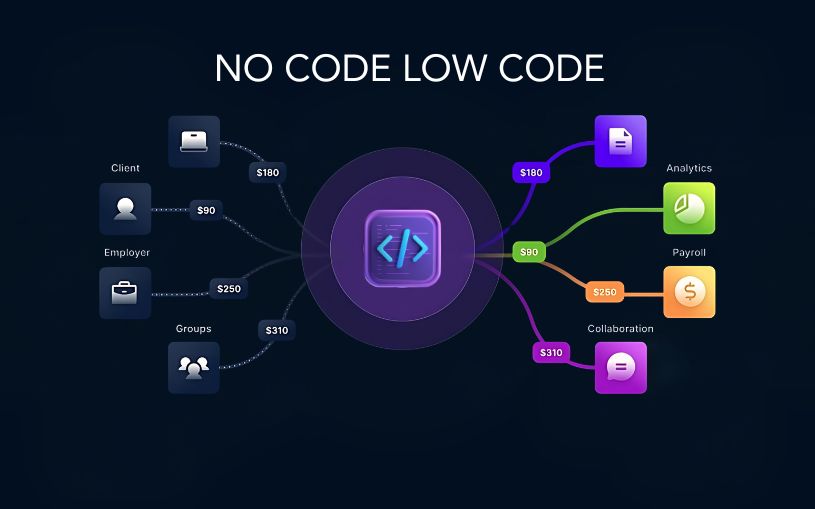
Low-Code vs No-Code vs Traditional Development: Which One Should Businesses Choose? Technology is evolving faster than ever, and businesses today have more options than ever when it comes to building software. Not long ago, developing an application meant hiring a team of developers and spending months writing code from scratch. Today, organizations can choose between traditional development, low-code platforms, and no-code solutions depending on their goals, budget, and technical expertise. As companies accelerate their digital transformation efforts in 2026, understanding these three development approaches has become essential. Each offers unique advantages, and selecting the right one can directly impact project success, operational efficiency, and long-term growth. Understanding Traditional Development Traditional software development remains the most powerful and flexible way to build applications. In this approach, developers write code manually using programming languages such as Python, Java, JavaScript, or C#. This method gives businesses complete control over every aspect of an application, from user experience and functionality to security and scalability. Organizations that require highly customized solutions, advanced integrations, or enterprise-grade systems often rely on traditional development because it can handle virtually any business requirement. However, this flexibility comes at a cost. Traditional development typically requires larger budgets, experienced developers, longer project timelines, and ongoing maintenance efforts. What is Low-Code Development? Low-code development bridges the gap between traditional coding and visual application building. Instead of writing every feature manually, developers can use drag-and-drop components, pre-built modules, and automated workflows to speed up the development process. The biggest advantage of low-code platforms is efficiency. Businesses can launch applications significantly faster while still retaining the ability to customize features through code whenever necessary. Many organizations use low-code platforms to create internal business applications, workflow automation systems, customer portals, and operational dashboards. This approach allows development teams to focus on solving business challenges rather than spending time on repetitive coding tasks. What is No-Code Development? No-code development takes simplicity to the next level by allowing users to create applications without writing any code at all. These platforms are designed for business users, entrepreneurs, marketers, and department managers who may have little or no programming experience. Through visual interfaces, templates, and drag-and-drop tools, users can create websites, mobile applications, forms, databases, and automated workflows. The growing popularity of no-code platforms reflects a larger trend toward democratizing technology. Businesses no longer need to depend entirely on software developers for every digital solution. For startups and small businesses, no-code tools offer an affordable and fast way to turn ideas into functional products. Comparing Speed and Development Time When speed is the primary concern, no-code platforms often come out on top. Applications can sometimes be built within days instead of months. Low-code platforms also provide impressive development speed by reducing the amount of manual coding required. Teams can quickly build prototypes, test ideas, and deploy solutions without lengthy development cycles. Traditional development generally requires more time because every feature must be designed, coded, tested, and optimized from the ground up. While slower, it provides unmatched flexibility and customization. Cost Considerations for Businesses Budget plays a major role in choosing a development approach. No-code solutions usually have the lowest initial costs because they eliminate the need for large development teams. Businesses can often create and manage applications using existing staff members. Low-code development offers a balance between affordability and flexibility. Organizations can reduce development costs while still creating sophisticated applications. Traditional development tends to involve the highest investment due to developer salaries, infrastructure requirements, quality assurance processes, and long-term maintenance expenses. Customization and Flexibility Customization is where traditional development shines. Businesses can create exactly what they need without being limited by platform restrictions. Whether it’s advanced analytics, complex integrations, or unique customer experiences, traditional coding provides complete freedom. Low-code platforms offer substantial customization capabilities and can handle many complex business requirements. Developers can extend functionality whenever needed through custom code. No-code platforms, while highly convenient, often have limitations. Users must work within the framework and capabilities provided by the platform, which can become challenging for more advanced projects. Scalability and Long-Term Growth As businesses grow, scalability becomes increasingly important. Traditional applications can be designed to handle large user bases, complex workflows, and significant data volumes. This makes them ideal for enterprises expecting substantial growth. Modern low-code platforms also support scalability and are increasingly being adopted by large organizations for mission-critical applications. No-code solutions can support growth to a certain extent, but highly complex or large-scale requirements may eventually require migration to more flexible platforms. The Impact of AI on Software Development Artificial intelligence is reshaping all three development approaches. Low-code and no-code platforms now include AI-powered features that can generate workflows, recommend automation processes, and simplify application design. These capabilities allow businesses to build solutions even faster than before. Traditional development is also benefiting from AI-assisted coding tools that help developers write cleaner code, identify errors, and accelerate project delivery. As AI technology continues to mature, the boundaries between traditional, low-code, and no-code development are becoming increasingly blurred. Which Option Should Your Business Choose? There is no universal answer because every organization has different needs. If your goal is rapid deployment with minimal technical involvement, no-code platforms may be the best choice. If you need a balance between speed, flexibility, and customization, low-code development can deliver excellent results. For businesses requiring complete control, advanced functionality, and enterprise-level scalability, traditional development remains the strongest option. Many successful organizations are now adopting a hybrid approach, using no-code tools for simple workflows, low-code platforms for internal applications, and traditional development for customer-facing products and mission-critical systems. Conclusion The debate between low-code, no-code, and traditional development is not about finding a single winner. Instead, it is about selecting the right tool for the right business challenge. As digital transformation continues to accelerate in 2026, organizations that understand the strengths and limitations of each approach will be better positioned to innovate faster, reduce costs, and remain competitive in an increasingly technology-driven world. The future of software development will not belong exclusively to traditional

Cloud Computing and Technology, Digital Transformation, Technology

The Rise of Edge Computing: Why Processing Data Closer Matters

The Rise of Edge Computing: Why Processing Data Closer Matters The digital world is generating more data than ever before. Every smartphone notification, smart home device, connected vehicle, industrial sensor, and online interaction contributes to an ever-growing stream of information. For years, businesses have relied on cloud computing to store, manage, and process this data. While cloud technology revolutionized the way organizations operate, the explosion of connected devices has revealed a critical challenge: speed. Imagine a self-driving car traveling at high speed. If it encounters an obstacle, it cannot afford to send data to a distant cloud server, wait for processing, and then receive instructions. Even a delay of a few milliseconds could have serious consequences. The same challenge exists in manufacturing plants, healthcare facilities, smart cities, and countless other environments where immediate decisions are essential. This is where edge computing enters the picture. Edge computing is changing how organizations process information by bringing computing power closer to where data is created. Instead of sending every piece of information to a centralized cloud, data can be analyzed and acted upon near the source itself. This shift is helping businesses improve performance, reduce latency, enhance security, and unlock entirely new possibilities for innovation. As technologies like artificial intelligence, the Internet of Things (IoT), and 5G continue to evolve, edge computing is rapidly becoming one of the most important pillars of modern digital infrastructure. Understanding Edge Computing At its core, edge computing refers to processing data near the device or location where it is generated rather than transmitting it to a centralized data center or cloud server. Traditionally, data generated by devices would travel across networks to cloud servers where it would be processed and stored. The results would then be sent back to the device or application. While this approach works well for many scenarios, it introduces delays that can become problematic when immediate responses are required. Edge computing addresses this challenge by moving computing resources closer to the “edge” of the network. The edge can be a local server, a gateway device, a factory machine, a retail system, or even the device itself. Rather than depending entirely on distant cloud infrastructure, edge devices can analyze information in real time and make decisions instantly. The cloud still plays an important role, but it becomes part of a larger ecosystem where processing is distributed intelligently. This approach significantly improves efficiency while enabling applications that would be difficult or impossible to support through cloud-only architectures. Why the Need for Edge Computing Is Growing The rise of edge computing is closely connected to the rapid growth of connected devices. Industry experts estimate that billions of IoT devices are now generating massive volumes of data every day. From wearable fitness trackers and smart thermostats to industrial robots and connected vehicles, these devices continuously produce information that requires processing. Sending every bit of this data to the cloud creates several challenges. First, network congestion becomes a concern. The more data that travels across networks, the greater the strain on bandwidth resources. Second, latency can negatively impact user experiences and operational efficiency. Applications requiring real-time responses cannot tolerate delays. Third, transmitting large volumes of data to the cloud increases costs associated with bandwidth and storage. Finally, organizations face growing concerns about privacy, security, and regulatory compliance. Edge computing helps solve these issues by allowing data to be processed locally while only transmitting relevant information to the cloud when necessary. As businesses continue to embrace digital transformation, the demand for faster and more intelligent processing is making edge computing increasingly valuable. The Latency Advantage One of the biggest reasons organizations invest in edge computing is latency reduction. Latency refers to the time it takes for data to travel from its source to a processing location and back again. Even small delays can create significant problems in certain applications. Consider a smart manufacturing facility where machines operate with incredible precision. Sensors continuously monitor temperature, pressure, vibration, and performance metrics. If a machine begins to malfunction, immediate action may be required to prevent costly downtime. With cloud-based processing, the delay involved in transmitting data could slow down response times. Edge computing enables instant analysis directly within the facility, allowing maintenance teams to address issues before they escalate. The same principle applies to autonomous vehicles, remote healthcare monitoring, financial trading systems, and augmented reality applications. By processing data closer to where it originates, organizations can achieve near-instant decision-making capabilities. Enhancing Real-Time Decision Making Modern businesses increasingly rely on real-time insights to remain competitive. Customers expect immediate responses. Operations demand continuous optimization. Systems need to adapt dynamically to changing conditions. Edge computing supports these requirements by enabling faster decision-making at the source. For example, a smart retail store can use edge-powered cameras and sensors to analyze customer behavior in real time. Store managers can monitor foot traffic, optimize product placement, and improve customer experiences without waiting for cloud-based analytics. Similarly, healthcare providers can use edge-enabled monitoring devices to track patient vitals continuously. If a patient’s condition changes suddenly, alerts can be generated instantly, potentially saving lives. The ability to process information in real time creates opportunities that extend far beyond simple efficiency improvements. It enables businesses to become more proactive, responsive, and intelligent. Edge Computing and the Internet of Things The Internet of Things and edge computing are closely connected technologies. IoT devices generate enormous amounts of data, much of which requires immediate analysis. Without edge computing, organizations would struggle to manage this growing information flow effectively. Imagine a smart city equipped with thousands of connected sensors monitoring traffic, air quality, public transportation, and energy usage. If every sensor continuously transmitted data to centralized cloud systems, network infrastructure could quickly become overwhelmed. Edge computing allows local processing to occur near these sensors. Relevant insights can be generated instantly while only critical data is sent to the cloud for long-term analysis. This approach improves performance, reduces network traffic, and enhances overall system reliability. As IoT adoption continues to accelerate, edge computing will

Scroll to Top