TechOTD AI solutions

on-demand app

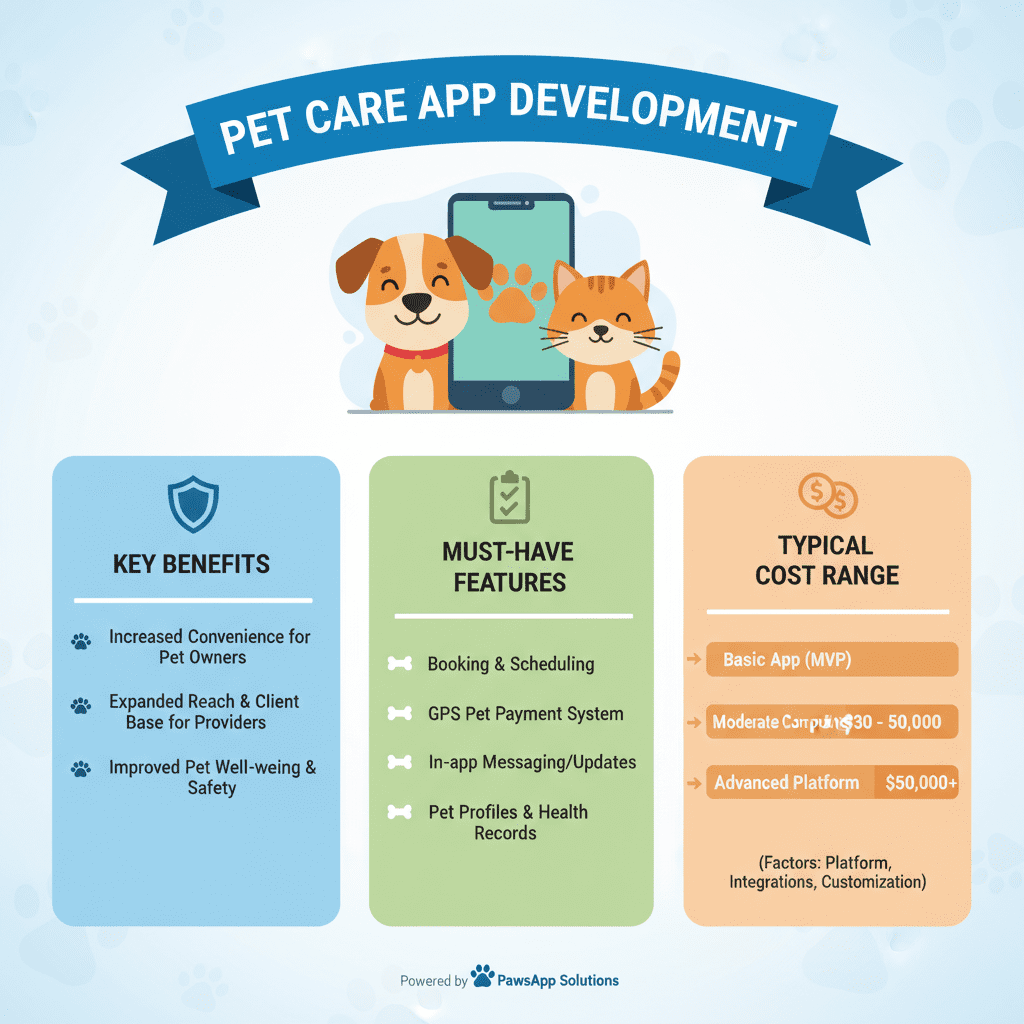
Pet Care App Development Like Rover: Benefits, Features, Costs, and More

Introduction The pet care industry has witnessed remarkable growth driven by changing lifestyles, increased pet ownership, and the demand for convenient, trustworthy pet services. Pet care apps like Rover revolutionize how pet owners find, book, and manage pet care—including dog walking, pet sitting, grooming, and training—right from their smartphones. These platforms create an ecosystem connecting pet owners with vetted service providers, combining technology with compassionate care. Building a pet care app like Rover offers a lucrative opportunity to tap into this expanding market by delivering seamless user experiences, efficient service management, and data-driven insights. This blog explores the benefits, must-have features, development process, costs, and strategies to build a competitive pet care app, enriched with insights and services from TechOTD AI Services and expert content from the TechOTD Blog. Benefits of Developing a Pet Care App Like Rover 1. Addressing Growing Market Demand The global pet care industry is booming, fueled by pet humanization and digital adoption. Apps provide pet owners with on-demand access to qualified pet sitters, walkers, and groomers, meeting their growing need for flexible, reliable care. 2. Building a Trusted Community Platforms like Rover establish trust through background-checked pet care providers, transparent reviews, and secure payment processing, fostering loyalty among users. 3. Increased Convenience and Accessibility 24/7 booking, real-time updates, and location tracking provide unprecedented convenience for pet owners, enhancing satisfaction and repeat usage. 4. Data-Driven Service Optimization Gathering behavioral data enables personalized recommendations, targeted promotions, and improved scheduling—fueling operational efficiency and revenue growth. 5. Monetization Opportunities Multiple revenue streams exist—from commission on bookings, subscription models for providers, to value-added services like pet health tracking and training modules. 6. Competitive Advantage Through Innovation Integrating AI for smart matching, blockchain for secure data management (blockchain in business), and analytics for customer insights sets your app apart. Essential Features of a Pet Care App Like Rover 1. User Profiles and Registration Separate profiles for pet owners and providers with verification, photos, service listings, and user reviews. 2. Search and Filters Robust searching with filters by location, service type, pet type, availability, and pricing. 3. Booking System Easy scheduling with calendar integration, service selection, duration options, and instant booking or request system. 4. Real-Time Notifications and Messaging In-app messaging, push notifications for booking status, reminders, and direct communication between users. 5. GPS Tracking and Updates Live tracking for dog walks and visit updates increases transparency and trust. 6. Secure Payment Gateway Multiple payment methods, automatic invoicing, and refund processing. 7. Ratings, Reviews & Feedback Allowing users to rate and review providers ensuring quality and accountability. 8. Admin Dashboard For managing users, providers, payments, disputes, and analytics reporting. 9. AI-Powered Matching Personalized service provider recommendations based on pet needs and user preferences (AI solutions). 10. Integration with Wearables & Health Tracking Syncing with pet health devices to log activity or medical info enhances service personalization. 11. Customer Support Automation Chatbots or AI assistants to handle FAQs, booking support, and issue resolution (Seamless AI journeys). 12. Multi-language and Localization Supporting global user base by offering region-appropriate languages and service recommendations. Development Process Overview 1. Market Research and Planning Understanding target audience, competitors, and regulatory compliance relevant to pet care and data privacy. 2. UI/UX Design Focusing on intuitive navigation, attractive layouts, and responsive design for mobile and web platforms. 3. Technology Stack Selection Front-end: React Native, Flutter for cross-platform apps Back-end: Node.js, Python/Django Database: MongoDB, PostgreSQL Cloud: AWS, Azure, Google Cloud for scalability AI & Analytics: Integration of machine learning models (Predictive analytics) for personalized recommendations Blockchain: For secure data handling if applicable 4. Development Phases MVP creation with core features Alpha/Beta testing User feedback incorporation Full platform rollout 5. Post-Launch Support Continuous monitoring, feature updates, bug fixes, customer support, and infrastructure scaling (TechOTD’s development process). Cost Breakdown for Building a Pet Care App Feature/Component Estimated Cost Range (USD) Basic MVP Development $40,000 – $70,000 Advanced Features (AI, GPS) Additional $30,000 – $70,000 Mobile App Development $20,000 – $50,000 Backend & API Development $30,000 – $60,000 Design and UX $10,000 – $30,000 Testing and Deployment $10,000 – $20,000 Maintenance & Support (Annual) 15% – 20% of development cost Total estimated budget typically ranges from $100,000 to $250,000+, depending on complexity and scale. Best Practices to Maximize ROI Start with a scalable MVP to test market response. Leverage AI and automation for customer and provider matching. Incorporate secure, transparent payment and data management via blockchain tech (Blockchain integration). Focus on user feedback loops to iterate UI/UX continuously. Offer subscription or premium service tiers. Use analytics for targeted marketing and service improvement. Conclusion Developing a robust pet care app similar to Rover requires a strategic blend of the right features, scalable technology, and a deep understanding of the pet care market. Investing in AI, secure data handling, and user experience can differentiate your platform and fuel sustainable growth. Partnering with experienced AI and software development specialists like TechOTD AI Services ensures access to cutting-edge technology and expert guidance. Stay updated with industry trends and innovation through the TechOTD Blog. Building a pet care app offers not only exciting business opportunities but also the chance to impact pet owners’ lives positively in an increasingly connected world

enterprice

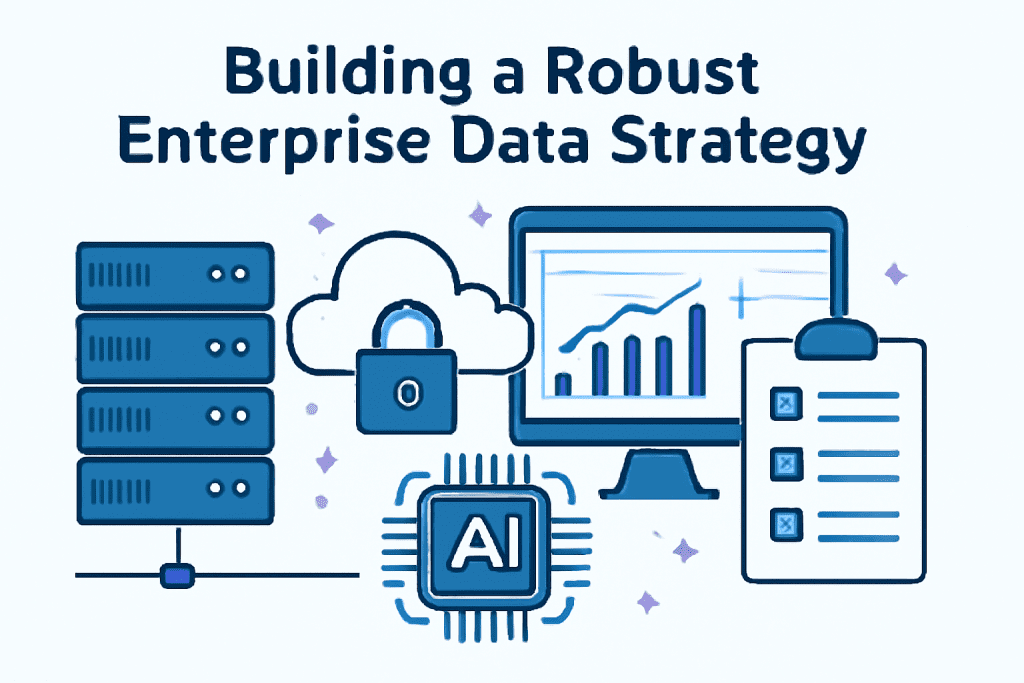
Building a Robust Enterprise Data Strategy: Benefits, Use Cases, Process, Costs & Best Practices

Introduction In today’s data-driven world, a robust enterprise data strategy is essential for organizations seeking to unlock the full potential of their data assets. It provides a comprehensive roadmap for managing, governing, and leveraging data to drive innovation, improve decision-making, ensure compliance, and gain a competitive advantage. This blog explores the benefits, use cases, key processes, costs, and best practices involved in building an effective enterprise data strategy. For further insights into AI-powered data solutions and digital transformation, visit TechOTD’s AI Services and explore their technology blog. Benefits of a Robust Enterprise Data Strategy Informed Decision-Making: Having reliable, consistent data reduces errors and enables rapid, strategic business choices across all organizational levels. Improved Operational Efficiency: Streamlining data access and integration eliminates duplication and redundant manual efforts, allowing employees to focus on value-added tasks. Regulatory Compliance & Risk Management: Implementing governance frameworks ensures compliance with critical regulations such as GDPR, HIPAA, and PCI-DSS, minimizing costly penalties and protecting customer privacy. Enhanced Customer Experience: Organizations gain a 360-degree customer view with unified data, enabling personalization, targeted marketing, and superior service. Data Security and Risk Mitigation: Strong data security policies protect sensitive information from unauthorized access and data breaches. Scalability and Future-Readiness: A good data strategy builds scalable infrastructure that adapts easily to growing data and emerging technologies. Cost Savings: Reducing redundant systems and improving data quality lowers overall IT costs and operational expenses. Use Cases for Enterprise Data Strategy Customer Analytics and Personalization: Tailoring marketing campaigns and services based on unified customer data insights. Fraud Detection and Risk Assessment: Combining real-time data streams across departments for proactive fraud prevention. Predictive Maintenance: Leveraging data to predict failures and reduce downtime in manufacturing and operations. Regulatory Reporting and Audit Readiness: Automated data lineage and governance ensure smooth compliance reporting. Product and Market Innovation: Data-driven R&D accelerates new product development and market adaptation. The Process of Building an Enterprise Data Strategy Planning and Goal Setting: Align data strategy objectives with business goals such as reducing churn, speeding time-to-market, or enhancing customer satisfaction. Current State Assessment: Audit existing data systems to identify redundancies, quality issues, and shadow IT. Future State Vision: Define the ideal “trusted, scalable, and compliant” data environment tailored to business needs. Roadmap Development: Develop structured implementation plans prioritizing quick wins and strategic initiatives. Implementation: Deploy governance, data quality, integration, and security processes aligned with roadmap milestones. Monitoring and Continuous Improvement: Track adoption metrics, data quality, and compliance, refining strategy as business evolves. Cost of Enterprise Data Strategy The investment varies widely based on scale, complexity, industry regulations, and existing infrastructure. Key cost drivers include: Integration and Migration: Consolidating legacy systems and data silos can consume 40-50% of initial budgets. Technology and Tools: Cloud platforms offer flexible spending models; on-premises solutions require higher upfront costs. Governance and Training: Developing policies, training personnel, and managing compliance are ongoing investments. Talent: Skilled data engineers, scientists, and governance experts are essential and can be a significant expense. Many organizations allocate between 3-6% of their IT budget to data strategy-related initiatives. Best Practices Start with High-Value Use Cases: Focus on domains with measurable ROI to build momentum. Invest in Data Lineage Early: Trace and document data origins to boost trust and audit readiness. Integrate Compliance into Pipelines: Address privacy and security during data ingestion, not as an afterthought. Balance Governance with Innovation: Create “innovation zones” for experimental AI or data products without sacrificing control. Prioritize Metadata Management: Catalog and document data thoroughly for easy discovery and security. Measure Adoption, Not Just Implementation: Encourage culture shifts through training, metrics, and leadership incentives. Design for Change: Utilize modular architectures anticipating evolving regulations and technologies. How TechOTD Supports Enterprise Data Strategy At TechOTD, we combine AI expertise, cloud infrastructure, and agile methodologies to build tailored enterprise data strategies that enhance operational resilience and unlock growth opportunities. Learn more about our mobile app and AI services. Conclusion A robust enterprise data strategy is vital to navigate today’s complex data landscape and drive sustainable business success. By aligning data initiatives with business goals, embedding governance and compliance, and prioritizing scalability and adoption, organizations can unlock significant value from their data assets. Partnering with experts like TechOTD ensures a structured, effective implementation that powers innovation and competitive advantage. Explore the latest trends and insights in data strategy and AI on the TechOTD Blog. FAQs Q1: What is an enterprise data strategy? A plan that aligns data management, governance, and analytics capabilities with business objectives to maximize data value. Q2: How does a data strategy improve operational efficiency? By reducing data silos, duplication, and manual errors, enabling faster, informed decision-making. Q3: What industries benefit most from enterprise data strategies? Finance, healthcare, retail, manufacturing, and telecom are leading adopters due to heavy data use and regulation. Q4: Can AI be integrated with an enterprise data strategy? Yes, clean, governed data is essential to drive AI and machine learning initiatives effectively. Q5: How much does an enterprise data strategy cost? The investment varies, but companies typically allocate 3-6% of their IT budgets toward data strategy initiatives.

Artificial Intelligence

Creating Hyper-Personalized Banking with AI: Cost, ROI, and Use Cases

Introduction Artificial Intelligence (AI) is revolutionizing the banking industry by enabling hyper-personalized customer experiences that were previously unimaginable. Banks can now leverage AI-driven data analytics, machine learning models, and natural language processing to tailor services, products, and interactions uniquely to each customer’s preferences and behaviors. This shift enhances customer satisfaction, loyalty, and operational efficiency, making AI-powered personalization a powerful competitive differentiator. This blog explores how banks can create hyper-personalized experiences using AI, including typical costs involved, potential Return on Investment (ROI), and compelling use cases transforming the sector. For insights on AI in finance and predictive analytics, explore TechOTD’s AI services and their technology blog. What is Hyper-Personalized Banking? Hyper-personalization uses AI to analyze vast datasets encompassing transactional history, demographics, social media, and behavioral signals, delivering real-time, individualized banking experiences. This goes beyond segment-based marketing to dynamic, one-to-one customer engagement. Key Use Cases of AI-Driven Hyper-Personalization 1. Personalized Financial Product Recommendations AI models analyze spending patterns, credit scores, and life events to suggest tailored loans, credit cards, or investment products. 2. Intelligent Virtual Assistants and Chatbots AI-powered chatbots offer 24/7 personalized customer support, resolve queries, and proactively alert customers about offers or account anomalies. 3. Customized Credit Risk Assessment Machine learning algorithms refine credit scoring individually based on expanded datasets, enabling more accurate risk evaluation and inclusive lending. 4. Dynamic Pricing and Offers Banks can customize interest rates, fees, and promotions in real time based on customer behavior and market conditions. 5. Fraud Detection and Prevention AI analyzes transaction patterns to identify unusual activities, instantly protecting customers from fraud and identity theft. Costs of Implementing AI for Hyper-Personalization Technology Investment: Procuring AI platforms, cloud infrastructure, and data storage solutions. Data Management: Cleaning, integrating, and maintaining quality datasets. Talent Acquisition: Hiring data scientists, AI engineers, and financial analysts. Development and Integration: Building, testing, and deploying AI models with existing banking systems. Compliance and Security: Ensuring data privacy and meeting regulatory standards (GDPR, PCI-DSS). Typical budgets vary based on scope: Small-scale pilots: $100,000 – $250,000 Mid-size implementations: $250,000 – $1 million Large enterprise-wide AI initiatives: $1 million+ Return on Investment (ROI) from AI-Powered Personalization Increased Customer Retention: Personalized services improve satisfaction and reduce churn by up to 30%. Boosted Revenue: Targeted product recommendations and dynamic pricing can increase sales by 10-20%. Cost Savings: AI automation reduces customer service costs and fraud losses significantly. Faster Decision-Making: Accelerated loan approvals with AI-driven credit assessment improve conversion rates. A well-executed AI personalization project typically sees ROI within 12-24 months. How to Get Started with AI-Powered Personalization Assess Data Readiness: Evaluate data quality and integration capabilities. Identify Use Cases: Prioritize high-impact personalization areas aligned with business goals. Choose AI Partners: Collaborate with AI vendors or development experts like TechOTD for custom solutions. Pilot and Scale: Implement pilot projects, analyze results, and expand capabilities iteratively. Ensure Compliance: Embed privacy and governance frameworks. Explore how TechOTD supports AI-enabled banking innovations: TechOTD AI Banking Solutions. Conclusion AI-driven hyper-personalization is transforming banking by creating seamless, tailored customer journeys that drive business growth and operational excellence. While initial investments can be substantial, the long-term ROI through enhanced loyalty, revenue, and efficiency justifies the commitment. With expert partners and a clear strategy, banks can harness AI to redefine customer relationships and competitive positioning in the digital age. Stay updated on AI and banking innovations through TechOTD Blog. FAQs Q1: What distinguishes hyper-personalization from traditional personalization? It uses real-time AI-driven insights for individual customer experiences versus broad segmentation. Q2: How much does AI personalization cost for banks? Costs range from $100,000 for pilots to over $1 million for enterprise projects. Q3: What are the biggest ROI drivers? Customer retention, revenue growth from targeted offers, fraud reduction, and operational efficiency. Q4: How quickly can banks implement AI personalization? Pilots can launch within 3-6 months, with scaling taking 1-2 years. Q5: Is data privacy a concern with AI in banking? Yes, compliance with regulations like GDPR is critical when handling sensitive financial data.

news & events

Google Acquires AppSheet: A Leap Forward in No-Code Mobile App Development

Introduction In a significant move advancing the no-code development landscape, Google has officially acquired AppSheet, a leading no-code mobile app development platform. This acquisition marks a strategic step by Google to empower businesses and citizen developers to create powerful mobile and web applications without writing traditional code. By integrating AppSheet’s capabilities with Google Cloud’s robust infrastructure and AI tools, Google aims to revolutionize application development and accelerate digital transformation across industries. This blog explores the details of Google’s acquisition of AppSheet, its implications for the no-code market, how it benefits enterprises, and the future of app development powered by AI and cloud. For deeper insights on AI-enhanced software development and cloud solutions, explore TechOTD’s AI services and their technology blog. What is AppSheet? AppSheet is a no-code development platform that enables users to build customized mobile and web applications using data sources like Google Sheets, Excel, and cloud databases. It offers an intuitive drag-and-drop interface, automation capabilities, and integration with various SaaS tools, allowing business users and developers to rapidly prototype and deploy apps tailored to specific workflows without writing code. Why Google Acquired AppSheet? 1. Democratizing App Development Google’s acquisition endorses its philosophy of making technology accessible to everyone, enabling “citizen developers” to innovate independently within organizations. 2. Enhancing Google Cloud Offerings AppSheet enriches Google Cloud’s ecosystem by adding powerful no-code tools, facilitating faster digital transformation and adoption of cloud-native application models. 3. Accelerating AI Integration Combined with Google’s AI and machine learning technologies, AppSheet apps can incorporate intelligent automation, predictive analytics, and personalized experiences seamlessly. Benefits to Businesses and Developers Fast, Cost-Effective Development: Business teams can deploy apps to address operational needs without lengthy coding cycles. Reduced Dependence on IT: Non-technical users gain autonomy to build and modify apps, lightening IT burdens. Integration with Google Workspace: Smooth workflows with Google Sheets, Drive, BigQuery, and other cloud services. Scalable and Secure: Deployed on Google Cloud infrastructure with enterprise-grade security and compliance. Learn how predictive analytics and AI enhance such app solutions: Predictive Analytics Software Development. The Future of No-Code and Low-Code Development The acquisition underscores a broader industry trend toward no-code/low-code platforms, which are revolutionizing software development by: Expanding developer ecosystems and speeding innovation Enabling rapid response to business process changes Reducing software development backlogs and costs At the same time, challenges remain around governance, integration, and scaling no-code applications securely. How TechOTD Supports No-Code Innovation TechOTD helps businesses leverage no-code and low-code platforms alongside traditional development to build hybrid solutions tailored for scalability and performance. Their AI-powered tools assist rapid prototyping, integration, and process automation for digital success. Discover their mobile and AI solutions here: TechOTD Mobile and AI Services. Conclusion Google’s acquisition of AppSheet is a game-changer, making no-code app development more accessible, scalable, and intelligent. By blending AppSheet’s ease of use with Google Cloud’s powerful AI and infrastructure, businesses can accelerate digital transformation while empowering non-technical users to innovate rapidly. This milestone signals a future where software creation is a collaborative, inclusive process supported by AI-driven tools. Stay updated on the latest in app development and AI technologies with TechOTD’s expert insights at TechOTD Blog. FAQs Q1: What is AppSheet’s core offering? A no-code platform for building mobile and web apps using existing data sources and drag-and-drop tools. Q2: How does Google benefit from acquiring AppSheet? It enhances Google Cloud’s portfolio with powerful no-code development capabilities and AI integration. Q3: Who can benefit from AppSheet? Both business users without coding skills and professional developers streamline app development. Q4: What industries can leverage no-code platforms? Virtually all, including healthcare, finance, retail, manufacturing, and logistics. Q5: Does AppSheet integrate with AI and analytics? Yes, especially post-acquisition, it is increasingly integrated with Google’s AI and predictive analytics services.

Business, Business Analytics

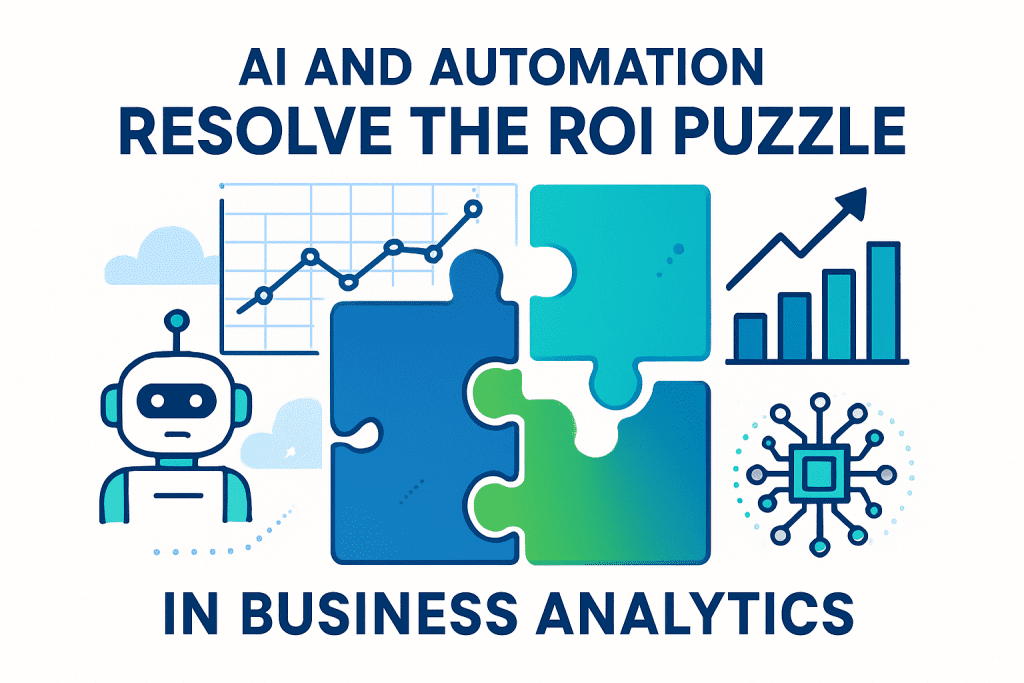
How AI & Automation Are Resolving the ROI Puzzle in Business Analytics

Introduction In today’s hyper-competitive business landscape, data has become the backbone of decision-making. But here’s the problem: while organizations collect tons of data daily, only a small fraction gets translated into measurable business value. The key challenge? ROI (Return on Investment) from analytics initiatives often remains unclear. This is where Artificial Intelligence (AI) and Automation step in. By accelerating data preparation, enhancing accuracy, and powering predictive insights, AI-driven automation is helping organizations connect the dots between analytics and real profit outcomes. This blog explores how AI and automation are revolutionizing business analytics ROI, along with use cases, benefits, challenges, trends, and frameworks to maximize returns. How AI and Automation Drive ROI in Business Analytics 1. Faster Data Processing and Insights Manual data cleaning and integration is time-consuming. Automation tools (ETL pipelines, Robotic Process Automation) cut data prep time by 60–80%. AI models instantly process structured + unstructured data, producing real-time insights. 2. Improved Accuracy and Reduced Errors Human-driven analytics can introduce bias or errors. Automated anomaly detection ensures clean, accurate datasets. AI reduces false positives in fraud detection or risk analysis. 3. Advanced Predictive Analytics AI models predict customer churn, sales demand, pricing trends, and risks. Predictive maintenance in manufacturing → reduces downtime & costs. Proactive strategies → higher ROI through smarter resource allocation. 4. Personalization and Customer Insights AI-powered segmentation → micro-level targeting (age, behavior, location). Sentiment analysis from social media & reviews. Personalized marketing → boosts conversions up to 20–25%. 5. Optimized Operational Efficiency Automated reporting = 70% less analyst time wasted on repetitive tasks. AI chatbots for analytics queries. Freeing analysts to focus on high-value decision-making. Key Benefits of AI & Automation for Business Leaders Benefit Business Impact Scalability Handles growing datasets without proportional cost increase Speed Real-time insights improve response to market changes Accuracy Reduces errors, ensuring reliable decision-making Efficiency Frees staff from repetitive tasks → focus on innovation ROI Tracking Easier attribution of revenue growth to data initiatives Continuous Learning ML models improve accuracy over time Use Cases Demonstrating ROI Success 1. E-commerce Growth AI-powered product recommendations increase AOV (Average Order Value). Real-time inventory analytics prevent stockouts. Example: Amazon’s recommendation engine generates 35% of total sales. 2. Risk Management in Finance AI fraud detection → monitors transactions in milliseconds. Predictive credit scoring → reduces loan default risk. Case: A global bank reduced fraud losses by 30% using AI automation. 3. Manufacturing Process Optimization Predictive maintenance reduces equipment downtime. AI-driven quality checks improve defect detection. Case: A leading automaker saved $50M annually using AI-enabled predictive analytics. 4. Healthcare & Life Sciences Automated diagnostics from medical images. Predictive patient care → reduced hospital readmission rates. AI-powered drug discovery accelerates R&D. Challenges in Measuring ROI from Business Analytics Data Silos: Scattered data across multiple systems. High Initial Costs: AI models, infrastructure, and skilled talent. Resistance to Change: Employees reluctant to adopt new workflows. Unclear Metrics: Organizations don’t define what ROI means for them (cost savings vs revenue growth). Skill Gaps: Need for data engineers, scientists, and AI experts. How to Measure ROI in Business Analytics ROI Metric Definition Example Cost Savings Reduction in manual effort, errors, or downtime 30% less time in report generation Revenue Growth Additional income from AI-driven strategies 20% higher sales via personalization Operational Efficiency Faster workflows, automation replacing manual work 70% less analyst effort in data cleaning Risk Reduction Lower financial & compliance risks 30% drop in fraud losses Customer Retention Enhanced loyalty via insights 25% higher retention with AI recommendations Future Trends in AI & Automation for Analytics   Natural Language Analytics (NLP) → Ask data questions in plain English. Generative AI in Analytics → AI-generated forecasts, insights, and reports. Cloud-based AI Platforms → Cost-effective, scalable solutions. Edge Analytics with AI → Real-time insights closer to data sources (IoT). Explainable AI (XAI) → Transparent decision-making for trust & compliance. Why Partner with Experts in AI & Automation? Implementing AI for analytics is not plug-and-play. It requires: Domain expertise. Integration with existing BI/BA tools. Continuous monitoring and model updates. 👉 Partnering with TechOTD Solutions ensures: Custom AI models tailored to your industry. Seamless integration with BI platforms. Scalable, cloud-ready architectures. 24/7 support for optimization. Conclusion AI and automation are no longer optional—they are essential to solving the ROI puzzle in business analytics. BI tells you what happened. BA tells you why it happened. AI + Automation tells you what will happen—and acts on it instantly. Organizations that embrace this shift will gain a sustainable competitive advantage in their industries. 👉 Call to Action: Ready to maximize ROI? Contact TechOTD today to explore customized AI and automation strategies tailored to your business.  FAQ Q1: How does AI improve business analytics ROI?AI speeds up analysis, predicts future outcomes, and eliminates costly errors. Q2: Can automation reduce analytics costs?Yes, automation minimizes manual work and errors, reducing long-term costs. Q3: What industries benefit most from AI analytics?E-commerce, finance, manufacturing, healthcare, logistics, and education. Q4: How do I measure ROI from AI projects?Track metrics like cost savings, revenue growth, efficiency gains, and retention. Q5: What’s the difference between AI-driven analytics and traditional BI?BI focuses on historical reporting, while AI-driven analytics predict and optimize future outcomes.

finance

Large Language Models (LLMs) in Finance: Benefits, Applications, and Real Examples

Introduction The finance industry is undergoing a transformation fueled by advances in artificial intelligence, with Large Language Models (LLMs) playing a pivotal role. These sophisticated AI models, trained on vast amounts of textual data, have unlocked new opportunities to automate, analyze, and innovate across various financial sectors. Here’s an in-depth look at the benefits, applications, and real-world examples of LLMs in finance. Explore how TechOTD’s AI services can help your business leverage LLMs and other cutting-edge technologies to drive growth and efficiency. Benefits of LLMs in Finance Enhanced Data Processing: LLMs can quickly read, interpret, and summarize massive volumes of financial documents, reports, and news, significantly reducing manual effort. Improved Decision-Making: By extracting insights from unstructured data, LLMs provide a richer context for risk assessment, investment strategies, and compliance monitoring. Automated Customer Support: Chatbots powered by LLMs handle complex, natural conversations, offering personalized assistance 24/7 with high accuracy. Fraud Detection and Risk Management: LLMs analyze patterns and flag suspicious activities beyond standard rule-based systems, increasing security. Regulatory Compliance: Automate the review of regulatory updates, ensuring businesses remain compliant without exhaustive manual checks. Cost Efficiency: Automating document processing, customer inquiries, and report generation reduces operational costs and accelerates turnaround times. Applications of LLMs in Finance Research & Analytics: LLMs aggregate and interpret market data, earnings reports, and analyst notes to generate actionable insights. Customer Experience: AI-driven virtual assistants personalize banking, investment, and insurance services to individual customer needs. Document Automation: Contracts, loan applications, and policy documents are processed faster and with fewer errors using LLMs. Sentiment Analysis: Monitoring social media and news for sentiment trends helps financial institutions adjust strategies proactively. Portfolio Management: LLMs assist portfolio managers by synthesizing data and simulating scenarios for better asset allocation. Chatbots & Conversational AI: Enhance virtual agents with LLMs to support financial advice, fraud alerts, and routine queries. Real Examples of LLMs in Finance JP Morgan Chase: Utilizes LLM-powered chatbots to automate client communications and internal document analysis, saving countless work hours. Goldman Sachs: Applies LLMs for market sentiment analysis, leveraging news and social media data to anticipate market shifts. Bank of America: “Erica” chatbot uses LLM technology to enhance customer interactions, deliver financial advice, and speed up transaction processes. HSBC: Employs LLMs for compliance and regulatory report automation, reducing the risk of penalties. Capital One: Uses natural language processing to analyze customer feedback and improve product offerings rapidly. Getting Started with LLMs in Your Financial Business Adopting LLMs requires a strategic approach—from data assessment and model selection to secure deployment and continuous refinement. Partnering with an expert like TechOTD ensures you get customized AI solutions designed for your specific finance needs, backed by secure cloud and software development expertise (TechOTD Services). FAQ 1. Can LLMs replace human analysts in finance? LLMs augment analysts by automating routine tasks and providing insights, but human expertise remains crucial for strategic decisions. 2. How secure are LLM implementations in finance? With proper security protocols, encryption, and compliance standards, LLMs can be deployed safely in financial environments. 3. What types of financial documents can LLMs process? Contractual agreements, earnings reports, regulatory filings, loan applications, policy documents, and more. 4. Are LLM-powered chatbots suitable for all customer segments? Yes, they can be trained to handle diverse queries with personalized responses across demographics. 5. How does AI improve compliance in finance? By quickly analyzing regulatory changes and automating report generation, reducing human errors and audit risks.

Scroll to Top