generative AI

Artificial Intelligence, Educational Technology, Software development

Vibe Coding: Can AI Really Build Software from Natural Language Prompts?

Vibe Coding: Can AI Really Build Software from Natural Language Prompts? Introduction Imagine building an entire software application simply by describing what you want in plain English. No complicated syntax. No hours spent debugging code. No need to memorize programming languages. Sounds like science fiction, right? Well, welcome to the world of Vibe Coding, one of the most talked-about trends in artificial intelligence and software development today. Over the past few years, AI-powered coding assistants have evolved from simple autocomplete tools into sophisticated development partners capable of generating entire applications from natural language instructions. This new approach to software creation is changing how developers, entrepreneurs, startups, and even non-technical professionals build digital products. But can AI truly create software from simple prompts? Is Vibe Coding the future of development, or is it just another tech buzzword riding the AI wave? In this article, we’ll explore what Vibe Coding is, how it works, its advantages, limitations, real-world applications, and what it means for the future of software engineering. What is Vibe Coding? Vibe Coding refers to the process of building software primarily through natural language prompts instead of manually writing every line of code. Rather than spending hours coding features, developers describe what they want: Create a user login system Build a dashboard for analytics Design a responsive e-commerce website Connect a payment gateway Generate a customer support chatbot The AI interprets these instructions and generates the required code automatically. The term gained popularity as AI coding tools became increasingly capable of understanding context, software architecture, user requirements, and development workflows. In simple words: Traditional Coding Human writes code → Computer executes Vibe Coding Human describes idea → AI writes code → Human reviews and refines The focus shifts from coding every detail to communicating intentions clearly. The Rise of AI-Powered Development Software development has always evolved alongside technology. First came assembly language. Then high-level programming languages like C, Java, and Python. After that, low-code and no-code platforms emerged. Now, AI-driven development is pushing automation even further. Modern AI models are trained on vast amounts of programming knowledge, enabling them to: Generate code Explain code Fix bugs Create documentation Build user interfaces Write test cases Suggest optimizations As a result, developers can move from idea to prototype significantly faster than ever before. This shift has laid the foundation for Vibe Coding. How Vibe Coding Actually Works At the heart of Vibe Coding lies Large Language Models (LLMs). These AI systems have been trained on billions of lines of code and programming-related content. When a user enters a prompt such as: “Create a task management web application with user authentication and dark mode.” The AI breaks down the request into smaller development tasks: Design database schema Create authentication system Build frontend interface Implement task management logic Add dark mode functionality Generate API endpoints Create responsive design The AI then produces the necessary code components and integrates them together. Developers review the output, make adjustments if necessary, and continue refining through additional prompts. This iterative workflow resembles a conversation rather than traditional programming. Why Vibe Coding is Becoming Popular 1. Faster Development One of the biggest advantages is speed. Tasks that once required days can now be completed in hours. Developers spend less time writing repetitive code and more time solving business problems. For startups, this speed can make a significant difference in launching products before competitors. 2. Lower Entry Barrier Many people have brilliant software ideas but lack programming knowledge. Vibe Coding helps bridge that gap. Entrepreneurs, marketers, designers, and business owners can create prototypes without deep technical expertise. This democratizes software development. 3. Increased Productivity Developers often spend large portions of their day writing boilerplate code. AI can automate: CRUD operations API integrations Form validation Database queries Documentation This allows developers to focus on architecture and innovation. 4. Rapid Prototyping Companies can test ideas quickly. Instead of investing months in development, teams can build MVPs in days and gather user feedback early. 5. Continuous Learning Developers can learn new frameworks and technologies faster by observing AI-generated solutions. The AI acts as both a coding assistant and an educational tool. Popular Tools Driving the Vibe Coding Movement Several AI-powered development platforms have contributed to this trend. GitHub Copilot One of the earliest mainstream AI coding assistants. It suggests code in real time and helps developers write faster. Cursor Cursor has become a favorite among developers because it combines coding, debugging, and AI-assisted development in a single environment. Replit AI Allows users to create applications directly from prompts while handling much of the setup automatically. Bolt Focused on creating full-stack applications using conversational instructions. Lovable Designed to turn ideas into web applications with minimal coding effort. Windsurf An AI-native development environment helping developers build software through collaborative interactions with AI. These platforms continue to push the boundaries of what AI-assisted development can achieve. Real-World Use Cases of Vibe Coding Startup MVP Development Startups frequently need to validate ideas quickly. Vibe Coding enables founders to: Build prototypes Test markets Gather user feedback Secure investors Without hiring large development teams initially. Internal Business Tools Companies often require custom dashboards, workflow systems, and reporting tools. AI-generated solutions can significantly reduce development costs. Educational Projects Students can transform concepts into working applications rapidly, helping them understand software architecture and functionality. E-commerce Websites Businesses can create: Product catalogs Shopping carts Checkout systems Inventory management tools Much faster than traditional development cycles. Automation Systems Organizations can build tools that automate repetitive tasks and improve operational efficiency. Can AI Really Build Complete Software? The answer is both yes and no. What AI Can Do Well AI excels at: Generating code quickly Creating standard application structures Building user interfaces Writing documentation Creating APIs Automating repetitive tasks For many common applications, AI can generate a surprisingly large percentage of the codebase. What AI Still Struggles With Complex software projects involve: Business logic Security requirements Scalability planning System architecture Regulatory compliance Performance optimization These areas still require human expertise. AI may generate
Artificial Intelligence, Business Intelligence, Digital Transformation, enterprise

Agentic AI: How Autonomous AI Agents Are Changing Business Workflows

Agentic AI: How Autonomous AI Agents Are Changing Business Workflows Artificial Intelligence has rapidly evolved from being a futuristic concept to becoming a critical component of modern business operations. Over the past few years, organizations have adopted AI-powered tools to automate repetitive tasks, improve customer experiences, and enhance decision-making. However, the latest advancement in this technological journey is Agentic AI—a new generation of AI systems capable of acting autonomously, making decisions, and completing complex workflows with minimal human intervention. Unlike traditional AI systems that require continuous prompts and instructions, Agentic AI can independently analyze situations, plan actions, execute tasks, and adapt based on outcomes. This shift represents one of the most significant developments in business technology, offering organizations unprecedented levels of efficiency, productivity, and scalability. As businesses face increasing competition and growing operational complexity, Agentic AI is emerging as a powerful solution capable of transforming how work gets done. From customer service and sales to software development and project management, autonomous AI agents are redefining business workflows across industries. In this article, we’ll explore what Agentic AI is, how it works, its business applications, benefits, challenges, and why it is poised to become a cornerstone of future enterprise operations. Understanding Agentic AI Agentic AI refers to artificial intelligence systems designed to operate as autonomous agents. These agents can perceive their environment, understand goals, create plans, make decisions, and take actions without requiring constant human supervision. Traditional AI tools generally perform specific tasks based on direct user input. For example, a chatbot may answer questions, or an AI image generator may create images based on prompts. Agentic AI goes several steps further. Instead of merely responding to commands, autonomous AI agents can: Understand objectives Break down complex tasks into smaller actions Gather necessary information Make decisions based on available data Execute workflows independently Learn from outcomes and adjust strategies This capability transforms AI from a passive assistant into an active digital worker capable of managing entire business processes. The Evolution from Traditional AI to Agentic AI The development of Agentic AI represents the next stage in the evolution of artificial intelligence. Traditional Automation Early automation systems followed predefined rules. They could execute repetitive tasks but lacked flexibility and intelligence. Examples include: Email automation Data entry automation Scheduled reporting systems Machine Learning Systems Machine learning introduced predictive capabilities. These systems could identify patterns and make recommendations based on data. Examples include: Recommendation engines Fraud detection systems Predictive analytics tools Generative AI Generative AI expanded AI capabilities by creating content such as text, images, code, and videos. Examples include: AI writing assistants Image generation platforms Coding assistants Agentic AI Agentic AI combines reasoning, planning, memory, and action capabilities. Instead of assisting users with individual tasks, autonomous agents can complete entire workflows from start to finish. This progression marks a fundamental shift from AI tools that simply respond to requests toward AI systems that actively pursue objectives. How Agentic AI Works To understand its business value, it’s important to know how Agentic AI functions. 1. Goal Understanding An AI agent begins by understanding the objective provided by the user or organization. For example: “Generate a market research report for the healthcare industry.” The agent interprets the request and identifies the required steps. 2. Planning The system creates a strategic plan to accomplish the objective. This may involve: Researching industry data Gathering competitor information Analyzing trends Creating visual reports Drafting conclusions 3. Execution The AI agent performs tasks independently using available tools and resources. It may: Search databases Access internal documents Analyze spreadsheets Generate reports Send notifications 4. Monitoring Throughout execution, the agent evaluates progress and adjusts actions when necessary. 5. Learning Advanced agents continuously improve performance by learning from previous experiences and outcomes. This combination of reasoning, planning, execution, and adaptation enables Agentic AI to handle increasingly sophisticated business processes. Why Businesses Are Embracing Agentic AI Organizations worldwide are investing heavily in Agentic AI because of its ability to improve operational efficiency while reducing costs. Several factors are driving adoption: Growing Data Volumes Businesses generate enormous amounts of data daily. Human teams often struggle to process and analyze this information efficiently. Agentic AI can monitor, analyze, and extract insights from large datasets in real time. Need for Faster Decision-Making Competitive markets require rapid responses. Autonomous agents can process information and make recommendations significantly faster than traditional workflows. Workforce Productivity Employees spend substantial time on repetitive administrative tasks. AI agents can automate these activities, allowing workers to focus on strategic and creative responsibilities. Cost Optimization Reducing manual effort leads to lower operational expenses while maintaining high levels of productivity. Business Applications of Agentic AI Agentic AI is transforming numerous departments across organizations. Customer Support Customer service is one of the most impactful areas for AI adoption. Autonomous agents can: Handle customer inquiries Resolve common issues Process refunds Escalate complex cases Provide 24/7 support This improves customer satisfaction while reducing support costs. Sales and Lead Generation Sales teams spend considerable time identifying prospects and nurturing leads. AI agents can: Research potential customers Qualify leads Schedule meetings Send follow-up emails Generate sales insights As a result, sales professionals can focus on closing deals rather than administrative work. Marketing Automation Marketing departments can leverage Agentic AI for: Content creation Campaign optimization Audience segmentation Competitor analysis Social media management AI agents continuously monitor performance and make adjustments to improve results. Human Resources HR teams are increasingly using AI agents to streamline recruitment and employee management. Applications include: Resume screening Candidate ranking Interview scheduling Employee onboarding Performance tracking This reduces hiring time and improves recruitment efficiency. Software Development Agentic AI is making a major impact in software engineering. AI agents can: Write code Detect bugs Conduct testing Generate documentation Monitor system performance Development teams benefit from faster release cycles and improved software quality. Finance and Accounting Financial departments use autonomous AI agents for: Invoice processing Expense tracking Financial forecasting Fraud detection Compliance monitoring These capabilities reduce errors and improve financial accuracy. Benefits of Agentic AI for Businesses Increased Productivity

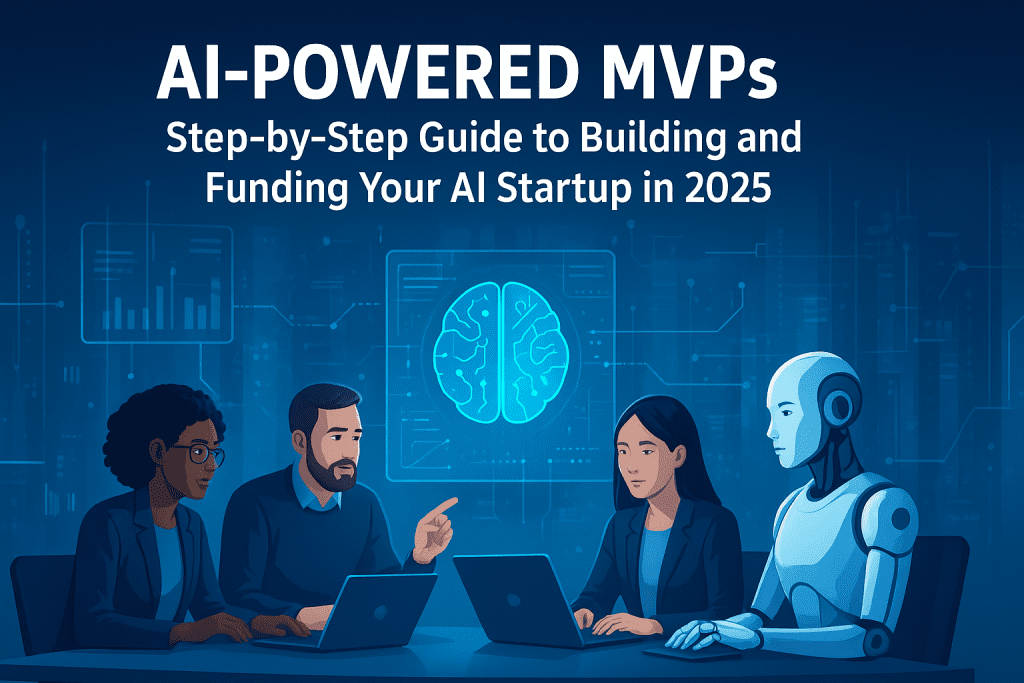
A diverse team of professionals and a humanoid robot collaborate in a futuristic office surrounded by holographic AI visuals and digital data charts, symbolizing innovation, technology, and AI-driven startup development.
Artificial Intelligence, startup

Step-by-Step Guide to Building and Funding Your AI Startup

Introduction Artificial Intelligence (AI) is the driving force behind the most exciting AI startup trends of 2025. From generative models to predictive analytics, AI is fueling a new generation of innovation across industries. For emerging startups, building an AI MVP (Minimum Viable Product) is the smartest way to test ideas and attract early investors. This guide will walk you through the step-by-step process of AI MVP development, explore AI funding strategies, and highlight artificial intelligence innovation that can turn your idea into a real-world business success. Step-by-Step Guide to Building Your MVP 1. Identify the Problem and Validate the IdeaStart with a real-world problem AI can solve. For example, automating resume screening, predicting health outcomes, or optimizing logistics. Conduct market research and user interviews to confirm demand before writing a single line of code. 2. Define Core Features (Keep It Lean)Focus on the one AI-driven feature that delivers the most value. Instead of building everything at once, design a prototype that showcases the core intelligence of your product — like a chatbot, image recognizer, or recommendation engine. 3. Choose the Right Tech StackSelect reliable tools for faster MVP development: Backend: Python (FastAPI, Flask) or Node.js Frontend: React.js or Next.js AI/ML Tools: TensorFlow, PyTorch, OpenAI API, Hugging Face Database: MongoDB, PostgreSQL Hosting: AWS, Google Cloud, or Azure 4. Build and Test IterativelyDevelop your MVP in short sprints. Gather feedback from beta testers and iterate quickly. Use analytics to understand user behavior and improve AI performance. 5. Launch and Collect DataOnce launched, track user engagement, model accuracy, and overall experience. The insights you gather will help refine your AI model and product roadmap. How to Raise Funding for Your MVP in 2025 1. Create a Compelling Pitch DeckHighlight your AI’s unique edge — what problem it solves and how it uses data intelligently. Investors want to see impact + scalability. 2. Showcase Early TractionEven small user metrics, pilot results, or demo videos can prove your MVP’s value. Show that your AI works and users love it. 3. Target the Right InvestorsReach out to AI-focused venture funds, tech accelerators, and angel investors who understand machine learning and automation potential. Examples: Sequoia India, Accel, Y Combinator, Techstars AI Track. 4. Emphasize Ethical AI and Data PrivacyIn 2025, investors are more cautious about AI ethics and compliance. Mention fairness, transparency, and responsible data handling in your pitch. 5. Use Funding PlatformsExplore modern fundraising options like: AngelList (for pre-seed rounds) Y Combinator’s Startup School PitchBook & Crunchbase (for investor connections) Crowdfunding with AI-based prototypes (Kickstarter, Indiegogo) Pro Tips  Start with No-Code or Low-Code AI Tools: Use platforms like Bubble, Builder.ai, or Lobe.ai to test MVP ideas quickly.  Focus on Data Quality: Your AI is only as smart as the data you train it on.  Leverage Open Source Models: Fine-tune pre-trained models instead of building from scratch.  Prioritize User Feedback: Iteration is your best teacher.  Integrate Ethics and Transparency: Build user trust through explainable AI features. Conclusion The AI boom of 2025 offers endless opportunities for innovative startups. Building a smart, efficient MVP is the best way to validate your idea and attract funding. By staying lean, focusing on real problems, and emphasizing responsible AI practices, you can turn your concept into a market-ready product. Remember — in AI startups, speed and adaptability matter more than perfection.   ❓ FAQ 1. What is an AI MVP?An AI MVP (Minimum Viable Product) is a lightweight version of an AI-based product built to test market demand and gather user feedback before full-scale development. 2. How long does it take to build an AI MVP?Typically 4–12 weeks, depending on complexity, data availability, and team size. 3. How much funding do AI startups usually raise initially?AI startups usually raise between $50,000 – $250,000 in seed or pre-seed rounds for MVP development. 4. What’s the best AI tech stack for startups in 2025?Python (for AI/ML), React (for frontend), and AWS or Google Cloud for deployment are the most popular combinations. 5. Can I build an AI MVP without coding?Yes! Tools like Lobe.ai, Peltarion, and Builder.ai allow non-technical founders to prototype AI solutions quickly. How to Build a Minimal Viable Product (MVP) and Raise Funding in 2025

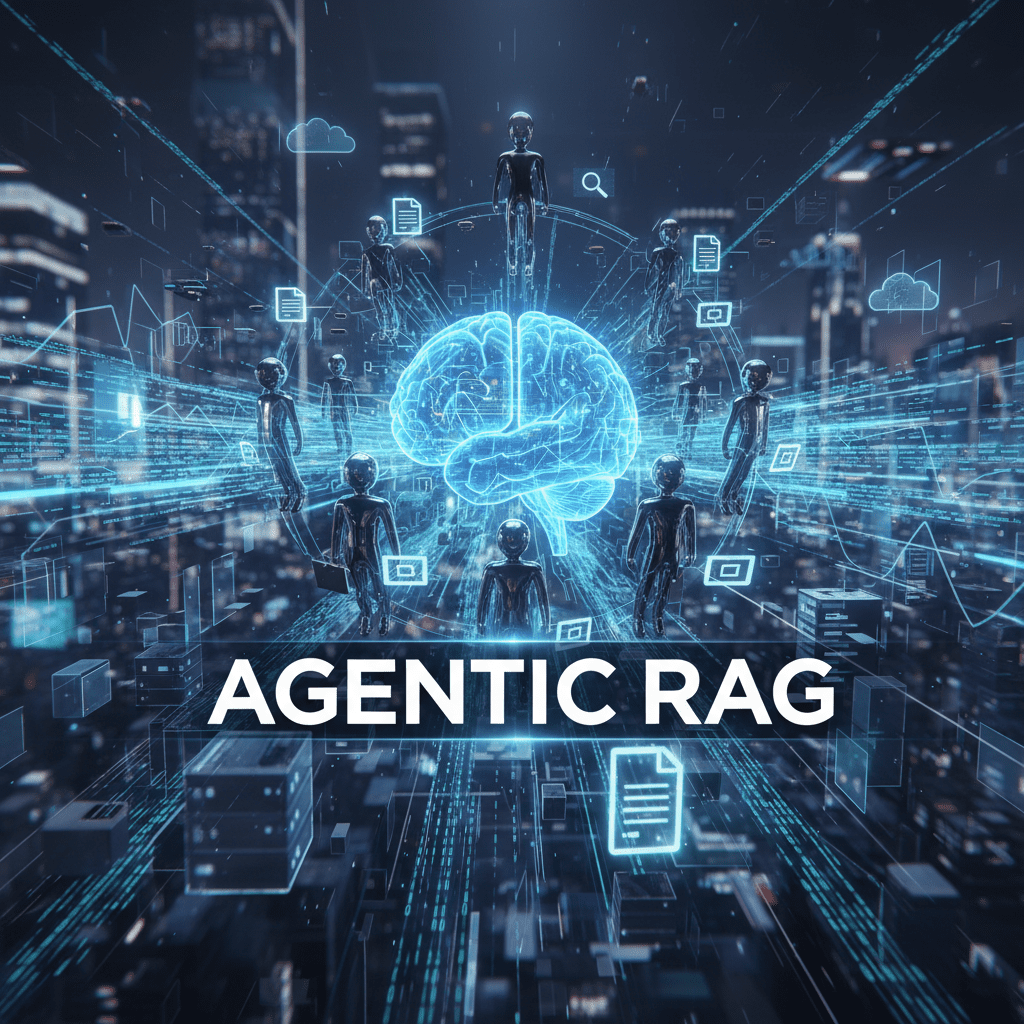
Futuristic business illustration showing a central AI brain connected to digital agent nodes and data streams, with document icons symbolizing smart retrieval. Bold title reads 'Agentic RAG
React native doveploment

Agentic RAG

Introduction Agentic RAG is transforming the way organizations approach information retrieval, research, and automation by combining the power of retrieval-augmented generation (RAG) with intelligent, autonomous agents. This advanced AI framework empowers systems to reason, plan, use external tools, and learn over time, resulting in highly accurate and context-aware outputs. As modern enterprises face exponential growth in data, agentic RAG offers new ways to access reliable information, automate workflows, and create advanced virtual assistants—ushering in a new era of scalable, adaptive business intelligence. What Is Agentic RAG? Agentic RAG merges retrieval-based AI models with generative language models, empowered by autonomous agents that go beyond static query matching. Agents can decide what information to retrieve, break down complex queries into sub-tasks, access external APIs, and synthesize data for comprehensive responses. Unlike classic RAG, agentic RAG adapts to new data and context dynamically, leveraging iterative planning and feedback to continually improve output quality. Key Features: Autonomous decision-making and reasoning Multi-step planning and query decomposition Dynamic retrieval from diverse sources (databases, APIs, knowledge bases) Enhanced accuracy, efficiency, and real-time adaptability Continual learning and context management Types of Agentic RAG Agentic RAG systems employ several types of agents based on function and complexity: Routing Agent: Directs queries to the most suitable RAG pipeline, using agentic reasoning to analyze tasks such as document summarization or question answering. One-Shot Query Planning Agent: Breaks queries into independent sub-queries, executes them in parallel, and synthesizes unified answers. Tool Use Agent: Integrates external tools and APIs for real-time or specialized data, enhancing generative responses. ReAct Agent (Reason + Act): Iteratively reasons and interacts with multiple sources or tools, adapting its approach mid-task for the most precise result. Dynamic Planning & Execution Agent: Manages multi-step and complex workflows, separating long-term plans from immediate execution. Utilizes computational graphs and orchestrates stepwise execution. Applications in Real-World Scenarios Agentic RAG offers transformative benefits across industries: Enterprise Knowledge Management: Streamlines access to organizational data, enabling employees to make fast, informed decisions. Automated Support & Virtual Assistants: Reduces workloads by providing instant, context-relevant answers in customer and employee support. Healthcare: Improves patient insights and research capabilities with agents that gather and contextualize medical knowledge. Legal Research & Finance: Accelerates analysis of documents, regulations, and market data with agents capable of domain-specific data synthesis. Innovation & Research: Assists in synthesizing ideas, comparing multiple sources, and driving strategic initiatives through intelligent information retrieval. How To Implement Agentic RAG Follow these steps for building an agentic RAG system: Define Objectives: Identify tasks suitable for agentic RAG, such as chatbots or automated research. Choose Core Components: Select a retrieval system (e.g., dense passage retrieval, hybrid search) and a generative AI model (e.g., GPT, BERT). Prepare Data: Collect, clean, and preprocess documents to ensure compatibility and maximize retrieval accuracy. Build the Retrieval Layer: Index documents for fast, context-aware search. Agent Integration: Introduce agents to orchestrate workflows—query planning, tool use, and multimodal integration. Fine-Tune & Feedback Loops: Continuously refine models with user feedback and retraining to maintain high performance. Deploy & Monitor: Set up APIs, real-time monitoring, and performance dashboards for ongoing optimization. Key Tools: LlamaIndex and LangChain for agent orchestration, reasoned workflows, and tool integration. Low-code platforms like ZBrain for business workflows and rapid issue response. Conclusion Agentic RAG is redefining the landscape of AI-driven knowledge management, automating complex information retrieval, and powering scalable enterprise solutions. Its combination of multi-agent intelligence, context-awareness, dynamic adaptation, and modular flexibility gives organizations the tools to succeed in an information-rich, rapidly evolving market. Unlock the power of agentic RAG to supercharge research, virtual assistants, and automated decision-making. Call-to-Action: Explore how agentic RAG can optimize workflows and revolutionize information access—connect with AI experts today to get started on a future-ready solution! FAQ What is Agentic RAG? Agentic RAG is a framework that empowers AI agents to retrieve and use external information, plan multi-step workflows, and generate intelligent, context-aware responses far beyond classic RAG capabilities. How does it differ from traditional RAG? Agentic RAG adds autonomous reasoning, multi-task orchestration, and external tool use—enabling more accurate and adaptable information synthesis. What are the main benefits for enterprises? Benefits include scalable automation, enhanced data accuracy, personalized user experiences, and efficiency with reduced costs and improved decision quality. What are common implementation challenges? Challenges involve complex system integration, managing data quality, ensuring scalability, and maintaining real-time performance. Which platforms support agentic RAG development? Popular frameworks are LlamaIndex, LangChain, and low-code platforms like ZBrain, offering flexible workflow design and seamless data integration. The Real Benefits of Hiring a React Native App Development Company

Artificial Intelligence

The Future Is Now: 7 Emerging AI Trends You Shouldn’t Overlook

Introduction Artificial Intelligence is moving at lightning speed, redefining the way we live, work, and innovate. As we navigate through 2025 and beyond, keeping up with emerging AI trends is crucial for businesses, students, and tech enthusiasts alike.   These trends are shaping the future of everything from customer service and healthcare to creative industries and global security. If you want to harness cutting-edge AI for your business, check out the resources and services at TechOTD, learn more about their AI solutions, explore their industry expertise, and view the company’s story and partnerships. 1. Explainable AI (XAI) AI systems are increasingly complex, prompting a demand for transparency in how decisions are made. Explainable AI ensures that machine learning models provide clear, auditable reasoning behind their outputs. This is particularly critical in finance, healthcare, and regulated industries, fostering trust among users and stakeholders. 2. Multimodal AI Gone are the days when AI could only analyze one type of data. Multimodal AI systems now process diverse data sources—like text, images, video, and audio—simultaneously. This enables smarter assistants, highly interactive customer interfaces, and more natural human-computer interactions. 3. Edge AI Instead of processing all data in distant data centers, Edge AI moves intelligence closer to where data is generated—such as smartphones, cameras, or IoT devices. This drastically reduces latency, enhances privacy, and enables real-time decision-making for applications like manufacturing automation and wearable health analytics. 4. AI Democratization Low-code and no-code AI platforms empower non-technical users to create and deploy powerful AI systems. This democratization accelerates business innovation, promotes accessibility, and shrinks the gap between ideas and execution—especially for startups and SMBs. 5. Generative AI AI is no longer just for analyzing data—it now creates. Generative AI models (like ChatGPT and DALL-E) can produce content, design products, write code, and generate simulations, revolutionizing creative industries, marketing, gaming, and education. 6. AI-Blockchain Convergence The synergy of blockchain and AI unlocks robust, decentralized, and secure data sharing. In sensitive sectors like healthcare and finance, this convergence brings new trust mechanisms, improved security, and transparent record-keeping for data-driven services. 7. Agentic & Autonomous AI The rise of Agentic AI means intelligent systems can now reason, plan, and execute tasks autonomously. Imagine digital employees handling workflows, diagnostics, or complex customer support—freeing humans for more strategic initiatives. Conclusion The AI landscape is evolving faster than ever, and these 7 emerging trends are paving the way for the next wave of digital transformation. Whether you’re a business leader, developer, or tech enthusiast, now is the time to embrace these advances—or risk falling behind. To stay ahead and unlock AI-driven innovation, connect with the experts at TechOTD and explore collaboration, industry solutions, and partnership opportunities. FAQ 1. What is Explainable AI, and why is it important? Explainable AI provides clear, human-readable explanations for AI decisions, which is crucial for trust, especially in highly regulated industries. 2. How does Edge AI affect user privacy? Edge AI processes data locally, reducing exposure and boosting privacy by keeping sensitive information on the device. 3. Will Generative AI replace human creativity? No—it enhances creativity by allowing humans to prototype, iterate, and explore ideas more quickly. 4. Can non-programmers leverage AI in their business? Absolutely! With no-code and low-code AI tools, anyone can build and deploy AI-powered solutions. 5. How does TechOTD help organizations adopt new AI trends? TechOTD offers AI strategy consulting, development, and industry-focused implementation—learn more at their AI services page.

Scroll to Top