Cloud Infrastructure

DevOps process showing collaboration, automation, and CI/CD pipelines in modern software development.
DEVOPs

DevOps in 2025: Bridging Development and Operations for Smarter Software Delivery

Introduction In the fast-paced world of software, speed and reliability define success. That’s where DevOps comes in — a powerful approach that unites Development (Dev) and Operations (Ops) to deliver high-quality applications faster and more efficiently. By 2025, DevOps isn’t just a methodology; it’s a culture of collaboration, automation, and continuous improvement that drives digital transformation across industries. What Is DevOps? DevOps is a software engineering practice that integrates development and IT operations teams to shorten the software development lifecycle and ensure continuous delivery with high quality. It focuses on: Collaboration: Breaking silos between teams. Automation: Streamlining repetitive tasks. Continuous Integration/Continuous Deployment (CI/CD): Delivering updates frequently and reliably. Why DevOps Matters in 2025 As organizations scale digitally, agility and efficiency are more important than ever. Faster Releases: Frequent and automated deployments. Improved Quality: Automated testing reduces errors. Greater Collaboration: Developers and operations share responsibility. Business Agility: Quick adaptation to user feedback and market trends. Key Principles of DevOps Collaboration and Communication: Shared ownership between teams. Automation: From code integration to deployment. Continuous Testing: Detect bugs early with automated QA. Monitoring and Feedback: Real-time tracking of performance and issues. Security Integration (DevSecOps): Embedding security into every stage. Popular DevOps Tools in 2025 Category Tools Description Version Control Git, GitHub, GitLab Manage and track code versions CI/CD Jenkins, CircleCI, GitHub Actions Automate build, test, and deploy Containerization Docker, Kubernetes Deploy apps consistently across environments Monitoring Prometheus, Grafana Real-time tracking of app performance Infrastructure as Code (IaC) Terraform, Ansible Automate infrastructure management Cloud Integration AWS, Azure DevOps Host, scale, and manage pipelines The Future of DevOps The future of DevOps is powered by AI, automation, and cloud-native development. AI-Driven Monitoring: Predict system failures before they occur. Serverless Architecture: Deploy apps without managing servers. ChatOps: Real-time collaboration through chat platforms like Slack. Sustainable DevOps: Optimizing infrastructure for lower energy use. Conclusion DevOps represents the perfect balance between innovation and reliability. By combining collaboration, automation, and continuous feedback, it empowers teams to build, test, and deploy faster than ever before. In 2025 and beyond, DevOps will remain the foundation of agile, scalable, and secure software delivery — the key to digital success. “DevOps isn’t a tool or a team — it’s a mindset that builds better software, together.” FAQ Section Q1. What is DevOps in simple terms?It’s a collaboration between developers and operations teams to deliver software faster and more reliably. Q2. What tools are used in DevOps?Popular tools include Git, Jenkins, Docker, Kubernetes, and Terraform. Q3. How does DevOps differ from Agile?Agile focuses on development cycles; DevOps extends that to deployment and operations. Q4. What is CI/CD in DevOps?It’s a process of continuously integrating code and deploying updates automatically. Q5. Why is DevOps important?It enhances efficiency, reduces downtime, and improves product quality.

Cloud

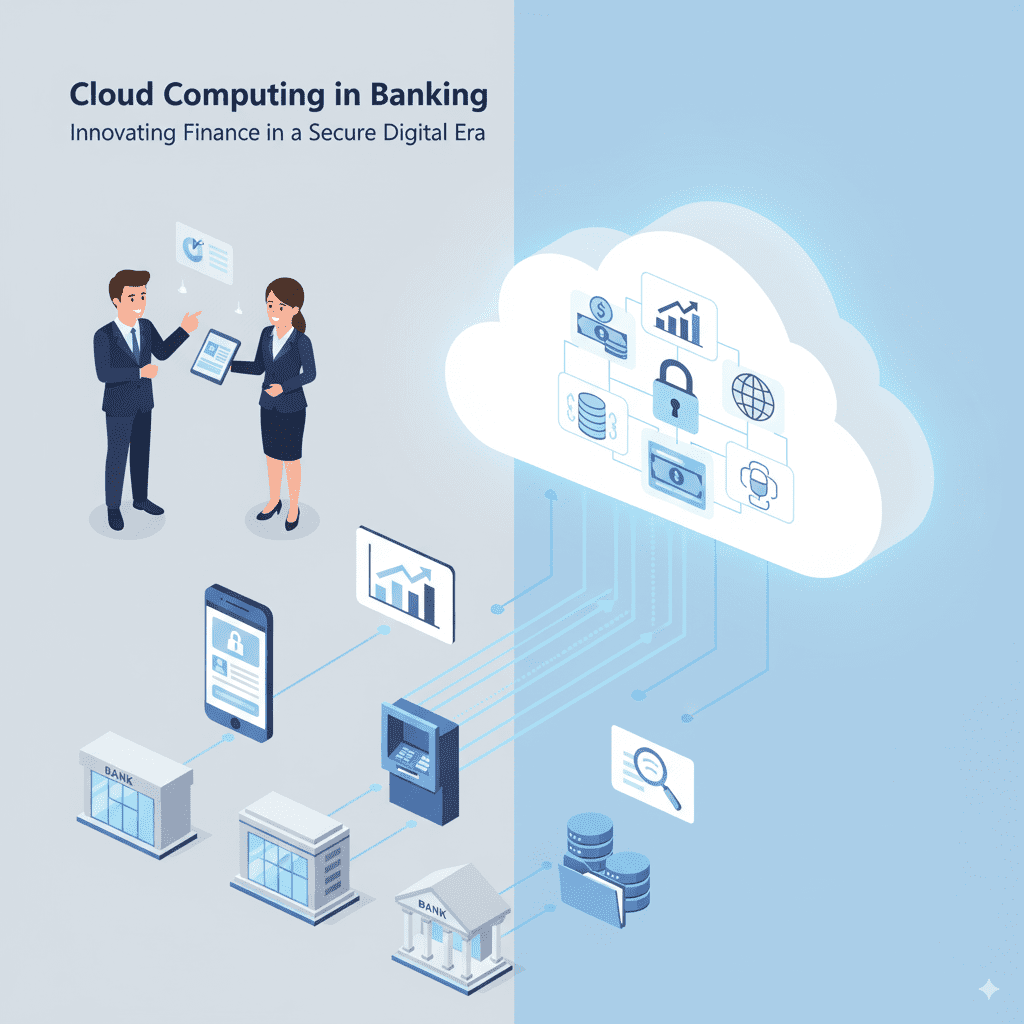
Cloud Computing in Banking: All You Need to Know Before Moving to the Cloud

Introduction The banking industry is undergoing a profound digital transformation, with cloud computing emerging as a critical enabler of innovation, agility, and operational efficiency. Banks worldwide are rapidly adopting cloud technologies to modernize legacy systems, enhance customer experience, and accelerate product delivery. However, migrating to the cloud also presents unique challenges around data security, regulatory compliance, and integration complexity. This blog covers everything banks need to know before moving to the cloud—benefits, risks, migration strategies, and key considerations for a successful cloud journey. It also highlights how AI-driven cloud solutions and predictive analytics are shaping the future of banking technology, drawing on insights from leading experts like TechOTD. Why Cloud Computing Matters for Banks Scalability: Cloud platforms enable banks to scale computing resources on demand during peak loads or new product launches. Cost Efficiency: Moving from capital expenditure to operational expenditure reduces upfront IT investments and optimizes resource usage. Innovation Enablement: Cloud supports rapid development of digital banking products, AI-powered services, and personalized customer experiences. Improved Collaboration: Cloud platforms enhance data sharing across departments and partner ecosystems securely. Disaster Recovery & Business Continuity: Cloud’s resilient infrastructure safeguards critical banking operations against data loss and outages. Explore how AI and analytics complement cloud capabilities to drive smarter, data-driven banking: Predictive Analytics in Banking. Key Considerations Before Moving to the Cloud 1. Regulatory Compliance and Data Privacy Banks must comply with strict regulations like GDPR, PCI DSS, and regional data protection laws. Understanding cloud providers’ compliance certifications and data residency options is vital. 2. Security and Risk Management Implementing end-to-end encryption, identity and access management (IAM), and continuous threat monitoring is mandatory to protect sensitive financial data. 3. Legacy System Integration Seamless integration between existing on-premises systems and cloud platforms is crucial to avoid business disruptions. 4. Selecting the Right Cloud Model Public Cloud: Cost-effective and scalable but requires strict security controls. Private Cloud: Offers better control and security but at higher costs. Hybrid Cloud: Combines benefits of both, allowing sensitive workloads on private clouds and less critical ones on public clouds. 5. Vendor Lock-in and Multi-cloud Strategy Banks should evaluate risks associated with dependence on a single cloud provider and consider multi-cloud approaches for flexibility and resilience. Migration Strategies for Banking Cloud Adoption Lift and Shift: Moving applications without changes; fastest but may not optimize cloud benefits. Re-platforming: Modifying existing apps for cloud compatibility and efficiency. Refactoring: Redesigning applications entirely to be cloud-native, maximizing scalability and functionality. TechOTD’s expert teams design and execute tailored cloud migration strategies ensuring minimal disruption: How We Work – TechOTD. Benefits of AI and Cloud in Modern Banking Enhanced Fraud Detection: AI algorithms analyze transactions in real-time to flag suspicious activities. Personalized Customer Experiences: AI models predict customer needs and tailor financial products. Operational Efficiency: Automation reduces manual workflows and error rates. Discover AI’s role in banking innovation and see real-world examples: Large Language Models in Finance. Challenges Banks Face in Cloud Adoption Managing cultural and organizational change Ensuring interoperability across hybrid environments Handling complex data migration and synchronization Meeting constantly evolving compliance and security requirements Conclusion Cloud computing offers transformative potential for banks looking to innovate, scale, and compete in the digital economy. However, it requires careful planning, strategic decision-making, and trusted technology partnerships to effectively manage risks and unlock benefits. Leveraging AI and predictive analytics atop cloud infrastructure further accelerates banking digital maturity by enabling smarter operations and customer-first models. Embark on your cloud journey with experienced partners like TechOTD, who specialize in AI-driven cloud solutions for finance and beyond. Explore more banking technology insights and trends at TechOTD Blog. FAQs Q1: Is public cloud safe for banks? With strong encryption and compliance controls, public cloud can be secure, though sensitive data may benefit from private or hybrid clouds. Q2: How long does cloud migration usually take? Depending on scale and complexity, it ranges from a few months to over a year. Q3: What are key benefits of hybrid cloud in banking? It balances security, flexibility, and cost efficiency by allocating workloads appropriately. Q4: Can AI operate effectively in cloud environments? Yes, cloud provides the computational power and scalability AI applications demand. Q5: How to avoid vendor lock-in? Adopt open standards, multi-cloud strategies, and platform-agnostic architectures.

Cloud, Uncategorized

Unleashing the Potential of Cloud for the Insurance Industry

Introduction The insurance industry is undergoing a radical transformation fueled by digital technologies, with cloud computing playing a pivotal role. The cloud enables insurance companies to modernize IT infrastructure, enhance customer experience, boost operational efficiency, and accelerate innovation. As insurers strive to meet rising customer expectations, regulatory demands, and growing data complexities, embracing cloud solutions becomes crucial to stay competitive. This blog explores the profound impact of cloud computing on the insurance sector, detailing benefits, use cases, challenges, and future trends. Throughout the discussion, it integrates relevant insights on artificial intelligence, blockchain, predictive analytics, and digital transformation from the TechOTD AI Services and TechOTD Blog resources. The Digital Imperative in Insurance Traditional insurance models are heavily reliant on legacy systems that are costly to maintain and rigid in meeting new consumer and market demands. Digital disruption has dictated an urgent need to adopt scalable, flexible, and agile IT architectures — and cloud computing provides this foundation. Insurers face increasing pressures to: Deliver personalized, on-demand services Analyze vast amounts of customer and risk data Accelerate product development and go-to-market cycles Ensure compliance and data security Optimize costs Cloud computing answers these imperatives with on-demand computing power, storage, and access to advanced technologies such as AI and blockchain. Core Benefits of Cloud Computing for Insurance 1. Scalability and Flexibility Cloud platforms allow insurers to scale infrastructure dynamically based on demand, supporting fluctuating workloads like claims processing during disasters or new product launches without expensive over-provisioning. 2. Cost Efficiency By shifting to cloud models, insurance companies reduce capital expenditure and operations costs related to on-premises infrastructure, benefiting from pay-as-you-go pricing and reduced hardware investments. 3. Enhanced Data Analytics and AI Integration Cloud environments enable integration with AI-driven analytics tools that process big data for risk assessment, fraud detection, and customer insights—boosting predictive capabilities and personalized insurance offerings. Explore advanced AI solutions tailored for insurance at TechOTD AI Services. 4. Improved Customer Experience Cloud-powered customer portals, mobile apps, and chatbots offer real-time access to policy information, claims status, and personalized support, enhancing satisfaction and loyalty. Relevant AI-driven customer journey strategies can be found at TechOTD Seamless AI Customer Journeys. 5. Regulatory Compliance and Security Cloud service providers increasingly offer robust security, encryption, and compliance certifications that help insurers meet stringent data protection regulations in diverse markets. 6. Faster Innovation and Time to Market Cloud platforms enable rapid development and deployment pipelines that accelerate innovation, allowing insurers to stay ahead in competitive landscapes through agile product launches. Transformative Use Cases in Insurance Cloud-Based Claims Management Digitizing claims on the cloud facilitates automated workflows, real-time status updates, faster approvals, and fraud detection through integrated AI analytics. Risk Modeling and Underwriting Cloud-powered big data analytics enable insurers to better predict and price risk dynamically by ingesting multiple data sources across geographic and demographic segments. Customer Self-Service Portals and Mobile Apps Cloud-hosted portals provide centralized, secure access to insurance products and services, empowering customers digitally while reducing service costs. Insights on building effective mobile apps are detailed at TechOTD Mobile Apps. Blockchain for Policy Management and Fraud Prevention Combining blockchain with cloud infrastructure supports tamper-proof policy records, secure transactions, and enhanced transparency in claims processing. Detailed exploration at TechOTD Blockchain Integration. Predictive Analytics to Combat Fraud and Improve Retention Cloud data platforms integrated with predictive analytics software help proactively identify suspicious claims and optimize customer retention strategies. Challenges and Strategic Solutions Data Migration Complexity Moving legacy data to the cloud is complex but can be simplified through phased migration strategies and cloud-native redesigns (see the generated image above). Security Concerns Insurance companies need layered security approaches combining cloud vendor safeguards, encryption, access controls, and continuous monitoring. Regulatory Compliance Collaborating with cloud providers offering region-specific compliance certifications and conducting rigorous audits mitigates regulatory risks. Cultural and Organizational Change Driving cloud adoption requires cultural shifts towards agility, continuous learning, and DevOps practices supported by leadership (see the generated image above). For structured digital transformation, explore TechOTD How We Work. Future Trends in Cloud Computing for Insurance Increased Adoption of AI and Machine Learning: More cloud-based AI solutions will enhance automation and personalization. Expansion of Hybrid and Multi-Cloud Strategies: Insurers will balance private and public clouds for optimal performance and security. Greater Integration of Blockchain: Enhancing trust, transparency, and efficiency in insurance processes. Focus on Edge Computing: Combining cloud and edge to manage IoT-enabled insurance use cases such as telematics and connected home devices. Cloud-Native Application Development: Accelerating innovation cycles through microservices architecture and containerization. Stay updated on technology trends at TechOTD Blog. Key Takeaways: Cloud enables scalable, agile, and cost-effective IT modernization. AI and predictive analytics supercharge data-driven decisions. Blockchain enhances security, transparency, and trust. Multi-cloud and edge architectures balance innovation and regulation. Enterprise cultural adoption is critical for successful cloud transformation. Conclusion Cloud computing is dramatically reshaping the insurance industry by delivering scalable infrastructure, enhanced analytics capabilities, improved customer experiences, and cost efficiencies. Insurers who leverage the cloud alongside AI, blockchain, and edge technologies are best positioned to innovate, adapt, and lead in a digital-first market.

Healthcare & Fitness

Cloud Infrastructure and DevOps in Healthcare Apps

Introduction The intersection of cloud infrastructure and DevOps is revolutionizing how healthcare applications are built, deployed, and maintained, making healthcare systems more agile, compliant, and patient-centered. These advances empower providers to store vast amounts of sensitive data securely, deliver real-time services to patients worldwide, and quickly innovate in response to emerging needs and regulatory guidelines. Explore how AI-powered healthcare applications are transforming patient experiences and operations—see more on cloud-based AI services and their integration journey. The Role of Cloud Infrastructure in Healthcare Apps Scalability and Flexibility Cloud platforms such as AWS, Azure, and Google Cloud enable healthcare organizations to scale resources up or down dynamically, adapting to fluctuating workloads, seasonal spikes, or pandemic-driven surges in demand. This elasticity is essential for electronic health records (EHR), big data analytics, telemedicine, and remote monitoring applications. Multicloud and hybrid architectures are gaining traction, allowing seamless integration to meet stringent compliance needs and local storage guidelines. Private clouds cater to high-security environments such as large hospitals and research institutions, while public clouds efficiently handle analytics, appointments, and remote care. For a detailed breakdown of cloud-driven innovation in healthcare, visit TechOTD’s main blog. Secure Data Storage and Compliance Sensitive medical data demands the highest levels of security and compliance. Cloud vendors offer HIPAA- and GDPR-compliant solutions that maintain data privacy, encryption, and integrity. End-to-end encryption, auditing, and identity management are embedded in modern cloud services. Automated backups and disaster recovery protocols minimize downtime and data loss. To understand how TechOTD addresses privacy and compliance in healthcare, see the Privacy & Cookies policy. Accelerating Digital Health with AI and Analytics Cloud infrastructure empowers healthcare organizations to leverage advanced AI, machine learning, and predictive analytics. Key applications include: Standardizing precision diagnostics with massive image datasets, Predicting patient risks using trend analysis and real-time telemetry, Automating administrative documentation with NLP engines. Discover feature-rich use cases in predictive analytics on TechOTD’s dedicated analytics page. Enabling Telehealth and Remote Patient Monitoring The adoption of telemedicine surged during the COVID-19 pandemic, with cloud platforms facilitating: Real-time video consultations, Remote patient monitoring using IoT wearables, Synchronous data sharing among care teams. Integration details for mobile healthcare solutions are documented in TechOTD’s mobile app services section. DevOps: The Engine of Continuous Healthcare Innovation What Is DevOps in Healthcare? DevOps combines software development (Dev) and IT operations (Ops) to foster automation, collaboration, and rapid deployments. In healthcare, this approach: Shortens application release cycles, Ensures continuous integration and delivery (CI/CD), Facilitates ongoing feedback and quality improvements. Explore practical examples of workflow optimization on the TechOTD blog. Key Benefits of DevOps for Healthcare Faster Time to Market Automates deployments, enabling rapid roll-out of new features and critical patches. Provides a competitive edge in launching telehealth and AI-driven apps. Improved Patient Outcomes Supports continuous monitoring and rapid issue resolution, which enhances clinical reliability and patient trust. Real-time data analytics drive timely decisions at the point of care. Security and Compliance Implements DevSecOps to integrate security into every phase of the application lifecycle. Ensures adherence to sector-specific regulations (HIPAA, GDPR, etc.) using automated compliance checks. See TechOTD’s structured approach to secure software on their How We Work page. Cost and Resource Efficiency Applies Infrastructure as Code (IaC) principles, minimizing manual tasks and human error. Optimizes cloud spend by enabling demand-driven resource allocation. Case studies on cost savings and operational improvements can be found in TechOTD’s blog industry section. AI and Predictive Analytics Support Maintains stable environments for AI/ML-powered healthcare applications. Accelerates the development of smart diagnostics, triaging, and personalized medicine. For examples of large language models in regulated sectors, see LLMs in Finance. Implementing Cloud and DevOps for Healthcare Apps: A Step-by-Step Roadmap 1. Assess Business Needs and Regulatory Requirements Conduct a deep analysis of the existing tech ecosystem and compliance landscape. Evaluate suitability for cloud migration and DevOps adoption. Explore a real-world blueprint on TechOTD’s services overview. 2. Data Strategy and Cloud Architecture Selection Identify sensitive and non-sensitive datasets. Choose optimal cloud deployment models: public, private, hybrid, or multicloud. 3. Develop Secure, Scalable Applications Using DevOps Practices Implement CI/CD pipelines for all healthcare modules: EHRs, billing, telemedicine, and connected health IoT solutions. Automate testing, code reviews, and compliance checks to guarantee quality and security. 4. Integrate AI, Analytics, and Automation Leverage cloud APIs and frameworks for real-time analytics, predictive insights, and automated workflows. Explore how AI supports preventive care and operational efficiency in TechOTD’s AI service models. 5. Continuous Monitoring, Maintenance, and Support Use cloud-based monitoring tools (e.g., Grafana, Azure Monitor) for uptime, performance, and security event tracking. Establish mechanisms for ongoing maintenance, data retraining, and customer support. For workflow strategies, check out customer journey mapping with AI. Emerging Trends and Future Directions AI-Powered Healthcare and Predictive Care Increasing adoption of generative AI, chatbots for patient triage, and risk stratification tools. Integration of real-time wearable IoT data with cloud-hosted analytics engines. Get a comprehensive review of technology trends in healthcare and beyond at TechOTD’s blog. Blockchain Integration for Secure Health Data Blockchain ensures transparent, immutable transaction logging, critical for audit trails in clinical trials, medication administration, and consent management. Find an in-depth analysis at TechOTD’s blockchain blog post. Regulatory Evolution and Interoperability Ongoing standards development for seamless data exchange (HL7 FHIR, DICOM) and international interoperability. Enhanced focus on privacy-preserving machine learning and federated learning architectures. Challenges in Cloud and DevOps Adoption Legacy systems and data silos limiting seamless migration. Addressing complex multi-region compliance and data residency requirements. Upfront investments in talent, training, and DevOps/Cloud tooling. Best practices, pitfalls, and CRM integration insights can be found at TechOTD’s mobile app frameworks guide. Conclusion: Cloud and DevOps as Healthcare’s Innovation Backbone The synergy of cloud infrastructure and DevOps is shaping a future where healthcare is more agile, resilient, and patient-focused than ever before. With ongoing advancements in AI, predictive analytics, and compliance automation, healthcare providers are set to deliver faster, more effective, and more personalized care. For more guidance, industry news, and in-depth resources, visit: Privacy & AI Solutions TechOTD Blog Home How We Work at TechOTD Predictive Analytics Features Mobile Application Services Advanced Industry Insights Customer-Centric AI Journeys LLMs in Finance Use Cases Technology for Modern Education Gadgets for


Scroll to Top