web development

Cloud Computing and Technology, Digital Transformation, Technology, Technology & Innovation

The Future of Web Architecture: Why Edge Computing and Backendless Frameworks Are Redefining Scalability

The Future of Web Architecture: Why Edge Computing and Backendless Frameworks Are Redefining Scalability The internet is undergoing a quiet but radical structural transformation. For decades, the standard blueprint for building a web application followed a predictable, centralized path. A user in Tokyo would open a browser, click a button, and send a request across continents to a massive data center located in Northern Virginia or Ireland. The server would process the request, query a central database, format the data, and send it all the way back. While fiber-optic cables and content delivery networks optimized this journey, the fundamental limitation remained: physical distance equals latency. In a digital economy where a 100-millisecond delay can slash conversion rates by double digits, relying entirely on centralized cloud warehouses is no longer a viable strategy for hyper-scale applications. At the same time, the operational overhead of managing backend infrastructure has become an unnecessary burden for modern development teams. The traditional duties of provision, scaling, patching, and maintaining database connections are increasingly viewed as friction. To solve these compounding challenges, two architectural paradigms have converged to create a new blueprint for the web: Edge Computing and Backendless Frameworks. Together, they are shifting the center of gravity of the internet away from centralized mega-data centers and placing it directly at the perimeter of the network, mere miles—or sometimes millimeters—away from the end user. This is not just an incremental upgrade to server infrastructure; it is a fundamental re-engineering of how data is processed, stored, and delivered across the globe. The Limits of Centralized Cloud Infrastructure To understand where web architecture is going, we must first analyze the breaking points of where it has been. The rise of cloud computing giants in the late 2000s revolutionized the tech industry by turning hardware into software. Instead of buying physical racks, companies rented virtual machines. This centralized model brought unprecedented convenience, but it introduced structural inefficiencies that are now catching up to modern engineering demands. The first issue is the speed of light. Data cannot travel faster than the laws of physics allow. When an application requires complex server-side rendering or dynamic database lookups, a round-trip journey to a central cloud region introduces an unavoidable floor of latency. As applications become more interactive, relying on real-time data streaming, collaborative interfaces, and instant feedback loops, this regional latency becomes a jarring user experience bottleneck. The second bottleneck is data egress and bandwidth congestion. Centralized architectures require that every single interaction, no matter how trivial, be pushed to the core network. As billions of internet-of-things devices, smartphones, and smart appliances flood the internet with telemetry and media data, backhauling this raw information to central data centers creates immense network strain and skyrocketing cloud bills. Finally, centralized systems present a concentrated blast radius for failures. When a primary cloud region experiences a routing misconfiguration or power outage, thousands of dependent services across the globe go dark simultaneously. The internet becomes brittle when its intelligence is concentrated in only a handful of geographic zones. Demystifying Edge Computing Edge computing flips the centralized model on its head by moving compute and storage capabilities out of distant data centers and into localized nodes positioned directly at the network’s perimeter. These nodes are embedded within cellular towers, regional internet service providers, and content delivery network points of presence. Instead of acting as passive pipes that merely cache static images and style sheets, modern edge networks operate as distributed mini-computers capable of executing complex code on the fly. When a user interacts with an edge-native application, their request is intercepted by the physically closest node. If code execution is required, it happens right there. By processing data at the edge, the round-trip time across the backbone of the internet is completely eliminated. Latency drops from hundreds of milliseconds to single digits. Crucially, edge computing changes how we handle data security and compliance. Instead of transmitting sensitive user information across sovereign borders to a centralized server, data can be sanitized, filtered, and anonymized locally at the edge. If local regulations require that citizen data remain within specific geographic boundaries, edge nodes can enforce these compliance rules dynamically, ensuring data sovereignty without sacrificing application performance. The Rise of Backendless and Serverless Frameworks Simultaneously, the development philosophy of “Backendless” architecture has matured from a niche experimental approach into an enterprise-grade standard. To clear up a common misconception: backendless does not mean there is no backend. It means that developers no longer build, manage, or maintain custom backend infrastructure or dedicated server instances. In a traditional setup, an engineering team spends significant time writing boilerplate code for authentication, session management, database scaling, file uploads, and API routing. They must configure load balancers to handle traffic spikes and set up monitoring tools to catch server crashes. Backendless frameworks abstract this entire layer away. Instead of writing a continuous monolithic server application, developers leverage managed, highly specialized micro-utilities and BaaS (Backend-as-a-Service) ecosystems. Authentication is handled by fully managed identity providers; file storage is offloaded to intelligent object storage systems; and custom business logic is broken down into modular, event-driven functions that execute only when explicitly triggered. This shift radically alters the economics of software development. Traditional servers run continuously, charging businesses for idle CPU cycles even when no users are online. Backendless architectures operate on a strict pay-as-you-go model. If an application receives zero traffic overnight, the infrastructure costs zero. When a massive spike of a million concurrent users hits the application, the underlying platform automatically provisions the necessary micro-resources instantly, scaling down just as quickly when the surge subsides. Developers are freed from the anxieties of infrastructure management, allowing them to focus exclusively on refining user experiences and frontend product value. The Convergence: Computational Edge Meets Managed Backends The true magic happens where edge computing and backendless frameworks intersect. For a long time, serverless functions suffered from a major flaw known as “cold starts.” Because cloud providers had to dynamically spin up a virtual container or runtime environment when a

Software development, Technology & Innovation

Top 10 Web Development Trends Businesses Should Follow in 2026

Top 10 Web Development Trends Businesses Should Follow in 2026 If you were to step into a time machine and look at the internet from a decade ago, it would feel like a completely different world. Back then, a business website was essentially a digital brochure—a static, quiet place where customers went to check your hours, copy your phone number, and maybe read a brief “About Us” page. Today, your website isn’t a brochure. It is your storefront, your chief customer service officer, your primary sales engine, and the living, breathing heart of your brand’s public identity. But building a great web presence isn’t a “set it and forget it” project. The underlying technology moves at a dizzying pace. What felt cutting-edge last year can feel clunky, frustrating, and outdated to a modern consumer today. As we navigate 2026, user expectations have hit an all-time high: they want web experiences that are blindingly fast, intensely personalized, radically secure, and effortlessly interactive. If your business web presence is still leaning on outdated architectures, you aren’t just losing aesthetic points—you’re dropping revenue. Let’s dive into the top 10 web development trends defining 2026, why they matter to your bottom line, and how you can adopt them without losing your human touch. 1. The Domination of WebAssembly (Wasm) For years, JavaScript has been the undisputed king of the browser. It runs virtually every interactive element on the internet. But as web applications have grown more complex—think desktop-grade video editors, real-time 3D design platforms, and heavy data visualization dashboards running directly in a tab—JavaScript has started hitting its performance ceiling. Enter WebAssembly (Wasm). WebAssembly is a binary code format that allows high-performance languages like C++, Rust, and Go to run inside web browsers at near-native speed. Why Businesses Care in 2026 Wasm means you no longer have to build separate, bulky desktop applications for Windows and Mac to provide a high-end software experience. Your customers can execute heavy, computational work—like rendering high-definition architectural models or processing complex financial simulations—instantly inside a standard web page without their laptops overheating or lagging. It bridges the gap between web convenience and desktop power. 2. Decentralized, Backendless, and Edge Architectures The days of hosting your website on a single server located in a centralized data center are rapidly drawing to a close. If a customer in London tries to access a website hosted exclusively on a server in Ohio, those few thousand miles of physical distance introduce a subtle delay—a lag that causes modern consumers to hit the “back” button. Modern systems utilize Edge Computing and Backendless (Serverless) architectures. Instead of a website living in one place, its functions and data are broken down into tiny microservices and copied across a global network of “edge” servers. [Traditional Hosting] User ───(Miles of Delay)───> Central Server (One Location) [Edge Architecture] User ───> Nearest Edge Node ───> Instant Dynamic Response Why Businesses Care in 2026 When a user clicks your link, the website loads from the physical server closest to them, reducing load times to milliseconds. Furthermore, because serverless apps scale instantly on demand, your site won’t crash if your product suddenly goes viral on social media and receives half a million simultaneous hits. 3. AI-Driven Hyper-Personalization Layers We’ve all experienced basic personalization: a banner that says “Welcome back, John!” or an e-commerce row displaying items you looked at yesterday. In 2026, web development has moved far beyond these basic cookies. Modern websites embed native AI models directly into the frontend. These systems analyze a user’s behavior in real time—tracking how fast they scroll, what headers they linger on, their local time, and even the weather in their city—to dynamically rearrange the entire website structure on the fly. Why Businesses Care in 2026 If a hurried, goal-oriented B2B buyer lands on your software page, the AI layer might automatically surface technical specifications, pricing tables, and an instant booking widget. If a casual, exploratory buyer clicks the exact same link, the page might morph to showcase narrative video testimonials, case studies, and an interactive product tour. You are essentially giving every single visitor a custom-built storefront designed specifically for their psychology. 4. Zero-Trust Frontend Security Cyberthreats have evolved dramatically. Hackers are no longer just trying to breach backend corporate databases; they are launching sophisticated “supply chain attacks” targeting the frontend browser environment, injecting malicious code into third-party scripts, forms, and analytical tools. Web development in 2026 requires a Zero-Trust Frontend Philosophy. This means the website operates under the assumption that no script, plugin, or user interaction is inherently safe until verified. Why Businesses Care in 2026 Implementing strict Content Security Policies (CSP), subresource integrity checks, and client-side vulnerability scanning ensures that your customer data cannot be intercepted during checkout or registration. Protecting your digital storefront preserves consumer trust—the most valuable and fragile asset your brand owns. 5. Voice-First Navigation and Natural Language Search The traditional magnifying glass search icon on websites is undergoing a major overhaul. Modern consumers, deeply accustomed to conversational AI tools and smart home assistants, no longer want to type rigid keyword combinations like “mens shoes black leather waterproof size 10” into a basic database search bar. Websites are increasingly building native voice activation and advanced Semantic Search engines into their main navigation blocks. Why Businesses Care in 2026 Users can click a microphone icon and speak naturally: “Show me those rugged outdoor boots I was looking at last week, but only if they’re currently in stock in my size.” The website understands the context, searches your internal product database like an intelligent human sales assistant, and renders the exact results instantly, dramatically lowering purchase friction. 6. Sustainable, Low-Carbon Digital Design It is a quiet, often overlooked fact: the internet uses an immense amount of electricity. Every kilobyte of data transferred across the globe requires power from data centers, routing hubs, and consumer devices. As global corporate sustainability initiatives take center stage, Green Web Development has transformed from a niche trend into a core operational standard. ┌────────────────────────────────────────────────────────────────────────┐ │

Koishu Digital web development and digital marketing services banner
Digital Marketing

Koishu Digital – Building Smart Digital Solutions for Modern Businesses

Introduction In today’s competitive digital landscape, businesses require more than just an online presence. They need modern websites, effective branding, strong SEO strategies, and scalable digital platforms to stay ahead in the market. Koishu Digital focuses on helping businesses establish a strong digital identity through innovative web development and digital marketing solutions. Whether it is website design, e-commerce development, or online branding, Koishu Digital aims to create user-friendly and performance-driven digital experiences that help businesses grow successfully. Why Businesses Need Digital Transformation Digital transformation is no longer optional for businesses. Customers now search online before purchasing products or services. A professionally developed website and strategic digital marketing plan help businesses improve visibility and attract potential customers. Benefits of digital transformation include: Increased online visibility Better customer engagement Stronger brand reputation Higher conversion rates Improved business scalability Businesses that invest in modern digital solutions gain a competitive advantage in today’s fast-changing online market. Web Development Services by Koishu Digital Responsive Website Development A responsive website is essential for providing a smooth user experience across all devices. Koishu Digital develops websites that are optimized for desktops, tablets, and smartphones. Key features include: Mobile-friendly layouts Fast-loading web pages Modern user interface design SEO-friendly structure Secure browsing experience Responsive websites improve customer engagement and reduce bounce rates, helping businesses achieve better online performance. E-Commerce Development Solutions The e-commerce industry continues to expand rapidly. Businesses need secure and scalable online stores that provide seamless shopping experiences for customers. Koishu Digital offers e-commerce solutions with features such as: Secure payment integration Inventory management systems Product management tools Fast checkout process Smart product recommendations These features help businesses improve customer satisfaction and streamline operations. Digital Marketing Services Search Engine Optimization (SEO) SEO is one of the most effective ways to improve online visibility. Proper SEO strategies help websites rank higher on search engines and attract targeted traffic. SEO benefits include: Higher search engine rankings Increased website traffic Better lead generation Improved brand authority Long-term online growth Koishu Digital focuses on building SEO-friendly digital platforms that help businesses strengthen their online presence. Social Media Marketing Social media platforms play a major role in brand promotion and customer engagement. Effective social media marketing helps businesses connect directly with their audience. Social media marketing strategies may include: Brand awareness campaigns Content promotion Audience engagement Lead generation campaigns Paid advertising strategies Strong social media presence improves customer trust and business credibility. Google Search Central SEO Guide Schema.org Official Website Importance of Branding and User Experience Professional Branding A strong brand identity helps businesses stand out from competitors. Professional branding creates trust and leaves a lasting impression on customers. Branding services may include: Logo design Creative visual identity Website UI/UX design Brand consistency Digital graphics creation Strong branding supports long-term business growth and recognition. User Experience and Performance User experience is one of the most important factors for online success. Customers prefer websites that are easy to navigate, fast, and visually appealing. Important elements of good user experience include: Clean design layout Easy navigation Mobile responsiveness Fast page speed Secure browsing Websites with better user experience often achieve higher engagement and conversion rates. Future of Digital Business Growth Technology is continuously evolving, and businesses must adapt to changing digital trends. Artificial intelligence, automation, analytics, and modern marketing strategies are shaping the future of online business growth. Koishu Digital focuses on providing scalable and innovative digital solutions that help businesses stay competitive in the digital era. Businesses that embrace digital transformation today are more likely to succeed in the future. Koishu Digital Home TechOTD Portfolio Page Conclusion A professional website and effective digital strategy are essential for modern business success. Koishu Digital helps businesses grow through web development, e-commerce solutions, SEO, branding, and digital marketing services. By combining technology, creativity, and business-focused strategies, the company supports brands in building strong digital identities and achieving long-term online growth. Frequently Asked Questions What is Koishu Digital? Koishu Digital is a digital solutions company that provides web development, e-commerce development, branding, SEO, and digital marketing services. Why is SEO important for websites? SEO improves search engine rankings, increases website traffic, and helps businesses reach more customers online. Does Koishu Digital provide responsive website development? Yes, the company develops responsive websites optimized for desktops, tablets, and mobile devices. What are the benefits of digital marketing? Digital marketing helps businesses increase visibility, improve engagement, generate leads, and grow their online presence. Why is branding important for businesses? Branding creates trust, improves recognition, and helps businesses establish a strong identity in competitive markets.

Digital Transformation, Software development, Technology & Innovation

Efficiency Without Compromise: Optimizing Web Development with Low-Code Platforms

Introduction For a long time, the tech world was split into two camps: the “hardcore” developers who wrote every line of code by hand and the “no-code” enthusiasts using drag-and-drop tools. But in 2026, the lines have blurred. Professional web development is no longer about how much you can type; it’s about how quickly and securely you can deliver value. Optimizing your workflow with a Low-Code Application Platform (LCAP) isn’t about replacing developers—it’s about giving them superpowers. 1. Eliminating the “Boring” Work Every web project has repetitive tasks: setting up user authentication, building basic CRUD (Create, Read, Update, Delete) operations, and configuring database schemas. Doing this manually for the hundredth time isn’t “craftsmanship”—it’s a bottleneck. Low-code platforms allow developers to automate these foundational layers. By using visual modeling for the architecture, you can move from a blank screen to a functional prototype in hours instead of weeks. This leaves you with more energy to focus on the “human” parts of the app: the unique user experience and the complex logic that requires a real brain. 2. Bridge the Gap Between Design and Deploy One of the biggest friction points in web development is the handoff between designers and developers. Things often get “lost in translation.” Modern low-code platforms act as a common language. Designers can see their layouts come to life in real-time, and developers can inject custom CSS or JavaScript exactly where it’s needed. This collaborative environment reduces the back-and-forth emails and ensures the final product actually looks like the original vision. 3. Hybrid Development: The Best of Both Worlds The fear with low-code is often “vendor lock-in” or limited flexibility. However, the best optimization strategy is a Hybrid Approach. You use the low-code platform for 80% of the standard infrastructure but keep the door open for custom code. Whether it’s a specialized API integration or a unique WebAssembly module, a humanized development process knows when to use the tool and when to break out the manual code. It’s about balance, not restriction. 4. Scaling Without the Stress One of the most human aspects of web development is the “fear of the launch.” Will the server hold up? Can the architecture handle 10,000 users? When you optimize with a reliable Low-Code Application Platform (LCAP), much of the heavy lifting regarding scalability and infrastructure is managed by the platform itself. Instead of spending your weekend configuring load balancers or worry about database sharding, you can trust the platform’s underlying architecture. This doesn’t just make the development process faster; it makes it more sustainable for the people building it. It shifts the focus from “keeping the lights on” to “building new features.” 5. Empowering “Citizen Developers” Safely In many organizations, there is a massive backlog of small requests—internal tools, simple dashboards, or feedback forms. Traditionally, these would sit in a developer’s queue for months. By using low-code, you can empower non-technical team members (often called Citizen Developers) to build these simple tools themselves. As a professional developer, your role shifts to being an architect. You set the guardrails, ensure security protocols are met, and manage the data flow, while the business teams build the UI they need. This “humanizes” the workload by distributing it across the team, preventing developer burnout. Conclusion: The Future is Collaborative Optimizing web development with low-code isn’t about cutting corners; it’s about cutting out the noise. It allows us to return to what made us love technology in the first place: solving problems and creating things that work. As we move through 2026, the most successful developers won’t be the ones who refuse to use these tools, but the ones who master them to build faster, smarter, and more human-centric applications. Low-code is simply the next evolution of the “compiler”—it’s a tool that lets us speak to machines in a more natural way.  

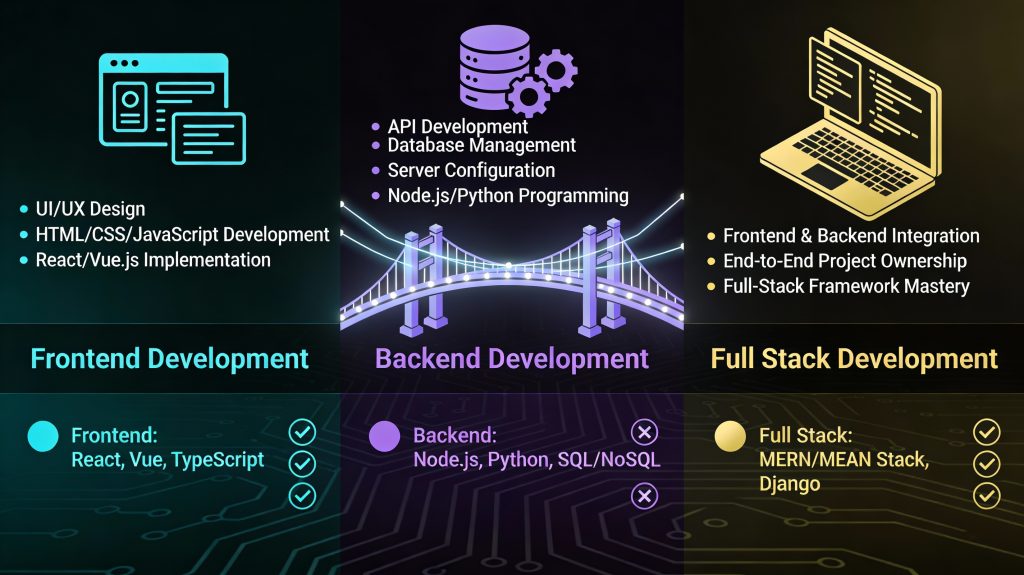
Frontend vs backend vs full stack software development comparison
Software development

Frontend vs Backend vs Full Stack Development: A Complete Software Development Guide

Introduction Modern software applications are built using multiple layers of technology, each responsible for a specific part of the system. To manage this complexity, software development roles are commonly divided into frontend, backend, and full stack development. Understanding these roles is essential for businesses planning projects and individuals choosing a career in software development. Each role requires different skills, tools, and responsibilities but works together to create functional, user-friendly applications. In this blog, we’ll explore frontend vs backend vs full stack development, compare their responsibilities, technologies, career paths, and help you decide which role best fits your goals. What Is Frontend Development? Frontend development focuses on the user interface (UI) and user experience (UX) of an application. It involves everything users see and interact with in a browser or mobile app. Key Responsibilities Designing layouts and user interfaces Implementing responsive designs Optimizing performance Ensuring cross-browser compatibility Frontend Technologies HTML, CSS, JavaScript Frameworks: React, Angular, Vue Styling tools: Tailwind, Bootstrap Build tools: Webpack, Vite Skills Required UI/UX principles Responsive design Performance optimization Frontend developers ensure that applications are visually appealing, intuitive, and fast. What Is Backend Development? Backend development handles the server-side logic that powers an application. It ensures data is processed, stored, and delivered securely. Key Responsibilities Building APIs Managing databases Handling authentication and authorization Ensuring scalability and security Backend Technologies Programming languages: Java, Python, Node.js, PHP Databases: MySQL, PostgreSQL, MongoDB Frameworks: Spring Boot, Django, Express Skills Required Data modeling API design Security practices Backend developers ensure applications function correctly behind the scenes. What Is Full Stack Development? Full stack development combines both frontend and backend responsibilities. A full stack developer can work across the entire application stack. Key Responsibilities Designing user interfaces Developing APIs Managing databases Deploying applications Popular Full Stack Stacks MERN (MongoDB, Express, React, Node.js) MEAN (MongoDB, Express, Angular, Node.js) LAMP (Linux, Apache, MySQL, PHP) Skills Required Frontend and backend expertise System design DevOps basics Full stack developers offer versatility and efficiency. Frontend vs Backend vs Full Stack: Comparison Aspect Frontend Backend Full Stack Focus UI/UX Server & data End-to-end Skills Design, JS Logic, databases Both Tools React, CSS APIs, databases Full stack tools Career Flexibility Moderate Moderate High Which Role Should You Choose? Choose Frontend If You enjoy design and visuals You like user interaction Choose Backend If You enjoy logic and data You prefer system performance Choose Full Stack If You want versatility You enjoy problem-solving across layers Career Opportunities Frontend Developer Backend Developer Full Stack Developer Software Engineer Each role offers strong career growth and demand. Conclusion Frontend, backend, and full stack development are all essential to software development. Each role offers unique challenges and opportunities. Understanding these roles helps teams collaborate effectively and individuals choose the right career path. Frequently Asked Questions (FAQs) 1. Is full stack development harder than frontend or backend? Full stack development requires broader knowledge but offers greater flexibility. 2. Can a frontend developer become full stack? Yes, many developers transition to full stack roles. 3. Which role pays more? Pay depends on skills and experience, not just the role. 4. Do full stack developers replace specialists? No, specialists are still essential for complex projects. 5. Which role is best for beginners? Frontend is often considered beginner-friendly. 6. Are full stack developers in demand? Yes, full stack developers are highly sought after. Connect with us:https://www.facebook.com/profile.php?id=61555452386126  

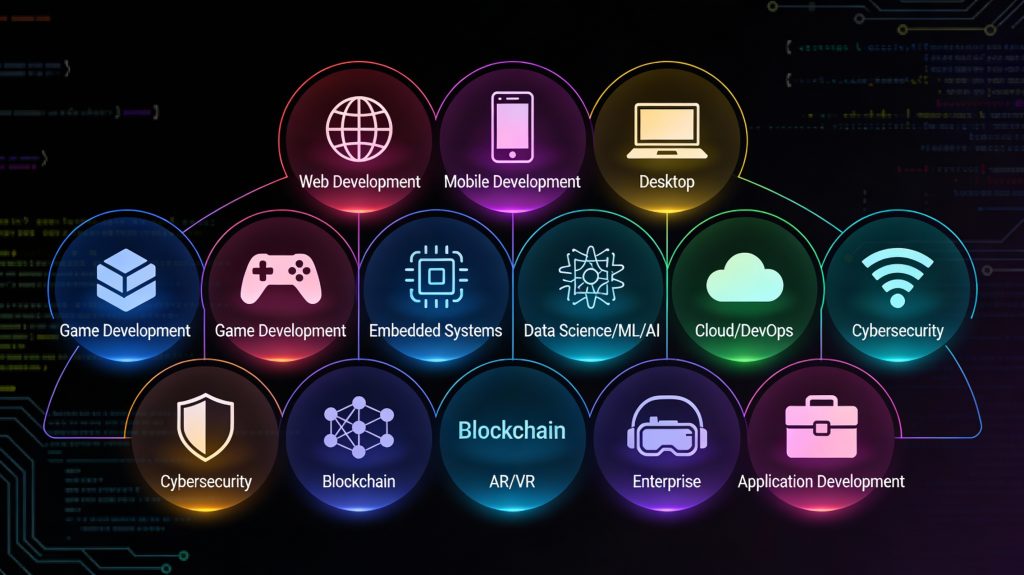
Different types of software development applications and platforms
Software development

Types of Software Development: Understanding Different Development Approaches and Applications

Introduction Software development is not a one-size-fits-all discipline. Depending on business goals, user needs, platforms, and technologies, software solutions are built in different ways. From websites and mobile apps to enterprise systems and embedded software, each type of software development serves a unique purpose. Understanding the types of software development helps businesses choose the right approach and enables developers to specialize in the areas that best align with their skills and career goals. As digital transformation accelerates across industries, the demand for diverse software solutions continues to grow. In this blog, we’ll explore the major types of software development, their characteristics, use cases, and how they contribute to modern technology ecosystems. Web Application Development Web development focuses on building applications that run in web browsers. These applications are accessible across devices without requiring installation. Key Characteristics Browser-based access Platform-independent Easy updates and maintenance Technologies Used Frontend: HTML, CSS, JavaScript, React, Angular Backend: Node.js, Python, Java, PHP Databases: MySQL, PostgreSQL, MongoDB Use Cases Business websites E-commerce platforms Content management systems Web portals Web development remains one of the most popular and in-demand software development types. Mobile Application Development Mobile software development involves creating applications for smartphones and tablets. Types of Mobile Development Native Development: Platform-specific (Swift for iOS, Kotlin for Android) Cross-Platform Development: Single codebase for multiple platforms (React Native, Flutter) Use Cases Social media apps Banking and fintech apps Fitness and healthcare apps On-demand services Mobile development focuses on performance, usability, and device-specific features. Desktop Software Development Desktop software development involves building applications that run on operating systems like Windows, macOS, and Linux. Key Features Offline functionality High performance Direct access to system resources Examples Productivity tools Graphic design software Accounting systems Although cloud and web apps are growing, desktop applications are still essential in many industries. Enterprise Software Development Enterprise software development focuses on building large-scale applications for organizations. Key Characteristics High scalability Complex workflows Integration with existing systems Examples ERP systems CRM platforms HR management software Enterprise software improves efficiency, data management, and operational control. Cloud Software Development Cloud development involves building applications designed to run on cloud infrastructure. Benefits Scalability on demand High availability Cost efficiency Popular Platforms Amazon Web Services (AWS) Microsoft Azure Google Cloud Platform Cloud-native development supports modern architectures like microservices and serverless computing. Embedded Software Development Embedded software runs on hardware devices rather than traditional computers. Examples IoT devices Automotive systems Medical equipment Smart appliances Embedded software must be efficient, reliable, and often real-time. Custom Software Development Custom software development involves building solutions tailored to specific business needs. Advantages Full control over features Better integration with business processes Competitive advantage Custom software is often preferred over off-the-shelf solutions for unique requirements. Game Development Game development combines software engineering with creativity. Technologies Used Game engines (Unity, Unreal Engine) Graphics and physics libraries Applications Mobile games Console games VR and AR experiences Game development emphasizes performance, graphics, and user engagement. AI and Machine Learning Software Development AI-driven software development focuses on intelligent systems. Use Cases Recommendation engines Chatbots Predictive analytics AI development requires specialized skills and data-driven approaches. Choosing the Right Type of Software Development Selecting the right development type depends on: Business goals Target users Budget and timeline Scalability requirements Making the right choice ensures long-term success. Conclusion Software development encompasses a wide range of approaches, each designed to solve specific problems. Understanding the different types of software development allows businesses to make informed decisions and developers to focus their skills effectively. As technology continues to evolve, the diversity of software development will only expand, offering endless opportunities for innovation. Frequently Asked Questions (FAQs) 1. What are the main types of software development? The main types include web, mobile, desktop, enterprise, cloud, embedded, and custom software development. 2. Which type of software development is most in demand? Web and mobile development are currently the most in-demand due to widespread digital adoption. 3. What is custom software development? Custom software development involves building applications tailored to specific business needs rather than generic solutions. 4. Is cloud software development different from web development? Yes, cloud development focuses on scalability and cloud infrastructure, while web development focuses on browser-based applications. 5. Which type of software development is best for startups? Web and cross-platform mobile development are often ideal for startups due to lower costs and faster time-to-market. 6. Can one project involve multiple types of software development? Yes, many modern projects combine web, mobile, cloud, and backend development. Connect with us: https://www.facebook.com/profile.php?id=61555452386126

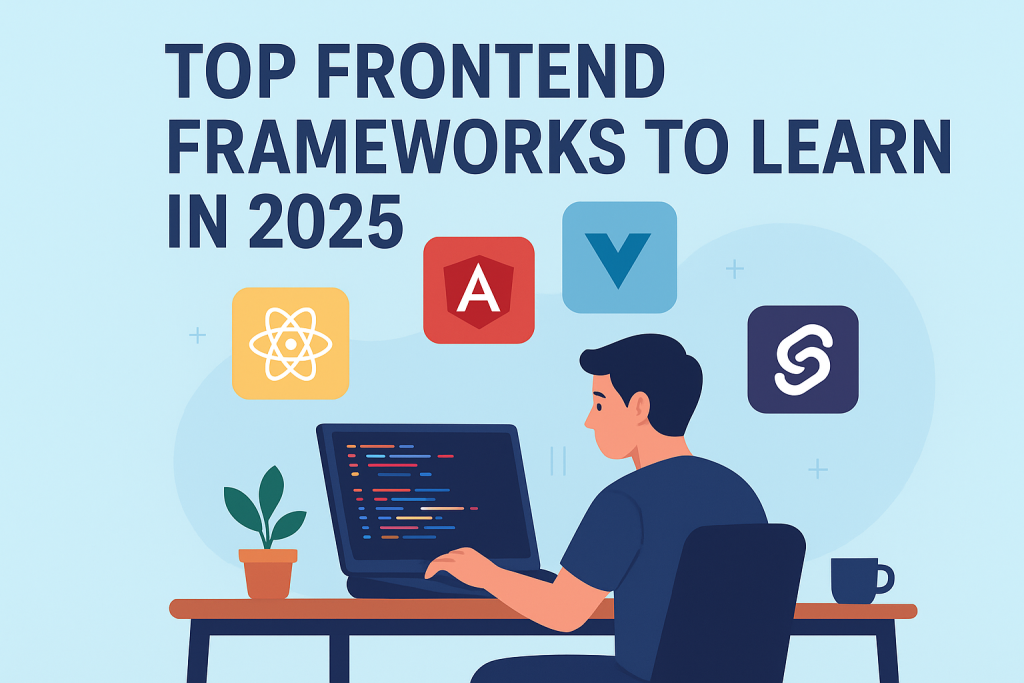
frontend developer exploring React, Angular, Vue, and Svelte frameworks on laptop
Frontend Developer

Top Frontend Frameworks to Learn in 2025 for Maximum Career Growth

Introduction The world of frontend development is evolving at lightning speed. Every year brings new tools, frameworks, and technologies that redefine how web interfaces are built and experienced. As a frontend developer in 2025, mastering the right frameworks can be the difference between being a job seeker and being in high demand. In this blog, we’ll explore the top frontend frameworks every developer should consider learning in 2025 — focusing on popularity, performance, and job opportunities. React.js — The Undisputed King React.js, developed by Meta, continues to dominate the frontend ecosystem. Its component-based structure allows developers to create highly interactive UIs efficiently.Key benefits include: Virtual DOM ensures fast rendering. Strong community support and reusable components. Works seamlessly with libraries like Redux and Next.js.Why learn it:React developers are in high demand, and its ecosystem powers countless enterprise-grade applications, from Facebook to Netflix. Vue.js — The Progressive Framework Vue.js stands out for its simplicity and flexibility. It bridges the gap between traditional HTML/CSS/JS and modern frameworks like React or Angular.Key benefits include: Easy learning curve for beginners. Great performance and smaller file sizes. Ideal for single-page applications (SPAs).Why learn it:Vue’s growing adoption in startups and Asian markets makes it a valuable skill to have in 2025. Angular — The Enterprise Favorite Angular, backed by Google, is a comprehensive framework ideal for building large-scale web apps. It offers built-in solutions for routing, HTTP requests, and form validation.Key benefits include: TypeScript-based for better maintainability. Strong security and scalability. Perfect for enterprise-level applications.Why learn it:If you’re targeting corporate environments or complex projects, Angular remains a must-learn framework. Svelte — The Future of Frontend Svelte is making waves for its compile-time approach, meaning it converts your code into efficient JavaScript at build time, rather than running a virtual DOM.Key benefits include: Faster performance due to lightweight output. Minimal boilerplate code. Easier reactivity handling.Why learn it:Svelte is gaining traction among modern developers who value performance and simplicity. Next.js — The React Framework for Full-Stack Power Next.js extends React with server-side rendering (SSR), static site generation (SSG), and API routes. It’s the go-to choice for creating SEO-friendly and blazing-fast websites.Key benefits include: Built-in routing and file system structure. Optimized for performance and SEO. Supports both static and dynamic rendering.Why learn it:If you love React but want to go full-stack, Next.js is your best friend in 2025. Solid.js — The Rising Star Solid.js combines the best of React’s component model and Svelte’s performance. It delivers fine-grained reactivity without using a virtual DOM.Key benefits include: Extremely fast runtime performance. React-like syntax with simpler reactivity.Why learn it:As Solid.js matures, it’s becoming a favorite among developers who crave efficiency and clarity. Qwik — Built for Instant Loading Apps Qwik introduces a revolutionary concept called resumability, where the app starts instantly on the client without hydration delays.Key benefits include: Near-instant page loads. Optimized for mobile and low-power devices.Why learn it:Qwik’s approach could redefine how modern web apps are built and loaded in the near future. Conclusion In 2025, being a successful frontend developer means being strategic — learning not just one framework but understanding when and why to use each.Start with React or Vue if you’re new, explore Next.js for production-grade apps, and keep an eye on Svelte, Solid, and Qwik — the future is bright, and the possibilities are endless. FAQs Q1. Which frontend framework should I learn first in 2025?If you’re a beginner, start with React.js or Vue.js — they offer great documentation and a huge community. Q2. Is Angular still relevant in 2025?Absolutely. Angular remains a top choice for enterprise applications and large development teams. Q3. Why is Svelte gaining popularity?Svelte eliminates the virtual DOM and compiles code at build time, leading to faster and more lightweight apps. Q4. Can I learn multiple frontend frameworks together?Yes, but start with one (like React) and move on to others once you’re confident with core concepts. Q5. Which framework has the best job opportunities?React.js and Next.js dominate global job listings in 2025, especially in startups and SaaS-based companies.

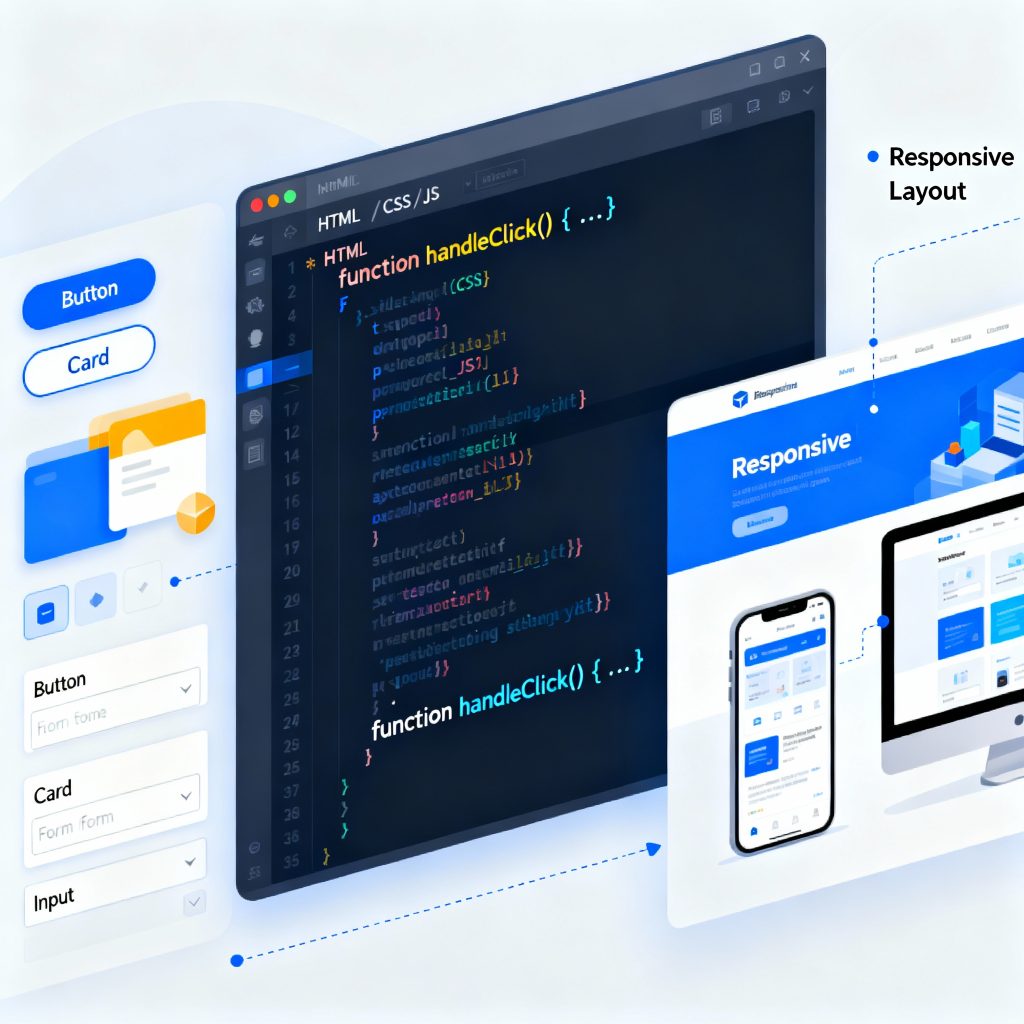
Illustration of frontend development showing a laptop with code editor, browser window, and UI components.
Frontend Developer

The Complete Guide to Becoming a Frontend Developer in 2025

Introduction In 2025, the role of a frontend developer has become one of the most exciting and creative careers in the tech world. A frontend developer builds everything a user sees and interacts with — from website layouts and animations to responsive buttons and navigation menus. This guide will help you understand what a frontend developer does, which skills you need, the tools used in 2025, and how to start your career. What is Frontend Development? Frontend development, often called the client-side of web development, deals with what users see on the screen. When you open a website, the design, color scheme, buttons, and animations — all are handled by frontend developers. Their main job is to transform static designs into fully functional, interactive web pages that look great on any device. Core Technologies You Must Learn To become a successful frontend developer, master these three building blocks: HTML (Structure)Defines the skeleton of a website using tags and elements. Example: headings, images, and links. CSS (Styling)Controls colors, fonts, and layout. Frameworks like Tailwind CSS and Bootstrap simplify this process. JavaScript (Interactivity)Adds logic and animations. In 2025, frameworks like React.js, Vue.js, and Next.js are industry favorites. Learn these three deeply, then move to advanced topics like APIs, TypeScript, and Performance Optimization. Frontend Developer Tools in 2025 Frontend developers rely on tools that enhance efficiency and quality: VS Code: Code editor with built-in extensions for HTML/CSS/JS. Git & GitHub: Manage versions and collaborate with teams. Figma: Understand design prototypes. Chrome DevTools: Debug and test performance. Node.js: Run tools and frameworks locally. MDN Web Docs on HTML — a trusted resource to strengthen your fundamentals. Frontend Developer Roadmap Follow this 7-step roadmap to become a frontend developer: Learn Basics: HTML, CSS, JS. Build Mini Projects: Portfolio, calculator, or to-do app. Learn Frameworks: React.js or Vue.js. Understand Version Control: Git and GitHub. Responsive Design: Make your site mobile-friendly. Deploy Projects: Use Netlify or Vercel. Build a Portfolio Website: Showcase your best work online. Career Growth and Salary Role Experience Salary (India) Junior Frontend Developer 0–2 years ₹4–6 LPA Frontend Engineer 2–5 years ₹6–10 LPA React Developer 3–6 years ₹8–15 LPA Frontend Architect 6+ years ₹15–25 LPA The more frameworks and tools you master, the higher your value in the market. Common Mistakes Beginners Should Avoid Ignoring responsive design Overusing frameworks without strong fundamentals Skipping Git version control Not learning debugging tools Not optimizing performance Future of Frontend Development In 2025, AI tools, WebAssembly, and Progressive Web Apps (PWA) are shaping the future. Frontend developers who stay updated with these trends will continue to be in high demand. Conclusion Becoming a frontend developer in 2025 is an incredible opportunity. It’s a mix of creativity, logic, and design. Learn the fundamentals, build projects, and continuously update your skills. Whether you work for a company or freelance, the demand for skilled frontend developers isn’t going anywhere. FAQs Is frontend development beginner-friendly?Yes, you can start with HTML, CSS, and JS even without prior coding experience. Which framework should I learn first?React.js — it’s the most popular in 2025. Do I need a degree to become a frontend developer?No, skill and portfolio matter more than degrees. How can I improve my frontend skills?Build projects, contribute to open source, and follow tutorials. What is the difference between frontend and backend?Frontend deals with visuals; backend handles logic and databases. Can AI replace frontend developers?No, AI assists — but creativity and user experience still need humans.

Artificial Intelligence

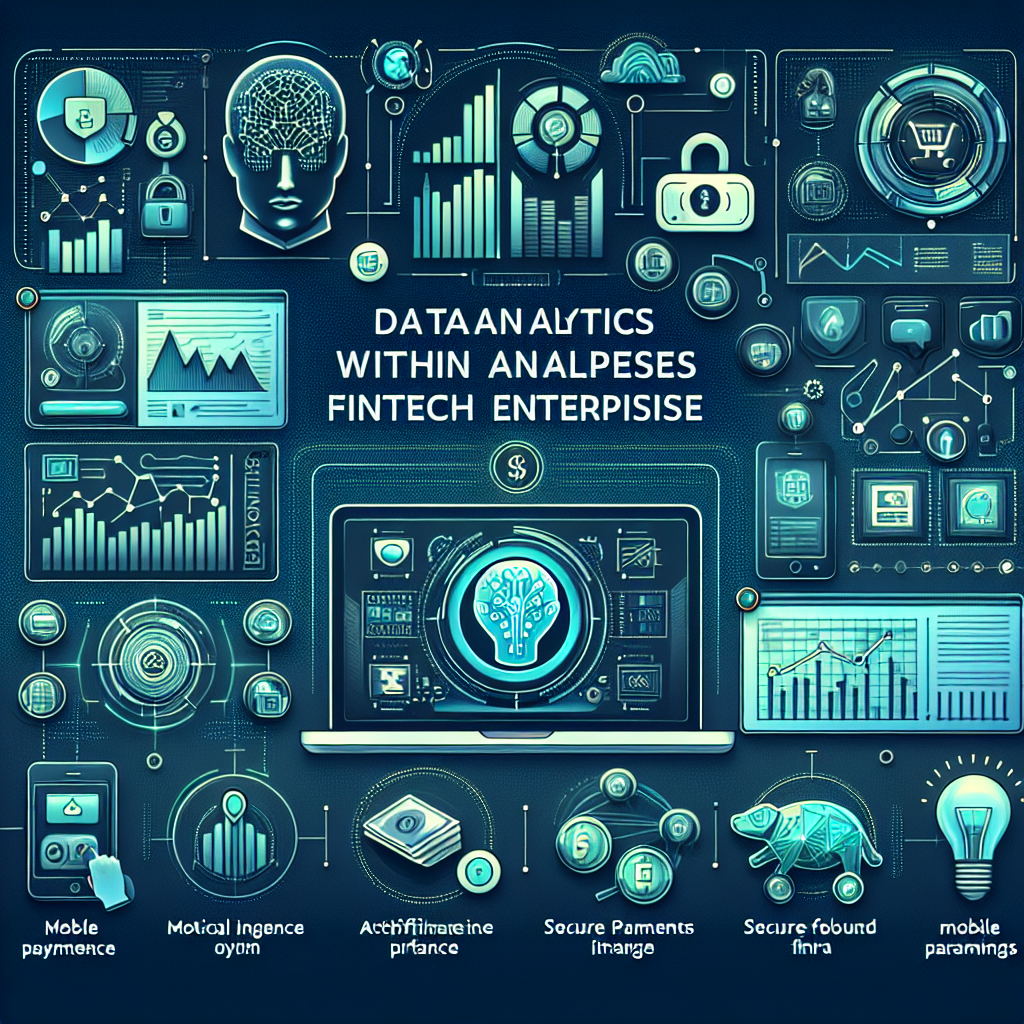
How Data Analytics Works in Fintech Enterprises

Introduction In 2025, data analytics has become the backbone of innovation and efficiency in fintech enterprises. Whether it’s for risk assessment, real-time fraud detection, customer personalization, or regulatory compliance, the strategic use of big data is redefining how fintech firms operate and scale. In this blog, we’ll explore how data analytics functions in the fintech sector, covering everything from data collection and processing to predictive modeling and business impact. Plus, discover why working with a future-ready partner like TechOTD is key to accelerating your fintech transformation journey. The Role of Data Analytics in Fintech 1. Data Collection & Integration Fintech companies ingest massive volumes of structured and unstructured data from banking transactions, payment gateways, customer interactions, IoT devices, and open banking APIs. The data stack typically involves cloud-native data lakes, robust ETL pipelines, and seamless integrations—often built by expert partners like TechOTD Web Development Services. 2. Preprocessing & Cleaning Before analysis, raw data undergoes cleaning, transformation, and normalization. This ensures that only accurate, relevant, and consistent information is carried forward. Automated workflows powered by AI-driven process monitoring and automation can catch anomalies and flag low-quality data early. 3. Real-Time Analysis & Decisioning Modern fintech relies on real-time analytics. Platforms stream data through tools like Apache Kafka or cloud-native systems, enabling instantaneous fraud detection, payment authorization, and compliance monitoring. For high-volume actions such as microtransactions or trading, milliseconds matter. 4. Predictive Modeling & Machine Learning At the core of fintech analytics are advanced AI and machine learning models that power: Credit scoring & risk assessment Fraud pattern recognition Customer segmentation & personalization Predictive portfolio management Dynamic pricing for loans and insurance AI models are developed, trained, and deployed by specialists using platforms and stacks like those offered by TechOTD’s AI Solutions, which also include model retraining and ongoing performance refinement. 5. Visualization & Business Insights Clear data visualization—think dashboards, interactive charts, automated reports—makes complex analytics understandable, actionable, and auditable for decision-makers, regulators, and partners. 6. Compliance & Data Security Regulations in finance are strict (GDPR, PSD2, local compliance). Data analytics platforms in fintech must be secure, transparent, and auditable, using encrypted flows, monitored access, and traceable changes. TechOTD’s consulting and development services include robust compliance planning baked into every solution. Key Benefits of Data Analytics in Fintech Faster and smarter decision-making Reduced fraud and operational risk Improved loan and product personalization Better regulatory reporting and auditability Higher user retention and growth rates Practical Example: AI-Powered Credit Scoring A leading fintech lender integrates open banking data and transaction histories through a secure cloud pipeline. ML models analyze applicant financial footprints in real time, generating nuanced credit ratings that outperform legacy techniques—reducing default rates and improving financial inclusion. Why Choose TechOTD for Fintech Data Analytics? Deep expertise in cloud, AI, and secure web development for finance Experience across banking, insurance, trading, and eCommerce verticals End-to-end project delivery from strategy to support Backed by glowing client testimonials—discover our services at TechOTD, About TechOTD, and Partner with Us. Conclusion Data analytics is the competitive edge that defines modern fintech. From collecting transaction data to deploying AI-driven models and visualizing actionable insights, each step unlocks new value and opportunity. If you’re looking to transform your fintech enterprise with next-level analytics, expert development, or custom AI, connect with TechOTD—and start building the future today. FAQ 1. What is the primary value of data analytics in fintech? It powers smarter decisions, reduces risk, and drives customer personalization and growth. 2. How do fintechs ensure data quality? Through automated cleaning, transformation, real-time monitoring, and specialist support from partners like TechOTD. 3. What role does AI play in fintech analytics? AI enables advanced use cases: predictive credit scoring, smart fraud detection, automated process optimization, and customer experience tailoring. 4. Is data analytics essential for compliance? Absolutely. Analytics platforms facilitate real-time compliance checks, automated reporting, and full audit trails. 5. How can TechOTD help my fintech business? By delivering secure, scalable, and innovative web, AI, and analytics solutions tailored for the financial services ecosystem—see our AI services and industry expertise

Software development

Custom Development vs White Label Solutions: Choosing What’s Best for Your Business

Introduction In today’s hyper-competitive digital world, selecting the right software strategy is crucial for business growth. Should your business invest in a bespoke solution tailored to your unique vision through custom development, or opt for a white label solution for fast, cost-effective deployment? This guide explores the key differences, benefits, and limitations of both approaches—empowering you to make an informed decision in line with your growth targets, market, and resources. Key Differences Between Custom Development and White Label Solutions Aspect Custom Development White Label Solutions Customization Built from scratch to fit your business’s requirements. Full control over features, branding, scalability, and security. Web & Software Development Pre-built, ready-to-deploy software. Customizable mainly for branding/interface. Explore Solutions Investment Higher upfront investment, potentially lower long-term cost (no ongoing vendor licenses). Your dedicated development partner: About Techotd Lower initial cost, but ongoing subscription/licensing fees may add up over time. Deployment Speed Requires skilled team and longer timelines—often months to years for complex projects. Rapid market entry—often deployable in weeks. eCommerce & More Support & Updates Managed by your in-house or dedicated team. Requires continuous investment in updates/security. Partner for Innovation Vendor provides technical support and product updates. Autonomy may be limited by provider’s roadmap. Scalability Infinite scalability and evolving features tailored to your growth. AI/ML Expertise Scalability is dependent on the vendor’s platform capabilities. Modifications are restricted. Use Cases Custom Development: Best for highly regulated industries (fintech, healthcare), unique SaaS, solutions demanding maximum compliance, complex workflows. See: Healthcare Solutions White Label Solutions: Ideal for startups, agencies, e-commerce businesses, and organizations needing fast, low-risk entry. See: eCommerce Platforms Weighing the Pros and Cons Advantages Custom Development Unique features and branding for a true competitive edge. Unlimited scalability and flexibility. Security tailored to compliance and industry specifics. May lower total cost of ownership in the long run. In-house or dedicated support ensures alignment and faster innovation. White Label Solutions Go live in weeks, not months. Low initial costs—make technology accessible for any size business. Pre-tested, vendor-maintained software means fewer technical hurdles. Focus on your core business; tech is managed by the solution provider. Limitations Custom Development High upfront investment and long project cycles. Ongoing expenses for maintenance, security, updates. Risk of delays or overruns if requirements change or expertise is lacking. White Label Solutions Limited ability to differentiate your brand. Customization confined mainly to aesthetics and minor features. Vendor lock-in risks and recurring costs. Scalability and compliance may be hindered by vendor limitations. Support and updates are dictated by the solution provider’s priorities. Conclusion Choosing between custom development and white label solutions depends on your organization’s vision, resource availability, and growth ambitions. If rapid launch and minimal investment are your priorities, a white label approach is practical. For businesses focused on unique positioning, advanced features, and long-term competitiveness, investing in custom development is a strategic move. Ready to elevate your business? Connect with TechOTD’s experts, assess your needs, and prepare for future-ready digital growth. FAQ 1. What is the biggest difference between custom development and white label solutions? Custom development is fully tailored, while white label is ready-made and limited to superficial customization. 2. Which approach is more cost-effective? White label is cheaper up front, but custom solutions may cost less long-term by avoiding subscription/vendor fees. 3. Does custom development guarantee faster business growth? It boosts long-term competitiveness via uniqueness and scalability, but doesn’t guarantee immediate gains. 4. Can white label solutions be customized for unique needs? Mostly limited to branding/interface tweaks—not deep feature or workflow changes. 5. When should I choose a white label solution? If you need to go to market quickly, have a limited budget, or don’t need complex integrations.

Scroll to Top