Integrating Telehealth with Existing EHR Systems: Streamlining Workflows
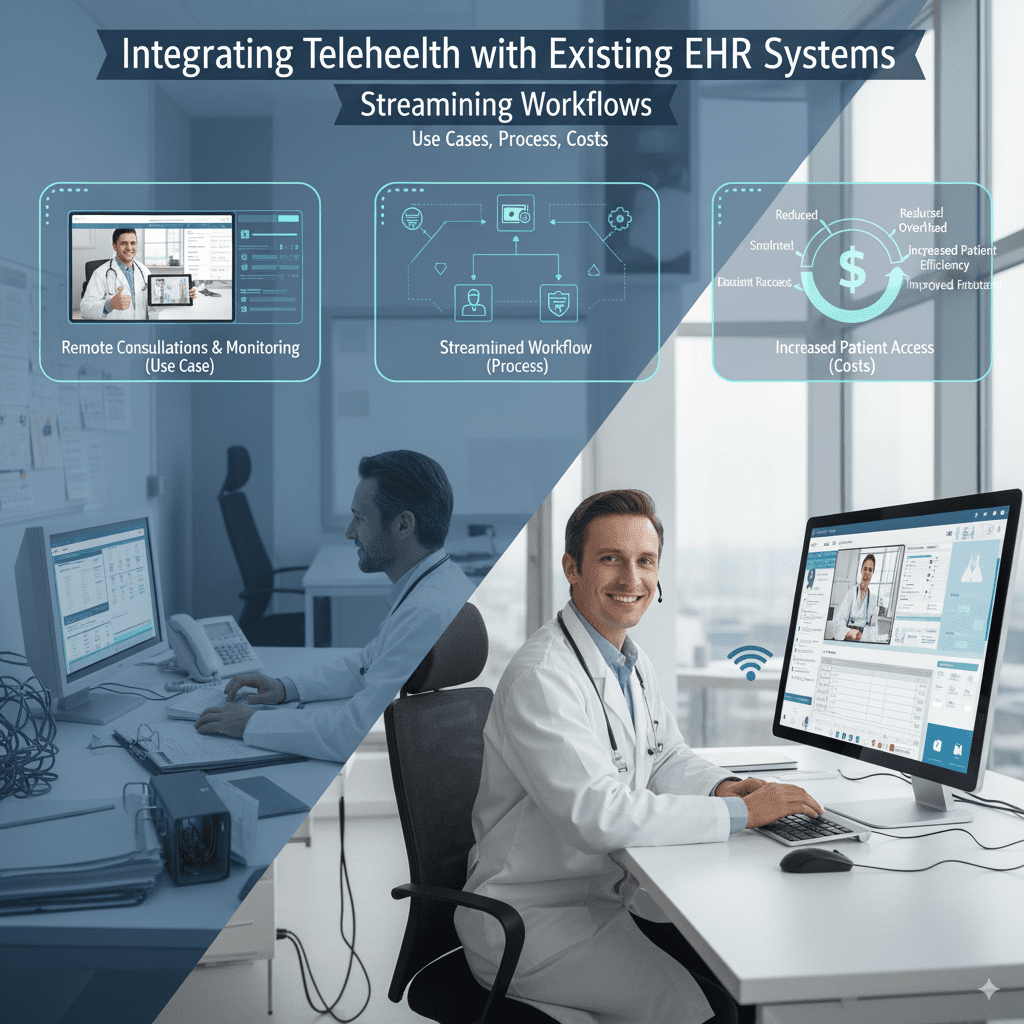
A rapid growth in the adoption of Electronic Health Records (EHRs) and telehealth software systems have been reported all across the world. For instance, almost 74% of healthcare physicians are actively offering telehealth services to their patients. However, one interesting finding in these studies is that it is causing a new strain of problems for healthcare providers, especially for healthcare IT teams. Since most healthcare providers use different healthcare software systems for different purposes, the creation of data silos has affected not only the interoperability of the desperate healthcare systems but also the clinical workflows of these practices. The disconnection between telehealth and Electronic Health Records (EHR) is creating a gap that is widening with every passing day. That is the reason a new trend is now taking shape and becoming a norm in the modern-day healthcare landscape. Yes, telehealth integration with EHR systems and EHR integration with telehealth systems for better data integration practices is what we’re talking about. But is this really the solution to bridge the gap between patient data leading to fragmented care? Well, explore exactly that along with the telehealth EHR integration benefits and the challenges of telehealth integration as well. So, without further ado, let’s get started! Unlocking the Power of Data Integration As healthcare practices are moving towards a digital landscape, the role of data in care delivery and also in the day-to-day affairs of healthcare practices is becoming the epicenter. That is why healthcare practices offering telemedicine should have EHR integration with their systems. Here are some of the telehealth EHR integration benefits that you must know: 1. Holistic Patient View: EHR integration with telemedicine systems enables healthcare providers to have a unified and holistic view of patient data. This patient data usually includes medical history, previous notes, telehealth encounters, and even medication and treatment plans. This will enable the provider to provide better patient care with a personalized approach. 2. Improved Care Coordination: Telehealth integration with healthcare systems, especially electronic health records systems, gives the provider direct access to all the relevant patient information, that too, in one place. This way, the entire care team can coordinate care in a much better way and make informed clinical decisions that can contribute to improving patient outcomes. 3. Streamlined Workflows and Reduced Errors: One of the major benefits of telehealth EHR integration is that it completely eliminates the chances of data duplication and manual entry. This way, clinical workflow is streamlined, significant time for both healthcare providers is saved, and errors are minimized, which will lead to better care practices. Apart from that, with EHR integration, the entire workflow can be streamlined, leading to better care practices. The Key to Interoperability: Standards and Technologies If you have even a slight idea about workflow optimization and telehealth integration with electronic health records, then you must know that interoperability is the key to data integration. Furthermore, to create a well-connected digital healthcare ecosystem, you must achieve interoperability. Here are some ways in which you can achieve that: 1. Breaking Down Silos with HL7 FHIR: HL7, also known as Health Level 7 and FHIR, are the interoperability standards that allow secure and standardized data exchange between telehealth platforms and EHR systems. Following these standards for data, integration enables healthcare providers to seamlessly exchange data and achieve EHR interoperability and telehealth. 2. Beyond Telehealth: While telehealth enables real-time virtual consultations with the use of telecommunication technologies, its integration with electronic health records and remote patient monitoring systems by achieving interoperability will make it an ecosystem where information can flow seamlessly and efficiently across different healthcare IT systems. This way, the telehealth integration will take the system beyond just virtual health consultations. 3. Future Proofing Your Infrastructure: As healthcare systems are becoming a part of the mainstream healthcare landscape, sooner or later, there will be a need to standardize the pattern in which data will be exchanged. This is in the foresight of the future of healthcare systems. So, actually following this as a best practice during your healthcare development will help you make your software future-proof and your practice one step ahead of the competitors, giving your practice more efficiency and efficacy. Challenges to Consider During Integration Since there are a lot of systems involved, the integration of so many systems is bound to be a challenging process for many. Here are some things that you can consider to avoid such challenges during the integration to help you achieve easy and smooth EHR and telehealth integration. 1. Data Standardization and Mapping: Data consistency across different systems is almost near impossible. The data stored in one healthcare IT system would be completely different from the data stored in your physicians’ healthcare systems. For instance, if the data standardization formats followed are different, then it becomes hard for the healthcare system to understand, interpret, and make sense of the data. However, with data mapping tools and industry-standard practices, you can actually ensure the quality of the data, which will automatically enhance the entire process, making the integration process much easier for the systems. 2. Cybersecurity and Data Privacy: Being one of those industries that is highly prone to cyber threats, there is a need to take robust security measures to protect sensitive patient data during the integration process. But how to ensure that? Following necessary compliances and regulatory regulations such as HIPAA, HITECH Act, GDPR, etc., can go a long way. Along with that, you ensure security measures are taken and also build trust in patients that their data is safe and private from the rest of the world. 3. Change Management and Staff Training: It cannot be ignored that the technology is constantly changing, and with that, everything needs to change. And the advancements in the medical field are proof of that. Being in the fastest changing industries, any change in the workflow or procedure will need a change in the system as well. Prepare for that in advance, train your staff well, and always address the technological changes that will help in the smooth adoption of the integrated system. Strategies for A Successful