TechOTD

Artificial Intelligence

AI Agents vs Traditional Automation: What’s Changing in 2026?

Introduction:- Automation has been a cornerstone of digital transformation for decades. Businesses have long relied on software to eliminate repetitive tasks, reduce operational costs, and improve efficiency. From manufacturing lines to customer relationship management systems, traditional automation has helped organizations streamline workflows and maintain consistency. However, the technological landscape in 2026 is undergoing a significant shift. Organizations are no longer satisfied with systems that simply follow predefined rules. They increasingly require software that can understand context, adapt to changing situations, make informed decisions, and collaborate with humans. This demand has accelerated the adoption of AI agents, one of the most influential developments in modern artificial intelligence. Unlike traditional automation, AI agents are designed to reason, plan, and act toward specific goals. They can analyze large amounts of information, interact with multiple applications, learn from feedback, and even coordinate with other AI systems. Rather than replacing simple automation, AI agents expand what automation can achieve by handling more dynamic and complex tasks. This article explores how AI agents differ from traditional automation, why organizations are investing in intelligent systems, and how businesses can prepare for the next generation of digital operations. Understanding Traditional Automation Traditional automation refers to software that performs predefined actions based on fixed rules. These systems execute workflows exactly as they were programmed, making them highly reliable for repetitive processes. Examples include: Automated invoice generation Payroll processing Scheduled email campaigns Data backups Manufacturing assembly lines Basic customer support chatbots Rule-based approval workflows The primary advantage of traditional automation is consistency. Once configured correctly, it performs the same task repeatedly with minimal errors. It is ideal for environments where processes rarely change. However, these systems have clear limitations. They cannot interpret ambiguous information, adapt to unexpected scenarios, or make decisions beyond their programmed rules. If the business process changes, developers often need to redesign or update the automation. What Are AI Agents? AI agents are intelligent software systems capable of perceiving information, reasoning about it, making decisions, and taking actions to achieve defined objectives. Unlike conventional automation tools, AI agents do not rely solely on fixed rules. They use technologies such as large language models, machine learning, natural language processing, retrieval systems, and external tools to solve problems dynamically. For example, an AI customer support agent can: Read a customer’s email. Identify the issue and urgency. Search internal documentation. Check order status. Draft a personalized response. Escalate complex cases when necessary. Learn from user feedback over time. Instead of executing a single scripted workflow, the agent evaluates the situation and chooses the most appropriate action. Traditional Automation vs AI Agents Feature Traditional Automation AI Agents Decision-making Rule-based Context-aware Learning No Yes, through AI models and feedback Flexibility Low High Handles unstructured data Limited Excellent Human-like communication Minimal Advanced Adaptability Requires reprogramming Can adjust to changing inputs Best suited for Repetitive tasks Complex, evolving workflows Why 2026 Marks a Turning Point Several technological trends have converged to make AI agents practical at scale. Large language models have become significantly more capable, enabling agents to understand natural language and generate useful responses. Cloud infrastructure now provides the computing power needed to run advanced AI workloads efficiently. Businesses have also accumulated vast amounts of digital data, creating opportunities for AI systems to deliver meaningful insights and automation. At the same time, organizations are under pressure to improve productivity, reduce costs, and respond faster to customer expectations. AI agents address these needs by automating tasks that previously required human judgment. Real-World Business Applications Customer Service Modern AI agents can resolve support tickets, summarize conversations, translate languages, and personalize responses while maintaining a consistent customer experience. Software Development Development teams use AI agents to generate code, review pull requests, identify bugs, write documentation, and automate testing. These capabilities accelerate delivery while allowing engineers to focus on architecture and innovation. Cybersecurity Security operations centers increasingly deploy AI agents to monitor logs, detect anomalies, investigate suspicious behavior, and recommend remediation steps. This helps analysts respond more quickly to emerging threats. Cloud Operations Cloud management platforms benefit from AI agents that optimize infrastructure, monitor resource utilization, predict outages, and recommend cost-saving opportunities. They can assist administrators in maintaining reliable and scalable environments. Healthcare Hospitals and healthcare providers use intelligent agents to organize patient records, assist with appointment scheduling, summarize clinical notes, and support administrative workflows, enabling staff to spend more time on patient care. Benefits of AI Agents Organizations adopting AI agents are seeing improvements in several areas: Increased productivity through intelligent task automation. Faster decision-making based on real-time data. Improved customer experiences with personalized interactions. Reduced operational costs by minimizing manual work. Better scalability across departments. Continuous learning and optimization through AI-driven feedback loops. These advantages make AI agents an important part of digital transformation strategies across industries. AI Governance in 2026: Balancing Innovation and Regulation  
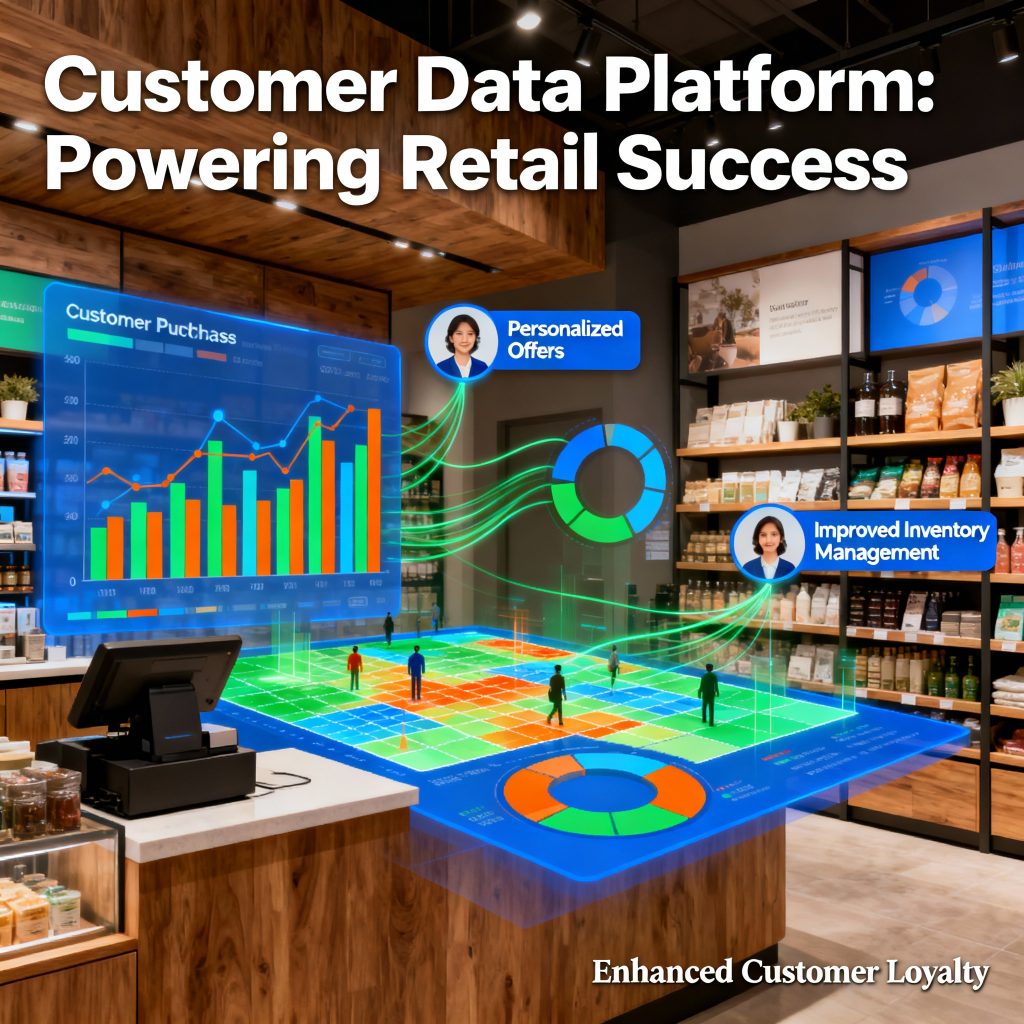
Feature image showing customer data platform (CDP) benefits for retail businesses, with colorful data analytics visuals and modern retail store elements.
Software development

10 Reasons You Need a CDP for Your Retail Business

  Introduction In today’s data-driven retail landscape, understanding and connecting with customers is crucial to success. Modern retailers rely on advanced software solutions like a Customer Data Platform (CDP) to unify fragmented customer data into a single hub. This empowers retail technology ecosystems to create personalized experiences, optimize marketing, and boost sales. As machine learning retail analytics, privacy regulations, and digital channels expand, a robust e-commerce CDP is no longer a luxury—it’s an essential tool for thriving in retail. This blog explores ten powerful reasons every retailer needs a CDP and offers actionable steps to build one, with deep insights and internal links to TechOTD’s leading resources. 10 Reasons You Need a CDP for Your Retail Business 10 Reasons Your Retail Business Needs a CDP 1. Unified Customer View A CDP creates a single, comprehensive profile for each customer by consolidating data from online stores, point-of-sale systems, mobile apps, and loyalty programs. This unified profile becomes the backbone of your retail system, supporting better understanding and improved decision-making. 2. Improved Personalization With unified data, retailers can deliver highly personalized product recommendations, emails, and offers. Personalization increases engagement and conversion rates by leveraging smart machine learning retail models within your CDP. 3. Enhanced Customer Segmentation CDPs enable segmentation based on behaviors, demographics, and purchase history—so messaging and offers are always relevant to each group, making your retail technology strategy more powerful. 4. Better Marketing ROI Precise targeting with real-time data means fewer wasted ad dollars and more effective campaigns. CDPs boost return on ad spend (ROAS) and improve overall marketing efficiency using advanced software analytics. 5. Seamless Omnichannel Experience CDPs unify customer journeys across web, apps, email, and physical stores, ensuring consistent messaging and experiences no matter where customers interact—essential for any e-commerce cdp implementation. 6. Data Compliance and Privacy Managing customer data centrally makes compliance with GDPR, CCPA, and other privacy regulations easier, reducing legal risks. 7. Real-Time Analytics and Insights Advanced analytics allow retailers to track campaign performance, predict churn, and uncover trends for smart, agile decision-making within your retail system. 8. Recover Abandoned Carts CDPs enable personalized follow-up emails and offers that re-engage customers and recover lost sales—using software-powered triggers for timely communication. 9. Customer Retention and Loyalty By understanding and responding to customer needs, CDPs empower loyalty programs and incentives, driving repeat purchases and long-term relationships with the help of advanced retail technology. 10. Marketing Automation and Efficiency Automated workflows triggered by customer actions save time, increase relevance, and let teams focus on strategy instead of manual tasks. This is the essence of modern retail software. How to Build a CDP for Your Retail Business Building a CDP is a strategic process that ensures your investment aligns with business goals—and delivers ongoing value for your retail system. 1. Assess Your Business Needs Identify whether you want more personalization, improved retention, or seamless omnichannel experiences. Clear goals inform every subsequent step. 2. Audit Existing Data Sources Review all systems with customer data (e.g., CRM, online store, loyalty programs—a part of your retail system), identify overlaps and gaps, and clean your data to ensure reliability. 3. Design the Architecture Plan how the CDP will connect to platforms like CRMs, e-commerce, POS, and marketing tools—key elements of retail technology. Define rules for real-time and batch data processing, access control, and regulatory compliance. 4. Develop and Integrate the Platform Choose scalable technology and APIs to bridge systems, ensure rapid data sync, and prioritize security. Integrate with existing processes and future-proof for business expansion using suitable software. 5. Define Segments and Attributes Map out key customer attributes and create segments for targeted campaigns (e.g., VIPs, frequent buyers, at-risk customers). 6. Personalization and Automation Configure real-time triggers for personalized messages, recommendations, and offers using machine learning retail tools. Use automation tools to deliver the right communication at the right time. 7. Privacy and Compliance Management Build in privacy controls and consent management. Keep customer trust by being transparent about data handling and honoring customer choices. 8. Measure and Optimize Set clear KPIs, monitor campaign results, and adjust segments, messages, and strategies using live data and advanced analytics software. Key Points Table Reason/Step Description Unified Customer View Single profile per customer enables better understanding and interactions. Improved Personalization Data-driven product recommendations and offers for each user. Enhanced Segmentation Group customers for relevant messages and campaigns. Marketing ROI Fewer wasted ads, real-time performance tracking, higher sales. Omnichannel Experience One smooth journey across online and offline touchpoints. Compliance & Privacy Centralized data simplifies consent management and data regulations. Real-Time Analytics Track trends, campaign success, and customer needs as they happen. Recover Carts Use behavioral data to re-engage and convert lost customers. Retention & Loyalty Data-driven incentives for long-term relationships and repeat sales. Automation Hands-off, triggered messaging and campaigns improve efficiency. For insights on how AI and software are transforming retail, read our guide on Machine Learning in Healthcare for parallels in data-driven innovation: Machine Learning in Healthcare Explore the future of AI-powered customer service in retail technology with our article on Seamless Customer Journeys with AI: Seamless Customer Journeys with AI – The Future of Service Excellence Understand how predictive analytics software enhance CDP capabilities in retail by visiting: Predictive Analytics Software Development – Features, Benefits, Use Cases, Process, and Cost Discover how cloud technology supports modern retail systems in our comprehensive guide: Cloud Computing – An Ultimate Guide for Businesses Learn about agentic RAG and its applications for smarter data management in retail systems: Agentic RAG: What It Is, Types, Applications, and Implementation Read about confidential AI systems transforming data security and compliance in retail technology: Confidential AI Conclusion A Customer Data Platform is a must-have software for every modern retail business. By connecting disparate data sources, enabling true omnichannel engagement, and powering personalization through machine learning retail analytics, a CDP puts the customer at the heart of decision-making. Investing in a CDP enables retailers to exceed customer expectations, drive returns, and thrive amid fierce competition. If you haven’t yet explored CDPs, now is the time to future-proof your retail business with advanced retail system tools—ensuring agility, compliance, and sustained growth. For tailored CDP integration and AI solutions, explore TechOTD’s expertise today. FAQ What is a CDP and how does it differ from a CRM? A CDP unifies customer data from all sources for 360° analysis and activation, while a CRM

Artificial Intelligence

The Future Is Now: 7 Emerging AI Trends You Shouldn’t Overlook

Introduction Artificial Intelligence is moving at lightning speed, redefining the way we live, work, and innovate. As we navigate through 2025 and beyond, keeping up with emerging AI trends is crucial for businesses, students, and tech enthusiasts alike.   These trends are shaping the future of everything from customer service and healthcare to creative industries and global security. If you want to harness cutting-edge AI for your business, check out the resources and services at TechOTD, learn more about their AI solutions, explore their industry expertise, and view the company’s story and partnerships. 1. Explainable AI (XAI) AI systems are increasingly complex, prompting a demand for transparency in how decisions are made. Explainable AI ensures that machine learning models provide clear, auditable reasoning behind their outputs. This is particularly critical in finance, healthcare, and regulated industries, fostering trust among users and stakeholders. 2. Multimodal AI Gone are the days when AI could only analyze one type of data. Multimodal AI systems now process diverse data sources—like text, images, video, and audio—simultaneously. This enables smarter assistants, highly interactive customer interfaces, and more natural human-computer interactions. 3. Edge AI Instead of processing all data in distant data centers, Edge AI moves intelligence closer to where data is generated—such as smartphones, cameras, or IoT devices. This drastically reduces latency, enhances privacy, and enables real-time decision-making for applications like manufacturing automation and wearable health analytics. 4. AI Democratization Low-code and no-code AI platforms empower non-technical users to create and deploy powerful AI systems. This democratization accelerates business innovation, promotes accessibility, and shrinks the gap between ideas and execution—especially for startups and SMBs. 5. Generative AI AI is no longer just for analyzing data—it now creates. Generative AI models (like ChatGPT and DALL-E) can produce content, design products, write code, and generate simulations, revolutionizing creative industries, marketing, gaming, and education. 6. AI-Blockchain Convergence The synergy of blockchain and AI unlocks robust, decentralized, and secure data sharing. In sensitive sectors like healthcare and finance, this convergence brings new trust mechanisms, improved security, and transparent record-keeping for data-driven services. 7. Agentic & Autonomous AI The rise of Agentic AI means intelligent systems can now reason, plan, and execute tasks autonomously. Imagine digital employees handling workflows, diagnostics, or complex customer support—freeing humans for more strategic initiatives. Conclusion The AI landscape is evolving faster than ever, and these 7 emerging trends are paving the way for the next wave of digital transformation. Whether you’re a business leader, developer, or tech enthusiast, now is the time to embrace these advances—or risk falling behind. To stay ahead and unlock AI-driven innovation, connect with the experts at TechOTD and explore collaboration, industry solutions, and partnership opportunities. FAQ 1. What is Explainable AI, and why is it important? Explainable AI provides clear, human-readable explanations for AI decisions, which is crucial for trust, especially in highly regulated industries. 2. How does Edge AI affect user privacy? Edge AI processes data locally, reducing exposure and boosting privacy by keeping sensitive information on the device. 3. Will Generative AI replace human creativity? No—it enhances creativity by allowing humans to prototype, iterate, and explore ideas more quickly. 4. Can non-programmers leverage AI in their business? Absolutely! With no-code and low-code AI tools, anyone can build and deploy AI-powered solutions. 5. How does TechOTD help organizations adopt new AI trends? TechOTD offers AI strategy consulting, development, and industry-focused implementation—learn more at their AI services page.

data science

Unleashing the Role of Data Analytics in Driving Smarter Banking Decisions

Introduction In today’s evolving financial landscape, data analytics has become the secret weapon of forward-thinking banks. As digital transformation accelerates and customer expectations soar, leveraging big data and advanced analytics is helping financial institutions make smarter, faster, and more secure decisions. This blog explores how data analytics is revolutionizing smarter decision-making in banking, empowering both organizations and their customers. Looking for transformative analytics and AI solutions? Discover expert offerings at TechOTD, explore industry AI services, learn about TechOTD’s background, investigate eCommerce banking solutions, check out the partnership program, or see their web development expertise. How Data Analytics Powers Smarter Banking Decisions Deeper Customer Insights: Analytics tools process customer transactions, behaviors, and digital interactions to create detailed customer profiles. This enables hyper-personalized recommendations, targeted offers, and dynamic risk scoring. Proactive Risk Management: AI and machine learning monitor transactions in real time to detect and predict fraud or credit risks—allowing banks to act before issues escalate. Operational Efficiency: Automated analytics streamline processes like loan approvals, compliance checks, and account monitoring, reducing costs and improving accuracy. Strategic Growth: Market analytics reveal emerging opportunities, untapped customer segments, and help banks launch new banking or investment products. Data-Driven Compliance: Powerful reporting and analytics ensure regulatory requirements are met and help quickly respond to audits or legislative shifts. Real-World Applications Fraud Detection: Real-time analytics flag suspicious activities, preventing losses and boosting customer trust. Credit Scoring: Dynamic scoring models incorporate more data points—and are much more predictive than traditional scoring. Personalized Banking: Recommending the right product or service, at the right moment, for every unique customer. Operational Optimization: Monitoring ATM usage, branch performance, and digital channel adoption to inform smarter resource allocation. Use Cases Where Data Analytics Drives Smarter Banking   Use Case Application Example Value Delivered Cash Flow Forecasting Retailer gets insights on seasonal cash fluctuations Bank tailors products and credit lines to ensure liquidity Working Capital Optimization Manufacturing firm’s payment trends analyzed Automation and financial advice to free up cash flow Fraud Detection Real-time monitoring of outlier transactions Reduces losses, limits fraud-related customer churn Loan & Credit Recommendations Analysis of historic purchases and payment cycles Banks offer right-sized, flexible loans or credit Strategic Expansion Aggregated customer and location data for market entry decisions Minimizes risk, enables smarter regional growth How to Implement Data Analytics for Bank Success in 2025 Modernize Infrastructure: Move to scalable, cloud-driven solutions for seamless data processing. (TechOTD’s web solutions) Use AI/ML Intensively: Integrate automated fraud, risk, and customer analytics with your core banking systems. (TechOTD AI services) Invest in Team Training: Upskill your staff in analytics, machine learning, and data-driven decision-making. Partner Strategically: Collaborate with fintech and digital partners to accelerate analytics innovation. (Partner with TechOTD) Adopt Robust Data Governance: Ensure privacy, data security, and compliance with Australia’s privacy laws and banking regulations. Conclusion The banks that thrive in 2025 and beyond will be those that embed data analytics at every level of their business. Smarter insights lead to better products, sharper risk management, and exceptional customer experiences. If you’re looking to unleash smarter banking through cutting-edge analytics and AI, explore trusted solutions and industry expertise at TechOTD, the AI innovation hub, about TechOTD, specialized eCommerce finance solutions, the TechOTD partnership program, and custom web development services. FAQ 1. How can data analytics improve my bank’s profitability? By detecting fraud earlier, targeting high-value offers, optimizing operations, and improving risk management—all driven by accurate, data-based insights. 2. Is AI replacing bankers in decision-making? No; AI and analytics tools support human bankers with actionable intelligence—freeing staff for higher-value client interactions. 3. What’s essential to get started with banking analytics? A modern, secure data infrastructure, trained teams, clear governance, and the right technology partners like TechOTD. 4. Are data analytics solutions secure and compliant? Yes, when implemented with the right security architecture, privacy controls, and compliance expertise (as provided by TechOTD). 5. Can analytics help banks unlock new growth? Absolutely. Analytics reveal new markets, guide product launches, and deepen customer loyalty.

Artificial Intelligence

How Data Analytics Works in Fintech Enterprises

Introduction In 2025, data analytics has become the backbone of innovation and efficiency in fintech enterprises. Whether it’s for risk assessment, real-time fraud detection, customer personalization, or regulatory compliance, the strategic use of big data is redefining how fintech firms operate and scale. In this blog, we’ll explore how data analytics functions in the fintech sector, covering everything from data collection and processing to predictive modeling and business impact. Plus, discover why working with a future-ready partner like TechOTD is key to accelerating your fintech transformation journey. The Role of Data Analytics in Fintech 1. Data Collection & Integration Fintech companies ingest massive volumes of structured and unstructured data from banking transactions, payment gateways, customer interactions, IoT devices, and open banking APIs. The data stack typically involves cloud-native data lakes, robust ETL pipelines, and seamless integrations—often built by expert partners like TechOTD Web Development Services. 2. Preprocessing & Cleaning Before analysis, raw data undergoes cleaning, transformation, and normalization. This ensures that only accurate, relevant, and consistent information is carried forward. Automated workflows powered by AI-driven process monitoring and automation can catch anomalies and flag low-quality data early. 3. Real-Time Analysis & Decisioning Modern fintech relies on real-time analytics. Platforms stream data through tools like Apache Kafka or cloud-native systems, enabling instantaneous fraud detection, payment authorization, and compliance monitoring. For high-volume actions such as microtransactions or trading, milliseconds matter. 4. Predictive Modeling & Machine Learning At the core of fintech analytics are advanced AI and machine learning models that power: Credit scoring & risk assessment Fraud pattern recognition Customer segmentation & personalization Predictive portfolio management Dynamic pricing for loans and insurance AI models are developed, trained, and deployed by specialists using platforms and stacks like those offered by TechOTD’s AI Solutions, which also include model retraining and ongoing performance refinement. 5. Visualization & Business Insights Clear data visualization—think dashboards, interactive charts, automated reports—makes complex analytics understandable, actionable, and auditable for decision-makers, regulators, and partners. 6. Compliance & Data Security Regulations in finance are strict (GDPR, PSD2, local compliance). Data analytics platforms in fintech must be secure, transparent, and auditable, using encrypted flows, monitored access, and traceable changes. TechOTD’s consulting and development services include robust compliance planning baked into every solution. Key Benefits of Data Analytics in Fintech Faster and smarter decision-making Reduced fraud and operational risk Improved loan and product personalization Better regulatory reporting and auditability Higher user retention and growth rates Practical Example: AI-Powered Credit Scoring A leading fintech lender integrates open banking data and transaction histories through a secure cloud pipeline. ML models analyze applicant financial footprints in real time, generating nuanced credit ratings that outperform legacy techniques—reducing default rates and improving financial inclusion. Why Choose TechOTD for Fintech Data Analytics? Deep expertise in cloud, AI, and secure web development for finance Experience across banking, insurance, trading, and eCommerce verticals End-to-end project delivery from strategy to support Backed by glowing client testimonials—discover our services at TechOTD, About TechOTD, and Partner with Us. Conclusion Data analytics is the competitive edge that defines modern fintech. From collecting transaction data to deploying AI-driven models and visualizing actionable insights, each step unlocks new value and opportunity. If you’re looking to transform your fintech enterprise with next-level analytics, expert development, or custom AI, connect with TechOTD—and start building the future today. FAQ 1. What is the primary value of data analytics in fintech? It powers smarter decisions, reduces risk, and drives customer personalization and growth. 2. How do fintechs ensure data quality? Through automated cleaning, transformation, real-time monitoring, and specialist support from partners like TechOTD. 3. What role does AI play in fintech analytics? AI enables advanced use cases: predictive credit scoring, smart fraud detection, automated process optimization, and customer experience tailoring. 4. Is data analytics essential for compliance? Absolutely. Analytics platforms facilitate real-time compliance checks, automated reporting, and full audit trails. 5. How can TechOTD help my fintech business? By delivering secure, scalable, and innovative web, AI, and analytics solutions tailored for the financial services ecosystem—see our AI services and industry expertise

Internet of Things

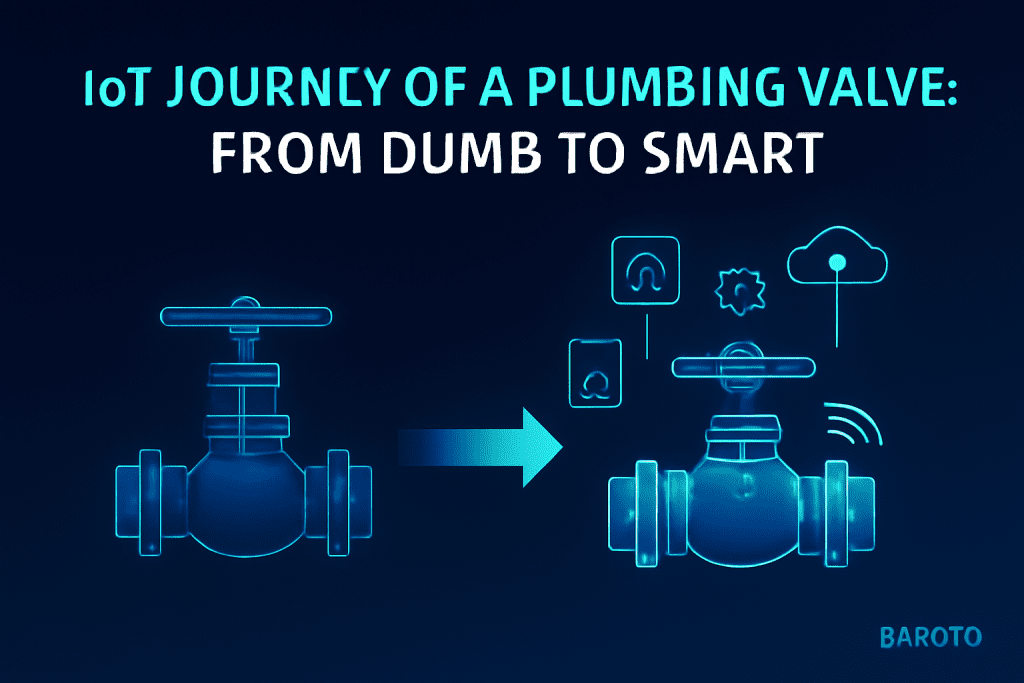
IoT Journey of a Plumbing Valve: From Dumb to Smart—A Hardwork Product Story

Introduction Traditionally, plumbing valves were mere mechanical switches—simple, robust, and entirely manual. But with the rise of the Internet of Things (IoT), these “dumb” products are undergoing a spectacular digital transformation, turning into intelligent, connected, and self-optimizing components of modern water systems. In this blog, we chronicle the real-world journey of a plumbing valve—from initial concept to becoming a smart hardware product—and show how the convergence of sensors, cloud connectivity, and data analytics enables new levels of efficiency, sustainability, and value. 1. Phase One: The Age of Dumb Valves Manual operation: Requires on-site access, often leading to delayed response for leaks or issues. Lack of data: No usage tracking, failure prediction, or remote diagnostics. Constant supervision: Human monitoring needed to ensure systems function as intended. Maintenance challenges: Failures are often detected late, causing water loss or property damage. 2. The Trigger: What Problems Spark Smart Plumbing Innovation? Water wastage and costly leaks: Manual valves can’t respond instantly to unexpected bursts or inefficiencies. Regulatory pressure and sustainability goals: Cities and organizations demand more visibility and control over water consumption. Labor and maintenance costs: Manual checks are labor-intensive and prone to human error. 3. Reimagining the Valve: Digital Foundations Embedded Sensors: Smart valves are equipped with flow, pressure, and sometimes chemical sensors, enabling real-time monitoring of water conditions at every point in the system. Wireless Connectivity: Modern smart valves feature WiFi, ZigBee, LoRa, or cellular modules that communicate with building management systems or mobile apps. Microcontrollers & Actuators: Allow the valve to be operated remotely and respond autonomously to sensor data (e.g., shutting off when a leak is detected). 4. The IoT Plumbing Valve Solution: Capabilities Unleashed Remote Monitoring & Control: Facility managers and homeowners can check valve status, flow rates, and issue commands from a smartphone or dashboard—anywhere, anytime. Automated Alerts: Receive instant notifications for leaks, excessive flow, or freezing conditions, enabling rapid response and minimizing damage. Predictive Maintenance & Analytics: The combination of usage data and AI analytics supports proactive servicing, optimizing both performance and lifespan of plumbing assets. Integration with Smart Ecosystems: Connect valves to fire suppression, energy management, or home automation platforms for unified, responsive building operations. 5. Real-World Impact Water Utilities: Deploy smart valves to monitor city-wide systems, reduce non-revenue water through early leak detection, and optimize pressure to minimize bursts. Commercial Buildings: Achieve regulatory compliance, reduce operational costs, and deliver greener, more responsive facilities. Residential Homes: Prevent costly flood damage and empower owners to actively manage water usage and conserve resources. 6. The Future: Smarter, Safer, Sustainable AI + Digital Twins: Next-gen smart valves use digital twins and AI to simulate and optimize real-world performance, preempting problems before they happen. Edge Computing: Smart valves are becoming more autonomous, running analytics on-device for instant decision-making. Self-Learning Systems: Over time, smart valves adapt to usage patterns, environmental changes, and unique plumbing demands—delivering truly “intelligent” water management. Conclusion The IoT-driven evolution of plumbing valves is a story of hard work, innovation, and digital transformation. What started as a humble manual component is now central to smart buildings, sustainable utilities, and efficient, resilient infrastructure. Businesses and homeowners ready to harness the full value of IoT plumbing systems—integrating smart sensors, cloud dashboards, and AI analytics—will drive the next phase of efficiency and water wisdom. Interested in building, upgrading, or monitoring your own smart plumbing systems? Partner with the IoT and web development leaders at TechOTD, leverage advanced analytics with AI solutions, or explore industry-specific innovations at Industry Solutions. Discover flexible, scalable, and secure digital plumbing control—start your journey today! FAQ 1. What makes a plumbing valve “smart”? Sensors, actuators, and wireless connectivity allow for real-time data, remote control, and autonomous behavior in response to leaks or usage patterns. 2. What are the biggest benefits of IoT plumbing valves? Instant leak detection, predictive maintenance, water conservation, and remote monitoring/control. 3. Can smart valves integrate with other smart home or building systems? Yes! Modern platforms enable integration with fire, HVAC, and central building management systems for holistic control. 4. Are smart valves cost-effective for small buildings or homes? While initial investment is higher than standard valves, long-term savings from avoided damage, lower labor, and water efficiency justify the expense. 5. How do I get started with smart plumbing technology? Contact experts like Techotd for a tailored solution that fits your property, budget, and sustainability goals.

sensor, Uncategorized

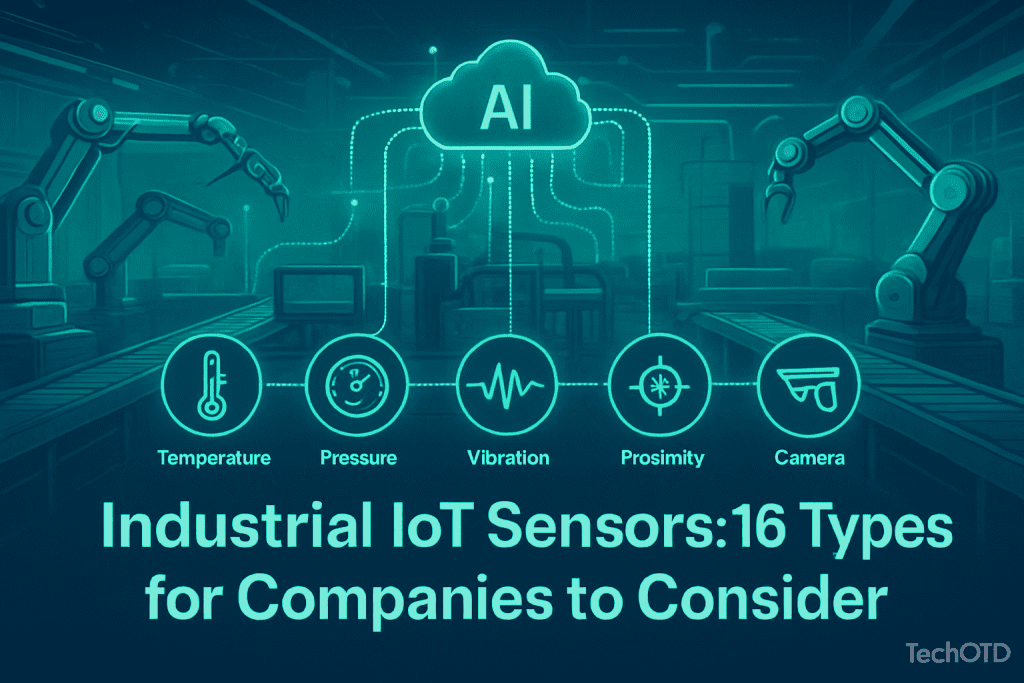
Industrial IoT Sensors: 16 Types Every Company Should Consider

Introduction In today’s rapidly advancing manufacturing and logistics landscape, Industrial Internet of Things (IIoT) sensors play a pivotal role in driving smart factories, real-time monitoring, and predictive analytics. From automating routine processes to enabling proactive maintenance and sustainability insights, the right IoT sensors transform how companies operate and compete. This comprehensive guide reveals 16 essential types of IIoT sensors modern enterprises should consider—plus actionable advice, real-world applications, and expert resources from TechOTD to future-proof your connected operations. Understanding Industrial IoT Sensors IIoT sensors are the building blocks of the smart industry. By capturing, transmitting, and analyzing physical phenomena (temperature, pressure, motion, etc.), they empower businesses to: Automate machine monitoring and control. Predict and prevent equipment failures. Boost energy efficiency and reduce costs. Improve workplace safety and compliance. Gain data-driven insights for better decision-making. Leading-edge sensor integration often includes AI, cloud analytics, and seamless custom development—discover what’s possible with TechOTD’s AI Services. 16 Types of Industrial IoT Sensors to Power Your Business 1. Temperature Sensors   Monitor equipment, products, and environments to prevent overheating, freezing, or spoilage. Use Cases: Cold chain logistics, HVAC, manufacturing. 2. Pressure Sensors Track fluid or gas pressure in pumps, pipelines, and tanks to prevent leaks or maintain optimal operation. Use Cases: Oil & gas, chemical processing, water utilities. 3. Proximity Sensors Detect presence or absence of objects—crucial for automation and safety interlocks. Use Cases: Conveyor lines, robotics, packaging lines. 4. Vibration Sensors Identify abnormal equipment vibrations indicating wear, imbalance, or impending breakdown. Use Cases: Predictive maintenance, rotating machinery, motors. 5. Humidity Sensors Measure moisture levels to ensure safe storage and ideal production conditions. Use Cases: Food processing, electronics, pharmaceuticals. 6. Flow Sensors Monitor the movement of liquids or gases for efficient control and billing. Use Cases: Water treatment, chemical processing, energy management. 7. Level Sensors Detect levels of liquids, solids, or granular materials in tanks and silos. Use Cases: Bulk storage, process industries, agriculture. 8. Accelerometers Track acceleration, tilt, and motion—enabling asset tracking and machine condition monitoring. Use Cases: Fleet management, machine health, smart logistics. 9. Gas Sensors Detect hazardous gases and pollutants to prevent accidents and ensure compliance. Use Cases: Mining, utilities, manufacturing, building management. 10. Optical Sensors Leverage light for object detection, counting, and quality inspection. Use Cases: Automated sorting, vision-based inspection, packaging. 11. Current/Voltage Sensors Monitor electrical consumption, surges, and overloads for operational efficiency and safety. Use Cases: Energy management, predictive maintenance, power distribution. 12. Ultrasonic Sensors Measure distance, detect objects, or monitor fluid levels using sound waves. Use Cases: Robotics, logistics automation, tank level detection. 13. Magnetic Sensors Detect magnetic fields or positions for speed, position, and rotational measurements. Use Cases: Conveyor belts, electric motors, proximity detection. 14. Infrared (IR) Sensors Enable temperature measurement and motion detection using infrared radiation. Use Cases: Safety systems, automated lighting, thermal monitoring. 15. Force/Torque Sensors Measure mechanical force or torque in manufacturing processes for quality control. Use Cases: Robotics, assembly lines, pick-and-place operations. 16. Image Sensors (Cameras) Capture and process images for AI analysis, defect detection, and remote monitoring. Use Cases: Production line inspection, security, operational dashboards. Integrating IIoT Sensors for Maximum Value Modern businesses achieve transformative benefits by integrating these sensors with: Cloud platforms for scalable analytics (Connect with TechOTD) AI and machine learning for predictive maintenance and insight generation (Next-gen AI Solutions) Custom dashboards for real-time, actionable views (Partner Programs) Industry-focused use cases like eCommerce logistics, manufacturing, or smart buildings (Industry Solutions) Conclusion The future of industrial operations is data-driven, intelligent, and interconnected. By strategically deploying these 16 IIoT sensor types, your company unlocks new levels of visibility, efficiency, and innovation. Ready to design a future-proof sensor network or need world-class AI integration for manufacturing, logistics, or energy? Start your digital transformation journey with TechOTD’s expert solutions. FAQ 1. What are the most popular IIoT sensor types for 2025? Temperature, pressure, vibration, and proximity sensors lead deployments in manufacturing and logistics. 2. How can IIoT sensors save costs for my business? They enable predictive maintenance, reduce downtime, optimize processes, and cut energy/waste expenses. 3. Is integrating multiple sensor types complicated? With the right partner and modular platforms like TechOTD, multi-sensor integration is streamlined and scalable. 4. Are IIoT sensors secure? Partner with trusted providers that prioritize data security, encryption, and compliance for safe operations. 5. How do I choose the right mix of sensors? Analyze your process needs, consult with IIoT and AI experts, and start with scalable pilot projects.

Real-Time Visibility

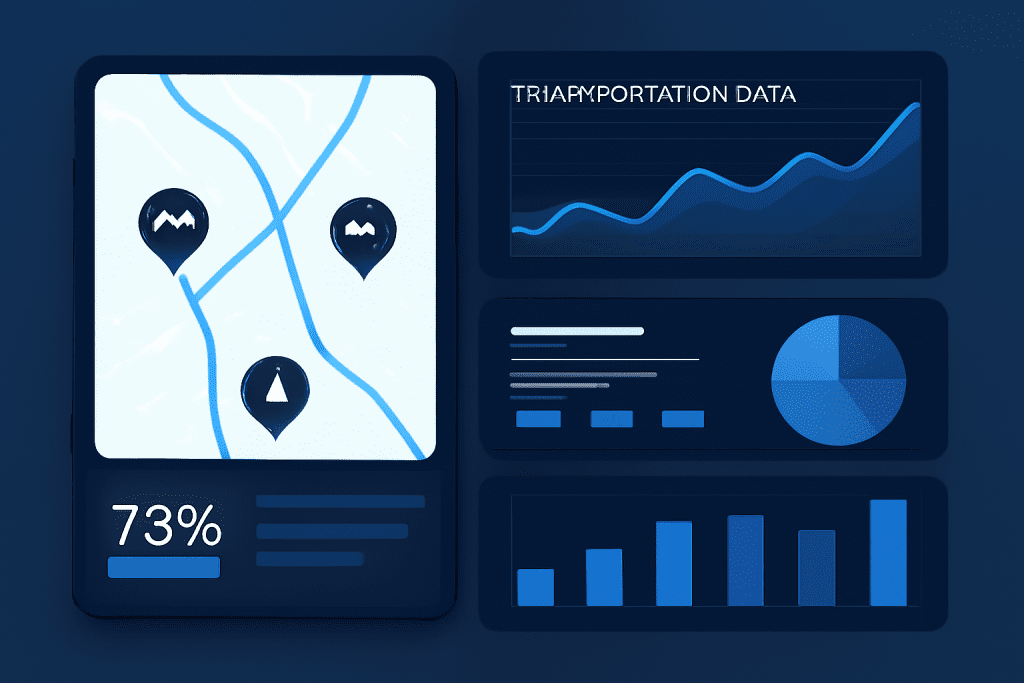
Solving the Transportation Data Breakdown Before It Hurts Performance

Introduction Transportation systems run on data—real-time routing, shipment tracking, fleet maintenance, and customer service all depend on seamless digital information flow. But when data breaks down—due to silos, outdated systems, or poor integrations—the impact is immediate: missed deliveries, increased costs, frustrated customers, and lost revenue. This blog reveals how to proactively solve the transportation data breakdown before it disrupts your logistics, showing you key strategies, actionable steps, and the critical role of future-proof technology in powering performance. Solving the Transportation Data Breakdown Before It Hurts Performance Transportation networks—covering logistics, fleet management, supply chain operations, and delivery services—depend heavily on accurate and timely data. When data breakdowns happen (due to silos, poor data quality, or system integration issues), it leads to: Delayed shipments Higher operational costs Inefficient route planning Reduced customer satisfaction Common Causes and Warning Signs of Data Breakdown Data Silos: Information trapped in separate TMS, ERP, or telematics platforms with no cross-communication. Manual Processes: Reliance on spreadsheets, faxes, or phone calls for load assignment and tracking. Inconsistent Data Formats: Discrepancies between systems, leading to errors in route planning, billing, or compliance. Lack of Real-Time Visibility: Delays in data flow mean you don’t know where trucks, inventory, or drivers are—until it’s too late. Integration Gaps: Outdated APIs or incompatible software prevent smooth hand-offs between shipper, carrier, and customer portals. Spot the warning signs: Frequent shipment delays or rerouting. Customer service teams “chasing” information across departments. High rates of billing errors and dispute resolution. Drivers or staff entering the same data into multiple systems. Why Fixing Data Breakdown is Critical Performance Impact: Broken data pipelines lead to missed ETAs, inventory shortfalls, and lost business. Cost Escalation: Every manual workaround or error correction increases operational costs. Customer Experience: Today’s clients expect real-time tracking and transparent updates—data breakdown derails trust. Compliance Risks: Regulatory requirements around safety, hours of service, and freight documentation demand accurate, up-to-date data.   Strategies to Solve Transportation Data Breakdowns Transportation systems rely heavily on data for smooth operations—covering everything from vehicle tracking and route optimization to shipment visibility and predictive maintenance. When data is incomplete, siloed, or inaccurate, it leads to operational delays, cost overruns, and reduced customer satisfaction.Here are key strategies to prevent and solve transportation data breakdowns:   1. Centralize and Synchronize Data Implement a unified transportation management system (TMS) that connects with ERPs, GPS, telematics, and customer portals. Use cloud-based solutions to enable seamless access and sharing, supporting distributed workforces and partners. Regularly audit your data schema—fix inconsistencies before they multiply. 2. Automate Data Collection and Sharing Replace manual logs and spreadsheets with IoT sensors, RFID tags, and direct software integrations. Automate notifications for load status, delays, or re-routing, giving customers and staff real-time alerts. 3. Modernize Integrations Use open APIs and EDI standards for easy communication between shippers, carriers, and partners. Invest in modular platforms that support easy integration with new tools (AI analytics, route optimization, billing). 4. Drive Data Quality and Governance Set up validation rules and “single source of truth” principles. Regularly inspect and cleanse historical data to ensure accuracy for reporting and decision-making. 5. Empower Data-Driven Performance Use real-time dashboards for tracking assets, shipments, and performance metrics. Leverage predictive analytics to spot issues before they occur—such as maintenance needs, at-risk deliveries, or bottlenecks. TechOTD offers expert solutions for cloud-based TMS, AI-powered route optimization, and seamless system integration. Discover modern logistics tech at TechOTD, or explore AI & Automation, Web Development, and Industry eCommerce Solutions for customized support. Conclusion Don’t let data breakdown silently undermine your transportation performance. By centralizing information, automating workflows, and modernizing integrations, your business can deliver faster, cheaper, and smarter than ever before. Act now—future-proof your logistics with digital solutions that keep your data, drivers, and customers in sync. Take the lead in transportation innovation. Connect with TechOTD for a free audit or explore end-to-end logistics technology built for tomorrow’s challenges. FAQ 1. What is transportation data breakdown? It’s when digital information flow (orders, routes, shipment status) is disrupted—causing delays, errors, and customer/operational issues. 2. How do I spot data breakdown early? Frequent shipment delays, manual data entry across platforms, and missing/inconsistent shipment info are key red flags. 3. What’s the fastest way to automate my transport data? Adopt cloud-based TMS, leverage open APIs, and integrate IoT/telematics for real-time data capture. 4. Can AI help prevent breakdown? Yes—AI predicts bottlenecks, optimizes routes, and automates alerts, making data-driven performance possible. 5. Is a single vendor or platform best for solving breakdown? A modular approach lets you integrate best-of-breed solutions—just ensure strong API and data governance for seamless operation.

Technical Debt

Digital Innovation Challenges: Can Your Technology Keep Up?

Digital Innovation Challenges: Can Your Technology Keep Up?   Introduction In today’s lightning-fast digital era, innovation isn’t just a buzzword—it’s a necessity. Businesses that fail to adapt quickly risk losing ground to agile competitors, eroding market share, and falling short of customer expectations. Digital innovation brings immense promise—streamlined operations, new revenue streams, and better user experiences—but it also introduces unique technological challenges. Is your technology stack resilient, scalable, and intelligent enough to keep pace? This blog explores the key hurdles companies face in the race for digital excellence and provides practical solutions, highlighting how future-ready partners like TechOTD can empower your journey. The Biggest Digital Innovation Challenges Legacy System Limitations Outdated IT infrastructure and siloed systems hamper integration and flexibility. Difficulty connecting legacy platforms to cloud, mobile, and AI solutions slows business transformation. Solution: Migrate gradually with expert web development and modernization. Scalability for Sudden Growth Many companies struggle to scale infrastructure to meet demand spikes without prohibitive costs. Cloud adoption and automation help, but navigating the transition can be complex. Solution: Embrace robust cloud solutions and leverage AI-powered automation. Security in a Connected World Expanding digital footprints increase vulnerabilities to cyber threats and data breaches. Compliance with evolving regulations (GDPR, HIPAA) is increasingly demanding. Solution: Build secure software with regular security audits through industry-leading partners. Data Overload and Insight Extraction Massive data is generated every minute, but actionable insights lag behind. Integrating disparate data sources and harnessing predictive analytics is an ongoing struggle. Solution: Invest in AI & Analytics to turn raw data into strategic advantage. User Expectations & Digital Experience Customers demand seamless, personalized experiences across platforms. Slow, unintuitive, or buggy apps lead to abandoned carts and lost loyalty. Solution: Employ cutting-edge mobile app and web solutions for world-class customer engagement. How to Overcome Innovation Hurdles Create a Culture of Agility Foster cross-functional teams and encourage experimentation over perfectionism. Rapidly prototype and test new ideas with minimal risk. Adopt Modular, Future-Proof Platforms Use modern APIs and microservices to facilitate integration and scalability. Avoid vendor lock-in and ensure long-term flexibility. Harness Artificial Intelligence Automate repetitive tasks and drive smarter decisions with AI-driven tools. Leverage AI for predictive analytics, personalization, and product recommendations for industries like eCommerce. Partner with Innovation-Driven Experts Collaborate with technology advisors who offer both strategy and implementation—see how TechOTD’s partner programs deliver end-to-end digital transformation. Invest in Proactive Maintenance and Support Ensure continuous uptime, regular updates, and future scalability. Choose IT partners that provide robust support and knowledge transfer—learn more About TechOTD. Conclusion Digital innovation is a journey with hurdles at every step—from legacy challenges and security threats to the need for constant scalability and insight. But with the right strategy and future-facing technology partners, these challenges turn into stepping stones for growth and leadership. Is your organization ready to innovate at scale and speed? Start by assessing your digital readiness and engaging with trusted partners like TechOTD to shape a resilient, intelligent future. FAQ 1. What’s the main technology challenge in digital innovation? Legacy systems and lack of integration are the biggest barriers—modernize gradually, don’t rip and replace. 2. How can my business extract more value from our data? Utilize advanced AI and data analytics platforms to unify, process, and interpret data from all sources. 3. Are cloud solutions essential for digital innovation? Yes, cloud infrastructure allows you to scale rapidly, deploy globally, and tap into new services and capabilities with less friction. 4. What are best practices for securing digital innovations? Follow a security-by-design approach, conduct regular audits, and stay compliant with the latest regulations. 5. When should I seek an external technology partner? If you need fresh expertise, want to expedite transformation, or lack in-house tech resources, partnering with a firm like TechOTD is highly effective.

Scroll to Top