
TechOTD solutions

Education & Learning

My First Steps into the Tech World: A Journey with TechOTD Solution Pvt Ltd

Introduction: My First Step into the Tech World Embarking on my journey into the tech world was both exciting and intimidating. Like most beginners, I faced the uncertainty of not knowing where to start, which skills would be most valuable, and how to grow in such a vast and dynamic field. Technology is constantly evolving, and stepping into this ever-changing environment felt like walking into a maze without a map. However, joining TechOTD Solution Pvt Ltd marked a turning point that helped me transform my hesitation into determination. At TechOTD, I was welcomed into a culture that values curiosity, learning, and innovation. The organization’s focus on cutting-edge technologies, especially AI-powered solutions, exposed me to the real impact of technology on businesses and everyday life. I quickly realized that this was not just about learning programming languages or tools—it was about understanding how technology could solve real-world problems and create meaningful change. The most valuable aspect of my experience has been the supportive environment. Guidance from mentors and collaboration with skilled professionals gave me the confidence to take on challenges that once felt overwhelming. Through hands-on projects, I was able to apply theoretical knowledge in practical scenarios, bridging the gap between learning and implementation. This not only deepened my technical understanding but also helped me develop problem-solving, teamwork, and communication skills—qualities essential for growth in the tech industry. Each day at TechOTD feels like a step forward into the future of technology. Whether it is exploring machine learning models, working with innovative applications, or simply learning new ways of thinking, I find myself motivated to keep pushing boundaries. The journey is no longer just about “surviving” in tech but about thriving in it, with a sense of purpose and vision for the future. Looking back, I see my first step into the tech world not as a leap into uncertainty, but as the beginning of an exciting adventure. With every challenge I face and every skill I acquire, I am shaping not only my career but also my contribution to the ever-expanding world of technology From Confused to Confident: My AI Journey Artificial Intelligence (AI) once seemed like a distant, intimidating concept—something reserved only for experts. When I first encountered it, I struggled to grasp how machines could “think” or “learn.” However, my journey with TechOTD Solution Pvt Ltd completely transformed this perception. Through structured training programs and continuous guidance, I was introduced to the core principles of AI in a way that felt approachable and practical. Learning about machine learning, natural language processing, and computer vision opened my eyes to the endless possibilities AI offers. These technologies were not just theoretical topics but powerful tools to analyze data, recognize patterns, and create intelligent systems. What fascinated me most was witnessing how AI is shaping industries such as healthcare, finance, and education, making processes more efficient and solutions more impactful. The shift came when I started applying AI techniques to real-world projects. Moving from a passive learner to an active contributor gave me confidence in both my skills and my ability to solve problems creatively. Each project became an opportunity to grow, and every challenge taught me resilience. Today, I see AI not as an intimidating subject, but as a platform where innovation meets possibility—and where I can make a meaningful impact. 🧠 How AI Tools Are Helping Me AI tools have been instrumental in accelerating my learning and productivity. Some of the key ways they aid me include: Automating Mundane Tasks: AI-powered automation tools free up time from repetitive coding and testing, allowing focus on creative problem-solving. Enhancing Coding Efficiency: Intelligent code completion and debugging assistants guide me toward better software practices. Data Processing and Analytics: AI-driven visualization tools help me interpret complex datasets, uncovering actionable insights quickly. Natural Language Processing: Tools that enable interaction with unstructured text data empower me to build smarter conversational agents and recommendation systems. Continuous Learning: AI platforms offer personalized learning paths, recommending resources tailored to my current skills and goals. These tools have significantly shortened my learning curve and increased my contribution to TechOTD’s projects. Key Points Summary Topic Description Benefits Resources & Links My First Tech Step Initial challenges and motivations joining TechOTD Supportive environment, exposure to cutting-edge technology TechOTD AI From Confused to Confident Learning AI fundamentals and applying real-world projects Accelerated skill development, hands-on experience TechOTD Blog AI Tools Assistance Usage of AI tools for automation, coding help, data analytics, NLP, and learning Increased productivity, better code quality, smarter data insights TechOTD AI Tools Insights Career Growth with TechOTD Structured mentorship, collaborative culture, and industry exposure Confidence building, skill expansion, job readiness How We Work Digital Transformation Impact of AI and emerging tech across industries Opportunity to solve real problems and innovate rapidly Blockchain Optimization My Experience with TechOTD’s AI-Driven Projects Working on projects at TechOTD has helped me move beyond theory and understand the true business value of AI. Deploying machine learning models in finance applications taught me how predictive insights can improve decision-making, while developing intelligent chatbots showed me the power of enhancing customer experiences through automation. Each project provided practical exposure, reinforcing my technical knowledge and sharpening my problem-solving skills. More importantly, these experiences demonstrated how AI is not just about innovation but also about creating real business impact. Through them, the digital future felt less abstract and more achievable, shaping my confidence as a tech professional. The company’s focus on innovation and continual learning helps me stay updated with emerging AI trends, including the application of large language models (LLMs) in finance and customer service, as detailed on their AI blog. Navigating Challenges in Learning AI Like any rapidly evolving field, mastering Artificial Intelligence has not been without challenges. When I first started, the steep learning curve often felt intimidating. The complex mathematics, algorithms, and unfamiliar terminologies seemed overwhelming, creating self-doubt about whether I could ever grasp these advanced concepts. Every new topic introduced multiple layers of abstraction, and initially, it felt like trying to solve a puzzle without all the pieces.

Educational Technology

7 Reasons Why Education Startups Fail & Ways to Avoid Them

Introduction The EdTech industry promises to transform education through technology, offering innovative learning experiences and scalable solutions. However, despite rapid growth and significant investment inflows, many education startups fail within the first few years. Understanding the common reasons for failure and how to overcome them is crucial for entrepreneurs aiming for long-term success and impact. This blog explores 7 key reasons why education startups often struggle, supported by market insights, and offers actionable strategies for thriving in this competitive sector. For deeper understanding of AI-powered education technology and digital transformation, explore TechOTD’s AI Services and their technology blog. 1. Poor Market Research Many education startups jump into product development without a solid grasp of the market dynamics, user needs, and ecosystem realities. They often mistake excitement for demand, leading to products that don’t solve real educational challenges or fit into school environments. How to avoid: Conduct thorough market and competitor analysis. Engage educators, learners, and administrators early for feedback. Validate product ideas with pilot studies or MVPs to ensure real-world applicability. 2. Lack of Patience Education adoption cycles are significantly slower than in other industries. Schools and institutions require time to trial, accept, and integrate new tools into rigid curriculums and budgets. Many startups fail because they expect rapid growth and give up prematurely. How to avoid: Set realistic expectations about timelines (often 5-10 years for widespread adoption). Focus on steady user engagement milestones rather than quick scaling. 3. Unclear Distinction Between Users and Buyers Confusing the end-users (students, teachers) with paying customers (schools, parents, districts) often leads to misaligned marketing, pricing, and product design strategies. Solutions must cater to the needs of all stakeholder groups in education. How to avoid: Map out all stakeholders and their specific requirements. Design your product and outreach strategies accordingly. 4. Overuse of Technology Without Educational Value EdTech startups sometimes focus on trendy technologies—AR, VR, AI—without ensuring these add tangible learning benefits. This increases costs and complexity, alienating users if technology does not improve outcomes. How to avoid: Prioritize pedagogical effectiveness over novelty. Pilot technology features to prove value before wide release. 5. Lack of Transparency and Collaboration with Educators Failing to involve teachers and educational institutions in development leads to lack of buy-in and resistance. Attempts to replace educators or disregard classroom realities often doom products. How to avoid: Collaborate with educators throughout development cycles. Create transparent, teacher-friendly products that complement teaching. 6. Too Many Features Leading to Complexity Feature overload makes platforms confusing and hampers usability. Startups with cluttered apps or platforms struggle with adoption and retention. How to avoid: Develop a minimal viable product (MVP) focusing on a core problem. Use data analytics to guide gradual feature expansion based on user needs. 7. Insufficient User Training and Support Lack of onboarding, training, and responsive support leads users to abandon even the best platforms. Many EdTech startups underestimate the training needs of educators and learners. How to avoid: Invest in comprehensive training resources and support systems. Continuously collect user feedback to improve usability and support. Conclusion Success in education technology requires more than innovative ideas or strong funding. It demands deep market knowledge, collaboration with educators, simple yet powerful product design, and long-term commitment. By avoiding these common pitfalls and leveraging strategic partnerships, EdTech startups can create impactful and sustainable solutions that transform learning. For expert guidance, explore how TechOTD combines AI, product development, and education insights to support startups in the education sector. Discover more tips and digital trends on the TechOTD Blog. FAQs Q1: Why do many EdTech startups fail within the first 5 years? Lack of proper market research and misunderstanding the slow adoption cycles in education are major reasons. Q2: How important is teacher collaboration? Critical. Products must align with educators’ needs and workflows to gain acceptance. Q3: Should startups always use the latest technology? No. Technology should be adopted only when it adds educational value. Q4: How can startups sustain long-term growth? By focusing on core user needs, iterative development, and investing in user training. Q5: What initial steps should EdTech startups take for product development? Conduct thorough market validation, develop an MVP, and engage educators from the start

App Development

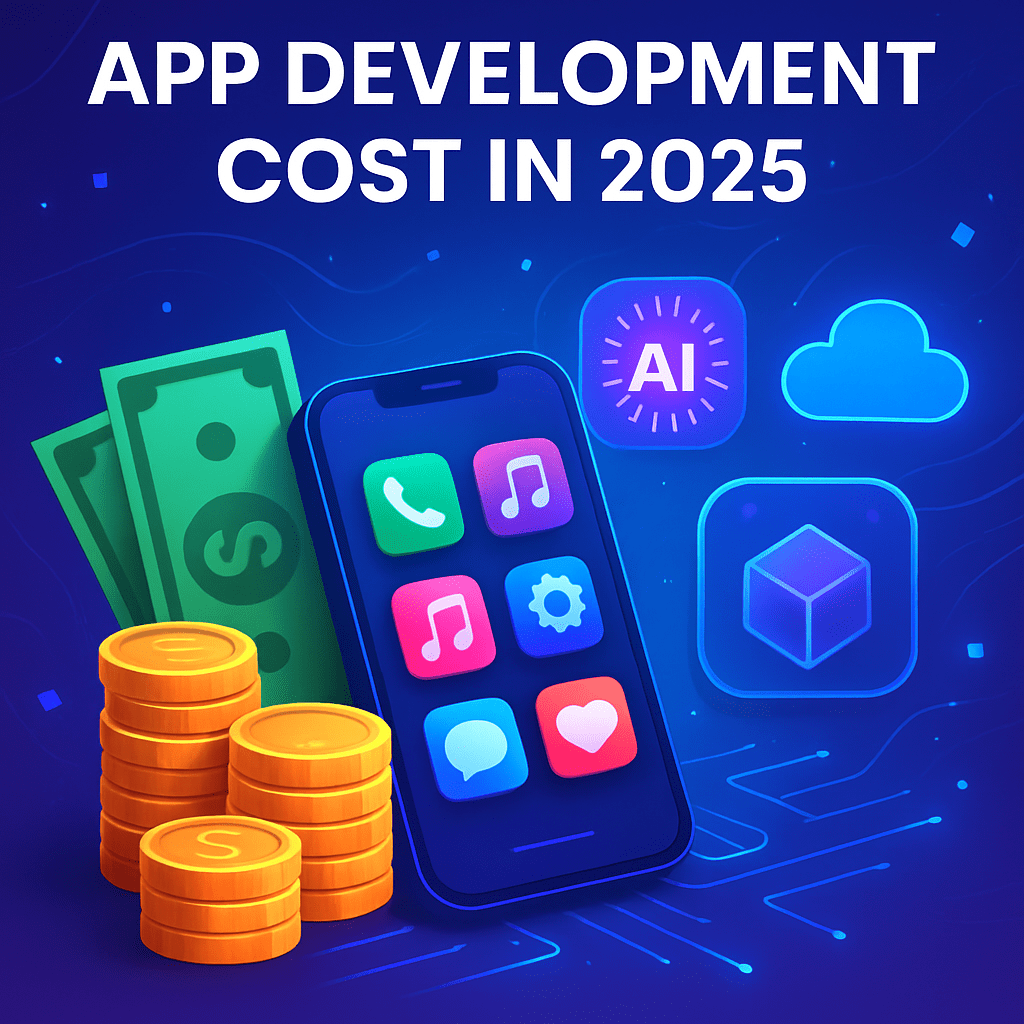
How Much Does It Cost to Develop an App in 2025?

Introduction Budgeting for app development is one of the most critical decisions a business leader will make in 2025. With digital transformation reshaping every industry, a well-planned mobile or web app is a gateway to new customers and better efficiency—but how much does it really cost to turn your idea into a fully functioning app? Costs depend on app complexity, required features, choice of tech, and team expertise. Understanding these factors will help every founder, manager, or enterprise leader plan smarter and build with confidence. In this detailed guide, we’ll break down app development costs phase-by-phase, compare budgets for different industries, highlight influencing factors, and show how leveraging AI and modern tech (like TechOTD’s solutions) can optimize investments. Explore TechOTD’s AI services, how we work, and mobile app solutions as you plan your journey. Phases of App Development and Associated Costs Building an app involves several distinct steps, each with budget requirements. Let’s break down each stage, using recent industry cost data: 1. Strategy & Planning ($4,000–$10,000) Business analysis, market research, competitor benchmarking. Defining user personas, app objectives, and feature lists. See TechOTD strategy examples. 2. Design (UX/UI) ($6,000–$30,000) Wireframing, prototyping, visual branding, user journey mapping. Interactive mockups and usability testing. Learn more about UX/UI trends. 3. Core Development ($25,000–$75,000+) Frontend and backend coding (iOS, Android, web, cross-platform). Third-party integrations (payment, GPS, social login). Custom features: e.g., predictive analytics, chatbots, real-time feeds. Framework insights: React Native vs Swift. 4. Third-Party Integrations ($5,000–$15,000) APIs for CRM, analytics, cloud storage, payment gateways. Blockchain or AI integrations for security and personalization. More on blockchain-powered apps. 5. Quality Assurance & Testing ($8,000–$18,000) Device, OS, and usability tests, bug fixing, security audits. Compliance with GDPR, PCI DSS, and industry standards. Predictive analytics in QA. 6. Deployment & Launch ($2,000–$7,000) App store submission (Apple, Google Play), launch marketing. Backend optimization, analytics setup. See TechOTD’s launch support. 7. Maintenance & Support (15–20% per year) Updates, bug fixes, feature enhancements, security patches. Hosting and server monitoring. Typical App Development Budgets by Complexity App Type Budget Range Examples Timeline Simple/MVP $20,000–$60,000 To-do, news, calculators 2–4 months Medium $60,000–$120,000 Loyalty, booking, fintech 4–7 months Complex $120,000–$250,000+ E-commerce, social media, healthcare, AR/AI 6–12 months Explore detailed cost analysis for loyalty apps: How much does it cost to build a customer loyalty app? Key Factors Influencing App Development Cost 1. App Complexity Number of user roles, features (e.g., chat, push notifications, payment). Custom UI, animation, and security. Advanced integrations (AI, ML, blockchain). TechOTD leverages latest innovations. 2. Platform Choice Native (Swift/Java/Kotlin) costs more than cross-platform (Flutter, React Native). Multi-platform apps increase cost by 30–40%. Cross-platform vs native advice. 3. Design and Branding High-fidelity UI/UX, custom illustrations, AR/VR increase cost. TechOTD’s design approach. 4. Data Security & Compliance Apps in finance, healthcare, and education need strict compliance (HIPAA, GDPR, PCI DSS). Cost increases for advanced encryption and regulatory audits. TechOTD’s security-first methodology. 5. AI, Analytics, and Next-Gen Technology Adding AI/ML for personalization, recommendation engines increases budget. Predictive analytics, chatbots, speech/image processing. AI-powered app solutions. 6. Team Location & Experience US/Europe rates: $60–$200/hr; Asia/Eastern Europe: $20–$60/hr. Experienced agencies deliver better quality and ongoing support. See TechOTD’s multi-regional expertise. Cost Examples by Industry Industry Typical Budget Unique Features Explore Fintech $80,000–$200,000+ Secure payments, AI analytics, blockchain LLMs in Finance Education $50,000–$150,000 LMS, AR/VR, remote learning, analytics Tech & Education E-Commerce $100,000–$250,000 Product catalog, cart, payment, push notifications Industry Blogs Loyalty/App $60,000–$120,000 CRM, rewards, gamification, partner systems Customer Loyalty App Guide On-Demand $75,000–$180,000 Real-time tracking, chat, payments, reviews Explore TechOTD’s solutions How TechOTD Optimizes Costs with Emerging Technologies AI & Machine Learning: Saves time, automates personalization, improves retention. Cloud & Edge Computing: Scalable infrastructure and performance. Blockchain Integration: High security and transparency for finance and supply chain apps. Agile & DevOps: Quicker cycles, better quality, ongoing support. Learn more from TechOTD’s blog and how we work. Tips to Budget Effectively for App Development Start with an MVP and validate user needs. Choose cross-platform tools if budget is limited. Use proven frameworks for speed and reliability. Invest in robust QA and post-launch support. Allocate budget for ongoing marketing and analytics. Partner with experienced agencies (like TechOTD) for guidance and best practices. Conclusion The cost to develop an app in 2025 depends on its complexity, features, chosen technology, and vendor expertise. Typical budgets range from $20,000 for a simple app to $250,000+ for enterprise-level solutions, with maintenance usually about 15–20% of initial yearly cost. Careful planning, partner selection, and leveraging advanced tech are key to maximizing ROI. Take the next step: Book a free consultation with TechOTD Explore best practices on TechOTD’s blog Discover AI-driven solutions FAQ Q1: What is the lowest possible budget for a simple app in 2025? A: MVPs with minimal features start at $20,000–$40,000 in most regions. Q2: Why do maintenance costs matter? A: Post-launch updates, bug fixes, and performance improvements are critical; expect 15–20% of original build cost per year. Q3: Can I reduce expenses by using cross-platform tools? A: Yes, React Native and Flutter typically lower costs by up to 30% compared to fully native solutions. Q4: Is security a major cost factor? A: Apps in finance or healthcare need greater compliance and security testing, which increases costs but protects your business. Q5: What kind of costs do loyalty and e-commerce apps involve? A: Loyalty apps range $60,000–$120,000 and e-commerce apps from $100,000–$250,000+, depending on features and integrations.

A suitable alt text for a feature image comparing Business Intelligence and Business Analytics could be: "Illustration highlighting the difference between Business Intelligence, focused on reporting and historical data analysis, and Business Analytics, emphasizing predictive modeling and future trend forecasting
Business Analytics

Business Intelligence vs Business Analytics

  Introduction In the digital age, data is often referred to as the “new oil.” Organizations generate massive amounts of information every second—from customer interactions and financial transactions to supply chain processes and social media engagements. Harnessing this data is no longer optional; it is a necessity for survival and growth. Two of the most powerful approaches to data-driven decision-making are Business Intelligence (BI) and Business Analytics (BA). While both aim to improve decision-making, they differ in purpose, methodology, and outcomes. Data Analytics in Banking: Transforming Finance in 2025 This blog explores the differences between Business Intelligence and Business Analytics, compares their strengths, highlights use-cases across industries, and helps you decide which approach—or combination—is the best fit for your organization. What is Business Intelligence (BI)? Business Intelligence refers to a set of processes, architectures, and technologies that transform raw data into meaningful insights. It is largely descriptive in nature, focusing on understanding what has happened and what is happening now. BI enables organizations to track KPIs, visualize performance, and monitor trends in real time. Instead of predicting the future, BI provides visibility into the present and past to improve operational efficiency. Key Features of Business Intelligence Data Warehousing & ETL (Extract, Transform, Load) → Ensures accurate, cleansed, and integrated data. Real-time dashboards → Easy-to-understand visualizations for quick insights. Standardized reporting → Ensures consistent reporting across departments. KPI monitoring → Tracks revenue, sales performance, employee productivity, etc. Alerts & anomaly detection → Flags unusual changes in data trends.  Example: Retailers use BI dashboards to monitor daily sales, store performance, and inventory levels in real time. What is Business Analytics (BA)? Business Analytics goes a step beyond BI. Instead of just describing “what happened,” BA seeks to answer why it happened and what might happen in the future. It relies on advanced techniques like statistical modeling, predictive analytics, machine learning, and AI. Business Analytics is diagnostic, predictive, and prescriptive, helping organizations make strategic and tactical decisions. Key Features of Business Analytics Predictive Analytics & Forecasting → Estimate sales trends, demand, or customer churn. Data Mining & Pattern Recognition → Discover hidden trends in customer behavior. Machine Learning & AI Integration → Automate decision-making through intelligent systems. What-if Scenario Analysis → Simulate multiple strategies before implementation. Root Cause Analysis → Understand the “why” behind business challenges.  Example: Banks use BA models to detect fraudulent transactions and predict loan defaults. Business Intelligence vs Business Analytics: Side-by-Side Comparison Aspect Business Intelligence (BI) Business Analytics (BA) Focus Descriptive (What happened?) Predictive & Prescriptive (Why & What Next?) Data Historical & current operational data Historical, current, and external datasets Questions Addressed “What is happening?” “Why is it happening? What will happen?” Tools Dashboards, Data Warehouses, Reporting Tools Statistical Models, ML Frameworks, AI Platforms Users Business users, Managers, Analysts Data Scientists, Advanced Analysts Purpose Monitoring & Reporting Forecasting, Optimization & Strategy When to Choose Business Intelligence Choose BI if: You need real-time operational visibility. You want standardized reports and KPIs for decision-making. Your goal is to improve daily operations and efficiency. You need user-friendly dashboards accessible by all employees. Example: A logistics company monitoring daily shipment tracking. When to Choose Business Analytics Choose BA if: You need predictive insights into market trends and customer behavior. You want to simulate business scenarios before investing resources. You are ready to invest in data science talent and advanced tools. You aim for long-term strategy and competitive advantage.  Example: An eCommerce business predicting which products will trend next season. Industry Applications of BI and BA  Retail → BI for sales dashboards, BA for demand forecasting. Healthcare → BI for patient records monitoring, BA for predicting disease outbreaks. Finance → BI for compliance reports, BA for fraud detection. Manufacturing → BI for production tracking, BA for predictive maintenance. E-Commerce → BI for order fulfillment tracking, BA for personalized recommendations. Challenges in BI and BA Implementation  Data Silos: Information scattered across departments. High Costs: Investment in infrastructure, talent, and tools. Change Management: Employees may resist adopting new systems. Data Privacy & Compliance: GDPR, HIPAA, etc. Skill Gaps: BI requires analysts; BA requires data scientists. Future Trends in BI and BA  AI-Driven Automation → BI dashboards enhanced with automated recommendations. Natural Language Processing (NLP) → Ask data questions in plain English. Cloud BI/BA → Cost-effective, scalable solutions. Blockchain in Analytics → Data authenticity and secure sharing. Embedded Analytics → Integrating BI/BA directly into business apps (CRM, ERP). ROI Analysis: BI vs BA BI ROI → Immediate efficiency gains, reduced reporting time, faster decisions. BA ROI → Long-term revenue growth, reduced risks, improved strategic planning. How TechOTD Supports BI & BA Needs BI Solutions: Data warehousing, dashboards, KPI tracking. BA Solutions: Predictive analytics, ML models, AI integration. Cloud Infrastructure: Secure, scalable, and cost-effective. Industry Expertise: eCommerce, finance, healthcare, and more. Conclusion  The choice between Business Intelligence and Business Analytics depends on your organization’s maturity, goals, and resources. If your focus is operational reporting and monitoring, BI is the way to go. If you want to predict future outcomes and drive innovation, BA is essential. The most successful organizations combine both BI and BA to build a full-fledged data-driven culture. Partnering with an expert like TechOTD ensures you have the right mix of strategy, technology, and execution. Ready to take your business forward? Connect with TechOTD today to implement a tailored BI & BA solution for competitive advantage. FAQ Q1. Can a company use both BI and BA?Yes. BI ensures operational efficiency while BA drives strategic foresight. Together they provide a 360° view. Q2. Do small businesses also need BI/BA?Absolutely. Even startups benefit from simple BI dashboards or predictive sales analytics. Q3. What skills are needed for BA?Statistical analysis, programming (Python/R), data visualization, and ML frameworks. Q4. How long does BI or BA implementation take?3–12 months depending on scale, data quality, and tools used. Q5. What are the most popular BI tools?Power BI, Tableau, QlikView, Looker. Q6. What are the most popular BA tools?R, Python, SAS, Apache Spark, TensorFlow. Q7. How secure is data in BI

Scroll to Top