TechOTD AI Services

Healthcare & Fitness

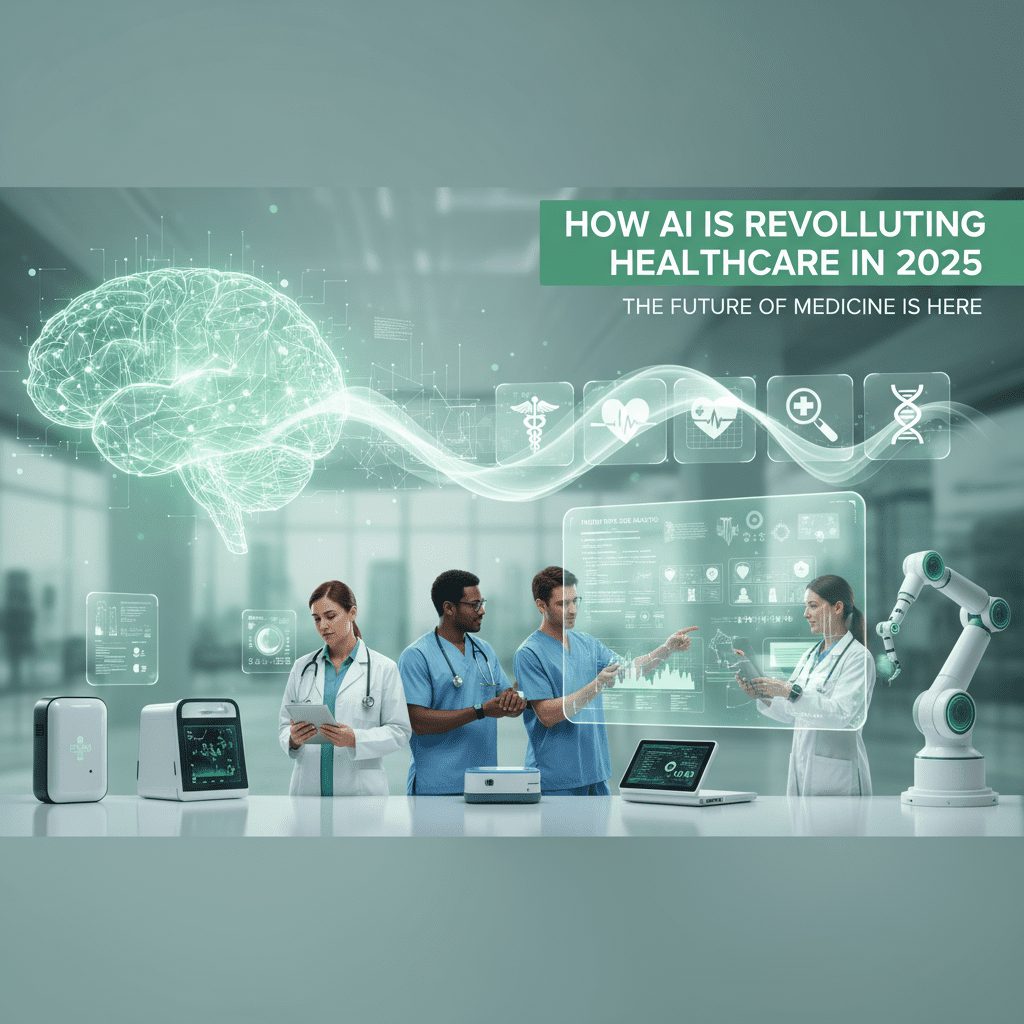
How AI is Revolutionizing Healthcare in 2025

Introduction Artificial Intelligence is ushering in a new era of healthcare in 2025—boosting patient outcomes, accelerating innovation, and making care more precise and accessible than ever before. Here’s how AI is shaping the future of medicine across the globe. Smarter, Faster Diagnostics AI-Powered Medical Imaging: AI now analyzes X-rays, MRIs, and CT scans to detect anomalies like tumors, fractures, and infections faster and more accurately than ever. Early cancer and rare disease detection have been dramatically improved, with error rates and costs dropping significantly. Predictive Diagnostics: AI uses data from patient histories, genetics, and wearables to anticipate the risk of diseases before symptoms occur, allowing for preventative care strategies—especially effective for chronic conditions like heart disease and diabetes. Next-Gen Treatment: Personalized Medicine Precision Treatments: AI integrates genetic, lifestyle, and clinical data to tailor therapies for individuals, especially in oncology and rare diseases, optimizing outcomes and reducing side effects. Genomics and Profiling: Advanced AI systems rapidly interpret genomic data, enabling real-time profiling during surgeries and predicting individual responses to therapies, revolutionizing cancer and rare disease management. Remote Care & Virtual Health Assistants Wearable Monitoring: AI-powered devices track real-time vital signs, alerting both patients and clinicians to potential health issues before they escalate. Hospital-at-home models reduce readmissions and improve quality of life. 24/7 Virtual Support: Chatbots and AI-driven apps now answer medical questions, schedule appointments, provide medication reminders, and triage patients, all while reducing the workload of clinicians. AI in Clinical Decision-Making Real-time Decision Support: AI gives doctors evidence-based recommendations at the point of care by synthesizing global research, treatment guidelines, and patient information. This augments physician expertise, increases diagnostic accuracy, and improves confidence in treatment decisions. Automating Admin Tasks: Intelligent agents automate medical documentation, billing, and coding. This lightens the administrative load and allows clinicians to spend more time with patients. Accelerating Medical Research & Drug Discovery Drug Development: AI can sift through millions of molecules, predict interactions, and simulate clinical trials—speeding up drug discovery, lowering development costs, and quickly identifying optimal candidates for new treatments. Clinical Trials Optimization: By analyzing records and finding ideal trial participants, AI makes trials safer and more effective, accelerating new therapies to market. Enhancing Equity and Population Health Addressing Social Determinants: AI analyzes socioeconomic data alongside health records to identify at-risk populations, close care gaps, and optimize resource allocation—paving the way for fairer, more accessible healthcare. Global Reach: AI extends expertise to remote areas, bridging geographic gaps and allowing global collaboration in tackling public health challenges. Robotic Surgery and Assisted Procedures Greater Precision: Robotic systems powered by AI help surgeons perform complex operations with greater dexterity and accuracy, resulting in fewer complications and quicker recovery times for patients. Impact at a Glance Area AI-Driven Transformation Example/Impact Diagnostics More accurate, earlier detection AI finds tumors in scans invisible to the eye Personalized Care Tailored therapies, reduced side effects Precision oncology; rare disease management Patient Monitoring Continuous data analysis, proactive alerts Wearables detect heart issues before symptoms Administration Automated records and workflows Less clinician burnout, more patient care Research Faster drug discovery, smarter trials Shortened time to new treatments Access & Equity AI bridges gaps for rural or vulnerable groups Virtual care reaches more patients Challenges and the Road Ahead Ethics & Trust: Ensuring privacy, reducing bias, and building transparent, explainable AI remain priorities as adoption expands. Human-AI Partnership: AI isn’t replacing medical professionals but empowering them—successful healthcare systems will be those that blend human empathy with machine intelligence. Scalability: With 90% of hospitals expected to use AI by 2025, broad access and workforce training are key for sustaining progress. AI’s transformative role in healthcare is just beginning. As these technologies advance, expect faster diagnoses, more personalized care, and a health system that’s smarter, fairer, and more responsive to the needs of all. The revolution is well underway—and in 2025, AI is making healthcare better, one patient at a time.

App Development

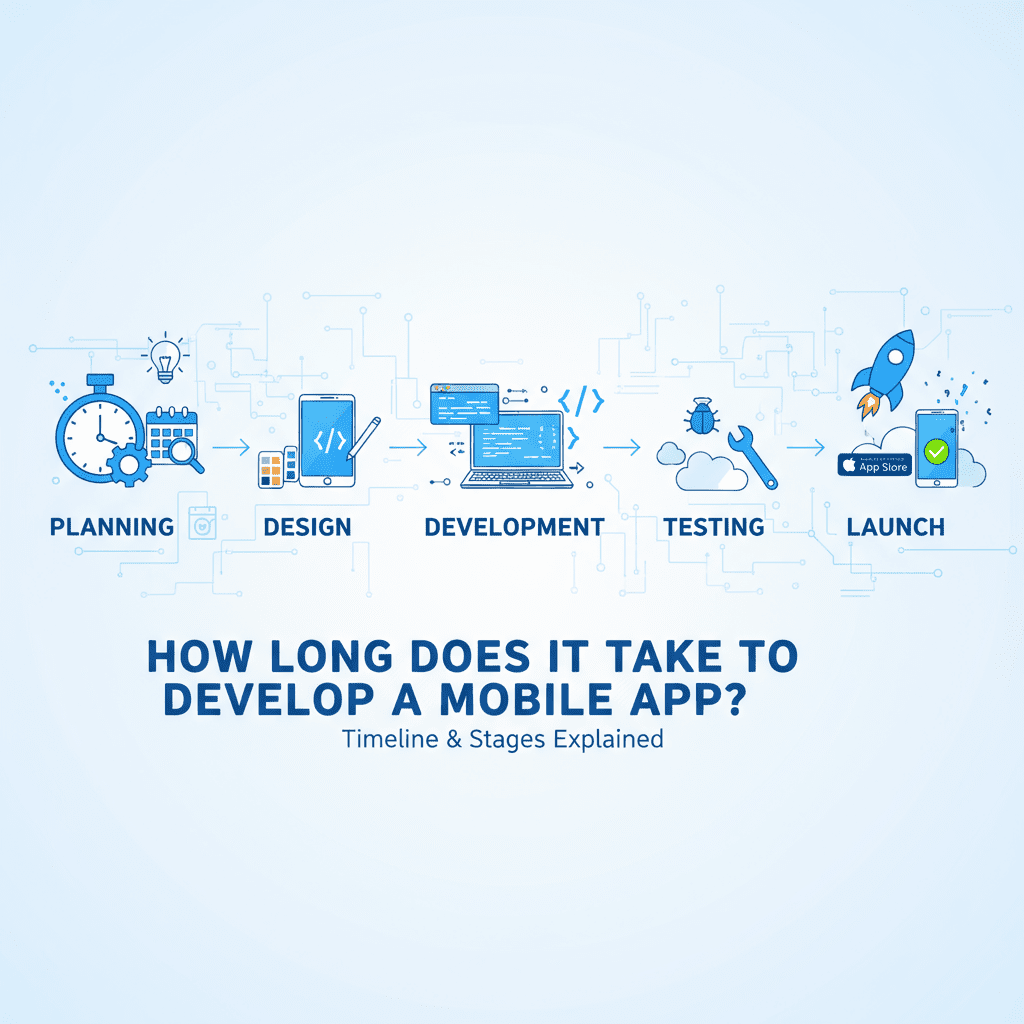
How Long Does It Take to Develop a Mobile App?

Introduction A common question for businesses and entrepreneurs planning mobile apps is: “How long will the development take?” The answer depends on many factors including app complexity, features, platforms, and team expertise. Understanding typical timeframes helps set the right expectations and plan budgets efficiently. App Development Timelines Based on Complexity Simple Apps (2 to 4 Months) Basic functionality with limited features Minimal backend or database integration Examples: Calculator, basic informational app, simple utilities Simple apps focus on core features with straightforward UI/UX and are ideal as MVPs or proof of concepts. Medium Complexity Apps (4 to 8 Months) Moderate feature set like user authentication, payment gateways Some backend integration and APIs Examples: Fitness trackers, food delivery apps, messaging platforms These apps require more testing, UI design, and cross-platform compatibility, extending development time. Complex Apps (8 to 12+ Months) Advanced features such as real-time data sync, AI, AR, video streaming Multiple user roles and third-party integrations Examples: E-commerce marketplaces, social networks, fintech solutions Complex apps often require scalable backend architecture, security compliance, and extensive QA cycles. Factors Influencing Development Time Feature Scope: More features mean longer development and testing periods. Platform Choice: Native apps for iOS and Android may take longer than cross-platform development. Design Complexity: Custom UI/UX design adds to project time. Third-Party Integrations: Payments, social media, maps, or AI APIs affect timelines. Team Size and Expertise: Larger or specialized teams can accelerate or delay schedules. Testing and Revisions: Time allocated for QA and feedback cycles can vary. Tips to Speed Up Development Start with an MVP to validate core features quickly. Use cross-platform frameworks like Flutter or React Native. Prioritize features using MoSCoW method (Must-have, Should-have, Could-have, Won’t-have). Automate testing and use CI/CD pipelines for faster releases. Work with experienced developers or agencies to avoid rework. Conclusion Typically, app development ranges from 2 months for simple projects to over a year for complex applications. Planning, clear requirements, and choosing the right technology are key to hitting your timeline. Setting realistic expectations helps businesses launch products faster and adapt to market feedback effectively. For expert mobile app development services and timeline consultation, explore TechOTD AI Services and follow industry trends on the TechOTD Blog.

enterprise

How Can Enterprise Mobile App Development Accelerate Your Business Growth?

Introduction Enterprise mobile app development is transforming the way businesses operate by providing powerful tools that streamline workflows, improve communication, and drive productivity. In 2025, organizations that invest in custom mobile solutions are better positioned to compete, innovate, and grow faster than their peers. Top Ways Enterprise Mobile Apps Accelerate Growth 1. Enhanced Employee Productivity Enterprise mobile apps empower employees to work efficiently on the go, access resources in real-time, and complete tasks with fewer barriers. Field teams use dedicated apps for inventory checks, reporting, and seamless task updates—making daily operations faster and more reliable. 2. Streamlined Operations and Workflow Automation Mobile apps automate repetitive processes like scheduling, approvals, and reporting, reducing administrative overhead and human error. This streamlines workflows across departments, enabling teams to focus on strategic work. 3. Real-Time Data and Decision-Making Mobile apps unify enterprise data sources and enable instant access to dashboards, analytics, and KPIs. Leaders can make data-driven decisions quickly, respond to changing conditions, and gain valuable business insights at any time. 4. Improved Communication and Collaboration Custom mobile apps offer secure, centralized channels for messaging, file sharing, and field communication, keeping teams aligned. Employees across locations coordinate instantly—boosting engagement and reducing internal delays. 5. Greater Customer Experience and Loyalty Enterprise apps give support and sales staff immediate access to customer data, enabling faster responses and more personalized service. This increases customer satisfaction, retention, and repeat business. 6. Integration with Existing Systems Mobile solutions integrate seamlessly with ERP, CRM, HRMS, and other enterprise software, ensuring data consistency and unified user experiences across all platforms. 7. Flexibility and Scalability Enterprise apps scale as the business grows—accommodating more users, teams, and new functionalities without major overhauls. Mobile-first strategies keep companies agile and responsive in a rapidly changing market. 8. Cost Savings and ROI Mobile app automation reduces process costs, cuts errors, and strengthens productivity—delivering long-term savings and measurable business value. Faster project execution and better resource allocation drive growth and profitability. Sectors Benefiting Most Manufacturing: Real-time production monitoring and supply chain optimization Retail: Inventory management, sales analytics, and loyalty programs Healthcare: Patient record accessibility and remote care coordination Logistics: Delivery tracking, route planning, and fleet management Construction: Equipment reporting, project tracking, and time logging Conclusion Enterprise mobile app development is a growth accelerator—enhancing processes, boosting productivity, and improving customer outcomes. In the fast-evolving digital landscape of 2025, investing in tailored mobile solutions is essential for organizations committed to innovation and competitive edge. Explore expert mobile app development and enterprise integration services at TechOTD AI Services and stay informed on the latest digital trends at the TechOTD Blog. Would you like step-by-step guidance on choosing the right enterprise mobile architecture?

Technology

Maximizing ROI with TechOTD IT Staffing Services

Introduction In today’s fast-paced digital landscape, the right IT talent is critical for business success. However, finding, hiring, and retaining skilled professionals is both resource-intensive and expensive. TechOTD IT Staffing Services offer a proven approach to building agile, high-performing tech teams while optimizing costs and maximizing return on investment (ROI). The Value of IT Staffing Services 1. Reduced Hiring Costs TechOTD streamlines the recruitment process, from sourcing and screening to onboarding, reducing internal HR overhead and associated expenses. Their expertise cuts down on recruitment advertising, lengthy interview processes, and credential checks—helping companies allocate resources toward growth initiatives instead. 2. Access to Specialized Talent Pools TechOTD has extensive networks of qualified IT professionals across various domains and technologies. Businesses benefit from rapid access to candidates in high-demand fields such as cloud computing, AI, cybersecurity, and software development, minimizing the time and cost of talent acquisition. 3. Faster Time-to-Hire Speed is vital for maintaining project momentum. TechOTD leverages experienced recruiters and smart technology to present pre-vetted candidates quickly, reducing time-to-hire and supporting business productivity and client delivery deadlines. 4. Enhanced Flexibility and Scalability TechOTD’s flexible staffing solutions—contract, temporary, contract-to-hire, and permanent—allow organizations to adapt workforce size as project requirements change, retaining budget control and operational agility. 5. Improved Quality of Hire Specialized IT recruitment teams use rigorous screening, technical assessments, and culture-fit evaluations to deliver high-caliber professionals primed for success. Quality hires drive project performance and reduce turnover rates, saving costs in the long run. 6. Cost Optimization Strategies TechOTD enables cost-effective solutions such as staff augmentation, remote talent integration, and contract-based assignments, which minimize long-term commitments and overhead while delivering project-specific expertise. 7. Focus on Core Business Functions By handing recruitment and staff management to TechOTD, internal teams focus on strategic business goals, innovation, and client delivery, further enhancing operational ROI. Strategies to Maximize ROI Define clear project goals and role requirements for targeted hires. Leverage data analytics to optimize recruitment and workforce management. Build lasting partnerships for rapid, reliable placements. Prioritize soft skills as well as technical abilities for long-term success. Use integrated staffing software to reduce admin time and enhance candidate engagement. Conclusion TechOTD IT Staffing Services deliver measurable ROI through reduced hiring costs, faster placements, higher quality hires, and flexible workforce solutions. With their deep expertise, scalable model, and commitment to client success, businesses can leverage TechOTD to accelerate digital transformation, drive innovation, and achieve superior growth. Would you like detailed ROI calculation examples, case studies, or info on emerging trends in IT staffing?

Mobile App Development

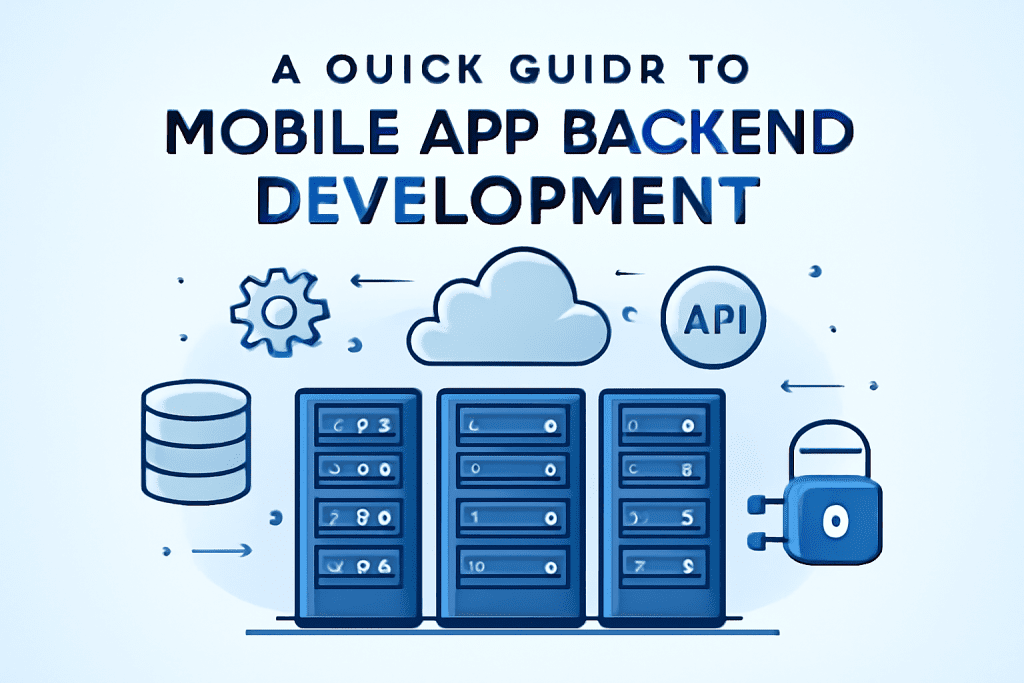
A Quick Guide to Mobile App Backend Development

Introduction In the world of mobile app development, the backend is the powerhouse that handles data storage, authentication, business logic, and integration with external services. While the frontend dazzles users with an intuitive interface, the backend ensures the app runs smoothly, securely, and scales as demand grows. This guide provides an overview of mobile app backend development in 2025, covering core components, technology choices, and best practices to build robust and scalable backends for modern mobile applications Mobile App Architecture Basics). What is Mobile App Backend? The backend is the hidden engine of an application. It handles communication between the frontend and the server. It includes databases, APIs, and cloud storage. (To understand how different database types impact your backend, check our article on SQL vs NoSQL Databases). Key Components of Mobile App Backend 1. Server The server processes requests from app users, runs the core business logic, communicates with databases, and manages third-party integrations. Developers may choose traditional dedicated servers, cloud-based virtual servers, or serverless architectures (like AWS Lambda) depending on scalability and budget needs. 2. Database Databases store user data, app content, and transactional records. Choices vary from relational databases (MySQL, PostgreSQL) for structured data to NoSQL (MongoDB, Cassandra) for unstructured or rapidly changing data. In-memory databases like Redis enhance performance through caching. 3. APIs (Application Programming Interfaces) APIs enable communication between the frontend and backend, as well as integration with external tools such as payment gateways, social logins, or third-party services. 4. Authentication and Security Robust backend security includes user authentication mechanisms (OAuth, JWT), data encryption, secure session management, and protection against common vulnerabilities to safeguard user data and comply with regulations. 5. Push Notifications Backend systems usually manage push notification services, sending timely alerts and updates to users to enhance engagement. 6. Scalability and Performance Management Backends must handle growing user loads efficiently using load balancers, auto-scaling groups, and performance monitoring tools. Popular Technology Stack Options Programming Languages & Frameworks: Node.js (Express), Python (Django, Flask), Ruby on Rails, Java Spring Boot, Go Databases: PostgreSQL, MySQL, MongoDB, Cassandra, Redis Cloud Providers: AWS, Google Cloud, Microsoft Azure, Firebase DevOps and Containerization: Docker, Kubernetes, Jenkins, GitHub Actions Backend Development Best Practices in 2025 Opt for cloud-native solutions to support flexibility and cost efficiency. Embrace serverless architecture where suitable for event-driven workloads. Prioritize security by design with encryption, secure APIs, and compliance. Implement CI/CD pipelines for faster and reliable deployment. Use monitoring and logging (e.g., Prometheus, New Relic) to debug and optimize performance. Design scalable data storage considering future growth and data types. Conclusion A strong backend architecture is fundamental to mobile app success. It manages everything from data integrity and security to real-time interactions and scalability. Choosing the right mix of technologies, frameworks, and cloud services, while adopting modern development and security best practices, sets your app up for long-term stability and growth. For expert guidance on backend development, cloud integration, AI-powered automation, and best practices, explore TechOTD AI Services and stay informed through the TechOTD Blog.

Software development

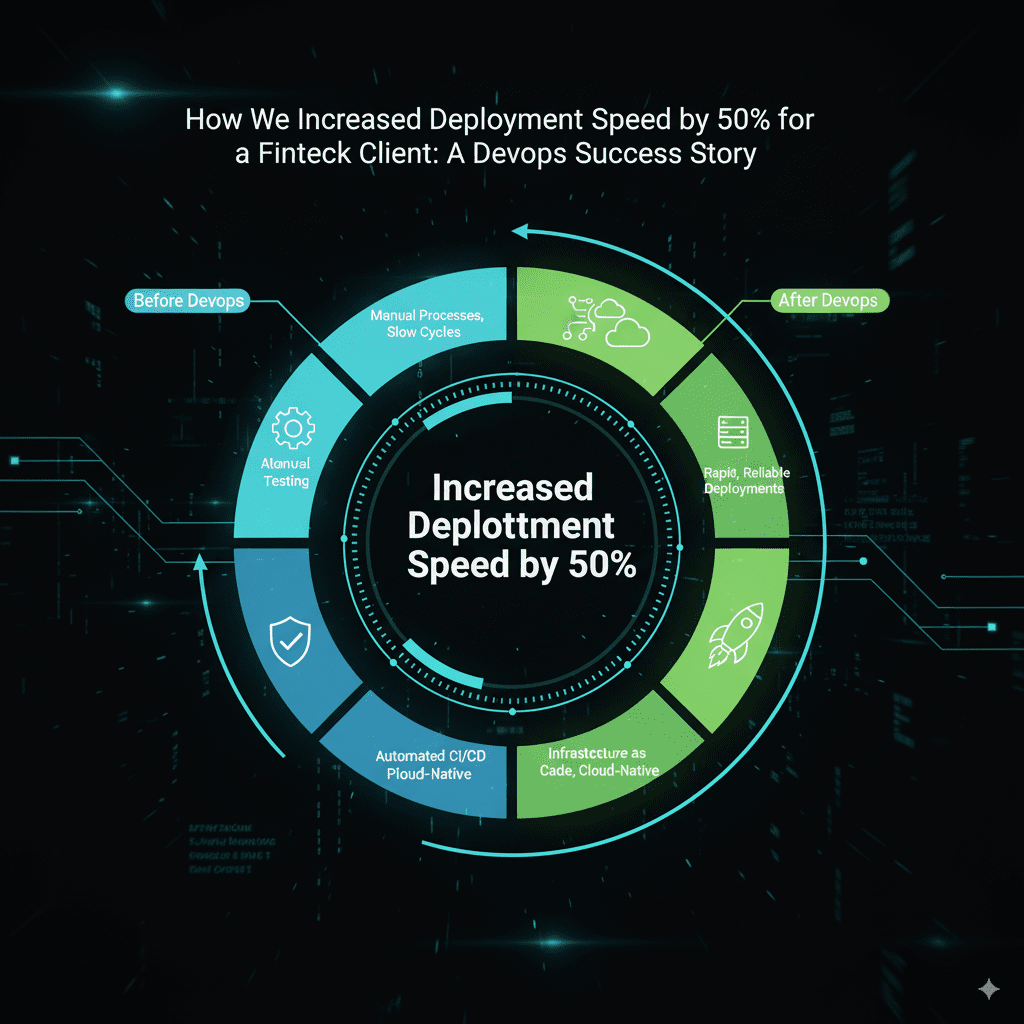
How We Increased Deployment Speed by 50% for a Fintech Client: A DevOps Success Story

Introduction Accelerating deployment velocity while maintaining software quality is the holy grail of modern fintech development. Our recent project achieved a 50% reduction in deployment time for a leading fintech client, enabling faster time-to-market and improved competitive advantage. This transformation streamlined their development pipeline and significantly enhanced their ability to respond to market changes and customer needs. The State of Fintech Development Speed in 2025 Fintech software development has become increasingly complex. According to industry research, projects typically take between one and nine months to complete, averaging about 4.5 months. More concerning is that software development projects often take about 30% more time than initially estimated. In today’s rapidly evolving financial technology landscape, this extended timeline can be the difference between market leadership and obsolescence. The pressure to accelerate deployment is enormous, but the stakes in fintech are equally high. Financial applications demand absolute reliability, security, and compliance, creating a challenging balancing act between speed and quality. Common Deployment Challenges in Fintech Before implementing our solution, our client faced numerous challenges that are common across the fintech industry: Manual Deployment Processes The client’s team spent excessive time manually deploying environments in their application pipeline while still trying to ensure uniform policies, governance, and compliance. This approach was time-consuming but also error-prone and difficult to scale across multiple environments. Tightly Coupled Components The application framework version and the Docker image creation process were tightly coupled, increasing component interdependence and impeding agility. This interdependence created bottlenecks in the deployment process and made it difficult to implement changes quickly. Inefficient Testing Procedures Manual testing consumed over 40% of development time and resources, leading to delayed releases, reduced productivity, and a compromised user experience. Legacy Tools and Vendor Lock-in The existing pipeline presented several problems, including vendor lock-in, lack of transparency, and the inability to support industry-standard integrations. Strategic Approaches That Delivered 50% Faster Deployments Our DevOps Consulting Services are focused on several key areas to dramatically improve deployment speed without compromising quality or security: 1. Implementing Infrastructure as Code (IAC) The most transformative change was the introduction of Infrastructure as Code (Iac) principles. By codifying the deployment of cloud resources, we achieved: One-touch deployment from development to production Consistency across regions, ensuring “First Time Right” changes Reduction in build and deploy times from days to hours This approach eliminated manual errors and provided a repeatable, version-controlled deployment process. 2. Revolutionising the CI/CD Pipeline We completely re-architected the deployment pipeline using DevOps best practices: Replaced proprietary tools with open-source alternatives, saving thousands in licensing costs Implemented streamlined CI/CD pipelines using modern tooling like Drone CI Decoupled Docker image versioning for faster, more flexible deployments 3. Adopting Delta Package Deployments By leveraging Delta package deployments, we reduced deployment time by 60% compared to full deployments. This meant: Only the changed components needed deployment Lower risk of failures More frequent feature releases 4. Automating Quality Assurance Our AI/ML Development team implemented automated testing, which: Replaced manual processes that consumed 40% of development time Enabled consistent, repeatable test scenarios Provided faster feedback to developers Measurable Results Beyond Speed Improvements While the 50% faster deployment was our headline achievement, the benefits extended further: ✅ Enhanced Development Efficiency – Teams now spend more time innovating rather than managing deployments. ✅ Improved Software Quality – Automated testing caught issues earlier, reducing bugs in production. ✅ Cost Reduction – Open-source tools saved thousands in licensing fees. ✅ Better Scalability – Kubernetes orchestration enabled transparent, global scaling. ✅ Increased Business Agility – The client now responds to market changes 50% faster. Implementation Roadmap: Achieving Faster Fintech Deployments For organisations looking to achieve similar results, we recommend our Digital Transformation Services with this roadmap: Assessment & Planning – Identify bottlenecks and automation opportunities. DevOps Foundation – Implement CI/CD pipelines and containerization. Automation Implementation – Use IAC, automated testing, and monitoring. Optimisation & Refinement – Introduce delta deployments and fine-tune resources. Conclusion: Faster Deployment as a Competitive Advantage In the fast-paced fintech industry, deployment speed is a critical differentiator. Our client’s 50% improvement has translated into faster time-to-market, better customer satisfaction, and accelerated innovation. By leveraging Infrastructure as Code, CI/CD optimisation, delta deployments, and QA automation, we’ve set a foundation for sustained success in fintech. For fintech companies struggling with slow deployments, modernising their pipeline isn’t just a technical upgrade—it’s a business imperative. Ready to accelerate your fintech deployments? Explore our DevOps Consulting Services Learn more about our Fintech Solutions How We Increased Deployment Speed by 50% for a Fintech Client: A DevOps Success Story    

cybersecurity

why cybersecurity is the backbone of mordern banking- importance, best practices

Introduction In today’s hyperconnected financial ecosystem, cybersecurity has become the lifeline of trust, resilience, and sustainable growth in modern banking. With the rise of digital transformation, online banking, cloud adoption, and artificial intelligence (AI), financial institutions increasingly depend on technology to deliver seamless services. However, this digital evolution has also expanded the attack surface, giving cybercriminals unprecedented opportunities to exploit vulnerabilities. Banks remain the most targeted industry for cyberattacks globally. According to IBM’s Cost of a Data Breach Report 2024, the average cost of a single data breach in the financial sector is USD 5.9 million—significantly higher than other industries. A report by Accenture reveals that cybercrime costs the banking industry USD 18.3 million annually per institution. These staggering figures underscore that cybersecurity is no longer just a compliance requirement—it is fundamental to business continuity, customer trust, and competitive advantage. Banks today operate beyond brick-and-mortar branches, serving as global digital platforms managing vast sensitive data: personal identification numbers, transaction records, loan and credit details, and institutional portfolios. A breach can lead to massive financial fraud, reputational damage, and systemic economic risks. Cybersecurity now acts as the new trust currency in banking, replacing the physical security of vaults and guards with digital firewalls, encryption, and AI-driven monitoring. Customers evaluate banks not only on financial products but also on how secure they feel transacting online. Cybersecurity is also tightly linked to regulatory compliance. Banking is among the most heavily regulated industries worldwide, with agencies like the RBI, ECB, and US Federal Reserve mandating stringent data protection standards. Frameworks such as GDPR, PCI-DSS, and ISO 27001 enforce strict governance. Non-compliance leads to heavy fines and legal battles, making cybersecurity existential for banks. Finally, cybersecurity underpins digital transformation efforts—powering mobile banking, cloud platforms, APIs, blockchain, and AI services. Without robust security, these innovations risk becoming liabilities. Reimagine cybersecurity not as a drag on innovation but as its enabler. Organizations like TechOTD AI Services help banks adopt AI-powered threat detection, predictive analytics, and automated incident response—moving beyond reactive security to proactive, intelligent defense. Learn more through the TechOTD Blog. Why Cybersecurity is Critical in Modern Banking 1. Protecting Sensitive Financial Data Banks safeguard highly sensitive data—including personal identities, account data, transaction histories, and credit information—making them prime targets for phishing, malware, ransomware, and other cyberattacks. For example, the 2020 Experian South Africa breach leaked data on 24 million individuals and around 800,000 entities, causing widespread financial harm and identity theft. Robust cybersecurity frameworks leveraging encryption, tokenization, and AI-based monitoring are indispensable to protect data confidentiality and integrity. Learn how AI-driven predictive analytics strengthen these defenses in TechOTD’s insights. 2. Preserving Customer Trust and Brand Reputation Customer trust is a bank’s most valuable asset. A security breach may cause irreversible damage. The 2016 Bangladesh Bank hack, involving USD 81 million theft via the SWIFT network, shook global finance and raised confidence concerns in digital banking systems. Banks that invest in and communicate transparent cybersecurity measures build long-term loyalty and market leadership—essential for sustaining competitive advantage. 3. Ensuring Regulatory Compliance Stricter regulations enforce data security obligations. Non-compliance risks penalties and business disruption. The Equifax breach in 2017, impacting 147 million customers, resulted in a USD 700 million settlement and highlighted the legal importance of cybersecurity compliance. Banks must meet requirements under GDPR, PCI-DSS, RBI norms, and more. Cybersecurity becomes inseparable from legal and operational strategy. 4. Preventing Fraud and Financial Crime Sophisticated fraud techniques—SIM swaps, identity theft, voice-based deepfakes—are rising. For instance, cybercriminals used voice deepfakes in 2021 to trick banking staff into releasing funds. AI-driven fraud detection systems, like those offered by TechOTD AI Services, use behavioral analytics and real-time anomaly detection to combat these threats effectively. 5. Supporting Digital Transformation Cloud, APIs, and mobile-first solutions improve customer experience but increase vectors for cyber threats. Strong cybersecurity implementation ensures these innovations scale securely, enabling banks to digitize without risking breaches. Explore the synergy between AI, blockchain, and secure innovation in banking at TechOTD Blog. Emerging Cybersecurity Challenges in Banking Quantum Computing Threats: Quantum advances risk breaking traditional RSA and ECC encryption, prompting urgency for quantum-safe cryptography adoption. AI-Augmented Attacks: Cybercriminals use AI to automate phishing, spear-phishing, and malware, increasing attack scale and complexity. Cloud Security Complexity: Multi-cloud and hybrid cloud platforms require layered defenses to prevent misconfigurations and access breaches. API Vulnerabilities: Open Banking exposes APIs to attack; robust security and regular audits are mandatory. Insider Threats and Social Engineering: Human risks persist, requiring continuous training and monitoring. Best Practices for Cybersecurity in Banking 1. Implement Zero-Trust Architecture Adopt zero-trust to verify all users, devices, and network access continuously. Employ micro-segmentation and granular access controls to minimize attack surfaces. 2. Employ AI and Behavioral Analytics Use AI-driven monitoring to detect deviations from normal behavior, predict risks, and automate responses. TechOTD AI Services offers advanced AI cybersecurity platforms designed for banking threats. 3. Strengthen Encryption and Key Management Deploy quantum-resistant encryption algorithms and manage cryptographic keys securely through hardware or software solutions. 4. Adopt Multi-Factor Authentication (MFA) MFA combines biometrics, hardware tokens, or OTPs to strengthen identity verification and prevent unauthorized access. 5. Regular Security Training and Awareness Proactive employee training combats phishing, social engineering, and insider threats. Regular simulations reinforce preparedness. 6. Ensure Continuous Monitoring and Incident Response Implement SIEM solutions with automated alerting and orchestrated incident response to reduce detection and recovery times. 7. Secure Cloud and API Environments Use cloud-native security controls, real-time compliance scanning, and API gateways to protect digital banking infrastructure. 8. Engage in Continuous Compliance and Auditing Regularly audit systems to verify controls and stay aligned with evolving regulations. Discover practical cloud app security techniques on TechOTD’s services page. Role of AI and Automation in Enhancing Banking Cybersecurity AI transforms cybersecurity from reactive to proactive through: Predictive threat analytics Automated threat hunting and response Reducing manual workloads for Security Operation Centers (SOCs) Banks leveraging AI platforms, as provided by TechOTD AI, improve fraud detection accuracy and operational efficiency. Further AI-driven service excellence insights are available at TechOTD Blog. Conclusion Cybersecurity underpins trust, resilience, and sustainable growth in the digital banking era. With threats escalating in scale and sophistication, embracing modern defense strategies—including zero-trust,

Healthcare & Fitness

Telemedicine App Development: Build a Secure & Scalable Telehealth Platform

Introduction As healthcare rapidly digitizes, telemedicine has evolved from a niche offering to an indispensable service connecting patients and providers anywhere, anytime. An effective telemedicine app solves challenges of accessibility, convenience, and real-time care—while navigating complex regulations and security concerns. Building a secure and scalable telehealth platform demands technical innovation, rigorous compliance, and a patient-centered design approach. This blog provides a comprehensive guide for building modern telemedicine apps, packed with insights, feature checklists, technology recommendations, and best practices—plus direct backlinks to TechOTD AI Services, the TechOTD Blog, and other expert resources. 1. Market Research and Defining Your Telemedicine Use Case Successful telemedicine projects start with a clear understanding of real user needs and market gaps. Analyze providers’ workflows and patients’ pain points, leveraging competitor reviews for actionable feedback. Address both acute and chronic care while considering unique regulatory requirements for different specialties and geographies. Plan for compliance early—HIPAA, GDPR, and regional regulations can dramatically affect architecture and timeline. 2. Choose the Right Technology Stack A future-ready telemedicine platform balances security, flexibility, and scale: Layer Examples (2025) Purpose Frontend React Native, Flutter, Swift, Kotlin Cross-platform UI, responsive on all devices Backend Node.js, Python, Java, .NET Fast, scalable API server, handles business logic Database PostgreSQL, MongoDB Secure, reliable storage of health records Cloud AWS, Azure, Google Cloud HIPAA-ready hosting, scalable infrastructure APIs Twilio (video), Stripe/PayPal (payments), Redox/FHIR (EHR) Real-time features, payments, interoperability Security OAuth 2.0, SSL/TLS, JWT Auth, encrypted data, safe transactions AI and predictive analytics integration increase platform value—see TechOTD AI Services and the Predictive Analytics Blog. 3. Design for Security & Compliance Protecting sensitive PHI is paramount. Best practices include: End-to-end encryption for data in transit and at rest Multi-factor authentication Secure role-based access and audit logging Consent management and clear data privacy policies Alignment with HIPAA, GDPR, and local healthcare regulations Blockchain solutions can further secure records and patient consents—explore this in TechOTD Blockchain Integration. 4. Build Core Features for Patients and Providers Modern telehealth platforms deliver an engaging clinical experience: User authentication & onboarding (AI-driven KYC for security) Appointment scheduling & reminders HD video consultations with low-latency streaming Secure chat and document sharing E-prescriptions & digital consents Integrated e-payments & billing, insurance processing EMR/EHR integration for provider continuity AI symptom checkers and post-visit care bots (learn more in AI & LLMs in Healthcare) Accessible UX (voice, large fonts, multi-language) Push notifications and patient engagement tools 5. Ensure Scalability and High Availability App performance should seamlessly support spikes in demand, regional expansion, and new services. Embrace cloud-native, microservices architectures. Implement autoscaling, load balancing, and robust CI/CD pipelines. Plan for future integrations using open APIs and modular software principles. Agile delivery and regular user feedback keep deployment efficient—see how TechOTD’s process optimizes outcomes at How We Work. 6. Testing, Launch, and Post-Launch Strategies Conduct comprehensive unit, integration, UAT, and security tests (HIPAA-aware/penetration testing) Validate cross-platform device and browser compatibility Deploy to app stores/enterprise distribution with rollback and monitoring tools Offer continuous technical support, updates, and user education Monitor app health, collect analytics, and release features iteratively Find guides on process and optimization at the TechOTD Blog. 7. Advanced Innovations: AI, Analytics, and Automation Embed AI to drive smarter care and better outcomes: AI chatbots for triage and 24/7 support (Service Excellence) Predictive risk assessment, personalized content NLP-powered automated documentation and speech-to-text Real-time data dashboards for providers and patients Integration with wearables and IoT for remote monitoring 8. Illustrative Budget and Timeline Telemedicine app costs in 2025 range widely: MVP: $30,000–$75,000 (core video/scheduling/chat) Full scale: $150,000–$250,000+ (AI, cloud, EHR integration, security, automation) Timeline: MVPs in 3–6 months; enterprise solutions 9–18+ months Offshore, onshore, and hybrid teams have different benefits—choose according to compliance needs and project complexity. For more, see: Mobile Apps Services. 9. Key Challenges (and Solutions) Complex multi-jurisdictional compliance—Plan regulatory alignment early User trust and adoption—Transparent privacy, simple UI/UX, clear support Technical integration—Robust APIs and partnerships with labs, pharmacies, and billing platforms Continuous quality—Agile feedback loops, analytics monitoring, rapid update cycles Conclusion Secure, scalable telemedicine platforms are at the heart of digital healthcare’s next decade. With thoughtful planning, a robust technical foundation, airtight security, and user-centric design, organizations can deliver outstanding digital health services at scale. Integrate AI, analytics, and blockchain to future-proof your product, and work with trusted partners for best results. For consulting, custom solutions, and end-to-end app development, partner with TechOTD AI Services, explore real-world results on the TechOTD Blog, and discover streamlined development at How We Work.

Artificial Intelligence

How Much Does It Cost to Build an AI Product?

Introduction Artificial Intelligence (AI) has transitioned from a futuristic concept to a critical driver of innovation across industries. From personalized customer experiences to intelligent automation and predictive analytics, AI products are transforming how businesses operate. However, one of the first questions enterprises and startups face when embarking on AI product development is: How much will it cost? This comprehensive blog explores the various factors influencing the cost of building an AI product, breaking down key components, typical budgeting ranges, cost drivers, and strategies to optimize investment while maximizing returns. Insights from leading AI service providers and current market trends, including those shared by TechOTD AI Services, complement the discussion. Factors Influencing AI Product Development Cost 1. Complexity and Scope of the AI Solution Simple AI features like chatbots or recommendation engines cost less compared to advanced solutions such as autonomous systems or deep learning models. The breadth of functionalities—e.g., real-time processing, multi-language support, or integration with IoT devices—increases costs. 2. Data Requirements and Preparation Quantity, quality, and variety of data needed affect cost. Data collection, cleaning, labeling, and preprocessing demand significant time and resources. Specialized datasets might incur acquisition or licensing fees. 3. Model Development and Testing Developing ML models involves algorithm selection, training, testing, tuning, and validation. Complex models (e.g., deep neural networks) require higher computational resources, adding to cost. Iterative experimentation typically extends timelines and budgets. 4. Infrastructure and Tools Cloud computing resources or on-premise hardware. AI development frameworks, APIs, and third-party integrations. Costs vary based on usage volume, storage, and scalability needs. 5. Team Composition and Expertise AI engineers, data scientists, software developers, UX designers, and domain experts. Senior talent and specialists command higher rates. Project management and collaboration tools also add to overhead. 6. Deployment and Maintenance Integrating AI into production environments. Post-launch maintenance including model retraining, monitoring, and updates. Support and compliance with data security and privacy regulations. Typical Cost Ranges for AI Product Development Small-scale AI projects: $30,000 to $100,000 Suitable for PoCs, chatbots, or basic automation. Mid-sized AI applications: $100,000 to $500,000 Includes integrated features, moderate data handling, and real-time components. Enterprise-level AI systems: $500,000 and above Large-scale solutions involving complex AI models, extensive data ecosystems, and global deployment. Note: Actual costs vary widely by geography, project specifics, and vendor pricing. Cost Optimization Strategies Start with a clear use case and minimum viable product (MVP) to validate assumptions. Leverage pre-built AI platforms and cloud services to reduce infrastructure expenses. Use open-source tools and frameworks where feasible. Outsource specialized tasks to expert partners with proven track records. Establish continuous data governance and model improvement processes to avoid costly failures. Value and ROI of AI Investment While initial costs are tangible, the long-term value of AI comes from enhanced decision-making, operational efficiency, customer satisfaction, and new revenue streams. Measuring ROI through KPIs aligned with business goals ensures sustained AI success. Learn about deploying AI for business impact through expert consulting at TechOTD AI Services. Conclusion Building an AI product is a significant investment influenced by many variables. Understanding cost drivers and deploying pragmatic development strategies helps organizations align AI initiatives with budgets and deliver measurable business outcomes.  

Scroll to Top