technology trends

cybersecurity, Digital Transformation, Educational Technology, enterprise

Zero Trust Security: Why Organizations Are Adopting It Faster Than Ever

Zero Trust Security: Why Organizations Are Adopting It Faster Than Ever Cybersecurity has never been more important than it is today. Organizations across the globe are facing an unprecedented number of cyber threats, ranging from ransomware attacks and phishing campaigns to insider threats and sophisticated nation-state cyber operations. As businesses continue to embrace cloud computing, remote work, digital transformation, and interconnected technologies, traditional security models are proving increasingly inadequate. For decades, organizations relied on perimeter-based security strategies. The assumption was simple: anything inside the corporate network could be trusted, while anything outside should be treated as a potential threat. Firewalls, VPNs, and network segmentation formed the backbone of enterprise security. However, the modern digital environment has fundamentally changed this approach. Employees access company resources from multiple devices and locations. Applications reside in public and private clouds. Third-party vendors require network access. Sensitive data moves continuously between platforms and users. In this new reality, the concept of trust based solely on network location no longer works. This is where Zero Trust Security comes into the picture. Zero Trust has rapidly evolved from a cybersecurity concept into one of the most widely adopted security frameworks worldwide. Organizations of all sizes are investing heavily in Zero Trust architectures to protect their digital assets, strengthen compliance, and reduce cyber risks. But what exactly is Zero Trust Security, and why are organizations adopting it faster than ever before? Let’s explore. Understanding Zero Trust Security Zero Trust Security is a cybersecurity framework built on a simple but powerful principle: “Never Trust, Always Verify.” Unlike traditional security models that automatically trust users and devices inside a corporate network, Zero Trust assumes that every user, device, application, and connection could potentially be compromised. Under a Zero Trust model, no entity receives automatic trust, regardless of whether it is inside or outside the network perimeter. Every access request must be continuously verified before access is granted. This verification process typically includes: Identity verification Device authentication Access control policies User behavior analysis Multi-factor authentication Continuous monitoring The objective is to minimize risk by ensuring that only authorized users can access specific resources under predefined conditions. The Evolution of Cybersecurity Threats One of the biggest reasons organizations are embracing Zero Trust is the dramatic evolution of cyber threats. Modern cybercriminals have become more sophisticated than ever. Today’s attackers use advanced techniques such as: Ransomware-as-a-Service (RaaS) AI-powered phishing attacks Credential theft Supply chain attacks Insider threats Cloud account compromises Social engineering campaigns Many of these attacks bypass traditional security defenses because they exploit trusted accounts and legitimate access credentials. When attackers successfully steal login credentials, they can often move freely across traditional networks without triggering security alerts. Zero Trust eliminates this weakness by requiring verification at every stage of access. Even if an attacker compromises one account, they cannot automatically gain unrestricted access to sensitive systems. This significantly reduces the attack surface and limits potential damage. Why Traditional Security Models Are Failing The traditional “castle-and-moat” approach to cybersecurity was designed for a different era. In the past: Employees worked primarily from offices. Applications were hosted on-premises. Data remained within corporate networks. Devices were company-managed. Today, none of these assumptions consistently apply. Modern enterprises operate in highly distributed environments where: Employees work remotely. Applications run in multiple clouds. Data resides across various platforms. Contractors and vendors require access. Employees use personal devices. As a result, the network perimeter has effectively disappeared. Organizations can no longer rely solely on perimeter defenses because users and data exist far beyond traditional boundaries. Zero Trust addresses this challenge by focusing on identities, devices, and access rather than network location. The Core Principles of Zero Trust Security While Zero Trust implementations vary between organizations, most frameworks follow several key principles. Verify Every User Every user must authenticate before accessing resources. Authentication methods may include: Passwords Biometrics Security tokens Multi-factor authentication Identity verification is performed continuously rather than only during login. Least Privilege Access Users receive only the minimum access necessary to perform their tasks. This approach reduces risk because compromised accounts cannot access systems beyond their authorized permissions. Least privilege significantly limits lateral movement during cyberattacks. Continuous Monitoring Security teams continuously monitor user activities, devices, and network traffic. Behavior analytics help identify unusual patterns that may indicate malicious activity. Suspicious behavior triggers additional verification or access restrictions. Assume Breach Zero Trust operates under the assumption that breaches can occur at any time. Instead of focusing solely on prevention, organizations prioritize detection, containment, and response. This mindset improves resilience against sophisticated attacks. Device Security Verification Access decisions consider device health and security status. Devices may be evaluated based on: Operating system updates Antivirus status Encryption settings Security compliance Compromised or non-compliant devices may be denied access. The Remote Work Revolution Accelerated Adoption The global shift toward remote and hybrid work has dramatically accelerated Zero Trust adoption. Employees now access corporate resources from: Home offices Coffee shops Airports Co-working spaces Mobile devices Traditional VPN-based security approaches struggle to secure this distributed workforce effectively. Organizations need a security framework that protects users regardless of location. Zero Trust enables secure access by verifying users and devices rather than relying on network boundaries. As remote work becomes a permanent part of business operations, Zero Trust continues to gain momentum. Cloud Computing and Zero Trust Cloud adoption is another major driver behind the rise of Zero Trust Security. Modern organizations increasingly rely on: Software-as-a-Service (SaaS) Infrastructure-as-a-Service (IaaS) Platform-as-a-Service (PaaS) Cloud environments introduce new security challenges because resources are distributed across multiple providers and locations. Traditional security architectures often lack visibility and control in these environments. Zero Trust helps organizations secure cloud assets through: Strong identity management Granular access controls Continuous authentication Micro-segmentation Cloud workload protection This approach improves security without sacrificing flexibility. The Role of Multi-Factor Authentication Multi-factor authentication (MFA) has become a cornerstone of Zero Trust Security. Passwords alone are no longer sufficient. Attackers frequently obtain credentials through: Phishing attacks Data breaches Malware Credential stuffing MFA requires users to provide additional verification


Software development, Technology

Green Software Development: Building Sustainable Digital Solutions

Green Software Development: Building Sustainable Digital Solutions As businesses continue to embrace digital transformation, the environmental impact of technology is becoming a growing concern. While discussions around sustainability often focus on electric vehicles, renewable energy, and eco-friendly manufacturing, software itself also plays a significant role in energy consumption. Every application, website, cloud service, and digital platform requires computing resources, which consume electricity and contribute to carbon emissions. This growing awareness has given rise to a new approach known as Green Software Development. The concept focuses on designing, building, and maintaining software in ways that minimize energy consumption and reduce environmental impact while still delivering excellent user experiences. As organizations worldwide strengthen their sustainability commitments, green software development is rapidly becoming an important part of modern digital strategies. The idea is simple yet powerful: software should not only be functional and scalable but also environmentally responsible. Developers, architects, and businesses are now exploring ways to create digital products that perform efficiently while consuming fewer resources. Green software development is transforming how organizations think about technology. Instead of measuring success solely through speed, functionality, and profitability, companies are increasingly considering the environmental footprint of their digital solutions as well. Understanding Green Software Development Green software development refers to the practice of creating software applications that use computing resources efficiently, reducing energy consumption and carbon emissions throughout their lifecycle. This includes everything from coding practices and software architecture to infrastructure selection and deployment strategies. Traditional software development often prioritizes functionality and performance without considering how much energy an application consumes. As applications become more complex and data-intensive, inefficient software can significantly increase power consumption in data centers, cloud environments, and user devices. Green software development aims to solve this challenge by integrating sustainability into every stage of software creation. The objective is not only to reduce environmental impact but also to improve operational efficiency and lower infrastructure costs. Modern organizations are realizing that sustainable software practices benefit both the planet and their bottom line. Reduced energy consumption often translates directly into lower operating expenses, making green development an attractive business strategy. Why Sustainability Matters in Software Development The technology industry has become one of the largest consumers of electricity worldwide. Massive data centers power cloud services, streaming platforms, artificial intelligence systems, and business applications used by billions of people every day. As digital adoption continues to increase, so does the energy required to support these services. Every search query, video stream, API request, and software transaction consumes computational resources. Many organizations have ambitious environmental goals that include reducing carbon emissions and improving energy efficiency. Since software directly influences how computing resources are utilized, developers now play a critical role in achieving sustainability objectives. Customers are also becoming more environmentally conscious. Businesses that demonstrate commitment to sustainable practices often strengthen their brand reputation and gain a competitive advantage in the marketplace. Governments and regulatory bodies across the globe are introducing sustainability initiatives that encourage organizations to reduce their environmental impact. Green software development helps businesses align with these evolving expectations. Core Principles of Green Software Development Green software development is guided by several key principles that focus on reducing resource consumption while maintaining functionality and performance. Energy Efficiency Applications should perform tasks using the least amount of energy possible. Efficient algorithms, optimized code, and streamlined processes help reduce computational requirements. Developers can improve energy efficiency by minimizing unnecessary calculations, reducing background processing, and optimizing database queries. Even small improvements can create significant energy savings when applications operate at scale. Carbon Awareness Carbon-aware software takes into account the environmental impact of computing activities. Some organizations schedule energy-intensive processes during periods when renewable energy sources are more available. By understanding the carbon intensity of different regions and cloud environments, businesses can make smarter decisions about where and when workloads are executed. Resource Optimization Efficient use of hardware resources is a fundamental component of sustainable software development. Applications that consume excessive CPU power, memory, storage, or network bandwidth contribute to higher energy usage. Resource optimization ensures that software utilizes available infrastructure effectively without unnecessary waste. Hardware Efficiency Extending the lifespan of devices and infrastructure contributes to sustainability. Software designed to run efficiently on existing hardware reduces the need for frequent upgrades and electronic waste. Applications that require fewer hardware resources can continue functioning effectively on older devices, supporting both environmental and economic goals. The Role of Cloud Computing in Green Software Development Cloud computing has become a major enabler of sustainable software practices. Leading cloud providers invest heavily in energy-efficient infrastructure, renewable energy projects, and advanced cooling technologies. Organizations can reduce their environmental footprint by leveraging cloud services that automatically scale resources based on demand. Instead of running underutilized servers continuously, businesses can allocate computing power only when needed. Cloud-native architectures further support sustainability by enabling efficient resource management through containers, serverless computing, and microservices. Serverless computing is particularly beneficial because resources are consumed only when applications are actively executing tasks. This minimizes idle energy consumption and improves overall efficiency. Businesses that carefully select cloud providers with strong sustainability commitments can significantly reduce the carbon impact of their digital operations. Writing Energy-Efficient Code The quality of software code directly affects energy consumption. Poorly optimized applications often require more processing power and infrastructure resources than necessary. Developers can build energy-efficient software by following best practices such as: Reducing unnecessary computations Optimizing loops and algorithms Minimizing memory usage Improving database performance Reducing redundant API calls Compressing data transfers Eliminating unused code Efficient coding practices not only reduce energy consumption but also improve application responsiveness and scalability. For example, an optimized search algorithm can process data more quickly while consuming fewer computational resources. Across millions of user interactions, these improvements can generate substantial environmental benefits. Sustainable Software Architecture Software architecture plays a crucial role in determining an application’s environmental impact. Monolithic systems often require large amounts of infrastructure resources even when only a small portion of the application is being used. Modern architectural approaches provide more efficient alternatives. Microservices

Educational Technology

How Businesses Can Prepare for the Quantum Computing Era

How Businesses Can Prepare for the Quantum Computing Era Quantum computing has long been considered a futuristic concept confined to research laboratories and science fiction movies. However, the technology is rapidly moving closer to practical business applications. While classical computers have powered the digital revolution for decades, quantum computers promise to solve certain types of problems exponentially faster, potentially transforming industries ranging from healthcare and finance to manufacturing and logistics. Although widespread commercial adoption may still take several years, businesses that begin preparing today will be better positioned to take advantage of future opportunities while minimizing potential risks. The quantum computing era is not just about faster computers; it represents a fundamental shift in how complex problems can be approached and solved. Organizations that understand the implications of quantum technology and take proactive measures now will gain a strategic advantage as the technology matures. The question is no longer whether quantum computing will impact businesses, but how companies can prepare for its arrival. Understanding Quantum Computing Traditional computers process information using bits that can exist as either 0 or 1. Quantum computers, on the other hand, use quantum bits or qubits. Unlike classical bits, qubits can exist in multiple states simultaneously through a phenomenon known as superposition. They can also interact with each other through entanglement, enabling computations that would be extremely difficult or impossible for classical systems. This unique capability allows quantum computers to evaluate vast numbers of possibilities at the same time, making them particularly effective for optimization problems, complex simulations, cryptography, and advanced data analysis. While today’s quantum computers are still in the early stages of development, major technology companies and research institutions continue to make significant progress. As hardware improves and practical use cases emerge, businesses will increasingly need to understand how quantum computing fits into their digital transformation strategies. Why Quantum Computing Matters for Businesses The impact of quantum computing extends far beyond the technology sector. Organizations across virtually every industry could benefit from quantum-powered solutions. In finance, quantum computers may enhance portfolio optimization, risk assessment, and fraud detection. Financial institutions often analyze enormous volumes of market data, and quantum algorithms could potentially identify patterns and opportunities much faster than traditional systems. Healthcare companies could leverage quantum computing to accelerate drug discovery and molecular simulations. Developing new medicines typically requires years of research and extensive testing. Quantum-powered simulations may significantly reduce development timelines and costs. Manufacturing businesses could use quantum optimization to improve production schedules, supply chain management, and inventory control. By analyzing countless variables simultaneously, quantum systems may help companies reduce waste and increase operational efficiency. Logistics providers could optimize delivery routes and transportation networks more effectively than current technologies. This capability could lead to reduced fuel consumption, lower operational costs, and faster delivery times. Energy companies may utilize quantum computing to improve grid management, battery development, and renewable energy solutions. As sustainability becomes a growing business priority, these applications could have substantial economic and environmental benefits. The Cybersecurity Challenge One of the most significant concerns surrounding quantum computing is its potential impact on cybersecurity. Much of today’s digital infrastructure relies on encryption methods that are considered secure against classical computers. However, sufficiently advanced quantum computers could potentially break some of the encryption algorithms currently used to protect sensitive data, financial transactions, and communications. This challenge has given rise to the concept of “quantum-safe” or “post-quantum” cryptography. Businesses must recognize that data encrypted today could potentially be vulnerable in the future if intercepted and stored by malicious actors. Organizations handling sensitive information, including financial records, customer data, intellectual property, and government-related information, should begin assessing their cryptographic infrastructure. Preparing for post-quantum security standards can help protect valuable assets against future threats. Companies that delay these preparations may face increased security risks as quantum technology advances. Industries Most Likely to Be Disrupted Although quantum computing will eventually influence many sectors, some industries are expected to experience disruption sooner than others. Financial services organizations are actively investing in quantum research due to the technology’s potential impact on trading strategies, risk modeling, and investment optimization. Pharmaceutical and biotechnology companies see significant opportunities in molecular simulation and drug development, where quantum computers could dramatically accelerate research processes. Transportation and logistics firms may benefit from improved route planning and resource allocation, leading to major efficiency gains. Telecommunications providers are exploring quantum networking technologies that could enable highly secure communications. Government agencies and defense organizations are investing heavily in quantum technologies for national security, intelligence analysis, and advanced computing applications. Technology companies themselves are leading the race to develop quantum hardware, software platforms, and cloud-based quantum services. Businesses operating within these sectors should closely monitor developments and evaluate potential opportunities and risks. Practical Steps Businesses Can Take Today Preparing for the quantum era does not require immediate investment in expensive quantum hardware. Instead, organizations should focus on building awareness, developing strategies, and creating a foundation for future adoption. The first step is education. Business leaders, technology teams, and decision-makers should develop a basic understanding of quantum computing concepts and their potential business implications. Awareness helps organizations make informed decisions as the technology evolves. Companies should also identify business challenges that may benefit from quantum solutions in the future. Optimization problems, complex simulations, predictive analytics, and advanced machine learning workloads are often strong candidates. Cybersecurity readiness is equally important. Organizations should inventory their current encryption systems and begin evaluating post-quantum cryptography options. Early planning can reduce future migration challenges. Building partnerships with technology providers, research institutions, and innovation hubs can provide valuable insights into emerging quantum developments. Many cloud providers already offer access to experimental quantum computing platforms, enabling businesses to gain hands-on experience without significant infrastructure investments. Organizations should also consider creating innovation teams or technology task forces dedicated to monitoring advancements in quantum computing and assessing potential business impacts. The Role of Cloud-Based Quantum Services One reason quantum computing is becoming more accessible is the growth of cloud-based quantum platforms. Rather than purchasing and maintaining quantum hardware, businesses

Future trends shaping the software development industry
Software development

Future Trends in Software Development: What to Expect in the Coming Years

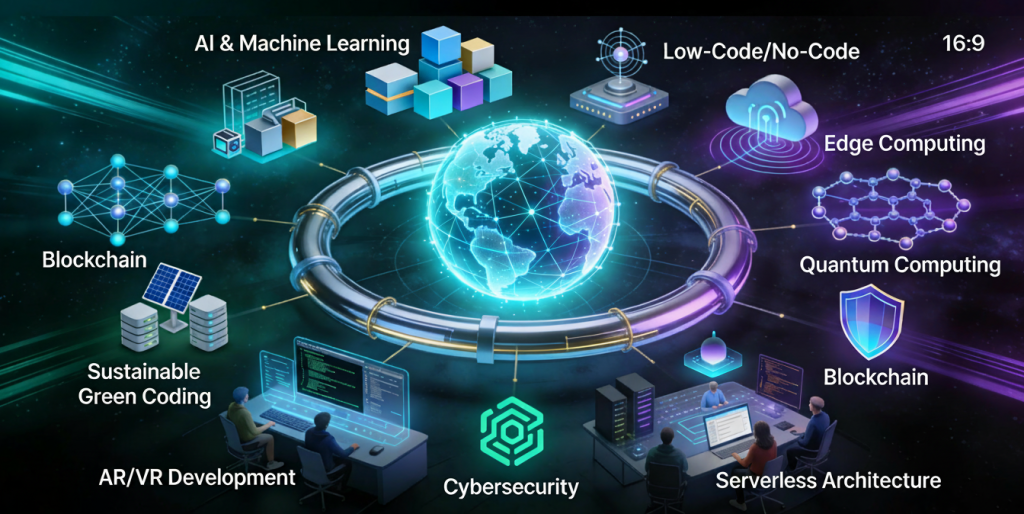
Introduction Software development is evolving at an unprecedented pace. Rapid advancements in artificial intelligence, cloud computing, automation, and development tools are reshaping how applications are built, deployed, and maintained. Organizations that fail to adapt risk falling behind in an increasingly competitive digital world. Understanding future trends in software development helps developers, businesses, and technology leaders prepare for upcoming challenges and opportunities. In this blog, we explore key trends that will define the future of software development and how they will impact the industry. Artificial Intelligence in Software Development AI is transforming every stage of the software development lifecycle. Key Applications AI-powered code generation Intelligent debugging Automated testing AI tools improve productivity and reduce human error. Low-Code and No-Code Development Low-code and no-code platforms enable faster application development with minimal coding. Benefits Faster time to market Reduced development costs Empowered non-technical users These platforms are ideal for rapid prototyping and internal tools. Cloud-Native Development Cloud-native applications are designed specifically for cloud environments. Key Technologies Containers Microservices Serverless computing Cloud-native development improves scalability and resilience. DevOps and Automation Automation continues to play a vital role in software development. Trends AI-driven CI/CD pipelines Automated infrastructure Continuous monitoring Automation enhances efficiency and reliability. Cybersecurity-First Development Security is becoming a core development priority. Emerging Practices Zero trust architecture DevSecOps Continuous security testing Security-first development protects applications from evolving threats. Microservices Architecture Microservices allow applications to be built as independent, scalable services. Advantages Better scalability Faster updates Improved fault isolation Microservices support modern, distributed systems. Edge Computing Edge computing processes data closer to the source. Use Cases IoT devices Real-time analytics Autonomous systems Edge computing reduces latency and improves performance. Remote and Distributed Development Teams Remote work is becoming the norm in software development. Benefits Access to global talent Improved flexibility Reduced operational costs Collaboration tools enable seamless teamwork. Sustainable Software Development Green software engineering focuses on energy-efficient applications. Key Goals Reduced carbon footprint Efficient resource usage Sustainability is becoming a strategic priority. Continuous Learning and Skill Evolution Developers must continuously update their skills to remain competitive. In-Demand Skills Cloud platforms AI and ML Cybersecurity Lifelong learning is essential in modern software development. Conclusion The future of software development is shaped by innovation, automation, and continuous improvement. AI, cloud-native technologies, security-first practices, and sustainability will define the next generation of applications. By embracing these trends, organizations and developers can stay competitive and build software that meets future demands. Frequently Asked Questions (FAQs) 1. What is the biggest trend in software development? AI and automation are the most impactful trends. 2. Will low-code platforms replace developers? No, they will complement developers by improving productivity. 3. Is cloud-native development the future? Yes, cloud-native approaches are becoming the industry standard. 4. How important is cybersecurity in future development? Cybersecurity is critical and must be integrated from the start. 5. Will DevOps continue to grow? Yes, DevOps will remain essential for modern software delivery. 6. How can developers prepare for the future? By continuously learning new technologies and adapting to change. Connect With Us:https://www.facebook.com/profile.php?id=61555452386126

Digital transformation concept with business technology, AI data flow, and cloud computing network.
Uncategorized

Digital Transformation in 2025: How Technology Is Redefining Business and Innovation

Introduction The world is changing — and it’s happening at digital speed. Digital transformation has evolved from being a buzzword to a fundamental necessity for every business. It’s not just about adopting new technologies but about reimagining how organizations operate, deliver value, and connect with customers. In 2025, companies that embrace digital transformation are leading markets, while those that resist it risk falling behind. From cloud computing to AI-driven automation, digital innovation is redefining the global economy. What Is Digital Transformation? Digital transformation is the integration of digital technologies into all areas of business, changing how companies operate and deliver value. It involves adopting new tools, automating processes, and building a culture that embraces continuous innovation. Key aspects include: Technology Adoption: Using AI, cloud, and analytics. Process Optimization: Automating workflows and operations. Cultural Change: Encouraging adaptability and innovation. Core Technologies Powering Digital Transformation Artificial Intelligence (AI): Enables automation, predictions, and personalization. Cloud Computing: Offers scalability and remote accessibility. Internet of Things (IoT): Connects devices for real-time data exchange. Big Data Analytics: Transforms raw data into actionable insights. Blockchain: Adds transparency and security to transactions. 5G Networks: Enables faster, more reliable digital experiences. Benefits of Digital Transformation Speed & Agility: Faster decision-making and innovation. Customer Satisfaction: Real-time personalization and engagement. Cost Efficiency: Automation reduces operational expenses. Business Continuity: Cloud services ensure resilience and scalability. Sustainability: Digital solutions minimize resource waste and paper usage. Challenges in Digital Transformation While transformation offers benefits, it also brings challenges: Cybersecurity Risks: Increased digital exposure demands stronger protection. Legacy Systems: Outdated technology slows innovation. Cultural Resistance: Employees may fear change or automation. High Initial Costs: Digital tools require upfront investment. The Future of Digital Transformation The next phase of transformation focuses on AI-first ecosystems, automation, and sustainability. Hyper-Automation: Everything that can be automated will be. Green IT: Businesses are adopting eco-friendly digital solutions. AI-Driven Decision Making: Predictive insights guide leadership. Metaverse Integration: Blending digital and physical experiences. Conclusion Digital transformation is not just a technological upgrade — it’s a mindset shift. In 2025, success depends on how quickly businesses adapt to change, leverage data, and deliver value through innovation. As AI, cloud computing, and automation continue to evolve, one thing is clear: “Digital transformation is the bridge between today’s challenges and tomorrow’s possibilities.” FAQ Section Q1. What is digital transformation in simple terms?It’s the process of using technology to improve how businesses operate and serve customers. Q2. Which technologies drive digital transformation?AI, cloud computing, IoT, big data, and automation. Q3. Why is digital transformation important?It enhances efficiency, innovation, and customer satisfaction while reducing costs. Q4. What are common challenges?Cybersecurity, cost, and cultural resistance to change. Q5. Is digital transformation only for big companies?No — small and medium businesses also benefit from automation and cloud tools.

Scroll to Top