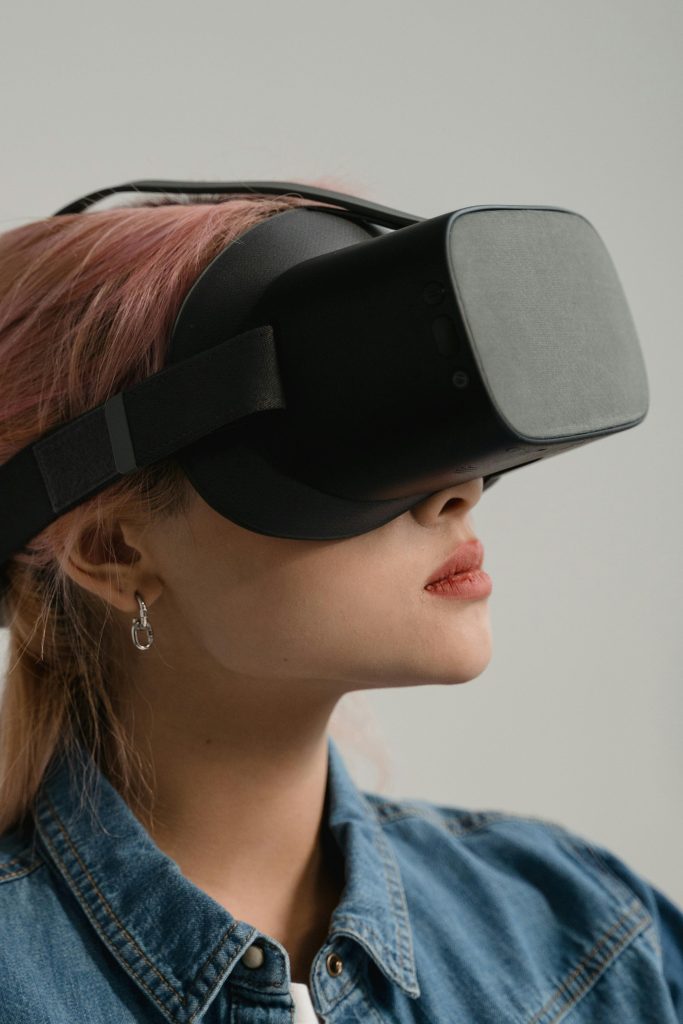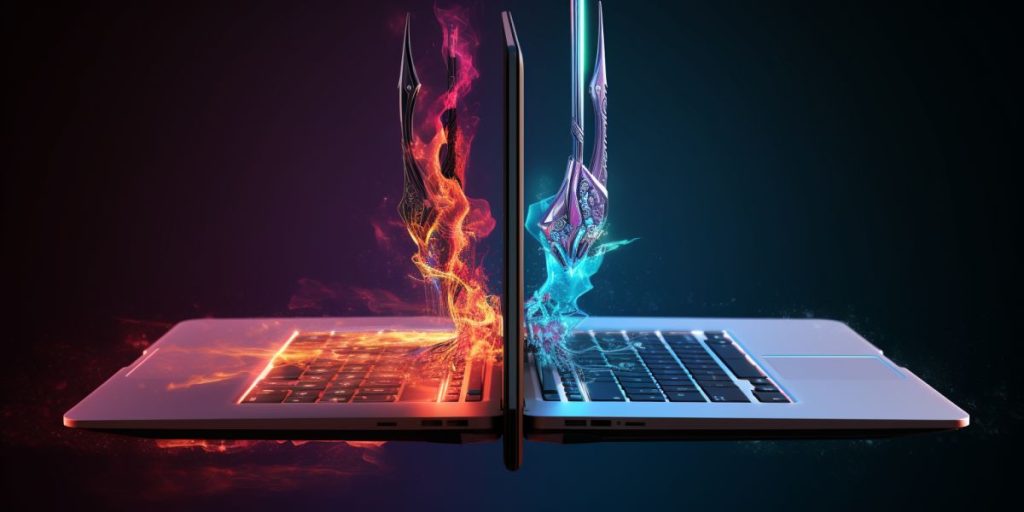
tech innovation

Artificial Intelligence, cybersecurity, Technology & Innovation

The Double-Edged Sword: How Artificial Intelligence is Rewriting the Rules of Cybersecurity

The Double-Edged Sword: How Artificial Intelligence is Rewriting the Rules of Cybersecurity We live in a world where our lives are fundamentally digital. From the photos of our kids stored in the cloud to the banking apps that hold our hard-earned savings, our digital footprints are massive. But behind the convenience of this connected world lies a chaotic, hidden battleground. Every single day, millions of cyberattacks are launched across the globe. Sneaky phishing emails, devastating ransomware, and massive corporate data breaches have become a regular part of our daily news cycle. For years, human security analysts were the primary defense line against these threats. But the sheer scale of the digital universe has outgrown human capacity. It’s like trying to drink from a firehose while playing a high-stakes game of Whack-A-Mole. Enter Artificial Intelligence (AI). AI has burst onto the scene as the ultimate savior for digital defense. It promises to analyze billions of data points in milliseconds, predict attacks before they happen, and patch vulnerabilities instantly. But there is a dark side to this story. The very same technology that shields us is also being weaponized by cybercriminals. Let’s dive deep into the fascinating, slightly terrifying, and incredibly fast-moving world of Artificial Intelligence in cybersecurity. We will explore how it works, how the bad guys are abusing it, and what the future holds for human defense teams. Part 1: Why Traditional Cybersecurity is Failing To truly appreciate why AI is a game-changer, we first have to understand why our old ways of doing things are falling apart. Traditionally, cybersecurity relied on something called signature-based detection. Think of it like a digital “Most Wanted” poster. When a security company discovered a new virus, they isolated its unique digital signature (a specific piece of code) and added it to a database. Your antivirus software would scan your computer, look for that specific signature, and block it if found. For a long time, this worked decently well. But it has two massive, fatal flaws: The “Zero-Day” Problem: Signature-based systems can only catch threats that have been seen before. If a hacker writes a brand-new piece of malware that isn’t in the database yet—known as a “Zero-Day” attack—the traditional software is completely blind to it. Alert Fatigue: Modern companies generate millions of security logs every day. Traditional software flags anything even slightly unusual, drowning human IT managers in a sea of alerts. When everything is a warning, nothing is a warning. Exhausted analysts inevitably miss the real, dangerous threats buried in the noise. The reality is that hackers have evolved. They move at lightning speed, changing their code dynamically to bypass traditional filters. Human beings simply cannot type, think, or react fast enough to keep up. We needed a system that doesn’t just look backward at past threats, but one that can think, adapt, and predict in real-time. Part 2: How AI Transforms Cyber Defense AI doesn’t sleep, it doesn’t get tired, and it doesn’t suffer from alert fatigue. By leveraging machine learning models, modern cybersecurity systems have shifted from a reactive stance to a proactive one. Here is exactly how AI is changing the defensive landscape. 1. Behavioral Analysis (Anomalous Activity Detection) Instead of looking for specific bad code, AI looks at behavior. It starts by learning what “normal” looks like for a specific network or user. For instance, it learns that Sarah from Accounting typically logs in from Chicago at 9:00 AM, uses Microsoft Excel, and downloads about 50 megabytes of data a day. If Sarah suddenly logs in at 3:00 AM from an IP address in eastern Europe and attempts to download 40 gigabytes of sensitive source code, the AI immediately flags it. Even if the hacker has Sarah’s valid username and password, the AI recognizes the behavior as highly anomalous and locks down the account instantly. 2. Automated Incident Response When a cyberattack hits, seconds matter. If a ransomware strain begins encrypting files on a company server at 2:00 AM on a Sunday, waiting for a human technician to wake up, check their email, drive to the office, and pull the plug could mean total devastation. AI-driven security systems can execute SOAR (Security Orchestration, Automation, and Response) playbooks. The moment an attack is detected, the AI can automatically isolate the infected computer from the rest of the network, block the malicious IP address, and preserve the data logs for investigation. It mitigates the damage in milliseconds, long before a human can even open their eyes. 3. Predictive Threat Intelligence AI excels at finding patterns in chaos. By scraping data from global security feeds, forums, and even the dark web, AI can predict where hackers are likely to strike next. It scans an organization’s public-facing infrastructure, identifies weak spots (like unpatched software), and tells the IT team precisely what they need to fix before malicious actors find it. Part 3: The Dark Side — When Hackers Use AI Technology is inherently neutral; it is defined by the intent of the person using it. Unfortunately, the exact same AI capabilities that make defenses stronger are giving cybercriminals unprecedented superpowers. We have officially entered the era of AI vs. AI warfare. Here is how the bad guys are exploiting Artificial Intelligence. 1. Hyper-Realistic Phishing and Social Engineering We all know the classic phishing email: full of terrible grammar, weird fonts, and a glaringly obvious fake link from a “Nigerian Prince” or a “bank manager” asking you to update your details. They were relatively easy to spot. Not anymore. Generative AI tools like ChatGPT have made it incredibly easy for hackers—even those who don’t speak English well—to write flawless, highly persuasive, and professionally phrased emails. Worse yet, hackers can use AI to crawl an individual’s public social media profiles (LinkedIn, Twitter, Facebook) to gather personal details. The AI can then automatically generate a highly tailored, deeply convincing email customized just for them. This is called Spear Phishing, and when powered by AI, its success rate skyrockets. 2. Deepfakes: The Next Frontier of

Software development, Technology, Technology & Innovation

The Future of Wearable Technology: Beyond Smartwatches

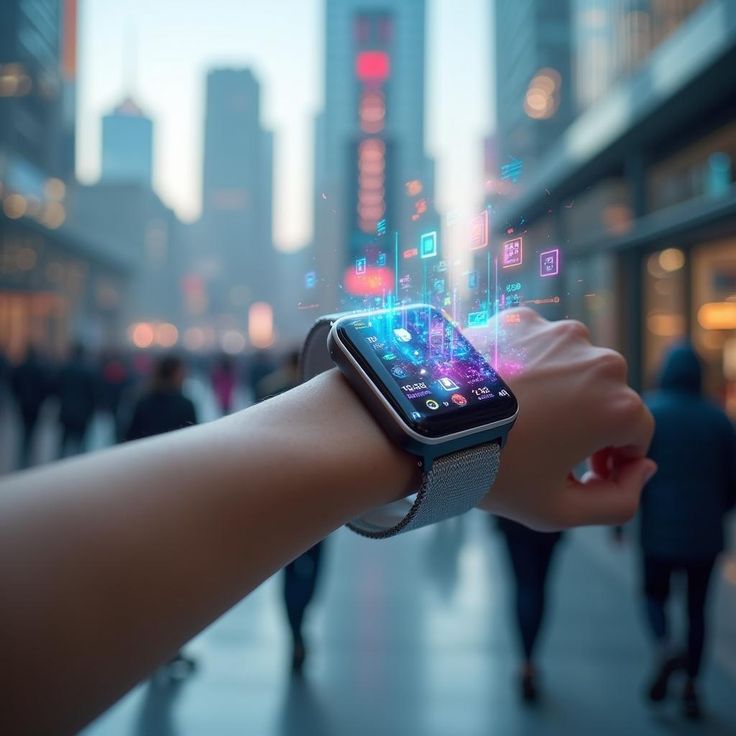
The Future of Wearable Technology: Beyond Smartwatches Wearable technology has become a major part of modern life. Just a decade ago, wearable devices were mostly limited to fitness bands that counted steps and tracked basic activity. Today, smartwatches can monitor heart rates, detect falls, measure blood oxygen levels, and even perform electrocardiograms. However, the wearable technology industry is rapidly moving beyond smartwatches. In 2026, the next generation of wearable devices is transforming how people interact with technology, manage their health, communicate, and experience the digital world. From smart glasses and AI-powered assistants to smart clothing and health-monitoring patches, wearable technology is becoming more intelligent, less intrusive, and more integrated into everyday life. As advancements in artificial intelligence, sensors, connectivity, and materials science continue to accelerate, the future of wearable technology promises experiences that were once considered science fiction. The Evolution of Wearable Technology The journey of wearable technology began with simple devices designed to track physical activity. Over time, improvements in miniaturization, battery efficiency, and wireless communication allowed manufacturers to create more sophisticated products. The first wave of wearables focused on fitness tracking. The second wave introduced smartwatches capable of delivering notifications, supporting mobile payments, and monitoring health metrics. Today, the industry is entering its third wave, where wearable devices are becoming proactive companions rather than passive tools. Modern wearables are increasingly capable of understanding user behavior, predicting needs, and providing personalized recommendations through artificial intelligence. Instead of simply collecting data, future wearables will help users make informed decisions about their health, productivity, and daily routines. Why the Smartwatch Is No Longer the Center of Innovation Although smartwatches remain popular, they face several limitations. Small screens restrict user interactions, battery life remains a challenge, and constant notifications can contribute to digital fatigue. Technology companies are now exploring alternative wearable formats that provide richer experiences while reducing dependence on smartphones and traditional screen-based interfaces. The goal is not to replace smartwatches entirely but to create an ecosystem of specialized wearable devices that work together seamlessly. Smart Glasses: The Next Major Computing Platform One of the most promising developments in wearable technology is the rise of smart glasses. Unlike traditional screens that require users to look down at a phone or smartwatch, smart glasses place information directly within the user’s field of vision. This creates a more natural and immersive way of interacting with digital content. Future smart glasses are expected to offer: Real-time navigation overlays Instant language translation Hands-free communication AI-powered personal assistance Enhanced workplace productivity Augmented reality experiences Advancements in display technology are making smart glasses lighter, more stylish, and more practical for everyday use. As battery performance improves and artificial intelligence becomes more capable, smart glasses could eventually become the primary interface for digital interactions. AI-Powered Wearables Are Becoming Personal Assistants Artificial intelligence is rapidly becoming the driving force behind wearable innovation. Future wearable devices will do far more than collect information. They will analyze behavior patterns, understand user preferences, and proactively offer assistance. Imagine a wearable device that: Detects signs of stress before you notice them Suggests breaks during long work sessions Provides personalized fitness coaching Recommends dietary adjustments Schedules meetings based on energy levels Offers contextual information during conversations These capabilities are becoming possible through advanced machine learning models that process data directly on devices or through secure cloud platforms. AI-powered wearables are transforming technology from a reactive tool into a proactive companion. The Rise of Smart Clothing Smart clothing is emerging as one of the most exciting areas of wearable technology. Instead of wearing separate devices, users may soon wear garments embedded with intelligent sensors. These textiles can continuously monitor various physiological and environmental conditions without requiring additional accessories. Potential applications include: Heart rate monitoring Respiratory tracking Muscle activity analysis Posture correction Temperature regulation Athletic performance optimization For athletes, smart clothing can provide detailed performance insights. For healthcare providers, it can enable continuous patient monitoring. For everyday users, it can offer health tracking without the inconvenience of multiple devices. As flexible electronics become more affordable, smart clothing could become a mainstream technology over the next decade. Wearable Health Technology Is Revolutionizing Healthcare Healthcare remains one of the most impactful applications of wearable technology. Current wearable devices already track: Heart rate Sleep quality Blood oxygen levels Physical activity Stress indicators Future generations of wearables are expected to monitor even more advanced health metrics, including: Continuous blood pressure tracking Non-invasive glucose monitoring Hydration levels Early disease detection Respiratory health indicators Mental wellness metrics Continuous monitoring allows healthcare professionals to identify health risks before symptoms become severe. This shift from reactive healthcare to preventive healthcare has the potential to improve outcomes while reducing medical costs. Wearable health technology could become a critical component of personalized medicine in the coming years. Smart Rings Are Gaining Popularity Smart rings represent another growing category within wearable technology. These compact devices provide many of the same benefits as smartwatches while offering a more discreet form factor. Modern smart rings can track: Sleep patterns Activity levels Heart rate variability Stress levels Recovery metrics Because they are lightweight and comfortable, smart rings appeal to users who prefer minimalistic technology. As sensor technology continues to improve, smart rings may become powerful health-monitoring tools capable of delivering highly accurate biometric data. Brain-Computer Interfaces and Neural Wearables Perhaps the most futuristic area of wearable technology involves brain-computer interfaces (BCIs). These systems allow direct communication between the human brain and digital devices. Although still in the early stages of development, neural wearables could eventually enable: Hands-free device control Enhanced accessibility for people with disabilities Faster communication Advanced gaming experiences Cognitive monitoring Personalized learning systems Researchers and technology companies are investing heavily in this field because of its potential to redefine human-computer interaction. While widespread adoption may still be years away, neural wearables represent one of the most transformative possibilities for the future. Wearable Technology in the Workplace Businesses are increasingly adopting wearable technology to improve productivity, safety, and efficiency. Industrial wearables can help workers by: Providing real-time instructions

Glowing quantum computer processor with interconnected qubits floating in a blue digital space
Cloud, Cloud Computing and Technology

The Rise of Quantum Computing: Breaking Through Classical Limitations

Introduction The world of computing stands at the precipice of a revolutionary transformation. While classical computers have served humanity remarkably well for decades, we’re now witnessing the emergence of a fundamentally different approach to computation—one that harnesses the bizarre and counterintuitive principles of quantum mechanics. Quantum computing promises to solve problems that would take conventional computers millions of years to crack, opening doors to breakthroughs in medicine, materials science, cryptography, and artificial intelligence. Understanding Quantum Computing: Beyond the Bits To appreciate the revolutionary nature of quantum computing, we must first understand what makes it different from classical computing. Traditional computers process information using bits—binary units that exist in one of two states: 0 or 1. Every calculation, every program, every digital interaction ultimately reduces to sequences of these binary digits flowing through silicon circuits. Quantum computers, however, operate on quantum bits or “qubits.” Unlike classical bits, qubits can exist in a state called superposition, where they’re simultaneously 0 and 1 until measured. This isn’t merely a theoretical curiosity—it’s a fundamental property of quantum mechanics that enables exponential increases in computational power. Consider this: A classical computer with three bits can represent any of eight possible states (000, 001, 010, 011, 100, 101, 110, 111) at any given moment. A quantum computer with three qubits can represent all eight states simultaneously. As you scale up, the advantage becomes staggering. While 20 classical bits can represent one of about a million states, 20 qubits can represent all million states at once. But superposition is just the beginning. Quantum computers also leverage entanglement, a phenomenon Einstein famously called “spooky action at a distance.” When qubits become entangled, the state of one instantly influences the state of another, regardless of the distance between them. This interconnectedness allows quantum computers to process information in ways that have no classical analogue. The Current State of Quantum Computing Technology The past few years have witnessed remarkable progress in quantum computing hardware and software. Major technology companies and research institutions worldwide are investing billions in quantum research. IBM has made quantum computers accessible through the cloud, allowing researchers and developers to experiment with real quantum hardware. Google claimed to achieve “quantum supremacy” in 2019 when their Sycamore processor performed a calculation in 200 seconds that would take a classical supercomputer approximately 10,000 years. However, the path to practical quantum computing remains challenging. Current quantum computers are incredibly fragile. Qubits must be kept at temperatures near absolute zero—colder than outer space—to maintain their quantum states. Environmental noise, electromagnetic interference, and even cosmic rays can cause “decoherence,” destroying the delicate quantum information before calculations complete. Today’s quantum processors typically have between 50 to 1000 qubits, but not all qubits are created equal. The quality of qubits, measured by metrics like coherence time and gate fidelity, varies significantly between different quantum computing platforms. Researchers are exploring various physical implementations of qubits, including superconducting circuits, trapped ions, topological qubits, and photonic systems, each with distinct advantages and challenges. Revolutionary Applications of Quantum Computing The true power of quantum computing lies in its applications. Drug discovery represents one of the most promising areas. Simulating molecular interactions requires calculating quantum mechanical properties—a task where quantum computers naturally excel. Traditional computers struggle to model even relatively simple molecules accurately, but quantum computers could simulate complex biological molecules, dramatically accelerating the development of new medications and treatments. Cryptography will undergo a fundamental transformation with quantum computing. Current encryption methods rely on the difficulty of factoring large numbers—a task that takes classical computers impractical amounts of time. Quantum computers using Shor’s algorithm could break these encryption schemes efficiently, rendering much of today’s digital security obsolete. This looming threat has sparked the development of post-quantum cryptography—new encryption methods designed to resist quantum attacks. Financial modeling and optimization problems also stand to benefit enormously. Portfolio optimization, risk analysis, and fraud detection involve evaluating countless scenarios and variables. Quantum computers could process these calculations exponentially faster, providing more accurate predictions and identifying opportunities that classical algorithms might miss. Climate modeling and materials science represent another frontier. Understanding and predicting climate patterns requires processing vast amounts of data and running complex simulations. Quantum computers could model atmospheric and oceanic systems with unprecedented accuracy. Similarly, designing new materials with specific properties—stronger alloys, more efficient solar cells, better batteries—could advance rapidly with quantum simulation. The Race for Quantum Advantage The global race for quantum computing dominance has become a matter of strategic importance. The United States, China, and the European Union have all announced multi-billion dollar quantum initiatives. Private companies like IBM, Google, Microsoft, and Amazon are building quantum computing platforms and ecosystems. Startups like IonQ, Rigetti, and PsiQuantum are pursuing novel approaches to quantum hardware. The concept of “quantum advantage” or “quantum utility” has evolved beyond the initial demonstrations. Researchers now focus on identifying specific problems where quantum computers can provide practical advantages over classical systems, even if those classical systems continue improving. This represents a more nuanced understanding than the early “supremacy” narrative. Hybrid approaches combining quantum and classical computing are gaining traction. Quantum computers excel at specific tasks but struggle with others. By strategically dividing problems between quantum and classical processors, researchers can leverage the strengths of both paradigms. This hybrid model likely represents the near-term future of quantum computing applications. Challenges and the Road Ahead Despite tremendous progress, significant challenges remain. Error rates in current quantum computers are still too high for many practical applications. Quantum error correction requires substantial overhead—potentially thousands of physical qubits to create one reliable logical qubit. Scaling quantum computers while maintaining qubit quality and connectivity presents formidable engineering challenges. The quantum computing industry also faces a talent shortage. Quantum computing requires expertise spanning quantum physics, computer science, mathematics, and engineering. Universities and companies are racing to develop training programs and build the workforce needed to realize quantum computing’s potential. Software development for quantum computers differs fundamentally from classical programming. New programming languages, algorithms, and development tools are emerging. Companies like IBM, Microsoft, and

Business professionals collaborating with digital technology, holographic displays, and innovative workspace
Technology & Innovation

The Future of Technology & Innovation: Transforming Tomorrow’s World

Introduction Technology and innovation have become the twin engines driving humanity forward in the 21st century. As we navigate through 2025, the pace of technological advancement shows no signs of slowing down. From artificial intelligence reshaping how we work to quantum computing promising to solve previously unsolvable problems, innovation continues to redefine what’s possible. In this comprehensive guide, we’ll explore the most significant technology trends, understand how innovation is transforming industries, and look ahead at what the future holds for our increasingly digital world. Artificial Intelligence: Beyond the Hype Artificial intelligence has evolved from a buzzword to an essential business tool. In 2025, AI is no longer just about automation—it’s about augmentation, enabling humans to make better decisions and achieve outcomes that were previously impossible. Generative AI’s Maturation Generative AI has moved beyond novelty to become a productivity powerhouse. Organizations are integrating AI assistants into workflows, automating complex tasks, and creating personalized customer experiences at scale. The technology has matured to handle multimodal inputs—text, images, audio, and video—opening new creative and analytical possibilities. AI in Healthcare Medical diagnostics powered by AI are detecting diseases earlier and more accurately than ever before. Machine learning algorithms analyze medical imaging, predict patient outcomes, and even assist in drug discovery, potentially saving millions of lives and billions in healthcare costs. Quantum Computing: The Next Frontier Quantum computing is transitioning from theoretical promise to practical application. While still in its early stages, quantum computers are beginning to tackle problems in cryptography, materials science, and complex optimization that would take classical computers millennia to solve. Major tech companies and research institutions are racing to achieve “quantum advantage”—the point where quantum computers can solve real-world problems faster than traditional computers. This breakthrough could revolutionize fields from climate modeling to financial forecasting. Sustainable Technology: Innovation with Purpose Climate change has made sustainable technology not just desirable but essential. Innovation is increasingly focused on reducing environmental impact while maintaining or improving functionality. Green Energy Solutions Solar and wind technology continues to become more efficient and affordable. Battery storage solutions are solving the intermittency problem, making renewable energy viable for baseload power. Innovations in hydrogen fuel cells and carbon capture technology are addressing hard-to-decarbonize sectors. Circular Economy Tech Technology is enabling circular economy models where waste becomes a resource. IoT sensors track product lifecycles, AI optimizes recycling processes, and blockchain ensures transparency in supply chains, all working together to minimize environmental impact. The Internet of Things (IoT) and Edge Computing The IoT ecosystem has exploded, with billions of connected devices generating unprecedented amounts of data. Edge computing processes this data closer to its source, reducing latency and enabling real-time responses crucial for applications like autonomous vehicles and smart cities. Smart homes, wearable health monitors, industrial sensors, and connected infrastructure are creating a world where physical and digital realms seamlessly integrate. This connectivity is optimizing everything from energy consumption to traffic flow. Blockchain Beyond Cryptocurrency While cryptocurrencies grabbed headlines, blockchain’s real innovation lies in its ability to create trust in trustless environments. In 2025, blockchain is being applied to supply chain transparency, digital identity verification, smart contracts, and decentralized finance (DeFi). Organizations are using blockchain to ensure product authenticity, streamline cross-border transactions, and create tamper-proof records for everything from medical histories to property deeds. Augmented and Virtual Reality: Merging Worlds AR and VR technologies have matured beyond gaming into practical applications across industries. Virtual training environments allow professionals to practice high-risk procedures safely. AR assists technicians with complex repairs by overlaying digital instructions onto physical equipment. The metaverse concept continues evolving, with virtual spaces hosting business meetings, educational experiences, and social interactions that feel increasingly natural and immersive. Biotechnology and Human Enhancement The convergence of technology and biology is opening extraordinary possibilities. CRISPR gene editing, brain-computer interfaces, and personalized medicine are moving from research labs to real-world applications. Wearable technology monitors health metrics in real-time, while implantable devices can restore sight, hearing, and mobility. The ethical implications are profound, but the potential to eliminate diseases and extend healthy lifespans is transforming healthcare. The Innovation Ecosystem True innovation rarely happens in isolation. It emerges from ecosystems where startups, established companies, research institutions, and governments collaborate. Open-source communities, accelerator programs, and venture capital all play crucial roles in bringing innovative ideas to market. The Role of Startups Startups continue to be innovation catalysts, unburdened by legacy systems and willing to take risks. They’re disrupting established industries and creating entirely new markets, from fintech to foodtech. Corporate Innovation Labs Large corporations are establishing innovation labs and partnering with startups to stay competitive. This collaboration combines startup agility with corporate resources and market access, accelerating technology adoption. Challenges and Considerations Innovation brings challenges alongside opportunities. Cybersecurity threats evolve as quickly as the technologies they target. Privacy concerns grow as data collection becomes ubiquitous. The digital divide risks leaving behind those without access to technology or digital literacy. Ethical considerations around AI bias, autonomous weapons, and genetic modification require thoughtful regulation and public discourse. Society must balance innovation’s benefits against potential risks and unintended consequences. Preparing for the Future Organizations and individuals must embrace continuous learning to thrive in this rapidly evolving landscape. Technical skills remain important, but creativity, critical thinking, and adaptability are equally crucial. Investing in STEM education, supporting diverse voices in technology, and fostering cultures of experimentation will determine who leads and who follows in the innovation race. Conclusion Technology and innovation are reshaping every aspect of human existence. From how we work and communicate to how we address global challenges like climate change and healthcare, technological advancement offers unprecedented opportunities. The future belongs to those who embrace change, think creatively, and use technology purposefully. As we stand at the intersection of multiple technological revolutions, the question isn’t whether innovation will transform our world—it’s how we’ll shape that transformation to benefit all of humanity. The most exciting innovations may not yet be invented. The next breakthrough could come from a garage startup, a university lab, or a global corporation. What’s certain is

Scroll to Top