

serverless computing

Cloud Computing and Technology

Why Cloud Computing is the Future of IT

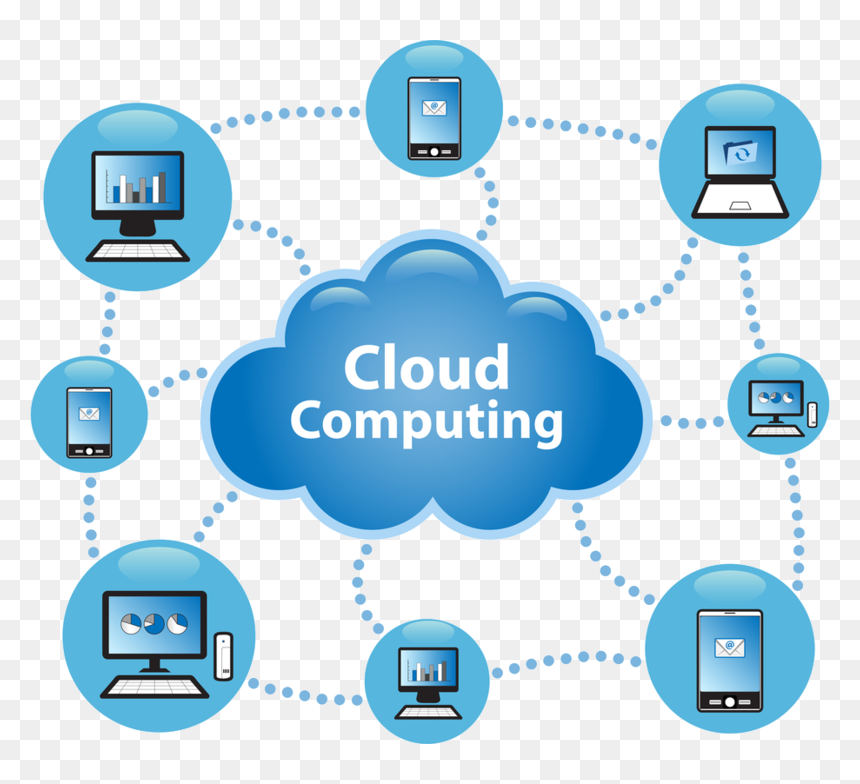
Introduction Cloud computing has evolved from a convenient option into the essential foundation powering modern IT infrastructure worldwide. As of April 2026, with AI workloads growing exponentially and global data creation reaching 181 zettabytes annually, businesses must embrace scalable, secure cloud platforms to remain competitive. Traditional on-premises servers demand massive upfront investments in hardware, maintenance, and cooling—costs that drain resources and limit agility in today’s fast-moving digital landscape. This fundamental shift delivers 30-70% cost savings through pay-as-you-go models, provides instant scalability to handle peak demands without overprovisioning, and offers native support for AI/ML workloads that on-premises setups simply can’t match. Whether through hybrid configurations blending private and public clouds or sophisticated multi-cloud strategies spanning AWS, Azure, and GCP, forward-thinking IT leaders recognize cloud computing as the resilient backbone of tomorrow’s digital economy. Companies ignoring this transformation risk falling behind in innovation speed, operational efficiency, and market responsiveness. Unmatched Scalability Cloud platforms eliminate traditional hardware bottlenecks, enabling applications to scale seamlessly from handling a handful of users to millions in seconds. Auto-scaling groups automatically detect demand spikes—such as during Black Friday sales or viral marketing campaigns—and provision additional compute resources without human intervention. Serverless functions like AWS Lambda or Azure Functions further revolutionize this by executing code only when needed, eliminating idle server costs and reducing deployment timelines from weeks of infrastructure setup to mere minutes. Traffic Spike Handling: E-commerce platforms can burst capacity by 10x during peak hours, then scale back instantly, avoiding the waste of permanently oversized on-premises clusters. Global Edge Networks: Deploy applications across 200+ edge locations worldwide, ensuring sub-50ms latency for users in Mumbai, New York, or rural Africa without building regional data centers. Developer Productivity: Teams focus on code rather than servers, with container orchestration tools like Kubernetes managing complexity automatically. This elasticity proves critical for startups testing market fit or enterprises supporting unpredictable workloads like real-time analytics or IoT data streams. Dramatic Cost Savings The cloud’s pay-as-you-go pricing model replaces crippling capital expenditures (CapEx) with predictable operational expenses (OpEx), often delivering 50%+ savings compared to maintaining on-premises data centers. Reserved instances lock in lower rates for predictable workloads, while spot pricing auctions unused capacity at discounts up to 90%. FinOps practices—combining financial accountability with engineering—use AI-driven tools to monitor usage patterns, right-size resources, and eliminate waste from idle virtual machines that plague traditional IT budgets. Enterprises reclaim millions annually by automating optimizations: auto-shutdown of dev/test environments after hours, intelligent workload migration to cheaper regions, and predictive scaling that matches supply to actual demand. A mid-sized retailer, for example, might save $2M yearly by moving batch processing to spot instances overnight while keeping customer-facing apps on premium capacity. AI-Native Infrastructure By 2026, cloud providers lead the AI revolution with purpose-built GPU clusters, tensor processing units (TPUs), and hyperscale training environments capable of handling trillion-parameter models. Agentic AI workflows—where systems autonomously orchestrate tasks across services—demand this infrastructure, with projections estimating $2 trillion in related spending by decade’s end. Multi-region orchestration ensures low-latency inferencing worldwide without vendor lock-in, as platforms like Google Cloud’s Vertex AI or AWS SageMaker integrate seamlessly across hybrid environments. Enterprise-Grade Security Modern cloud security surpasses on-premises through zero-trust architectures that verify every access request regardless of origin, end-to-end encryption for data in transit and at rest, and AI-powered threat detection scanning billions of events daily. Automated compliance tools handle GDPR, HIPAA, and SOC 2 audits continuously, generating reports in minutes rather than months. Hybrid clouds add flexibility by keeping highly regulated data—like patient records or financial transactions—on-premises under direct control, while bursting compute-intensive tasks to public clouds with encrypted tunnels. Unlike siloed on-prem firewalls vulnerable to insider threats, cloud shared responsibility models leverage providers’ massive security teams and global threat intelligence. Hybrid & Multi-Cloud Strategies With 93% of enterprises adopting multi-cloud for resilience, Kubernetes has emerged as the universal orchestrator unifying management across AWS, Azure, GCP, and private clusters. Hybrid setups shine in regulated industries: finance runs transaction processing on-premises for latency and compliance, then scales analytics to public clouds during quarter-end reporting. Benefits include development agility (test in cloud, deploy on-prem), consistent policy enforcement, and disaster recovery via workload migration—all while avoiding single-provider dependency. Edge Computing Boom Edge computing pushes processing to the network perimeter—5G towers, retail stores, factories—reducing latency to microseconds for AR/VR experiences, autonomous vehicles, and remote surgeries. IoT generates 79.4 zettabytes yearly by 2025; filtering this at the edge before cloud transmission cuts bandwidth costs 80% and enables real-time decisions impossible with centralized architectures. Sustainability Edge Cloud data centers achieve PUE ratings under 1.1 (90%+ efficiency vs. traditional IT’s 2.0+), powered by renewables and liquid cooling for AI GPUs. Major providers commit to carbon-neutral operations by 2030, helping enterprises meet ESG mandates without custom green retrofits. Conclusion Cloud computing isn’t just the future of IT—it’s the present reality enabling unprecedented agility, cost control, and AI innovation. No organization can thrive in 2026 without strategic migration to hybrid/multi-cloud architectures built for hyperscale resilience. Assess workloads today, prioritize quick wins like dev/test lift-and-shift, partner with certified experts, and position your business to lead the next digital wave. Ready to transform? Contact cloud specialists for your free infrastructure assessment and unlock 30-70% savings immediately. FAQ Why is cloud computing essential in 2026? Exploding AI demands, 181ZB data growth, and 30-70% savings make cloud mandatory—on-premises can’t deliver matching speed, scale, or security. What are the top 2026 cloud trends? AI-native platforms, hybrid/multi-cloud dominance, edge computing, sovereign clouds, serverless ubiquity, and FinOps maturity. Is cloud more secure than on-premises? Absolutely—zero-trust, AI threat hunting, and 24/7 global monitoring exceed siloed on-prem defenses, with hybrid adding granular control. How much do businesses save with cloud? 30-50% routinely via OpEx shift, spot pricing, and FinOps; many see ROI in 3-6 months after optimizing idle resources. What exactly is hybrid cloud? On-premises infrastructure for compliance/low-latency workloads + public cloud for elastic bursts, unified by Kubernetes for seamless management.
Modern data center with servers representing AWS cloud computing
aws

Understanding AWS Cloud Computing: A Complete Beginner’s Guide

Introduction In today’s digital era, cloud computing has become the foundation of modern IT infrastructure — and Amazon Web Services (AWS) stands tall as its undisputed leader. From small startups to Fortune 500 giants, businesses worldwide rely on AWS to build, scale, and innovate faster than ever before. But what exactly is AWS? How does it work? And why has it become so essential for the global tech ecosystem? This detailed guide breaks down AWS Cloud Computing in simple terms — exploring its services, advantages, architecture, and how it’s shaping the future of business and technology. What is AWS (Amazon Web Services)? Amazon Web Services (AWS) is a cloud computing platform developed by Amazon that provides on-demand IT resources over the internet on a pay-as-you-go basis. Instead of purchasing expensive hardware or managing physical servers, users can rent computing power, storage, databases, and other services from AWS and scale them as needed. In short, AWS allows you to: Build and host applications Store and process data Analyze large datasets Deploy AI and machine learning models Create global-scale systems — all without owning any physical infrastructure How AWS Cloud Computing Works AWS operates on a shared infrastructure model, which means multiple customers share the same underlying hardware and resources securely through virtualization. The AWS ecosystem consists of three main layers: Infrastructure as a Service (IaaS): Virtual servers, storage, and networking (e.g., EC2, S3). Platform as a Service (PaaS): Managed environments for application development (e.g., AWS Elastic Beanstalk). Software as a Service (SaaS): Ready-to-use cloud-based software applications. You can manage everything through: AWS Management Console (Web UI) AWS CLI (Command Line Interface) AWS SDKs (for programming languages) Key AWS Services Explained AWS offers 200+ fully featured services — here are some of the most popular ones categorized for better understanding 👇 1. Compute Services These handle your application’s processing power. Amazon EC2 (Elastic Compute Cloud): Virtual servers that run applications. AWS Lambda: Serverless computing — runs code automatically when triggered. Elastic Beanstalk: Automatically deploys and manages web applications. ECS / EKS: Manage Docker containers and Kubernetes clusters. 2. Storage Services For storing and retrieving any amount of data anytime. Amazon S3 (Simple Storage Service): Scalable object storage for files, images, backups. Amazon EBS: Persistent block storage for EC2 instances. Amazon Glacier / S3 Glacier Deep Archive: Long-term data archiving at low cost. 3. Database Services Fully managed databases for different needs. Amazon RDS: Relational databases like MySQL, PostgreSQL, Oracle, SQL Server. Amazon DynamoDB: Fast NoSQL database for real-time applications. Amazon Redshift: Data warehousing and analytics. 4. Security and Identity AWS Identity and Access Management (IAM): Manage user permissions and roles. AWS Shield & WAF: Protection against DDoS and web attacks. AWS KMS: Manage encryption keys for data protection. 5. Networking and Content Delivery Amazon VPC (Virtual Private Cloud): Isolated cloud network environment. Route 53: Domain name service and routing. AWS CloudFront: Global content delivery network (CDN) for faster website loading. 6. Artificial Intelligence & Machine Learning AWS provides advanced AI capabilities through easy-to-use APIs and frameworks. Amazon SageMaker: Build, train, and deploy machine learning models. AWS Lex: Natural language chatbot framework (used in Alexa). AWS Rekognition: Image and video recognition API. AWS Polly: Text-to-speech service. 7. Developer and Management Tools AWS CloudFormation: Automate resource deployment using templates. AWS CloudWatch: Monitor system health and performance. AWS CodeBuild / CodePipeline: Continuous integration and deployment tools. Benefits of Using AWS Cloud Computing Scalability and FlexibilityInstantly scale up or down based on demand. Perfect for growing startups and large enterprises alike. Cost-Effective (Pay-as-You-Go)No upfront investment — pay only for what you use. Reliability and AvailabilityAWS operates data centers in multiple Availability Zones (AZs) worldwide ensuring 99.99% uptime. Security and ComplianceAdvanced encryption, network isolation, and compliance with international standards like ISO and GDPR. Global ReachWith over 30 regions worldwide, AWS delivers low-latency experiences anywhere. Integration and EcosystemSeamless integration with third-party apps and other AWS services. Real-World Examples of AWS in Action 1. Netflix Netflix runs its entire global streaming infrastructure on AWS, using EC2, S3, and CloudFront to deliver videos to millions of users in real time. 2. Amazon.com Naturally, Amazon itself uses AWS to power e-commerce operations, analytics, and logistics automation. 3. NASA NASA uses AWS to store and analyze satellite data, making it available for researchers worldwide. 4. Capital One The financial giant uses AWS for secure cloud-based banking applications, fraud detection, and data analysis. AWS Pricing Explained AWS follows a pay-as-you-go model, meaning you only pay for the computing resources you use.Pricing depends on: Service type (e.g., EC2 vs. S3) Usage time (per hour or per second) Region (data center location) Data transfer and storage You can also use: AWS Free Tier: Try 100+ services free for 12 months. AWS Pricing Calculator: Estimate monthly costs before deploying. Challenges of AWS Despite its power, AWS isn’t perfect. Common challenges include: Complex pricing structure. Learning curve for beginners. Over-dependence on one provider (vendor lock-in). Cost overruns if resources aren’t monitored properly. The Future of AWS AWS is rapidly evolving beyond traditional cloud computing. Emerging trends include: Serverless computing becoming mainstream. AI and ML integration across services. Quantum computing development (via Amazon Braket). Sustainability initiatives, making AWS data centers carbon-neutral. AWS is no longer just infrastructure — it’s an innovation ecosystem that powers the digital transformation of the modern world. Conclusion AWS Cloud Computing has revolutionized the way organizations build, deploy, and scale applications. With its vast array of services, global reach, and flexible pricing, AWS remains the go-to platform for startups, enterprises, and developers alike. Whether you’re launching a new app, running data analytics, or exploring AI, AWS gives you the tools, flexibility, and speed to innovate at scale — all from the cloud. Frequently Asked Questions (FAQs) Q1. What is AWS Cloud Computing? Answer: AWS (Amazon Web Services) is a comprehensive cloud platform that provides on-demand access to IT resources like servers, storage, databases, and software — all accessible over the internet on a pay-as-you-go basis. It helps organizations build and scale applications without

Digital cloud representing Amazon Web Services and global cloud infrastructure.
aws, Cloud Computing and Technology

AWS Explained: How Amazon Web Services Powers the Cloud in 2025

Introduction In a world where every app, website, and business runs on the cloud, one name stands out — Amazon Web Services (AWS). From startups to global enterprises, AWS has become the foundation for innovation, scalability, and performance. As of 2025, AWS powers over 30% of the global cloud market, offering everything from basic storage to advanced artificial intelligence. This blog explores what AWS is, how it works, and why it continues to lead the cloud revolution. What is AWS (Amazon Web Services)? AWS is a cloud computing platform developed by Amazon, offering on-demand computing services such as servers, storage, databases, and machine learning — all accessible over the internet. Key Features: Scalability: Expand resources as your business grows. Pay-as-you-go: Pay only for what you use. Global Infrastructure: Data centers in 32 regions worldwide. Reliability: 99.99% uptime backed by Amazon’s global network. Core AWS Services You Should Know AWS provides over 200 services across computing, storage, databases, networking, and more. Here are the essentials: Category Service Description Compute EC2 Virtual servers for running applications Storage S3 Object storage for files, backups, and data lakes Database RDS Managed relational database service Networking VPC Isolated network for secure cloud deployment Serverless Lambda Run code without managing servers AI/ML SageMaker Build, train, and deploy machine learning models Security IAM Manage user access and permissions securely Why AWS Dominates the Cloud Market Here’s why AWS remains the top choice for developers and businesses: Massive Ecosystem: From gaming to AI to IoT, AWS supports every industry. Global Reach: 99 Availability Zones across 32 regions. Cost Efficiency: Pay-as-you-go model saves infrastructure costs. Innovation: Continuous updates with AI, blockchain, and edge computing. Security: End-to-end encryption, compliance, and monitoring tools. AWS Security and Compliance Security is AWS’s top priority. Identity & Access Management (IAM): Role-based control for users. Encryption: Protect data in transit and at rest. Compliance: Meets ISO, GDPR, HIPAA, and DPDP standards. Monitoring: Tools like CloudTrail and GuardDuty track activities in real time. The Future of AWS: Trends in 2025 and Beyond AWS continues to lead innovation in: AI and Generative Models Quantum Computing (Braket) Sustainability with Green Data Centers Edge Computing for Faster IoT Cloud-Native Development with Kubernetes (EKS) The next phase of AWS is all about intelligent automation, zero-latency networks, and sustainable innovation. Conclusion AWS is more than just cloud storage — it’s the backbone of digital transformation. With its unmatched scalability, security, and global reach, it enables businesses to innovate faster and smarter. As cloud computing evolves, AWS continues to redefine how we build, deploy, and manage technology — one click at a time. “Build the future in the cloud — powered by AWS.” FAQ Section Q1. What is AWS mainly used for?AWS provides cloud infrastructure for hosting, computing, storage, and app development. Q2. Is AWS free for beginners?Yes, AWS offers a Free Tier with limited services for 12 months. Q3. Which companies use AWS?Netflix, Adobe, NASA, Airbnb, and many startups rely on AWS for scalable cloud solutions. Q4. How is AWS different from Azure or Google Cloud?AWS offers broader service coverage, global infrastructure, and earlier market dominance. Q5. Can I learn AWS without coding?Absolutely — many AWS tools (like S3 and RDS) require little or no programming knowledge.

Scroll to Top