
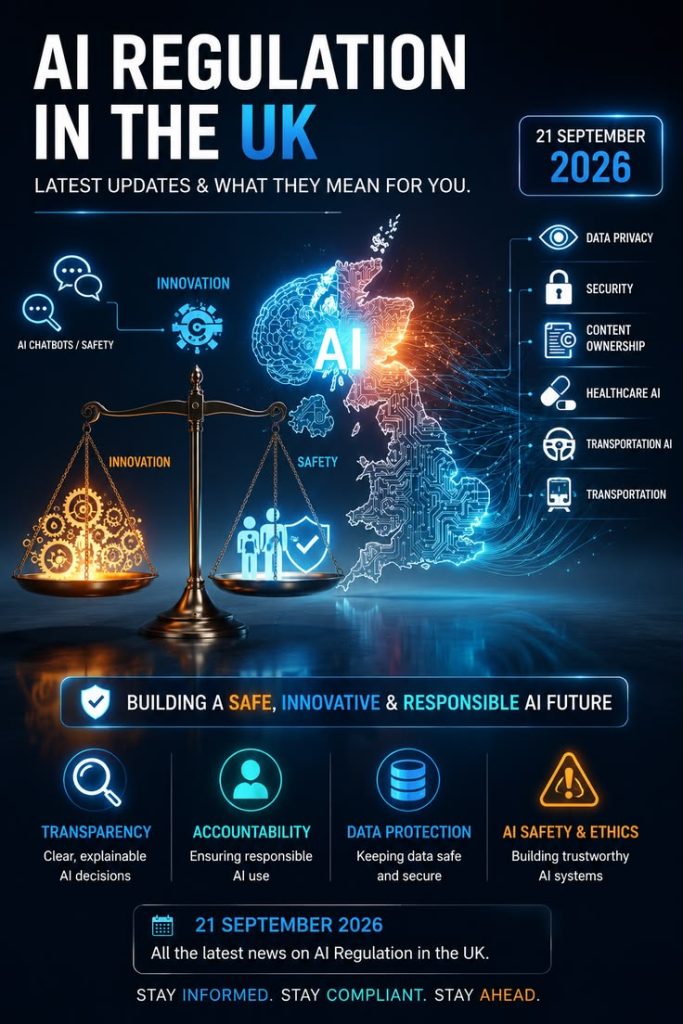
responsible AI

Artificial Intelligence, Business Intelligence, Digital Transformation, Technology

AI Governance in 2026: Balancing Innovation and Regulation

AI Governance in 2026: Balancing Innovation and Regulation Artificial intelligence has rapidly evolved from an emerging technology into a critical business and societal tool. From automating business operations and improving healthcare outcomes to powering advanced research and enhancing customer experiences, AI is transforming nearly every industry. However, as AI systems become more powerful and influential, concerns surrounding transparency, accountability, privacy, bias, and security continue to grow. In 2026, AI governance has become one of the most important topics in the technology landscape. Governments, regulators, technology companies, and enterprises are working together to create frameworks that encourage innovation while ensuring AI is developed and deployed responsibly. The challenge is clear: how can society unlock the enormous benefits of AI without exposing individuals, businesses, and governments to unnecessary risks? The answer lies in effective AI governance. What Is AI Governance? AI governance refers to the policies, standards, regulations, and organizational practices used to guide the development, deployment, and management of artificial intelligence systems. Its primary objectives include: Ensuring AI systems operate ethically Promoting transparency and accountability Protecting user privacy Reducing bias and discrimination Strengthening cybersecurity Maintaining regulatory compliance Building public trust Unlike traditional software governance, AI governance must address unique challenges associated with machine learning, generative AI, autonomous decision-making, and continuously evolving algorithms. As organizations increasingly rely on AI-powered systems for critical decisions, governance frameworks are becoming essential components of modern business operations. Why AI Governance Matters More Than Ever The rapid adoption of generative AI and autonomous systems has dramatically increased the importance of governance. Organizations are now using AI for: Financial decision-making Hiring and recruitment Healthcare diagnostics Customer service automation Cybersecurity monitoring Supply chain optimization Legal research Business intelligence While these applications offer significant benefits, they also introduce potential risks. An AI system that generates inaccurate information can damage a company’s reputation. A biased algorithm can lead to discrimination claims. Weak AI security controls can expose sensitive data to cybercriminals. Without proper governance, AI can become a liability instead of a competitive advantage. Businesses are realizing that governance is not merely about compliance—it is about creating sustainable and trustworthy AI ecosystems. The Global Push for AI Regulation One of the biggest developments in 2026 is the increasing focus on AI regulation worldwide. Governments recognize that artificial intelligence is reshaping economies, national security, labor markets, and public services. As a result, regulators are introducing policies designed to manage AI risks while encouraging innovation. Several key areas are receiving attention: Risk-Based AI Classification Many governments are adopting risk-based approaches to AI oversight. Under this model, AI applications are categorized according to their potential impact. Examples include: Low-Risk Systems Chatbots Recommendation engines Productivity assistants Medium-Risk Systems Customer service automation Business analytics platforms Educational AI tools High-Risk Systems Medical diagnosis systems Financial approval algorithms Law enforcement technologies Critical infrastructure management systems The higher the risk level, the stricter the governance requirements become. This approach helps regulators avoid unnecessary restrictions on innovation while focusing oversight where it is needed most. Transparency Requirements AI transparency has become a major regulatory priority. Users increasingly want to know: How AI systems make decisions What data is being used Whether content was AI-generated How organizations monitor AI outputs Transparency requirements are encouraging businesses to provide clearer explanations of AI-driven decisions and maintain detailed documentation of their AI models. Data Protection and Privacy AI systems require large amounts of data to function effectively. This has raised concerns about: User consent Data ownership Personal information protection Cross-border data transfers Governments are introducing stricter data governance rules to ensure AI systems respect privacy rights while still enabling innovation. Organizations that fail to comply may face significant financial penalties and reputational damage. Enterprise AI Governance Becomes a Strategic Priority In 2026, AI governance is no longer just the responsibility of compliance departments. It has become a boardroom issue. Executives recognize that poorly managed AI initiatives can create legal, financial, and operational risks. As a result, organizations are establishing dedicated AI governance programs that include: AI ethics committees Risk management teams Compliance officers Data governance specialists Cybersecurity professionals Legal advisors These teams work together to ensure AI projects align with business objectives, regulatory requirements, and ethical standards. Companies that implement robust governance frameworks are often able to deploy AI more confidently and at greater scale. Ethical AI Takes Center Stage Ethical AI has become one of the defining themes of AI governance. Businesses understand that compliance alone is not enough. Users expect AI systems to operate fairly, responsibly, and transparently. Ethical AI initiatives focus on several key principles. Fairness AI systems should treat all individuals fairly and avoid discriminatory outcomes. Organizations are investing in bias detection tools and model auditing processes to identify and mitigate unfair decision-making. Accountability There must be clear responsibility for AI-generated outcomes. Businesses are establishing governance structures that define who is accountable when AI systems make errors or produce harmful results. Human Oversight Despite significant advances in automation, human involvement remains critical. Many organizations require human review for high-impact decisions involving: Employment Healthcare Financial services Legal matters This ensures AI supports decision-making rather than replacing human judgment entirely. Transparency Users should understand when they are interacting with AI systems and how important decisions are made. Transparent AI helps build trust and reduces concerns about hidden algorithms influencing outcomes. The Rise of AI Audits Just as financial audits help ensure accountability in business operations, AI audits are becoming increasingly common. AI audits evaluate: Model performance Bias levels Security controls Regulatory compliance Data quality Decision-making processes Organizations are conducting regular assessments to verify that AI systems continue operating as intended. Independent third-party audits are also gaining popularity because they provide additional credibility and transparency. In many industries, AI auditing is becoming a standard governance practice. Managing Generative AI Risks Generative AI remains one of the most transformative technologies of the decade. Businesses are using AI tools to create: Marketing content Software code Product designs Business reports Customer communications Educational materials However, generative AI introduces unique governance challenges. Hallucinations AI models can

Futuristic business setting showing a diverse team collaborating around digital devices, surrounded by AI icons, smart data graphs, and a city skyline with the blog title “AI Readiness” prominently displayed(see the generated image above).
Artificial Intelligence

AI Readiness: The Foundation for Successful AI Integration

Introduction AI readiness is quickly becoming essential for businesses navigating the future of digital transformation. Organizations in every sector want to harness artificial intelligence (AI) to streamline processes, unlock strategic insights, and stay ahead of competitors. Yet, success is determined not by enthusiasm alone, but by how thoroughly an organization prepares for effective AI adoption. This blog explores what AI readiness means, why it matters, and how to chart a clear path toward responsible, scalable, and profitable AI initiatives.​   What Is AI Readiness? AI readiness measures an organization’s preparedness to implement and scale AI technologies effectively across its operations.​ It goes beyond having advanced technology—encompassing data management, infrastructure, workforce skills, ethical governance, and change management.​ Achieving readiness means developing a strategic vision, clarifying objectives, and building a roadmap that aligns AI projects with core business goals.​ Key Components of AI Readiness Strategy and Objectives Define clear business challenges and goals for AI initiatives. Align AI projects with overall corporate strategy and measurable KPIs.​ Secure leadership buy-in for long-term success.​ Data and Infrastructure Ensure high-quality, accessible data with strong governance and security.​ Upgrade technical infrastructure to support AI workloads (processing power, storage, network capabilities).​ Talent and Culture Invest in workforce training—AI skills, change management, and digital literacy.​ Foster a culture that welcomes innovation and adapts to new technologies.​ Governance and Risk Management Create policies for ethical, legal, and regulatory compliance in AI usage.​ Embed monitoring and feedback mechanisms to manage risks and ensure responsible AI deployment.​ How AI Readiness Drives Business Value Enhanced Efficiency: Automating repetitive tasks and leveraging AI for data analysis improves productivity and decision-making.​ Smarter Investments: Readiness assessments help businesses target high-impact projects and avoid costly missteps.​ Reduced Risks: Careful planning and training minimize failures and ensure robust, secure implementations.​ Competitive Advantage: Organizations ready for AI gain insights faster and innovate more effectively than competitors.​ Practical Steps For Building AI Readiness Conduct an AI readiness assessment to identify strengths and gaps.​ Implement the 11-step AI readiness checklist: Establish clear objectives Map current capabilities Develop an AI strategy and roadmap Improve data foundations Upgrade infrastructure Set governance policies Invest in talent and culture Pilot targeted projects Measure and iterate Engage leadership and stakeholders Ensure continuous learning and adaptation.​ Leverage real-world examples: Shell uses AI-driven predictive analytics for drilling optimization. IBM Watson analyzes healthcare data to guide treatment decisions.​ Retailers optimize inventory and supply chains with AI-powered demand forecasting.​ Conclusion AI readiness is the cornerstone of successful and sustainable AI transformation. By preparing across strategy, infrastructure, people, and governance, businesses unleash AI’s full potential—while mitigating risks and maximizing returns. Start by assessing your organization’s readiness, implementing targeted improvements, and fostering a future-ready culture. Ready to future-proof your business through AI? Begin your AI readiness assessment today and accelerate your journey to digital leadership! Flutter vs React Native — Which Framework Should You Choose in 2025? FAQ 1. What is an AI readiness assessment? An AI readiness assessment evaluates your organization’s strength across strategy, data, infrastructure, talent, culture, and governance to identify areas for improvement before adopting AI technologies.​ 2. Why should businesses focus on AI readiness? AI readiness prevents costly failures, boosts ROI, and enables responsible, scalable adoption—helping businesses realize the full value of AI investments.​ 3. What’s the most common barrier to AI readiness? Weak data infrastructure and insufficient workforce skills are frequent obstacles. Addressing these challenges is critical for smooth and effective AI integration.​ 4. Can small and medium businesses benefit from AI readiness? Yes. Clear objectives, practical assessments, and phased implementation plans help businesses of any size capitalize on AI opportunities.​ 5. How does AI readiness impact compliance and ethical use? Robust governance ensures AI systems are deployed responsibly, minimizing regulatory risk and building stakeholder trust.  

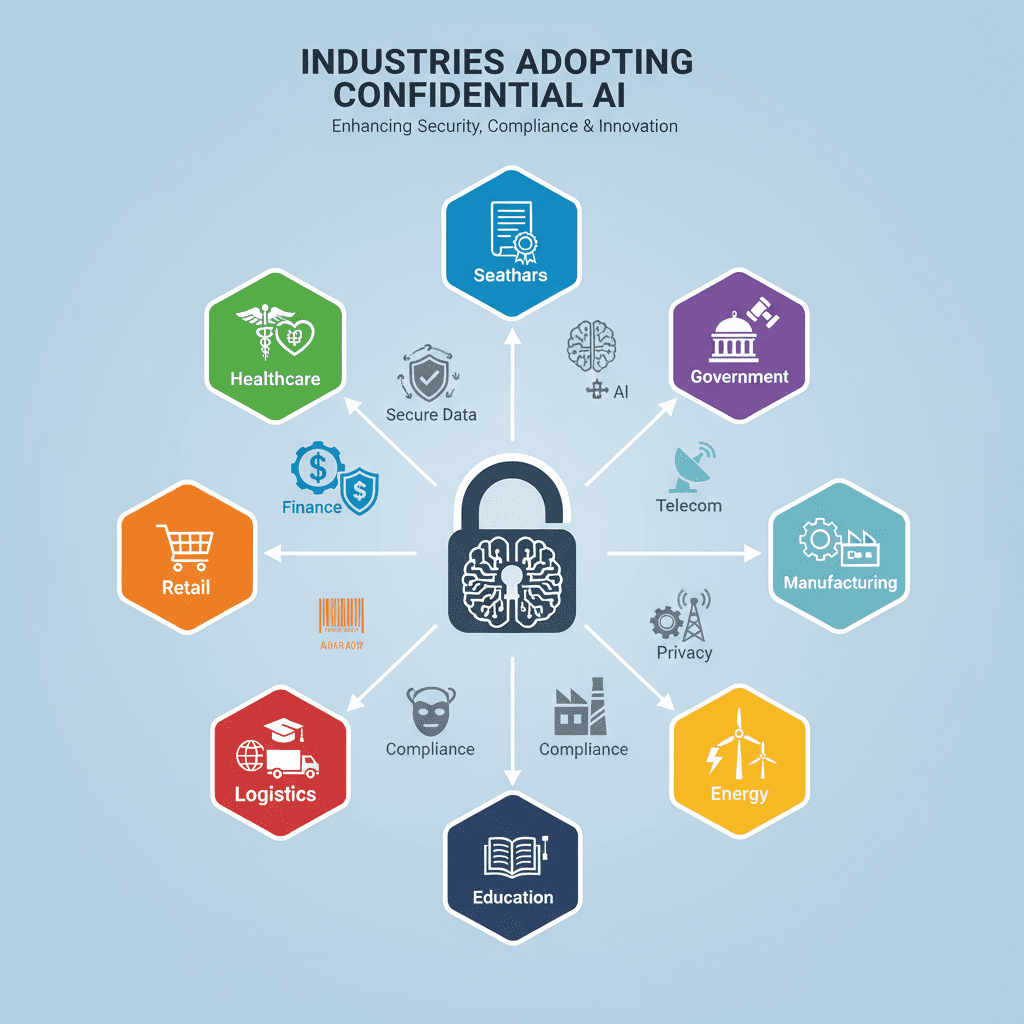
Infographic illustrating industries such as healthcare, finance, government, retail, telecom, manufacturing, energy, education, and logistics benefiting from Confidential AI adoption, with icons for data security, AI, and compliance.
Artificial Intelligence

Confidential AI

Introduction The age of intelligent automation is reshaping every industry, allowing organizations to process vast amounts of data, deliver deeply personalized experiences, and accelerate innovation. However, as the power of AI grows, so do concerns about data privacy, security, and regulatory compliance. Confidential AI—a new paradigm for data protection—ensures that sensitive information remains secure not only during storage or transit but also while being processed by advanced machine learning models. Embracing Confidential AI is essential for organizations that want to unlock the full potential of intelligent automation without compromising on trust or ethics. The Rise of Confidential AI: Protecting Data at Every Stage Traditional security approaches primarily focus on protecting data at rest and in transit. Confidential AI extends these boundaries, delivering robust protection even when data is actively being processed by AI models. Key Technologies Behind Confidential AI: Homomorphic Encryption: Allows computations on encrypted data, so raw information is never exposed—even during analytics and model training. Federated Learning: Enables AI models to learn collaboratively from multiple sources without sharing underlying data—critical for sectors like healthcare and finance. Trusted Execution Environments (TEEs): Secure zones within hardware that keep sensitive processing insulated from the rest of the system. Differential Privacy & Secure Multiparty Computation: Techniques that anonymize data or allow secure joint analysis across organizations. These methods work together to form multilayered defenses that guard against both external hackers and insider threats, ensuring regulatory compliance and ethical stewardship. Why Confidential AI is Critical for Today’s Businesses Compliance with Tougher Regulations With GDPR, HIPAA, CCPA, and similar laws tightening global data privacy requirements, Confidential AI helps organizations: Automate compliance by integrating privacy controls directly into AI workflows, reducing manual oversight. Respond rapidly to audits and demonstrate robust safeguards, building regulatory trust. End-to-End Security and Risk Mitigation Confidential AI protects sensitive datasets against exposure at all stages—storage, transit, and active processing—mitigating risks before they start. By encrypting or isolating data in secure hardware and software enclaves, organizations significantly reduce vulnerabilities to insider attacks and malicious breaches. Business Value and Ethical Innovation Enables organizations to extract actionable insights from confidential data safely, driving data-driven innovation without reputational risk. Supports responsible AI and data ethics by default, so businesses can build customer trust and brand reputation while scaling automation. Best Practices for Implementing Confidential AI 1. Encrypt All Sensitive Data Use strong encryption protocols for data storage, transfer, and especially for processing (homomorphic encryption). Ensure encryption keys are controlled and regularly rotated. 2. Strengthen Data Privacy with Differential Privacy Anonymize datasets before analysis to remove personal identifiers. Use role-based controls so only authorized personnel access confidential data. 3. Utilize Secure Hardware and Trusted Execution Environments Deploy TEEs to isolate AI computations from the rest of the system, preventing unauthorized monitoring or data leaks. 4. Enforce Rigorous Access Controls and Monitoring Use multi-factor authentication, API keys, and continuous monitoring to detect and stop unauthorized access to both data and models. Maintain full audit trails of data access and algorithm activity for accountability and compliance reviews. 5. Ensure AI Compliance and Governance Regularly review AI systems for bias, model transparency, and explainability issues to meet emerging regulatory standards. Align with frameworks like GDPR, HIPAA, and sector-specific regulation. Practical Use Cases of Confidential AI Healthcare Securely processes patient records for diagnostics and research without ever exposing raw personal data. Enables collaborative research via federated learning between hospitals and labs. Finance Protects sensitive financial data (such as transaction history and customer details) while enabling fraud detection and predictive analytics. Facilitates secure AI-driven risk modeling across regulated financial institutions. Government and Public Sector Allows agencies to analyze census, security, and welfare data without violating citizen privacy. Supports public health and smart city initiatives powered by confidential data aggregation. Cross-Industry: Multi-Party Data Collaboration Confidential AI allows companies in supply chain, retail, tech, and more to build shared AI models without sharing underlying datasets. Key Points Table Aspect Confidential AI Approach Traditional AI Security Data Protection Secures data at rest, in transit, and in use Focuses on data at rest/in transit Technology Homomorphic encryption, TEEs, federated learning Firewalls, standard encryption Insider Threats Mitigates both insider and outsider threats Limited resistance to insider attacks Compliance Embedded privacy controls, audit-friendly Manual compliance checks Business Value Unlocks insights from sensitive data securely Limits analysis on confidential data FAQ Q1: What is Confidential AI and how is it different from traditional AI security? A1: Confidential AI protects sensitive data not just during storage and transfer, but also while data is being actively processed by AI models—using technologies like encryption, federated learning, and secure hardware zones. Traditional security typically focuses only on protecting data at rest or in transit. Q2: What are the main regulatory compliance concerns with AI and sensitive data? A2: Regulations such as GDPR, HIPAA, and CCPA require strict data protection, usage transparency, and rapid breach reporting. Confidential AI automates much of the compliance process and reduces the risk of costly violations. Q3: Which industries benefit most from Confidential AI? A3: Sectors with highly sensitive or regulated data—such as healthcare, finance, government, and cloud-based collaboration—gain the most value from Confidential AI solutions. Q4: How can organizations implement Confidential AI effectively? A4: Encrypt all sensitive data, use secure enclaves for computation, enforce strict access controls, and embed compliance checks throughout the AI lifecycle. Q5: Is Confidential AI expensive or hard to deploy? A5: With cloud providers and hardware vendors now supporting TEEs, federated learning, and dedicated confidential AI services, implementation is becoming more accessible and cost-efficient for organizations of any size. Conclusion The explosion of intelligent automation means businesses handle more sensitive data than ever before. Confidential AI empowers organizations to extract unparalleled business value from data—while maintaining compliance, ethics, and trust. By embedding cutting-edge privacy and security methods throughout the AI lifecycle, Confidential AI becomes a cornerstone for safe, responsible automation. Now is the time for leaders in all industries to invest in end-to-end confidential AI solutions, leveraging innovation without sacrificing data protection. For organizations seeking to securely harness AI’s potential, consult with experts at TechOTD AI Services to design

Scroll to Top