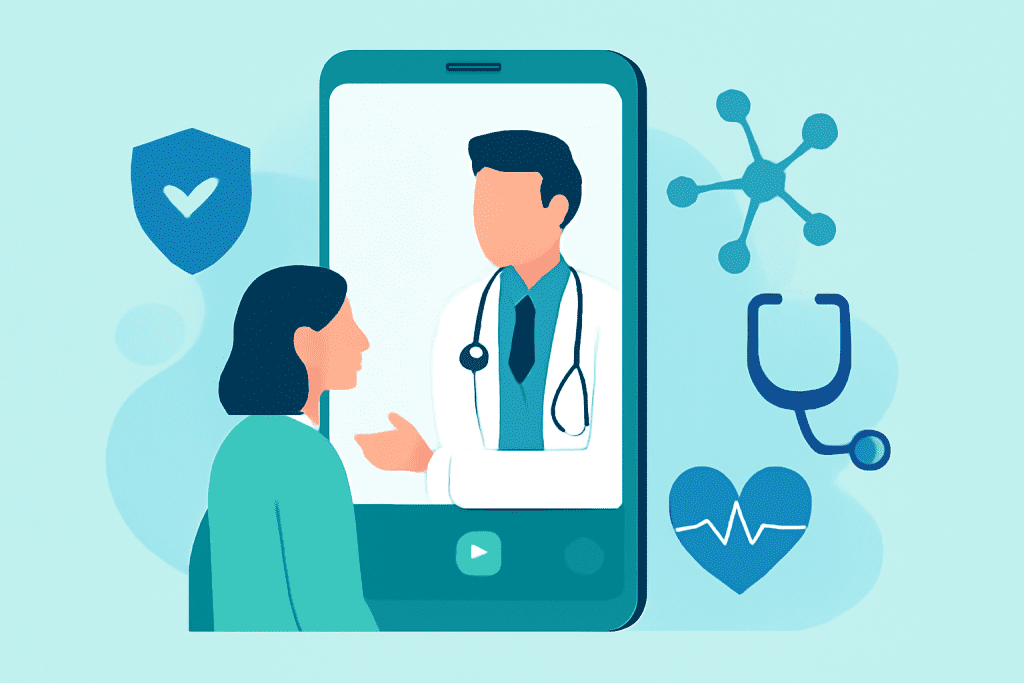
Remote Patient Monitoring

Illustration showing doctors, nurses, and digital AI interfaces analyzing patient data, medical images, and health charts—depicting how machine learning is transforming healthcare
machine learning

Machine Learning in Healthcare

Introduction Machine learning (ML) is redefining the healthcare sector worldwide, enabling medical professionals to deliver smarter, faster, and more personalized care than ever before. By analyzing vast amounts of medical data, ML algorithms are transforming how diseases are diagnosed, how treatments are personalized, and how hospitals operate. With predictions indicating the global healthcare AI market will exceed $600 billion by 2034, there’s no better time to explore how machine learning is reshaping the entire industry. Transformative Applications of Machine Learning in Healthcare Early Disease Detection and Accurate Diagnosis Machine learning’s pattern recognition strength allows it to analyze genetic data, medical images, and electronic health records to detect diseases at earlier stages. Advanced ML models interpret X-rays, MRIs, and CT scans for abnormalities that might escape the human eye, boosting detection rates for cancers, cardiovascular diseases, and neurological disorders. Example: AI-enabled breast cancer risk assessment models can predict malignancy up to 10% more accurately than traditional methods. Impact: Earlier intervention, higher survival rates, and improved patient outcomes. Predictive Analytics for Personalized Treatment By processing a patient’s entire health history, ML identifies patterns that correlate with optimal treatments. This accelerates precision medicine, where therapies are selected based on an individual’s genetic, lifestyle, and environmental factors. Example: Oncora Medical uses ML to tailor cancer treatment regimens, dramatically improving effectiveness. Drug Discovery and Development Acceleration Traditional drug discovery is slow and expensive. ML streamlines the development process by predicting how drugs interact with biological systems, identifying promising compounds, and reducing time to market. This advances new treatments for diseases like cancer, diabetes, and rare disorders. Streamlining Hospital Operations Hospitals are using ML to forecast patient admissions, optimize staff scheduling, manage inventory, and automate billing—improving overall operational efficiency and patient experience. Example: Historical data and ML models help hospitals anticipate patient influx, minimizing wait times and resource shortages. Improving Prescription Accuracy ML-based systems alert clinicians to potential drug interactions, allergies, or risky dosages, reducing adverse drug events and ensuring safer care. Real-Time Patient Monitoring With wearable devices, ML analyzes vital signs and behavioral data, flagging complications and enabling proactive interventions for chronic conditions. Benefits of ML in Healthcare Benefit Description Early Disease Detection Faster, more accurate diagnosis leveraging big data and imaging analytics. Personalized Care Custom treatment plans based on individual patient profiles and predictive modeling. Improved Efficiency Automates repetitive tasks, streamlines hospital ops, reduces costs. Drug Discovery Identifies effective compounds, speeds time to market, lowers R&D expenses. Better Patient Outcomes Enables timely, precise interventions, reducing hospitalizations and improving recovery. Enhanced Data Security ML models anonymize and protect sensitive health data, complying with regulations. Real-World Use Cases Risk Assessment Models: Predict cancer, heart disease, and diabetes risk from diverse health data sources. Optimizing Chemotherapy: AI models recommend optimal cancer treatments, boosting precision and reducing trial-and-error. Wearable Health Tech: Devices monitor patients in real time, alerting caregivers to emergencies or medication needs. Emergency Room (ER) Triage: ML automates prioritization, ensuring the most critical cases are addressed immediately. Virtual Health Assistants: Chatbots collect patient information, provide education, and offer 24/7 support, saving staff time. Predictive Hospital Resource Management: ML tools forecast peak periods, staff needs, and supply demands. Challenges to Adoption Data Privacy & Security: Sensitive medical data requires strict compliance with privacy regulations. Integration: Legacy systems can make incorporating AI and ML difficult for care providers. Bias and Explainability: Ensuring fairness and transparency in predictions remains a developing priority. Skill Gaps: Many providers require new skills and resources to realize ML’s full potential. Conclusion Machine learning is truly shaping the future of healthcare. From detecting diseases earlier to engineering revolutionary drugs and tailoring patient care at the individual level, ML brings innovation and efficiency across the sector. Adoption challenges remain, but its capacity to improve patient outcomes and operational excellence means ML will soon be omnipresent in every healthcare journey. Embracing these digital tools transforms healthcare into a smarter, safer, and more connected industry. FAQ How does ML improve healthcare diagnosis? ML analyzes vast medical datasets and images for patterns, enabling earlier and often more accurate detection of diseases than traditional methods. Can ML help in drug discovery? Yes. ML predicts promising compounds and streamlines R&D, making drug development faster and more cost-effective. What are the benefits of ML for hospitals? It improves efficiency by automating scheduling, billing, and inventory, forecasts patient flow, and enhances resource use. Does ML in healthcare protect patient data? Advanced ML models help anonymize and secure personal data, supporting compliance with HIPAA and GDPR. What is the outlook for ML in healthcare? With ongoing advances, ML will soon underpin everything from diagnostics and operations to personalized medicine—benefitting providers and patients alike.
Healthcare & Fitness

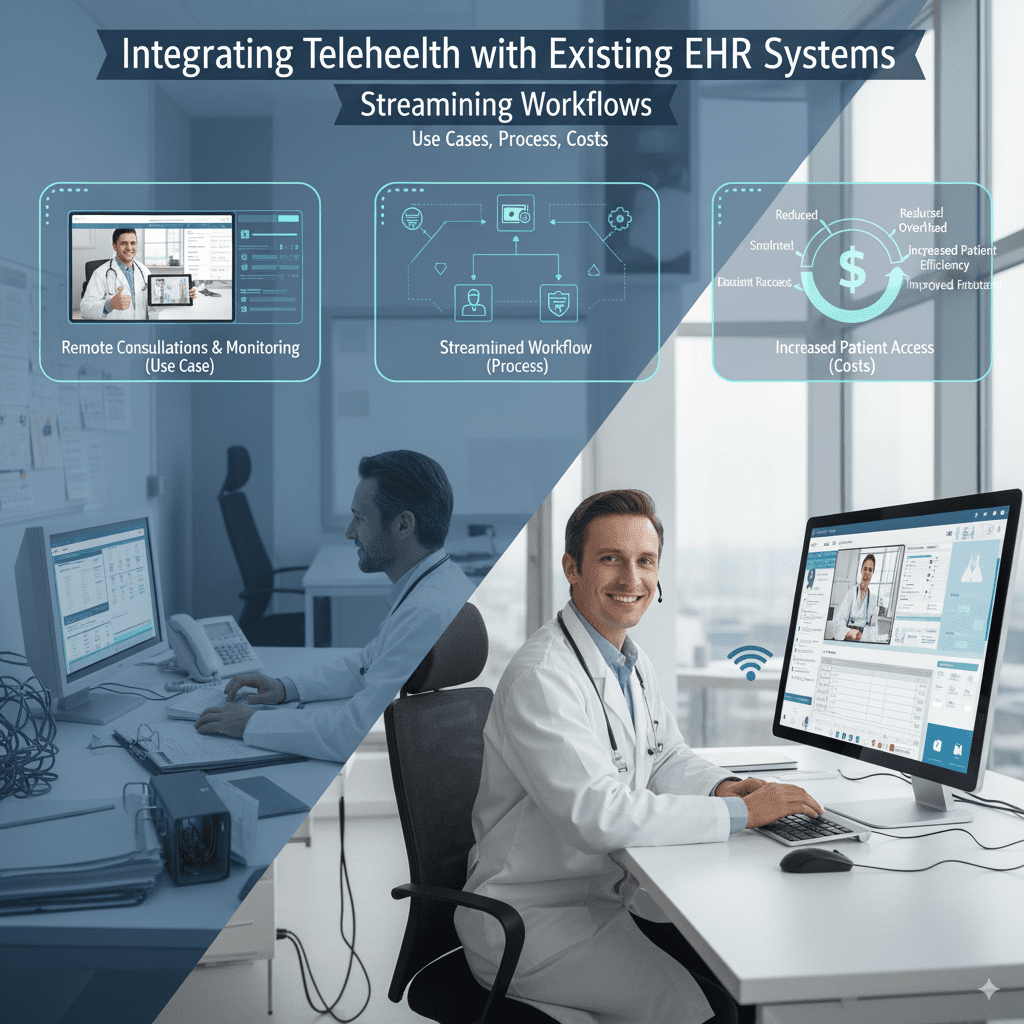
Integrating Telehealth with Existing EHR Systems: Streamlining Workflows

A rapid growth in the adoption of Electronic Health Records (EHRs) and telehealth software systems have been reported all across the world. For instance, almost 74% of healthcare physicians are actively offering telehealth services to their patients. However, one interesting finding in these studies is that it is causing a new strain of problems for healthcare providers, especially for healthcare IT teams. Since most healthcare providers use different healthcare software systems for different purposes, the creation of data silos has affected not only the interoperability of the desperate healthcare systems but also the clinical workflows of these practices. The disconnection between telehealth and Electronic Health Records (EHR) is creating a gap that is widening with every passing day. That is the reason a new trend is now taking shape and becoming a norm in the modern-day healthcare landscape. Yes, telehealth integration with EHR systems and EHR integration with telehealth systems for better data integration practices is what we’re talking about. But is this really the solution to bridge the gap between patient data leading to fragmented care? Well, explore exactly that along with the telehealth EHR integration benefits and the challenges of telehealth integration as well. So, without further ado, let’s get started! Unlocking the Power of Data Integration As healthcare practices are moving towards a digital landscape, the role of data in care delivery and also in the day-to-day affairs of healthcare practices is becoming the epicenter. That is why healthcare practices offering telemedicine should have EHR integration with their systems. Here are some of the telehealth EHR integration benefits that you must know: 1. Holistic Patient View: EHR integration with telemedicine systems enables healthcare providers to have a unified and holistic view of patient data. This patient data usually includes medical history, previous notes, telehealth encounters, and even medication and treatment plans. This will enable the provider to provide better patient care with a personalized approach. 2. Improved Care Coordination: Telehealth integration with healthcare systems, especially electronic health records systems, gives the provider direct access to all the relevant patient information, that too, in one place. This way, the entire care team can coordinate care in a much better way and make informed clinical decisions that can contribute to improving patient outcomes. 3. Streamlined Workflows and Reduced Errors: One of the major benefits of telehealth EHR integration is that it completely eliminates the chances of data duplication and manual entry. This way, clinical workflow is streamlined, significant time for both healthcare providers is saved, and errors are minimized, which will lead to better care practices. Apart from that, with EHR integration, the entire workflow can be streamlined, leading to better care practices. The Key to Interoperability: Standards and Technologies If you have even a slight idea about workflow optimization and telehealth integration with electronic health records, then you must know that interoperability is the key to data integration. Furthermore, to create a well-connected digital healthcare ecosystem, you must achieve interoperability. Here are some ways in which you can achieve that: 1. Breaking Down Silos with HL7 FHIR: HL7, also known as Health Level 7 and FHIR, are the interoperability standards that allow secure and standardized data exchange between telehealth platforms and EHR systems. Following these standards for data, integration enables healthcare providers to seamlessly exchange data and achieve EHR interoperability and telehealth. 2. Beyond Telehealth: While telehealth enables real-time virtual consultations with the use of telecommunication technologies, its integration with electronic health records and remote patient monitoring systems by achieving interoperability will make it an ecosystem where information can flow seamlessly and efficiently across different healthcare IT systems. This way, the telehealth integration will take the system beyond just virtual health consultations. 3. Future Proofing Your Infrastructure: As healthcare systems are becoming a part of the mainstream healthcare landscape, sooner or later, there will be a need to standardize the pattern in which data will be exchanged. This is in the foresight of the future of healthcare systems. So, actually following this as a best practice during your healthcare development will help you make your software future-proof and your practice one step ahead of the competitors, giving your practice more efficiency and efficacy. Challenges to Consider During Integration Since there are a lot of systems involved, the integration of so many systems is bound to be a challenging process for many. Here are some things that you can consider to avoid such challenges during the integration to help you achieve easy and smooth EHR and telehealth integration. 1. Data Standardization and Mapping: Data consistency across different systems is almost near impossible. The data stored in one healthcare IT system would be completely different from the data stored in your physicians’ healthcare systems. For instance, if the data standardization formats followed are different, then it becomes hard for the healthcare system to understand, interpret, and make sense of the data. However, with data mapping tools and industry-standard practices, you can actually ensure the quality of the data, which will automatically enhance the entire process, making the integration process much easier for the systems. 2. Cybersecurity and Data Privacy: Being one of those industries that is highly prone to cyber threats, there is a need to take robust security measures to protect sensitive patient data during the integration process. But how to ensure that? Following necessary compliances and regulatory regulations such as HIPAA, HITECH Act, GDPR, etc., can go a long way. Along with that, you ensure security measures are taken and also build trust in patients that their data is safe and private from the rest of the world. 3. Change Management and Staff Training: It cannot be ignored that the technology is constantly changing, and with that, everything needs to change. And the advancements in the medical field are proof of that. Being in the fastest changing industries, any change in the workflow or procedure will need a change in the system as well. Prepare for that in advance, train your staff well, and always address the technological changes that will help in the smooth adoption of the integrated system. Strategies for A Successful

Healthcare & Fitness, Uncategorized

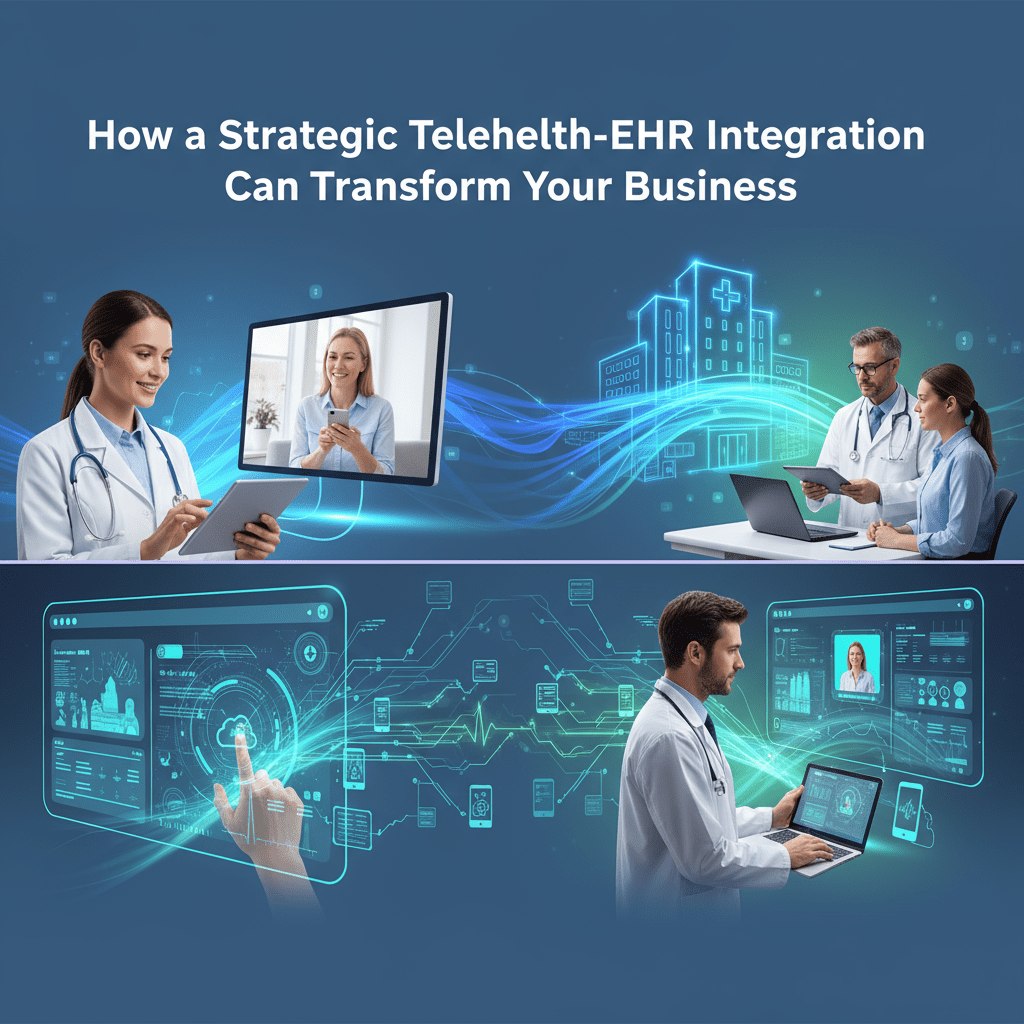
How a Strategic Telehealth-EHR Integration Can Transform Your Business: Use Cases, Process, Costs

Introduction The integration of telehealth systems with Electronic Health Records (EHR) is revolutionizing healthcare delivery by creating seamless, real-time access to patient data during virtual visits. This strategic alignment enhances care quality, streamlines operations, and opens new avenues for growth in healthcare organizations. Use Cases of Telehealth-EHR Integration Post-Surgical Follow-Ups Clinics use integrated systems to conduct virtual check-ins post-surgery, automatically updating patient records to ensure continuity and reduce unnecessary office visits. Remote Patient Monitoring Providers track chronic conditions via connected devices, with vitals and alerts seamlessly synced to the EHR, enabling proactive and timely interventions. Tele-specialty Consultations Specialists access comprehensive patient histories during remote consultations, reducing transcription errors and improving care coordination. Chronic Disease Management Integrated platforms allow centralized teams to monitor and respond to patient health remotely, reducing admissions and supporting underserved populations. Rural Telehealth Access Integration helps overcome barriers for rural facilities by enabling consistent remote care and efficient patient data exchange. Integration Process Overview Assessment & Planning: Evaluate existing telehealth and EHR systems for compatibility and establish integration goals. Choosing Integration Methods: Use APIs, HL7, or FHIR standards for data exchange. Data Mapping & Migration: Align telehealth data fields with EHR structures. Development & Testing: Build integration components and conduct rigorous testing. User Training: Train staff on new workflows and interfaces. Deployment & Monitoring: Rollout integration with ongoing support and optimization. Cost Considerations Small to mid-sized providers may expect initial setup costs between $20,000 to $200,000 depending on complexity. Data migration can range from $5,000 to $150,000+. Larger health systems investing in enterprise integration may face $400,000 to $600,000+ expenses. Annual maintenance, licensing, and staff training costs add to the ongoing investment. The right vendor partnership maximizes ROI while minimizing unforeseen expenses. Benefits of Integration Enhanced Clinical Workflow: Reduced manual entry, less duplication, and faster documentation. Improved Patient Experience: Seamless virtual visits with full access to medical history. Operational Efficiency: Streamlined billing, scheduling, and reporting. Scalability & Flexibility: Supports growth and new telehealth services with unified data infrastructure. Data Security & Compliance: Centralized policies reduce risk and simplify audits. Conclusion Strategic telehealth-EHR integration is a catalyst for healthcare innovation and improved business outcomes. By bridging virtual care with comprehensive patient records, organizations boost quality, efficiency, and patient satisfaction while controlling costs. For expert telehealth integration services and tailored healthcare technology solutions, visit TechOTD AI Services and stay informed via the TechOTD Blog.

Healthcare & Fitness

Telemedicine App Development: Build a Secure & Scalable Telehealth Platform

Introduction As healthcare rapidly digitizes, telemedicine has evolved from a niche offering to an indispensable service connecting patients and providers anywhere, anytime. An effective telemedicine app solves challenges of accessibility, convenience, and real-time care—while navigating complex regulations and security concerns. Building a secure and scalable telehealth platform demands technical innovation, rigorous compliance, and a patient-centered design approach. This blog provides a comprehensive guide for building modern telemedicine apps, packed with insights, feature checklists, technology recommendations, and best practices—plus direct backlinks to TechOTD AI Services, the TechOTD Blog, and other expert resources. 1. Market Research and Defining Your Telemedicine Use Case Successful telemedicine projects start with a clear understanding of real user needs and market gaps. Analyze providers’ workflows and patients’ pain points, leveraging competitor reviews for actionable feedback. Address both acute and chronic care while considering unique regulatory requirements for different specialties and geographies. Plan for compliance early—HIPAA, GDPR, and regional regulations can dramatically affect architecture and timeline. 2. Choose the Right Technology Stack A future-ready telemedicine platform balances security, flexibility, and scale: Layer Examples (2025) Purpose Frontend React Native, Flutter, Swift, Kotlin Cross-platform UI, responsive on all devices Backend Node.js, Python, Java, .NET Fast, scalable API server, handles business logic Database PostgreSQL, MongoDB Secure, reliable storage of health records Cloud AWS, Azure, Google Cloud HIPAA-ready hosting, scalable infrastructure APIs Twilio (video), Stripe/PayPal (payments), Redox/FHIR (EHR) Real-time features, payments, interoperability Security OAuth 2.0, SSL/TLS, JWT Auth, encrypted data, safe transactions AI and predictive analytics integration increase platform value—see TechOTD AI Services and the Predictive Analytics Blog. 3. Design for Security & Compliance Protecting sensitive PHI is paramount. Best practices include: End-to-end encryption for data in transit and at rest Multi-factor authentication Secure role-based access and audit logging Consent management and clear data privacy policies Alignment with HIPAA, GDPR, and local healthcare regulations Blockchain solutions can further secure records and patient consents—explore this in TechOTD Blockchain Integration. 4. Build Core Features for Patients and Providers Modern telehealth platforms deliver an engaging clinical experience: User authentication & onboarding (AI-driven KYC for security) Appointment scheduling & reminders HD video consultations with low-latency streaming Secure chat and document sharing E-prescriptions & digital consents Integrated e-payments & billing, insurance processing EMR/EHR integration for provider continuity AI symptom checkers and post-visit care bots (learn more in AI & LLMs in Healthcare) Accessible UX (voice, large fonts, multi-language) Push notifications and patient engagement tools 5. Ensure Scalability and High Availability App performance should seamlessly support spikes in demand, regional expansion, and new services. Embrace cloud-native, microservices architectures. Implement autoscaling, load balancing, and robust CI/CD pipelines. Plan for future integrations using open APIs and modular software principles. Agile delivery and regular user feedback keep deployment efficient—see how TechOTD’s process optimizes outcomes at How We Work. 6. Testing, Launch, and Post-Launch Strategies Conduct comprehensive unit, integration, UAT, and security tests (HIPAA-aware/penetration testing) Validate cross-platform device and browser compatibility Deploy to app stores/enterprise distribution with rollback and monitoring tools Offer continuous technical support, updates, and user education Monitor app health, collect analytics, and release features iteratively Find guides on process and optimization at the TechOTD Blog. 7. Advanced Innovations: AI, Analytics, and Automation Embed AI to drive smarter care and better outcomes: AI chatbots for triage and 24/7 support (Service Excellence) Predictive risk assessment, personalized content NLP-powered automated documentation and speech-to-text Real-time data dashboards for providers and patients Integration with wearables and IoT for remote monitoring 8. Illustrative Budget and Timeline Telemedicine app costs in 2025 range widely: MVP: $30,000–$75,000 (core video/scheduling/chat) Full scale: $150,000–$250,000+ (AI, cloud, EHR integration, security, automation) Timeline: MVPs in 3–6 months; enterprise solutions 9–18+ months Offshore, onshore, and hybrid teams have different benefits—choose according to compliance needs and project complexity. For more, see: Mobile Apps Services. 9. Key Challenges (and Solutions) Complex multi-jurisdictional compliance—Plan regulatory alignment early User trust and adoption—Transparent privacy, simple UI/UX, clear support Technical integration—Robust APIs and partnerships with labs, pharmacies, and billing platforms Continuous quality—Agile feedback loops, analytics monitoring, rapid update cycles Conclusion Secure, scalable telemedicine platforms are at the heart of digital healthcare’s next decade. With thoughtful planning, a robust technical foundation, airtight security, and user-centric design, organizations can deliver outstanding digital health services at scale. Integrate AI, analytics, and blockchain to future-proof your product, and work with trusted partners for best results. For consulting, custom solutions, and end-to-end app development, partner with TechOTD AI Services, explore real-world results on the TechOTD Blog, and discover streamlined development at How We Work.

Scroll to Top