Real-Time Data Processing

Cloud Computing and Technology, Digital Transformation, Technology

The Rise of Edge Computing: Why Processing Data Closer Matters

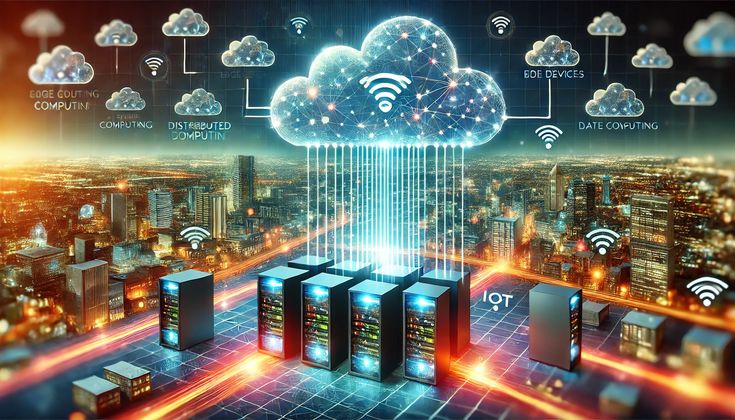
The Rise of Edge Computing: Why Processing Data Closer Matters The digital world is generating more data than ever before. Every smartphone notification, smart home device, connected vehicle, industrial sensor, and online interaction contributes to an ever-growing stream of information. For years, businesses have relied on cloud computing to store, manage, and process this data. While cloud technology revolutionized the way organizations operate, the explosion of connected devices has revealed a critical challenge: speed. Imagine a self-driving car traveling at high speed. If it encounters an obstacle, it cannot afford to send data to a distant cloud server, wait for processing, and then receive instructions. Even a delay of a few milliseconds could have serious consequences. The same challenge exists in manufacturing plants, healthcare facilities, smart cities, and countless other environments where immediate decisions are essential. This is where edge computing enters the picture. Edge computing is changing how organizations process information by bringing computing power closer to where data is created. Instead of sending every piece of information to a centralized cloud, data can be analyzed and acted upon near the source itself. This shift is helping businesses improve performance, reduce latency, enhance security, and unlock entirely new possibilities for innovation. As technologies like artificial intelligence, the Internet of Things (IoT), and 5G continue to evolve, edge computing is rapidly becoming one of the most important pillars of modern digital infrastructure. Understanding Edge Computing At its core, edge computing refers to processing data near the device or location where it is generated rather than transmitting it to a centralized data center or cloud server. Traditionally, data generated by devices would travel across networks to cloud servers where it would be processed and stored. The results would then be sent back to the device or application. While this approach works well for many scenarios, it introduces delays that can become problematic when immediate responses are required. Edge computing addresses this challenge by moving computing resources closer to the “edge” of the network. The edge can be a local server, a gateway device, a factory machine, a retail system, or even the device itself. Rather than depending entirely on distant cloud infrastructure, edge devices can analyze information in real time and make decisions instantly. The cloud still plays an important role, but it becomes part of a larger ecosystem where processing is distributed intelligently. This approach significantly improves efficiency while enabling applications that would be difficult or impossible to support through cloud-only architectures. Why the Need for Edge Computing Is Growing The rise of edge computing is closely connected to the rapid growth of connected devices. Industry experts estimate that billions of IoT devices are now generating massive volumes of data every day. From wearable fitness trackers and smart thermostats to industrial robots and connected vehicles, these devices continuously produce information that requires processing. Sending every bit of this data to the cloud creates several challenges. First, network congestion becomes a concern. The more data that travels across networks, the greater the strain on bandwidth resources. Second, latency can negatively impact user experiences and operational efficiency. Applications requiring real-time responses cannot tolerate delays. Third, transmitting large volumes of data to the cloud increases costs associated with bandwidth and storage. Finally, organizations face growing concerns about privacy, security, and regulatory compliance. Edge computing helps solve these issues by allowing data to be processed locally while only transmitting relevant information to the cloud when necessary. As businesses continue to embrace digital transformation, the demand for faster and more intelligent processing is making edge computing increasingly valuable. The Latency Advantage One of the biggest reasons organizations invest in edge computing is latency reduction. Latency refers to the time it takes for data to travel from its source to a processing location and back again. Even small delays can create significant problems in certain applications. Consider a smart manufacturing facility where machines operate with incredible precision. Sensors continuously monitor temperature, pressure, vibration, and performance metrics. If a machine begins to malfunction, immediate action may be required to prevent costly downtime. With cloud-based processing, the delay involved in transmitting data could slow down response times. Edge computing enables instant analysis directly within the facility, allowing maintenance teams to address issues before they escalate. The same principle applies to autonomous vehicles, remote healthcare monitoring, financial trading systems, and augmented reality applications. By processing data closer to where it originates, organizations can achieve near-instant decision-making capabilities. Enhancing Real-Time Decision Making Modern businesses increasingly rely on real-time insights to remain competitive. Customers expect immediate responses. Operations demand continuous optimization. Systems need to adapt dynamically to changing conditions. Edge computing supports these requirements by enabling faster decision-making at the source. For example, a smart retail store can use edge-powered cameras and sensors to analyze customer behavior in real time. Store managers can monitor foot traffic, optimize product placement, and improve customer experiences without waiting for cloud-based analytics. Similarly, healthcare providers can use edge-enabled monitoring devices to track patient vitals continuously. If a patient’s condition changes suddenly, alerts can be generated instantly, potentially saving lives. The ability to process information in real time creates opportunities that extend far beyond simple efficiency improvements. It enables businesses to become more proactive, responsive, and intelligent. Edge Computing and the Internet of Things The Internet of Things and edge computing are closely connected technologies. IoT devices generate enormous amounts of data, much of which requires immediate analysis. Without edge computing, organizations would struggle to manage this growing information flow effectively. Imagine a smart city equipped with thousands of connected sensors monitoring traffic, air quality, public transportation, and energy usage. If every sensor continuously transmitted data to centralized cloud systems, network infrastructure could quickly become overwhelmed. Edge computing allows local processing to occur near these sensors. Relevant insights can be generated instantly while only critical data is sent to the cloud for long-term analysis. This approach improves performance, reduces network traffic, and enhances overall system reliability. As IoT adoption continues to accelerate, edge computing will

Digital lock representing cybersecurity protection and network defense
cybersecurity

Cybersecurity Trends for 2025: Safeguarding the Digital Future

Introduction In the digital age, data is the new currency — and cybercriminals know it. As technology evolves, so do cyber threats, making cybersecurity one of the most critical priorities for businesses, governments, and individuals. With billions of devices connected through 5G, cloud computing, and the Internet of Things (IoT), the attack surface for cybercriminals has expanded like never before. According to industry estimates, global cybercrime costs are projected to reach $10.5 trillion annually by 2025, making cybersecurity not just a technical issue, but a global economic concern. As we step into 2025, the world of cybersecurity is being reshaped by artificial intelligence, automation, and quantum computing — both as tools for protection and as new sources of risk. Let’s dive deep into the trends defining the future of digital defense. Why Cybersecurity Matters More Than Ever Modern businesses operate in an ecosystem of interconnected technologies — from cloud-based services to remote work systems and AI-powered analytics. While these innovations improve efficiency, they also introduce vulnerabilities. Recent high-profile incidents — like ransomware attacks on hospitals, supply chain breaches, and phishing-driven data theft — highlight the urgent need for proactive and adaptive cybersecurity measures. Cybersecurity in 2025 is no longer about building walls; it’s about creating intelligent, self-healing defense systems that can anticipate and neutralize threats in real time. Top Cybersecurity Trends for 2025 1.  AI and Machine Learning in Cyber Defense Artificial Intelligence (AI) and Machine Learning (ML) have become the backbone of modern cybersecurity systems. AI algorithms detect unusual patterns and stop attacks before they happen. ML models learn from previous threats to improve detection accuracy. Predictive analytics help identify potential vulnerabilities in advance. Example:AI-driven tools like Darktrace and CrowdStrike use ML to monitor network traffic and detect anomalies faster than any human analyst could. However, attackers are also using AI — creating “smart malware” capable of adapting to traditional defenses, making this an ongoing technological arms race. 2.  Zero-Trust Architecture (ZTA) Becomes the Standard The Zero-Trust Model operates on one simple rule: “Never trust, always verify.” Instead of assuming internal users or devices are safe, ZTA continuously validates every access request using identity, context, and behavior analysis. By 2025, zero-trust frameworks will become a mandatory standard for enterprises — especially in hybrid work environments where employees connect from multiple devices and locations. Key Components of ZTA: Multi-Factor Authentication (MFA) Continuous user validation Least-privilege access Micro-segmentation of networks 3.  Human-Centered Security Awareness Training Human error remains one of the biggest cybersecurity risks. Phishing emails, weak passwords, and social engineering attacks still cause most data breaches. In 2025, companies are shifting from technical defenses to behavioral cybersecurity training — using gamified learning, simulated attacks, and AI-based education platforms to train employees to recognize threats. Example:Platforms like KnowBe4 and Cofense use real-world simulations to reduce phishing susceptibility by over 70%. 4.  Cloud Security and Shared Responsibility With businesses migrating to cloud-first strategies, the cloud has become both a target and a defense frontier. Cloud providers (like AWS, Azure, and Google Cloud) secure infrastructure, but users are responsible for data protection, access control, and compliance — a concept known as the shared responsibility model. By 2025, we’ll see: Greater use of cloud-native security tools Enhanced data encryption and tokenization Real-time identity and access management (IAM) 5.  Cybersecurity Mesh Architecture (CSMA) Introduced by Gartner, Cybersecurity Mesh Architecture connects security tools through an integrated framework. Instead of isolated systems, it creates a centralized policy layer where all applications, networks, and data points communicate securely. By 2025, over 60% of organizations are expected to adopt CSMA to unify their cybersecurity infrastructure. 6.  Quantum-Resistant Encryption Quantum computing, while promising for research and innovation, poses a serious threat to traditional encryption algorithms like RSA and ECC. To counter this, companies are developing quantum-resistant algorithms that can withstand attacks from future quantum computers. Organizations like NIST are already standardizing Post-Quantum Cryptography (PQC), ensuring data remains secure in a post-quantum era. 7.   Rise of Managed Security Service Providers (MSSPs) As cyber threats grow more complex, small and medium businesses (SMBs) often lack the expertise to handle them. By 2025, the demand for MSSPs — external cybersecurity experts providing 24/7 monitoring, compliance management, and incident response — will skyrocket. This approach offers affordable, scalable protection for companies without building large internal security teams. 8.  Data Privacy Regulations Tighten Worldwide Governments across the world are enforcing stricter data protection laws — like GDPR (Europe), CCPA (California), and DPDP Act (India). By 2025, more nations will introduce regulations demanding transparency in how companies collect, store, and use personal data. Privacy-by-design and encryption-by-default will become standard in all major digital products. 9.  Blockchain for Cybersecurity Blockchain technology is emerging as a powerful tool for cybersecurity. Its decentralized and immutable nature makes it ideal for: Securing identity management Verifying transactions Preventing tampering in data exchanges By 2025, blockchain-based identity verification and supply chain security solutions will see mass adoption across finance, logistics, and healthcare. 10.  Automation and SOAR (Security Orchestration, Automation, and Response) With thousands of alerts generated daily, human analysts can’t keep up. That’s where SOAR platforms come in — automating repetitive tasks like incident classification, response, and reporting. This improves efficiency, reduces human error, and ensures 24/7 vigilance.  Real-World Example: AI-Driven Threat Detection A financial institution in Singapore deployed an AI-based threat monitoring system that analyzes 100 million transactions daily.The system detects fraud within seconds and automatically isolates suspicious accounts — saving millions in potential losses. This case proves how AI, combined with automation, is redefining modern cyber defense. Challenges Ahead Despite advancements, the cybersecurity landscape in 2025 faces several challenges: Evolving threat actors: Hackers use AI and deepfake technology to bypass defenses. Shortage of skilled professionals: The global cybersecurity workforce gap exceeds 3 million experts. Cost of compliance: Meeting international data laws increases financial strain on small firms. Complex multi-cloud environments: Managing security across multiple cloud providers adds complexity. The Future of Cybersecurity Beyond 2025 By the late 2020s, cybersecurity will evolve from being reactive to predictive and autonomous. Emerging

Digital Transformation

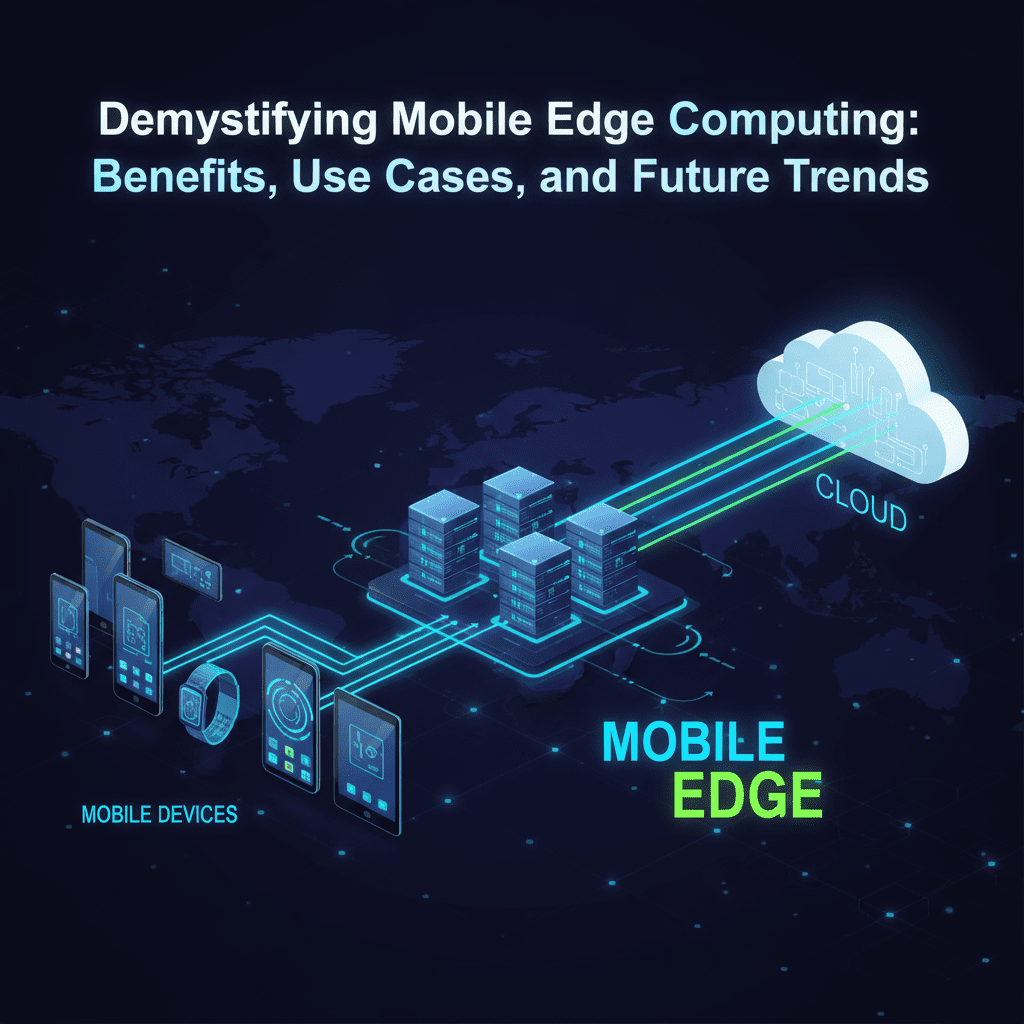
Demystifying Mobile Edge Computing: Benefits, Use Cases, and Future Trends

Introduction In the rapidly evolving digital landscape, Mobile Edge Computing (MEC) has become a critical technology, ushering in new capabilities beyond traditional cloud computing paradigms. By processing data closer to the source—at the edge of the network—MEC dramatically improves data processing speed, reduces latency, enhances security, and fuels innovation across industries. This comprehensive blog demystifies MEC with a deep dive into its benefits, practical use cases, and future trends shaping enterprise strategies. It also highlights key technological integrators such as AI, blockchain, and predictive analytics explored extensively by TechOTD and its related resources. What is Mobile Edge Computing? Mobile Edge Computing (MEC) pushes computing power and data storage closer to end users and connected devices, typically at or near cellular base stations, IoT gateways, or local data centers. Unlike central cloud data centers that might be geographically distant, MEC provides ultra-low latency and real-time processing capabilities. This proximity is a game changer for applications requiring speed, reliability, and privacy. MEC works symbiotically with 5G, AI, and IoT to enable seamless, intelligent experiences across multiple sectors. Benefits of Mobile Edge Computing 1. Ultra-Low Latency and Real-Time Processing By processing data at the edge, MEC reduces the time needed to transmit data to distant cloud servers and back. This latency reduction is essential for use cases like autonomous driving, remote surgery, and live video analytics. 2. Enhanced Data Privacy and Security MEC minimizes data traveling over public networks, reducing exposure risks. Enterprises can enforce data residency and compliance directly on edge nodes, critical for healthcare, finance, and government. 3. Bandwidth Optimization and Cost Savings Edge processing filters and aggregates data locally, reducing network congestion and lowering bandwidth costs—a vital benefit as IoT devices and data volumes surge. 4. Improved Reliability and Resilience MEC enables critical systems to function locally even if the central cloud or wide-area network connectivity is disrupted, offering business continuity and superior service quality. 5. Scalability and Flexibility Modular edge deployments allow enterprises to add or upgrade capacity closer to users and devices, supporting dynamic workloads and new services faster than traditional cloud-only models. Key Use Cases of MEC Across Industries Manufacturing: Smart Factories and Predictive Maintenance MEC combined with IoT sensors enables immediate processing of operational data, facilitating real-time monitoring, predictive maintenance, and automation in factories — minimizing downtime and maximizing productivity. Retail: Personalized In-Store Experiences Retailers use MEC for instant data analytics supporting personalized promotions, inventory management, and frictionless payment processing at the store edge, enhancing customer experience. Healthcare: Remote Monitoring and Diagnostics In healthcare, MEC allows processing of medical imaging and patient data locally for faster, secure diagnostics and telehealth services while ensuring compliance with privacy regulations. Transportation and Logistics: Autonomous and Connected Fleets Edge computing enables rapid data analysis for connected vehicles and fleets, supporting route optimization, safety monitoring, and compliance in real-time. Smart Cities: Responsive Public Infrastructure Citywide IoT systems use MEC to process environmental data, traffic flows, and public safety signals locally, enabling fast responses and efficient resource management. Integration with AI and Blockchain Technologies Artificial Intelligence at the Edge Integrating AI with MEC allows for real-time, context-aware decision making on devices or local nodes without sending data back to the cloud. This accelerates innovation in predictive analytics, image recognition, and anomaly detection. Explore advanced AI applications in enterprises at TechOTD AI Services and TechOTD AI Blog. Blockchain for Enhanced Security and Transparency Blockchain technology complements MEC by providing decentralized, tamper-proof transaction records and supply chain transparency, ideal for secure edge operations. Learn more about blockchain’s transformative business role at TechOTD Blockchain Integration. Best Practices for MEC Implementation Evaluate Business Needs and Edge Readiness: Identify workloads that gain most from edge processing to ensure efficient deployment and ROI. Prioritize Security: Implement comprehensive security protocols including data encryption, authentication, and zero-trust models at all edge points. Adopt Hybrid Cloud-Edge Architecture: Combine centralized cloud resources with edge nodes for balance between scalability and low latency. Use Automation and AI for Resource Optimization: Employ AI-driven management tools for predictive maintenance, load balancing, and anomaly detection. Partner with Experienced Vendors: Collaborate with technology providers skilled in edge deployments to ensure seamless integration and ongoing support and TechOTD How We Work. Future Trends in Mobile Edge Computing Advances in On-Device AI: Smaller, more capable AI models running independently on edge devices for privacy and speed. Industry-Specific MEC Solutions: Vertical customization for health, manufacturing, retail, and other sectors. Edge Orchestration and Automation: Automated deployment, scaling, and self-healing edge systems reducing OPEX. Integration with 6G and Beyond: As next-gen networks evolve, MEC will expand with wider network slices and higher bandwidths. Expansion of Smart Cities and IoT: Growing urban infrastructure and IoT devices will increase MEC demand exponentially. Stay current on technology impact with TechOTD Blog and explore mobile and AI app development strategies at TechOTD Mobile Apps. Key Takeaways: MEC drastically reduces latency by processing data near the source. Security and data privacy improve through decentralized processing. Reduces network load and operational costs for enterprises. Industry use cases span manufacturing, retail, healthcare, transport, and smart cities. AI and blockchain technologies amplify MEC capabilities. Hybrid cloud-edge architectures offer flexible, scalable designs. Automation and orchestration will drive future MEC innovations Conclusion Mobile Edge Computing is no longer a futuristic concept but a necessary foundation for enterprises embracing digital transformation in the 5G era. By bringing compute power and intelligence closer to data sources, MEC accelerates innovation, enhances security, optimizes networks, and delivers real-time insights that fuel competitive advantage. Enterprises equipped with strategic MEC integration, supported by AI, blockchain, and predictive analytics, will unlock new business models and efficiencies—leading the charge into a connected, intelligent future.

Mobile App Development

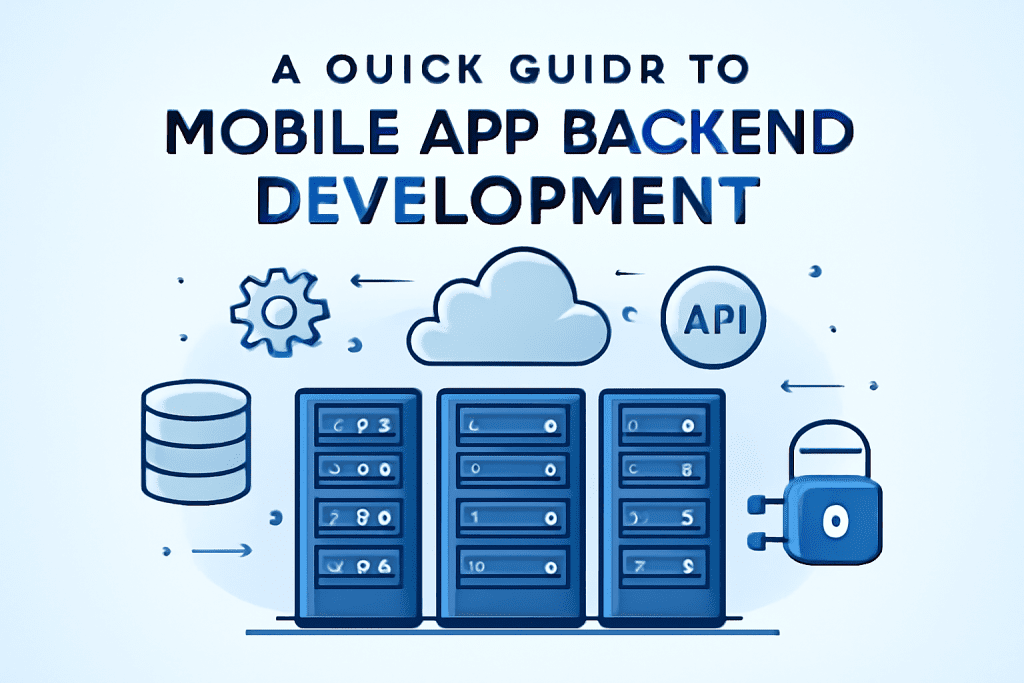
A Quick Guide to Mobile App Backend Development

Introduction In the world of mobile app development, the backend is the powerhouse that handles data storage, authentication, business logic, and integration with external services. While the frontend dazzles users with an intuitive interface, the backend ensures the app runs smoothly, securely, and scales as demand grows. This guide provides an overview of mobile app backend development in 2025, covering core components, technology choices, and best practices to build robust and scalable backends for modern mobile applications Mobile App Architecture Basics). What is Mobile App Backend? The backend is the hidden engine of an application. It handles communication between the frontend and the server. It includes databases, APIs, and cloud storage. (To understand how different database types impact your backend, check our article on SQL vs NoSQL Databases). Key Components of Mobile App Backend 1. Server The server processes requests from app users, runs the core business logic, communicates with databases, and manages third-party integrations. Developers may choose traditional dedicated servers, cloud-based virtual servers, or serverless architectures (like AWS Lambda) depending on scalability and budget needs. 2. Database Databases store user data, app content, and transactional records. Choices vary from relational databases (MySQL, PostgreSQL) for structured data to NoSQL (MongoDB, Cassandra) for unstructured or rapidly changing data. In-memory databases like Redis enhance performance through caching. 3. APIs (Application Programming Interfaces) APIs enable communication between the frontend and backend, as well as integration with external tools such as payment gateways, social logins, or third-party services. 4. Authentication and Security Robust backend security includes user authentication mechanisms (OAuth, JWT), data encryption, secure session management, and protection against common vulnerabilities to safeguard user data and comply with regulations. 5. Push Notifications Backend systems usually manage push notification services, sending timely alerts and updates to users to enhance engagement. 6. Scalability and Performance Management Backends must handle growing user loads efficiently using load balancers, auto-scaling groups, and performance monitoring tools. Popular Technology Stack Options Programming Languages & Frameworks: Node.js (Express), Python (Django, Flask), Ruby on Rails, Java Spring Boot, Go Databases: PostgreSQL, MySQL, MongoDB, Cassandra, Redis Cloud Providers: AWS, Google Cloud, Microsoft Azure, Firebase DevOps and Containerization: Docker, Kubernetes, Jenkins, GitHub Actions Backend Development Best Practices in 2025 Opt for cloud-native solutions to support flexibility and cost efficiency. Embrace serverless architecture where suitable for event-driven workloads. Prioritize security by design with encryption, secure APIs, and compliance. Implement CI/CD pipelines for faster and reliable deployment. Use monitoring and logging (e.g., Prometheus, New Relic) to debug and optimize performance. Design scalable data storage considering future growth and data types. Conclusion A strong backend architecture is fundamental to mobile app success. It manages everything from data integrity and security to real-time interactions and scalability. Choosing the right mix of technologies, frameworks, and cloud services, while adopting modern development and security best practices, sets your app up for long-term stability and growth. For expert guidance on backend development, cloud integration, AI-powered automation, and best practices, explore TechOTD AI Services and stay informed through the TechOTD Blog.

Mobile App Development

The Business Benefits of Choosing Aerospike Database

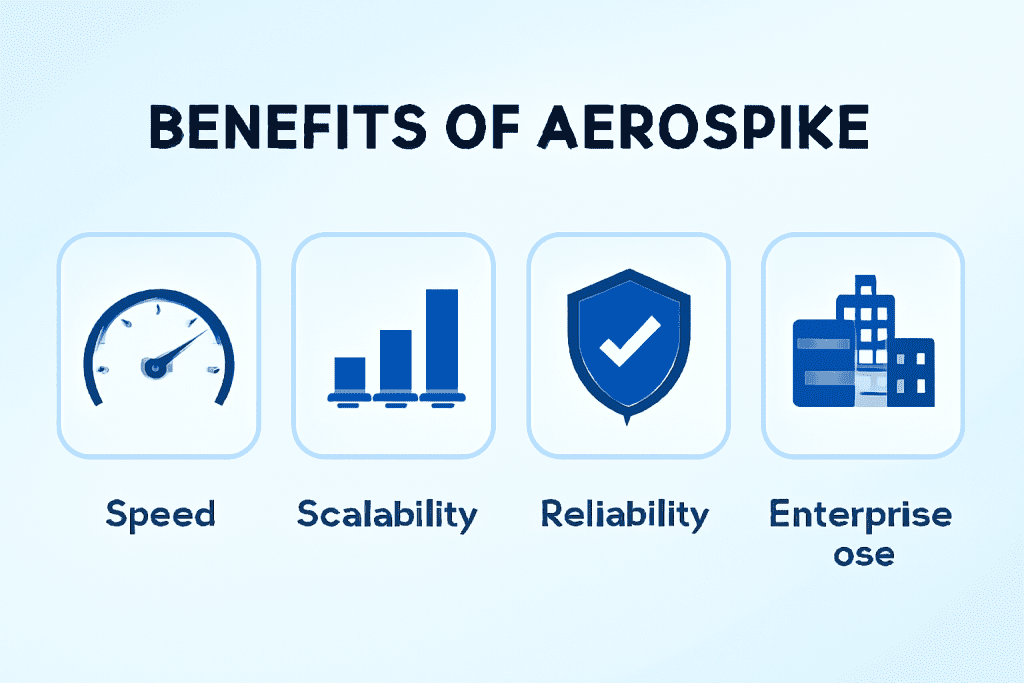
Introduction In today’s data-driven business landscape, organizations demand databases that deliver high performance, scalability, and reliability while processing vast volumes of real-time data. Aerospike, a modern NoSQL distributed database, excels in these areas, providing enterprises the foundation they need to innovate, optimize operations, and enhance customer experiences. This comprehensive blog explores the multifaceted business benefits of choosing Aerospike Database. It discusses key technical advantages, diverse industry use cases, and how Aerospike integrates with emerging technologies like AI, blockchain, and predictive analytics. Strategic backlinks to TechOTD AI Services and other relevant TechOTD content enrich the discussion for readers seeking to elevate their technology strategies. Why Aerospike? Key Business Advantages 1. Ultra-High Performance and Low Latency Aerospike is engineered for real-time, high-speed transactions at scale. Its Hybrid Memory Architecture leverages both RAM and persistent flash storage, dramatically reducing latency and enabling billions of transactions per day. Businesses can deliver instant personalization, fraud detection, and dynamic pricing, critical in sectors like retail, ad tech, and finance. Explore AI-driven real-time personalization and fraud prevention strategies at TechOTD AI Services. 2. Extreme Scalability and Reliability Aerospike’s distributed architecture supports automatic sharding and replication across multiple nodes and data centers, ensuring horizontal scalability and high availability without performance degradation. This reliability is vital for applications requiring 99.999% uptime such as telecom, gaming, and banking. Real-world case studies are available via TechOTD Blog. 3. Simplified Data Architecture By combining key-value and document store capabilities, Aerospike simplifies data models and reduces infrastructure complexity. This simplification accelerates development cycles and reduces operational costs and risks. Learn about lean and agile development in mobile apps at TechOTD Mobile Apps. 4. Enterprise-Grade Security and Compliance Aerospike includes multi-layer security features such as encryption at rest/in transit, access control, and audit logging, supporting regulatory requirements like GDPR and HIPAA. Enhanced data security integrates seamlessly with blockchain technologies to ensure immutable, secure transactions TechOTD Blockchain Integration. 5. Native Cloud and Hybrid Deployment Flexibility Aerospike supports deployment across public clouds, private clouds, and on-premises environments, providing flexibility aligned with IT strategy and regulatory mandates. Hybrid cloud architectures enable the best of scalability and control, a focus area covered extensively by TechOTD Cloud Blogs. Industry Use Cases Empowered by Aerospike   Retail & E-Commerce: Real-Time Personalization and Inventory Management Aerospike powers instant personalization at scale by managing user sessions and product catalogs with minimal latency. Faster inventory updates and order processing improve customer satisfaction and operational efficiency. Financial Services: Fraud Detection and Risk Analytics Aerospike enables ultra-fast transaction processing and real-time anomaly detection, reducing fraud and credit risks. AI-driven analytics running on Aerospike data accelerate decision-making TechOTD Large Language Models in Finance. Ad Tech: Real-Time Bidding and Audience Segmentation Aerospike’s capability to handle massive read/write loads supports real-time bidding platforms and audience analytics, increasing ad revenue and precision. Telecommunications: Session Management and Network Optimization High-availability and low-latency session data management improve call quality and subscriber experience. Gaming & Entertainment: Leaderboards and In-Game Analytics Real-time game state updates and analytics tracking enable responsive multiplayer experiences and personalized gameplay. Integration with AI, Blockchain, and Predictive Analytics Aerospike integrates seamlessly with AI and machine learning pipelines, enabling fast data ingestion and retrieval critical for training and inference at scale. For comprehensive AI integration strategies, see TechOTD AI Services. Blockchain enhances Aerospike’s secure data framework for use cases requiring transparency and trust TechOTD Blockchain Integration. Predictive analytics leverage Aerospike’s performance to deliver timely insights, enhancing operational decision-making TechOTD Predictive Analytics. Operational Excellence and Developer Productivity Aerospike comes with advanced management tools, monitoring, and automation features that reduce downtime and manual effort. Its powerful query language and APIs accelerate developer productivity, supporting agile methodologies TechOTD Mobile App Development. Challenges and Mitigation Learning Curve: Adopting new database technologies requires training, but developer-friendly resources and consulting can ease transition TechOTD How We Work. Integration Complexity: Aerospike integrates with popular data platforms and analytics tools to ease ecosystem compatibility. Future Outlook As edge computing and 5G expand, Aerospike’s low latency and edge adaptability position it for emerging workloads. Continued AI and blockchain feature integration will boost Aerospike’s role in next-gen applications. Stay updated with TechOTD insights on evolving technology at TechOTD Blog. Conclusion Choosing Aerospike Database offers enterprises a high-performance, scalable, and reliable platform crucial for modern data-intensive applications. Its unique architecture supports business agility, innovation, and operational excellence across sectors. Key Benefits Summary: Real-time, low-latency data processing Unmatched scalability and availability Simplified data models and reduced complexity Robust security compliance and blockchain synergy Hybrid and cloud deployment flexibility Proven multi-industry use cases and AI integration

Digital Transformation

Why Mobile Edge Computing is Critical for Enterprises in the 5G Era

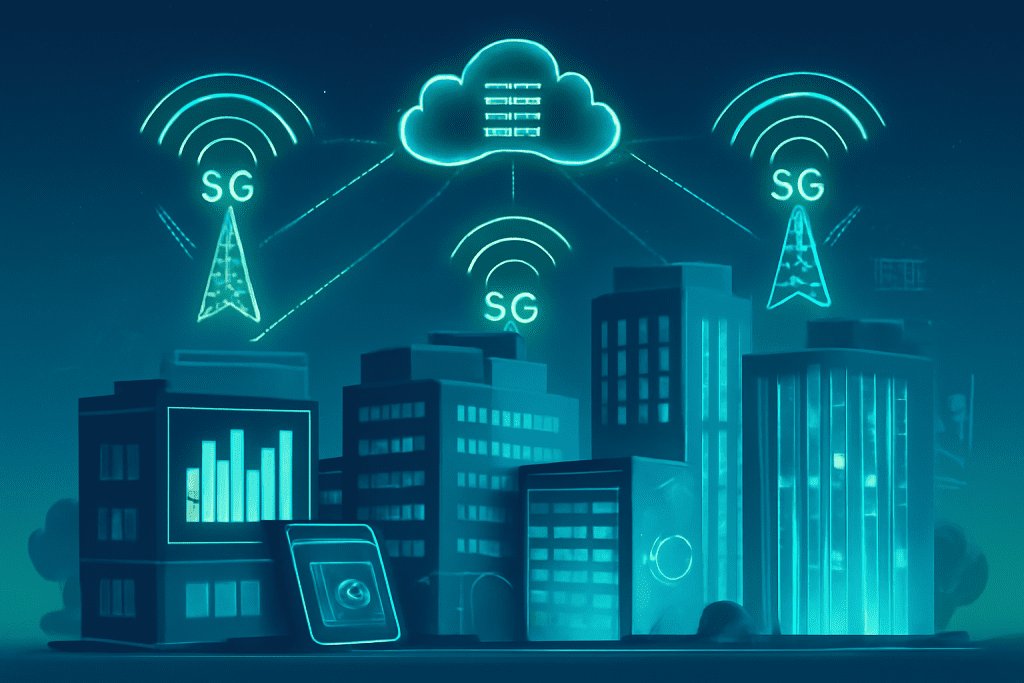
Introduction The arrival of 5G wireless technology is revolutionizing enterprise connectivity, promising multi-gigabit speeds, ultra-low latency, and support for billions of connected devices. However, to truly unlock the transformative potential of 5G, enterprises must integrate Mobile Edge Computing (MEC) into their digital infrastructure. 5G edge computing moves computation and data processing closer to where data is generated—at the “edge” of the network—enabling faster response times, greater security, and empowering real-time business innovation. Explore how AI-powered Mobile Edge Computing solutions can transform business processes at TechOTD AI Services. What is Mobile Edge Computing (MEC)? Mobile Edge Computing (MEC) is a network architecture that brings computing, storage, and analytics capabilities out of centralized data centers and closer to the physical location of devices and users. This proximity accelerates data processing and decision-making—critical in the 5G edge computing era where speed, responsiveness, and high-bandwidth are no longer optional but foundational to enterprise competitiveness. The Symbiosis of 5G and Mobile Edge Computing Ultra-low Latency: 5G networks promise sub-millisecond latency. Mobile Edge Computing (MEC) is essential for achieving these targets since only local processing can deliver true real-time responses for autonomous vehicles, telemedicine, and AR/VR solutions. High Bandwidth Utilization: With 5G’s massive data throughput, 5G edge computing prevents bottlenecks and network congestion. Reliability & Resilience: MEC in 5G networks reduces reliance on continual cloud connectivity, making operations more robust against outages and delivering superior quality of service. Key Benefits of Mobile Edge Computing for Enterprises Real-Time Data ProcessingProcessing data locally enables ultra-fast analytics required for applications like predictive maintenance, intelligent video surveillance, and automated supply chains. ✅ Example: A smart factory uses 5G edge computing with MEC to process IoT sensor data, optimizing equipment performance and reducing downtime—without sending all data to the cloud. Enhanced Security & PrivacyBy handling sensitive data close to its source, Mobile Edge Computing minimizes interception risks. Industries like healthcare and finance benefit from localized compliance and data residency. Reduced Network Congestion & CostsOffloading computation from central servers to the edge decreases backhaul requirements, making MEC in 5G both cost-efficient and scalable. Greater Scalability & FlexibilityMobile Edge Computing enables modular deployment of enterprise apps, scaling easily across retail, logistics, and smart cities. Industry Use Cases of Mobile Edge Computing Manufacturing: Smart factories rely on 5G edge computing for predictive analytics, digital twins, and real-time equipment monitoring. Retail: Edge-enabled personalization, AR shopping, and real-time customer engagement enhance user experience. Healthcare: Secure telemedicine, real-time imaging, and patient monitoring with Mobile Edge Computing in healthcare. Logistics & Transportation: Smart fleet management and navigation powered by MEC and 5G. Smart Cities: IoT-driven traffic management, safety, and environmental monitoring with edge computing in 5G networks. Conclusion Mobile Edge Computing (MEC) is critical for enterprises in the 5G era because it enables: Ultra-low latency, reliable, and scalable real-time applications Enhanced data security, privacy, and compliance Cost-effective handling of massive, distributed data flows Seamless integration with AI, IoT, and blockchain technologies Robust digital transformation strategies powering growth and innovation

Scroll to Top