
React Native development

App Development

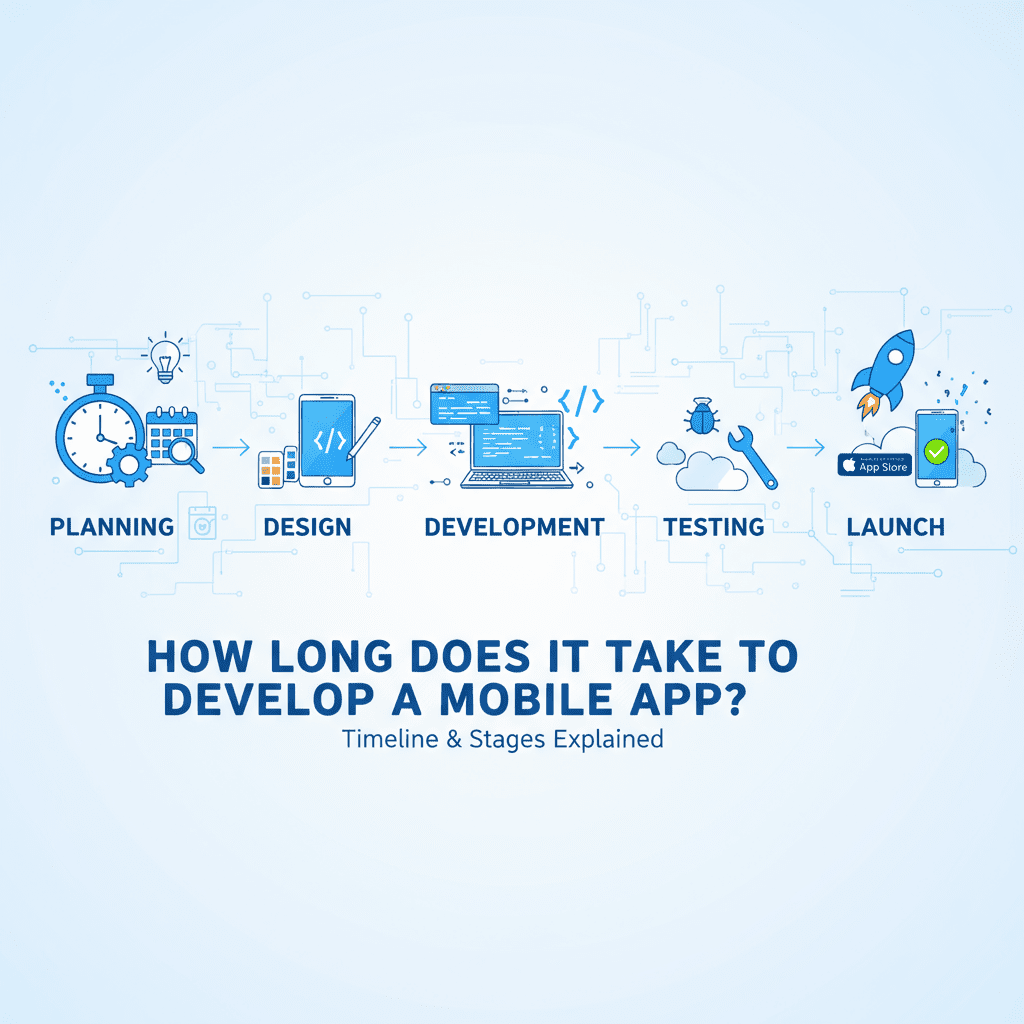
How Long Does It Take to Develop a Mobile App?

Introduction A common question for businesses and entrepreneurs planning mobile apps is: “How long will the development take?” The answer depends on many factors including app complexity, features, platforms, and team expertise. Understanding typical timeframes helps set the right expectations and plan budgets efficiently. App Development Timelines Based on Complexity Simple Apps (2 to 4 Months) Basic functionality with limited features Minimal backend or database integration Examples: Calculator, basic informational app, simple utilities Simple apps focus on core features with straightforward UI/UX and are ideal as MVPs or proof of concepts. Medium Complexity Apps (4 to 8 Months) Moderate feature set like user authentication, payment gateways Some backend integration and APIs Examples: Fitness trackers, food delivery apps, messaging platforms These apps require more testing, UI design, and cross-platform compatibility, extending development time. Complex Apps (8 to 12+ Months) Advanced features such as real-time data sync, AI, AR, video streaming Multiple user roles and third-party integrations Examples: E-commerce marketplaces, social networks, fintech solutions Complex apps often require scalable backend architecture, security compliance, and extensive QA cycles. Factors Influencing Development Time Feature Scope: More features mean longer development and testing periods. Platform Choice: Native apps for iOS and Android may take longer than cross-platform development. Design Complexity: Custom UI/UX design adds to project time. Third-Party Integrations: Payments, social media, maps, or AI APIs affect timelines. Team Size and Expertise: Larger or specialized teams can accelerate or delay schedules. Testing and Revisions: Time allocated for QA and feedback cycles can vary. Tips to Speed Up Development Start with an MVP to validate core features quickly. Use cross-platform frameworks like Flutter or React Native. Prioritize features using MoSCoW method (Must-have, Should-have, Could-have, Won’t-have). Automate testing and use CI/CD pipelines for faster releases. Work with experienced developers or agencies to avoid rework. Conclusion Typically, app development ranges from 2 months for simple projects to over a year for complex applications. Planning, clear requirements, and choosing the right technology are key to hitting your timeline. Setting realistic expectations helps businesses launch products faster and adapt to market feedback effectively. For expert mobile app development services and timeline consultation, explore TechOTD AI Services and follow industry trends on the TechOTD Blog.

React native doveploment

Less Talked About React Native App Development Considerations

Introduction React Native has surged in popularity as a preferred framework for building cross-platform mobile apps that deliver near-native performance. It offers developers the advantage of writing code once and deploying it on both iOS and Android, dramatically reducing time and cost. However, beyond the widely discussed benefits, there are several less-talked-about considerations that can impact the success and maintainability of React Native projects. This blog highlights underrated yet pivotal factors to consider when developing apps with React Native. Understanding these will help businesses and developers avoid common pitfalls, optimize performance, and build scalable applications. For insights on choosing the right development approach and leveraging AI-powered tools to enhance apps, explore TechOTD’s mobile app services and their technology blog. Less Talked About Considerations in React Native Development 1. Native Module Bridging Complexity While React Native covers most UI and logic needs, some features require native modules. Bridging custom native components between JavaScript and platform-specific code (Swift/Objective-C for iOS, Java/Kotlin for Android) can be complex and error-prone. Early planning of native module requirements prevents integration bottlenecks. 2. Platform-Specific UI/UX Nuances Cross-platform code sometimes overlooks subtle UI differences and behaviors expected by users on iOS or Android. Tailoring components and animations to respect platform conventions enhances user satisfaction but requires additional effort. 3. Debugging and Performance Profiling Challenges React Native debugging can be trickier compared to pure native apps. Certain performance issues stem from JavaScript thread bottlenecks and asynchronous bridge communication. Leveraging specialized profiling tools early helps identify and mitigate these problems. 4. Library and Dependency Maturity Not all React Native third-party libraries maintain parity between platforms or keep pace with the latest RN versions. Thorough vetting and maintenance planning for dependencies is critical to ensuring long-term app stability. 5. Handling Large App Sizes and Startup Times React Native apps tend to have larger binary sizes and longer cold start durations compared to native apps. Optimizing assets, code splitting, and lazy loading can mitigate user experience impacts but require strategic development approaches. 6. Security Considerations in JavaScript Environment JavaScript bundles can be reverse-engineered, posing risks of exposing app logic or sensitive data. Employing code obfuscation, secure storage, and adhering to best practices is essential to safeguard apps. How AI and Modern Tools Can Help AI-powered development assistants and predictive analytics tools can optimize performance tuning, automate testing, and suggest code improvements in React Native projects, reducing manual effort and error rates. TechOTD’s AI-driven solutions accelerate React Native development with proven frameworks and agile methodologies: React Native Development Services. Conclusion While React Native offers substantial advantages for rapid, cost-effective cross-platform app development, success requires attention to less obvious nuances—native module integration, platform-specific UX, debugging complexities, and security considerations. Addressing these early with the support of AI tools and expert development teams like TechOTD ensures scalable, high-performance apps that delight users across platforms. Stay updated on React Native trends and technology innovations at TechOTD Blog. FAQs Q1: Why is native module bridging necessary? Some hardware features or optimizations require platform-specific native code not supported directly by React Native. Q2: How do I ensure the app feels native on each platform? Design UI/UX specifically tailored for Android and iOS conventions with conditional rendering and styling. Q3: What tools help with React Native performance profiling? Tools like Flipper, Android Profiler, and Xcode Instruments assist in diagnosing performance bottlenecks. Q4: How do I manage third-party dependencies in React Native? Regularly audit and update libraries, favor well-maintained packages, and prepare for migration during React Native upgrades. Q5: How can I protect my app’s JavaScript code? Use obfuscation techniques, secure API keys, and follow secure coding guidelines to reduce vulnerabilities.

Scroll to Top