predictive maintenance

Manufacturing, Technology

Smart Factories and Industry 4.0: The Future of Manufacturing Operations

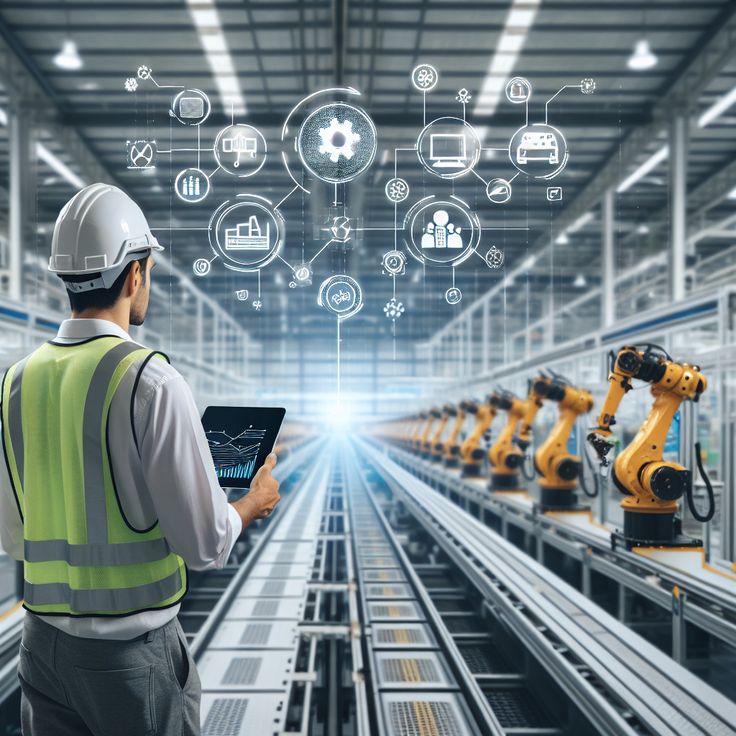
Smart Factories and Industry 4.0: The Future of Manufacturing Operations Manufacturing has always been a driving force behind economic growth and industrial development. From the steam-powered machines of the First Industrial Revolution to the computer-controlled production systems of the modern era, manufacturing has continuously evolved to meet changing market demands. Today, the industry is experiencing another major transformation known as Industry 4.0, a technological revolution that is redefining how factories operate, produce goods, and interact with supply chains. At the heart of this transformation lies the concept of the smart factory. Unlike traditional manufacturing facilities that rely heavily on manual monitoring and isolated systems, smart factories use interconnected technologies such as Artificial Intelligence (AI), the Internet of Things (IoT), cloud computing, robotics, and advanced analytics to create highly intelligent and automated production environments. As global competition intensifies and customer expectations continue to rise, manufacturers are under increasing pressure to improve efficiency, reduce costs, enhance product quality, and accelerate innovation. Smart factories provide a solution by enabling real-time visibility, predictive decision-making, and seamless communication across the entire production ecosystem. The combination of Industry 4.0 technologies and smart manufacturing practices is not simply improving existing processes; it is fundamentally changing how products are designed, manufactured, delivered, and maintained. Organizations that embrace this shift are positioning themselves for long-term success in an increasingly digital and connected world. Understanding Industry 4.0 Industry 4.0 represents the fourth industrial revolution, characterized by the integration of digital technologies into manufacturing and industrial operations. It connects machines, systems, and people through intelligent networks that enable autonomous decision-making and real-time data exchange. The first industrial revolution introduced mechanization through steam power. The second brought mass production through electricity and assembly lines. The third revolution introduced computers and automation. Industry 4.0 builds upon these developments by creating smart, connected, and data-driven manufacturing environments. The primary goal of Industry 4.0 is to create a seamless flow of information across all aspects of manufacturing operations. This allows organizations to respond quickly to changing conditions, optimize production processes, and improve overall performance. Smart factories serve as the practical implementation of Industry 4.0 principles. They combine digital technologies with traditional manufacturing processes to create adaptive and intelligent production systems capable of self-monitoring and self-optimization. What Is a Smart Factory? A smart factory is a highly digitized manufacturing facility where machines, sensors, software systems, and employees work together through connected networks to improve productivity and efficiency. In a smart factory, production equipment continuously generates data that is analyzed in real time. This information helps manufacturers identify inefficiencies, predict equipment failures, optimize workflows, and maintain consistent product quality. Unlike traditional factories where decisions often rely on manual intervention and historical reports, smart factories use real-time insights to support immediate action. Machines can communicate with each other, adjust production schedules automatically, and even detect potential issues before they impact operations. The result is a manufacturing environment that is more flexible, efficient, and responsive to customer needs. Key Technologies Powering Smart Factories The success of smart factories depends on several advanced technologies working together to create an interconnected manufacturing ecosystem. Internet of Things (IoT) The Internet of Things forms the foundation of Industry 4.0. IoT devices and sensors collect data from machines, production lines, and industrial equipment. These sensors monitor various parameters such as temperature, pressure, vibration, energy consumption, and machine performance. The collected data provides valuable insights into operational conditions and production efficiency. By connecting physical assets to digital systems, IoT enables real-time visibility across manufacturing operations and supports proactive decision-making. Artificial Intelligence and Machine Learning Artificial Intelligence plays a critical role in transforming raw manufacturing data into actionable insights. AI algorithms can analyze large volumes of information, identify patterns, and predict future outcomes. Machine learning systems continuously improve their accuracy by learning from historical and real-time data. Manufacturers use AI for predictive maintenance, quality control, demand forecasting, inventory optimization, and production planning. These capabilities help reduce downtime, improve product quality, and increase operational efficiency. Industrial Robotics Modern industrial robots have become increasingly intelligent, flexible, and collaborative. Unlike traditional robots designed for repetitive tasks, advanced robotic systems can adapt to changing production requirements and work alongside human employees. These collaborative robots, often called cobots, enhance productivity while improving workplace safety. Robots are widely used for assembly, welding, packaging, material handling, and inspection processes, allowing manufacturers to maintain high levels of accuracy and consistency. Cloud Computing Cloud computing provides the infrastructure needed to store, process, and analyze vast amounts of manufacturing data. By leveraging cloud platforms, manufacturers can access information from multiple locations, improve collaboration, and scale operations without significant infrastructure investments. Cloud-based systems also enable remote monitoring and management of manufacturing facilities, making it easier to oversee global production networks. Digital Twins A digital twin is a virtual representation of a physical asset, process, or production system. Digital twins allow manufacturers to simulate real-world conditions, test different scenarios, and evaluate potential improvements without disrupting actual operations. By creating accurate digital models of machines and production lines, organizations can optimize performance, reduce risks, and accelerate innovation. Big Data Analytics Manufacturing environments generate enormous volumes of data every day. Big data analytics helps organizations extract valuable insights from this information by identifying trends, detecting anomalies, and uncovering opportunities for improvement. Data-driven decision-making enables manufacturers to optimize production schedules, reduce waste, improve resource utilization, and enhance overall performance. Benefits of Smart Factories The adoption of smart factory technologies offers numerous advantages that extend across all aspects of manufacturing operations. Increased Operational Efficiency Automation and real-time monitoring help eliminate bottlenecks and streamline production processes. Manufacturers can identify inefficiencies quickly and make adjustments before they impact productivity. This leads to higher output and improved resource utilization. Reduced Downtime Unexpected equipment failures can result in costly production interruptions. Predictive maintenance solutions use AI and IoT data to identify potential issues before they cause breakdowns. Maintenance activities can be scheduled proactively, reducing downtime and extending equipment lifespan. Improved Product Quality Smart factories use advanced inspection systems, machine vision, and AI-powered analytics to detect

Artificial Intelligence, Digital Transformation, Technology

How Digital Twins Are Transforming Manufacturing and Smart Cities

How Digital Twins Are Transforming Manufacturing and Smart Cities Imagine being able to create an exact digital replica of a factory, a production line, a power grid, or even an entire city. Now imagine that this digital replica updates itself continuously using real-time data from sensors, machines, cameras, and connected devices. Engineers can test changes before implementing them, city planners can predict traffic congestion before it occurs, and manufacturers can identify equipment failures before they happen. This is the power of digital twin technology. Over the past few years, digital twins have evolved from an experimental concept into one of the most impactful technologies driving digital transformation. Organizations across industries are leveraging digital twins to improve efficiency, reduce costs, optimize operations, and make better decisions based on real-world data. As manufacturing facilities become smarter and cities become increasingly connected, digital twins are emerging as a critical technology that bridges the gap between the physical and digital worlds. Understanding how digital twins work and why they matter is essential for businesses, city planners, and technology leaders looking to stay competitive in an increasingly data-driven future. What Is a Digital Twin? A digital twin is a virtual representation of a physical object, process, system, or environment that continuously receives data from its real-world counterpart. Unlike traditional simulations that rely on static information, digital twins are dynamic. They constantly collect and analyze real-time data through sensors, Internet of Things (IoT) devices, software systems, and connected networks. The digital model mirrors the current condition of the physical asset and can predict future behavior based on historical and live data. For example, in a manufacturing plant, a digital twin of a machine can monitor temperature, vibration levels, energy consumption, and production output. If the system detects unusual behavior, it can alert operators before a costly breakdown occurs. Similarly, a digital twin of a city can monitor traffic flow, public transportation, energy consumption, water distribution, weather patterns, and infrastructure performance to help authorities make smarter decisions. The combination of IoT, artificial intelligence, cloud computing, big data analytics, and advanced visualization technologies has accelerated the adoption of digital twins across multiple sectors. Why Digital Twins Matter More Than Ever Today’s organizations face increasing pressure to improve operational efficiency while reducing costs and minimizing risks. Manufacturers must manage complex supply chains, maintain equipment reliability, and meet customer demands for faster production. City governments must address challenges such as population growth, traffic congestion, energy management, sustainability, and public safety. Traditional monitoring systems often provide limited visibility into operations. Digital twins offer a more comprehensive approach by providing a complete digital view of physical systems. This enables organizations to move from reactive decision-making to predictive and proactive management. Instead of fixing problems after they occur, organizations can anticipate issues and take action before disruptions happen. This shift is creating significant value across industries and transforming how physical assets are designed, managed, and optimized. The Role of Digital Twins in Modern Manufacturing Manufacturing is one of the industries experiencing the greatest impact from digital twin technology. Modern factories generate enormous amounts of operational data every day. Machines, robots, conveyors, sensors, and production systems continuously produce information that can be used to improve efficiency and productivity. Digital twins bring all this information together into a single intelligent model. Manufacturers can visualize operations in real time, identify inefficiencies, and test improvements without disrupting production. One of the most valuable applications is predictive maintenance. Equipment failures can cause expensive downtime and production delays. Traditional maintenance schedules often rely on fixed intervals, which may result in unnecessary servicing or unexpected breakdowns. Digital twins continuously monitor machine health and identify early warning signs of potential failures. This allows maintenance teams to perform repairs at the optimal time, reducing downtime and extending equipment lifespan. Production optimization is another major benefit. Manufacturers can simulate different production scenarios and evaluate their impact before implementing changes. Whether adjusting workflows, introducing new machinery, or redesigning assembly lines, digital twins help organizations make informed decisions with minimal risk. Quality control also improves significantly. By monitoring production processes in real time, digital twins can identify deviations that may affect product quality. This enables faster corrective actions and helps maintain consistent manufacturing standards. As competition increases and margins become tighter, these improvements can deliver substantial financial benefits. Enhancing Product Development and Innovation Digital twins are not only transforming factory operations but also revolutionizing product development. Traditionally, creating and testing physical prototypes requires significant time and resources. Digital twins enable engineers to evaluate product designs in virtual environments before building physical versions. Manufacturers can test performance, durability, safety, and functionality under various conditions using advanced simulations. This approach reduces development costs, accelerates innovation, and shortens time-to-market. For industries such as automotive, aerospace, electronics, and industrial equipment, digital twins provide a powerful way to improve product quality while reducing design risks. Companies can identify potential issues earlier in the development process and make adjustments before production begins. This creates a more efficient and cost-effective innovation cycle. Supply Chain Visibility and Optimization Global supply chains have become increasingly complex and vulnerable to disruptions. Manufacturers need better visibility into every stage of the supply chain to ensure smooth operations. Digital twins can create virtual models of supply chain networks, allowing organizations to track inventory, shipments, supplier performance, and logistics operations in real time. By analyzing supply chain data, businesses can identify bottlenecks, predict delays, and optimize inventory management. This improved visibility helps organizations respond more effectively to market fluctuations and unexpected disruptions. The ability to simulate different scenarios also supports strategic planning and risk management. As supply chain resilience becomes a top priority for businesses worldwide, digital twins are becoming an essential tool for operational success. How Digital Twins Are Powering Smart Cities The same technology that improves manufacturing efficiency is also helping cities become smarter, safer, and more sustainable. Urban populations continue to grow rapidly, creating increasing demands on infrastructure and public services. City planners face challenges related to transportation, energy consumption, environmental sustainability, housing, waste

Optimizing Operations with Digital Twin in Oil and Gas
Digital Transformation

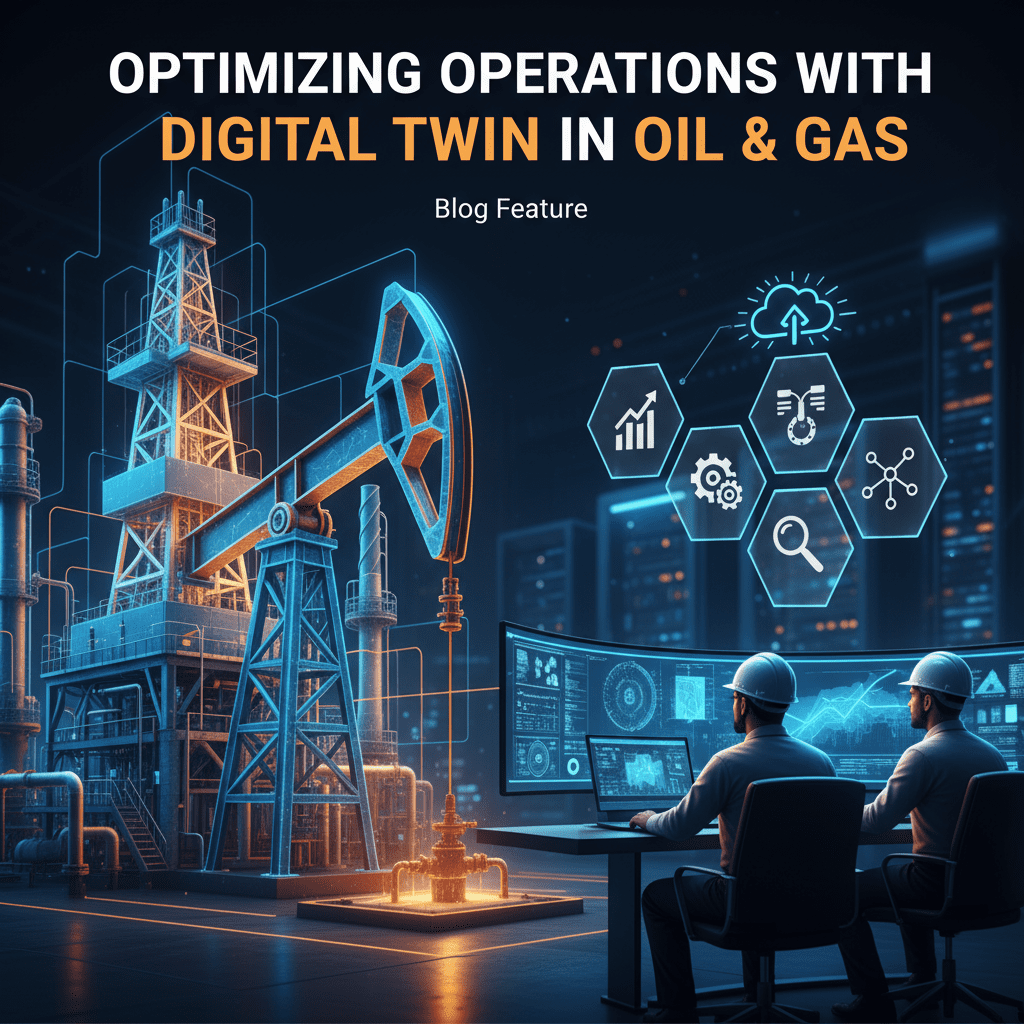
Optimizing Operations with Digital Twin in Oil and Gas

Introduction The oil and gas industry operates in a complex, high-risk environment where operational efficiency, safety, and cost management are critical. Digital twin technology—virtual replicas of physical assets or processes—is transforming how this sector monitors, manages, and optimizes its operations. By integrating real-time data with advanced simulations, digital twins enable companies to predict issues, enhance safety, and drive operational excellence. This blog explores practical use cases, benefits, common challenges, and solutions related to digital twins in oil and gas. What is a Digital Twin in Oil and Gas? A digital twin is a dynamic, virtual model mirroring the behavior of physical oil and gas assets like pipelines, refineries, or drilling rigs. Using IoT sensor data, AI, machine learning, and cloud computing, it provides continuous insights into performance, condition, and potential risks. Use Cases of Digital Twins in Oil and Gas 1. Predictive Maintenance Digital twins monitor equipment health to forecast failures before they happen, minimizing unplanned downtime and repair costs. 2. Asset Lifecycle Management Virtual replicas track assets from design and construction through operation to decommissioning, optimizing utilization and ROI. 3. Remote Monitoring and Control Operators can manage offshore platforms and remote sites through digital twins, making real-time data-driven decisions. 4. Process Optimization Simulations help refine production workflows, reduce energy consumption, and enhance output quality. 5. Workforce Training & Safety Simulations Virtual environments enable safe training for hazardous scenarios, improving preparedness and reducing accidents. Benefits of Digital Twin Technology Increased Operational Efficiency by providing real-time monitoring and data-driven insights. Enhanced Safety and Risk Management through virtual testing of scenarios and predictive alerts. Cost Reduction from optimized maintenance, less downtime, and efficient resource allocation. Sustainability Improvements by reducing emissions and aligning with environmental regulations. Improved Decision-Making leveraging AI and analytics integrated with digital twins. Challenges in Digital Twin Adoption Data Integration Complexity from heterogeneous sources and formats. High Initial Investment and Implementation Costs. Cybersecurity Risks associated with connected assets. Skills Gap in digital technologies and change management. Data Privacy and Ownership Concerns. Solutions and Best Practices Use cloud-based digital twins to reduce upfront costs and improve scalability. Integrate AI, IoT, and blockchain to enhance analytics, security, and data integrity. Invest in digital upskilling and training for workforce readiness. Develop comprehensive data governance policies to address privacy and compliance. Pilot projects with clear KPIs to demonstrate ROI and gradually scale adoption. Conclusion Digital twin technology offers transformative potential for the oil and gas industry by enabling smarter, safer, and more efficient operations. Despite challenges, the integration of digital twins with AI, IoT, and cloud computing will redefine future energy production and asset management. For tailored digital twin solutions and AI consulting in oil and gas, explore TechOTD AI Services and continue learning through the TechOTD Blog.

Internet of Things

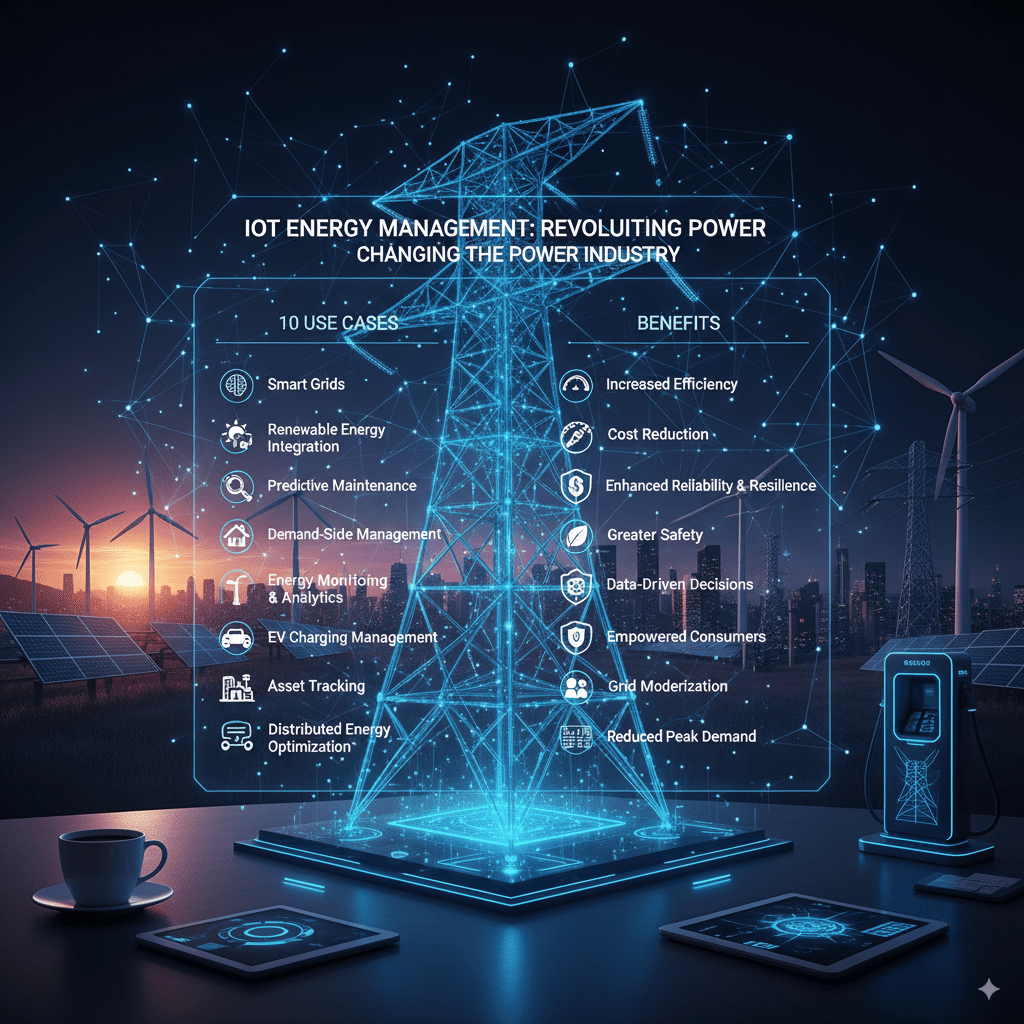
10 Use Cases and Benefits of IoT Energy Management Changing the Power Industry

Introduction The adoption of Internet of Things (IoT) technology is revolutionizing energy management across industries. By enabling real-time monitoring, automation, and data-driven optimization, IoT solutions help reduce costs, increase efficiency, and support sustainability goals. In the dynamically evolving power industry, IoT is a game-changer, transforming how energy is generated, distributed, and consumed. Here are 10 impactful IoT use cases in energy management and the benefits that are reshaping the power landscape in 2025. 1. Smart Commercial Buildings IoT devices optimize lighting, HVAC systems, and energy consumption based on occupancy and time of day. Automated control reduces unnecessary energy use and cuts costs in offices, warehouses, and retail spaces. 2. Smart Metering and Real-Time Energy Monitoring IoT-enabled smart meters provide granular usage data for consumers and utilities. This helps track energy consumption patterns, detect inefficiencies, and optimize demand response strategies. 3. Predictive Maintenance for Energy Assets IoT sensors monitor equipment health indicators such as temperature and vibration to anticipate failures before they occur, reducing downtime and maintenance costs. 4. Automated Energy Optimization By analyzing real-time data on environmental conditions and usage, IoT systems can dynamically adjust energy consumption, such as dimming lights or modulating HVAC, resulting in efficient resource use. 5. Integration of Renewable Energy Sources IoT manages and monitors solar panels, wind turbines, and other green energy assets. It enables smarter distribution, load balancing, and storage, supporting grid stability and sustainability. 6. Demand Response Management Utilities leverage IoT data to adjust supply dynamically in response to consumer demand spikes, minimizing blackouts and optimizing grid performance. 7. Energy Theft and Fault Detection IoT sensors detect anomalies indicating theft or faults in the grid infrastructure, improving security and reducing revenue losses. 8. Grid Automation and Remote Control IoT-enabled automation allows utilities to remotely monitor and manage substations, transformers, and distribution networks, improving reliability and reducing operating costs. 9. Asset Lifecycle Management IoT tracks energy infrastructure usage metrics and conditions to optimize replacements, upgrades, and budgeting, extending asset life and enhancing ROI. 10. Enhanced Consumer Engagement Consumers receive actionable insights through IoT-powered apps and devices, promoting energy-saving behaviors and enabling participation in energy markets (e.g., trading surplus solar energy). Benefits Cost Savings: Reduced energy waste cuts operational expenses. Energy Efficiency: Optimized consumption and supply balancing enhance system performance. Sustainability: Supports green energy adoption and reduces carbon footprint. Operational Transparency: Real-time data improves decision-making and regulatory compliance. Improved Reliability: Predictive maintenance and fault detection minimize outages. User Empowerment: Engages consumers in managing their energy usage actively. Conclusion IoT energy management is a cornerstone of the future power industry—creating smarter, cleaner, and more resilient energy ecosystems. Businesses, utilities, and consumers alike stand to benefit from adopting connected energy solutions and leveraging data-driven insights. For expert guidance on integrating IoT and AI into energy management, explore TechOTD AI Services and stay updated with innovations on the TechOTD Blog. Would you like a detailed technical overview or case studies illustrating IoT impact in energy?# 10 Use Cases and Benefits of IoT Energy Management Changing the Power Industry Introduction The adoption of Internet of Things (IoT) technology is revolutionizing energy management across industries. By enabling real-time monitoring, automation, and data-driven optimization, IoT solutions help reduce costs, increase efficiency, and support sustainability goals. In the dynamically evolving power industry, IoT is a game-changer, transforming how energy is generated, distributed, and consumed. Here are 10 impactful IoT use cases in energy management and the benefits that are reshaping the power landscape in 2025. 1. Smart Commercial Buildings IoT devices optimize lighting, HVAC systems, and energy consumption based on occupancy and time of day. Automated control reduces unnecessary energy use and cuts costs in offices, warehouses, and retail spaces. 2. Smart Metering and Real-Time Energy Monitoring IoT-enabled smart meters provide granular usage data for consumers and utilities. This helps track energy consumption patterns, detect inefficiencies, and optimize demand response strategies. 3. Predictive Maintenance for Energy Assets IoT sensors monitor equipment health indicators such as temperature and vibration to anticipate failures before they occur, reducing downtime and maintenance costs. 4. Automated Energy Optimization By analyzing real-time data on environmental conditions and usage, IoT systems can dynamically adjust energy consumption, such as dimming lights or modulating HVAC, resulting in efficient resource use. 5. Integration of Renewable Energy Sources IoT manages and monitors solar panels, wind turbines, and other green energy assets. It enables smarter distribution, load balancing, and storage, supporting grid stability and sustainability. 6. Demand Response Management Utilities leverage IoT data to adjust supply dynamically in response to consumer demand spikes, minimizing blackouts and optimizing grid performance. 7. Energy Theft and Fault Detection IoT sensors detect anomalies indicating theft or faults in the grid infrastructure, improving security and reducing revenue losses. 8. Grid Automation and Remote Control IoT-enabled automation allows utilities to remotely monitor and manage substations, transformers, and distribution networks, improving reliability and reducing operating costs. 9. Asset Lifecycle Management IoT tracks energy infrastructure usage metrics and conditions to optimize replacements, upgrades, and budgeting, extending asset life and enhancing ROI. 10. Enhanced Consumer Engagement Consumers receive actionable insights through IoT-powered apps and devices, promoting energy-saving behaviors and enabling participation in energy markets (e.g., trading surplus solar energy). Benefits Cost Savings: Reduced energy waste cuts operational expenses. Energy Efficiency: Optimized consumption and supply balancing enhance system performance. Sustainability: Supports green energy adoption and reduces carbon footprint. Operational Transparency: Real-time data improves decision-making and regulatory compliance. Improved Reliability: Predictive maintenance and fault detection minimize outages. User Empowerment: Engages consumers in managing their energy usage actively. > Conclusion IoT energy management is a cornerstone of the future power industry—creating smarter, cleaner, and more resilient energy ecosystems. Businesses, utilities, and consumers alike stand to benefit from adopting connected energy solutions and leveraging data-driven insights. For expert guidance on integrating IoT and AI into energy management, explore TechOTD AI Services and stay updated with innovations on the TechOTD Blog.

Digital Transformation, Uncategorized

Digital Twins Driving Innovation in the Energy Sector: Benefits, Use Cases, and Real Examples

Introduction The energy sector is undergoing a digital revolution⁠—and digital twin technology sits at its core. By creating virtual replicas of physical assets, processes, or systems, digital twins enable real-time monitoring, simulation, and predictive analysis. This innovation helps energy companies optimize performance, reduce costs, and achieve sustainability goals, marking a fundamental shift in how energy is produced, managed, and consumed. Benefits of Digital Twins in the Energy Sector Revolutionized Predictive Maintenance Digital twins let energy companies move from reactive to predictive maintenance. Sensor-driven data and real-time analytics identify equipment issues before failures occur⁠—minimizing downtime, reducing maintenance costs, and extending asset lifespans. Unparalleled Energy Efficiency Virtual models allow operators to simulate and optimize energy production and consumption. This results in greater efficiency, lower operational costs, and reduced environmental impact. Enhanced Data-Driven Decision Making Digital twins provide rich, real-time insights. Companies can test operational strategies in a “risk-free” virtual environment before implementation, improving system reliability and reducing operational risk. Accelerated Innovation This technology enables rapid prototyping of new solutions. Energy companies can experiment and iterate virtually, fast-tracking development cycles and driving the adoption of next-gen technologies. Increased Safety and Reliability Continuous, real-time monitoring makes it easier to spot risks and vulnerabilities. This proactive stance improves system integrity, worker safety, and reliability of supply. Supporting Sustainability By simulating and analyzing resource use and environmental impacts, digital twins help energy operators align with strict sustainability goals, reduce waste, and comply with global environmental standards. Key Use Cases in the Energy Sector Wind Farm Optimization: Virtual models predict wear, simulate conditions, and optimize turbine placement/performance, increasing energy yield and minimizing boilerplate. Smart Grid Management: Digital twins of grids enable real-time monitoring, outage prediction, and optimal load distribution, making power systems more resilient. Refinery and Power Plant Operations: Digital twins simulate production processes, optimize workflows, minimize energy consumption, and reduce emissions. Energy Storage Systems: Operators use digital twin models to optimize battery and hydro-storage, resulting in smarter grid-balancing and resource allocation. Asset Lifecycle Management: In nuclear or large-scale power installations, digital twins track aging, predict failures, and optimize replacement schedules. Distributed Renewable Integration: Twins help assess real-time performance of solar and distributed renewables, streamlining grid integration. Real-World Examples Siemens Gas Turbines: Digital twins track turbine operations in real-time, enabling predictive maintenance and improved performance, significantly cutting costs. Shell Refineries: Shell uses refinery digital twins for operational simulations, enabling optimization, emission reduction, and proactive maintenance. Duke Energy: Digital twins help manage Duke’s distributed power grid, improving fault prediction and grid reliability. General Electric Wind Farms: GE leverages digital twins to maximize wind farm yield and reduce unplanned outages by continuously analyzing turbine data. Smart Cities (Singapore, Shanghai): Entire cities are modeled with digital twins for energy optimization, traffic flow, and urban planning. Future Trends AI/ML Integration: Combining artificial intelligence and digital twins unlocks deeper analytics and autonomous optimization. Edge Computing: Processes data closer to assets for faster response and increased autonomy. Cross-Domain Models: Integrating energy twins with supply chain, production, and environmental data for holistic management. Sustainability Modeling: Enhanced environmental simulations for compliance and carbon management. Conclusion Digital twins are transforming the energy industry, driving operational efficiency, cost reduction, innovation, and sustainability. Energy sector leaders embracing this technology are poised to achieve new benchmarks in reliability, competitiveness, and environmental stewardship. For more on the intersection of digital innovation and energy management—or support integrating AI, blockchain, and analytics with your operations—explore TechOTD AI Services and insights on TechOTD Blog.

data science

10 Use Cases and Benefits of Predictive Analytics in Manufacturing

Introduction The manufacturing industry is undergoing a massive transformation, thanks to digital technologies such as Artificial Intelligence (AI), Machine Learning (ML), Internet of Things (IoT), and Predictive Analytics. In the past, factories relied heavily on reactive maintenance, manual monitoring, and limited visibility across operations. But today, manufacturers are leveraging data-driven insights to improve efficiency, reduce downtime, and boost profitability. At the center of this revolution lies Predictive Analytics—a powerful technique that uses historical and real-time data to forecast future outcomes. According to MarketsandMarkets, the predictive analytics market is expected to reach $28.1 billion by 2026, growing at a CAGR of 21.7%. Much of this growth is fueled by the manufacturing sector, where predictive analytics helps companies anticipate problems, optimize production, and stay competitive in a global marketplace. This blog explores the 10 key use cases of predictive analytics in manufacturing—and the benefits each brings to the table. What is Predictive Analytics in Manufacturing? Predictive analytics involves analyzing historical data, real-time data, and external factors to identify patterns and predict future outcomes. In manufacturing, it combines IoT sensors, machine learning algorithms, and advanced statistical models to forecast: Equipment failures Demand fluctuations Quality issues Supply chain risks Instead of reacting to issues after they occur, manufacturers can now prevent problems before they happen. Benefits of Predictive Analytics in Manufacturing Before diving into the use cases, let’s highlight some universal benefits: Reduced Downtime: By predicting equipment failures, factories minimize unplanned shutdowns. Lower Maintenance Costs: Shifting from reactive to predictive maintenance saves money. Improved Product Quality: Detecting defects early prevents large-scale waste. Optimized Supply Chain: Data-driven demand forecasting reduces inventory issues. Increased Productivity: Efficient operations ensure maximum output with fewer resources. Enhanced Customer Satisfaction: Delivering on time with consistent quality builds trust. Data-Driven Decision Making: Real-time analytics empowers management to act proactively. Now, let’s explore 10 powerful use cases. 10 Use Cases of Predictive Analytics in Manufacturing 1. Predictive Maintenance Problem: Traditional maintenance schedules are either too frequent (wasting resources) or too late (leading to breakdowns).Solution: Predictive analytics uses IoT sensor data (temperature, vibration, sound) to detect anomalies in equipment performance.Benefit: Manufacturers can service machines only when needed, reducing downtime and extending asset lifespan.Example: General Motors uses predictive analytics to monitor assembly line robots, preventing costly shutdowns. 2. Demand Forecasting Problem: Overstocking ties up capital, while understocking leads to missed sales.Solution: Predictive models analyze past sales, seasonal trends, and market conditions.Benefit: Accurate forecasts align production with demand, reducing waste and storage costs.Example: Coca-Cola uses predictive analytics to forecast demand for different beverage categories across global markets. 3. Quality Control and Defect Detection Problem: Manual quality checks are time-consuming and prone to errors.Solution: Predictive analytics processes real-time production data to spot deviations that may cause defects.Benefit: Early detection prevents defective products from reaching customers.Example: BMW uses predictive analytics to monitor welding processes and reduce defects in vehicle assembly. 4. Supply Chain Optimization Problem: Supply chains face disruptions due to delays, shortages, or global crises.Solution: Predictive analytics monitors supplier performance, transport delays, and raw material availability.Benefit: Manufacturers gain resilience, reducing risks of bottlenecks.Example: Toyota uses predictive analytics to optimize its just-in-time supply chain model. 5. Energy Management Problem: Energy consumption is one of the largest expenses in manufacturing.Solution: Predictive models analyze energy use patterns and suggest optimizations.Benefit: Reduced energy costs and improved sustainability.Example: Siemens uses predictive analytics to optimize energy usage across smart factories. 6. Inventory Management Problem: Overstocking and stockouts disrupt production.Solution: Predictive models ensure optimal stock levels by analyzing demand and lead times.Benefit: Reduced holding costs, improved cash flow, and uninterrupted production.Example: Unilever uses predictive analytics to balance inventory across global warehouses. 7. Workforce Optimization Problem: Labor shortages and high turnover affect productivity.Solution: Predictive analytics forecasts staffing needs based on demand and machine usage.Benefit: Right number of workers at the right time improves efficiency.Example: Foxconn uses predictive models to optimize workforce schedules in its electronics factories. 8. Equipment Lifecycle Management Problem: Manufacturers struggle with knowing when to replace vs. repair machinery.Solution: Predictive analytics provides lifecycle predictions based on usage patterns.Benefit: Helps plan capital expenditures and reduce unexpected failures.Example: Aerospace manufacturers use predictive analytics to monitor jet engine lifecycle performance. 9. Safety and Risk Management Problem: Industrial accidents lead to costly downtime and legal consequences.Solution: Predictive analytics analyzes workplace data (incidents, sensor readings, environmental factors).Benefit: Prevents accidents by alerting managers to unsafe conditions.Example: Oil & gas companies use predictive analytics to prevent equipment-related hazards. 10. Product Innovation and R&D Problem: Developing new products is costly and time-consuming.Solution: Predictive models analyze customer preferences, competitor trends, and material performance.Benefit: Faster innovation with higher chances of market success.Example: 3M uses predictive analytics in material science research to design new products. Challenges of Implementing Predictive Analytics in Manufacturing High Initial Investment: IoT sensors, data platforms, and analytics tools can be expensive. Data Integration Issues: Many factories still use legacy systems. Skill Gaps: Lack of data science expertise in manufacturing teams. Cybersecurity Risks: Increased data collection requires stronger security protocols. The Future of Predictive Analytics in Manufacturing Looking ahead, predictive analytics will continue to evolve, supported by: AI & Machine Learning: Smarter models for accurate predictions. Edge Computing: Faster real-time analytics closer to machines. Digital Twins: Simulating production processes to test improvements. Sustainability Goals: Optimizing energy and reducing carbon footprint. Manufacturers that embrace predictive analytics will gain a strong competitive edge in efficiency, innovation, and profitability. Conclusion Predictive analytics is no longer just a buzzword—it’s a game-changer for manufacturing. From predictive maintenance to product innovation, its use cases span across every stage of the production cycle. By adopting predictive analytics, manufacturers can: Reduce downtime Improve quality Optimize supply chains Manage costs Enhance customer satisfaction The 10 use cases and benefits we explored show why predictive analytics is becoming the backbone of smart manufacturing. As Industry 4.0 advances, manufacturers that ignore predictive analytics risk falling behind. Those who embrace it will lead the future of data-driven, efficient, and sustainable manufacturing.

Internet of Things

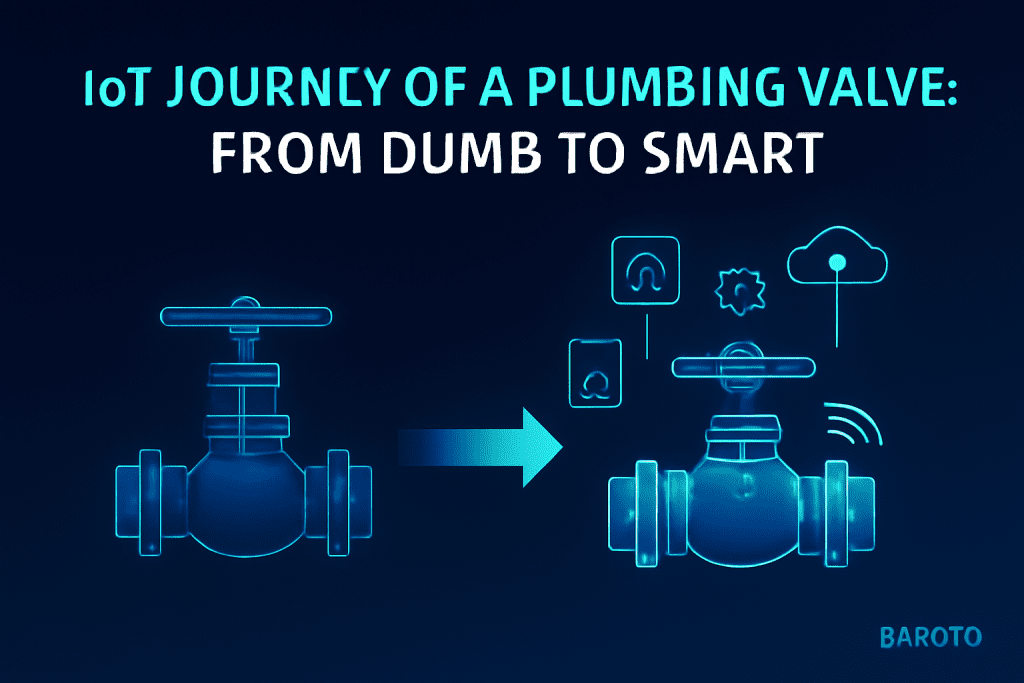
IoT Journey of a Plumbing Valve: From Dumb to Smart—A Hardwork Product Story

Introduction Traditionally, plumbing valves were mere mechanical switches—simple, robust, and entirely manual. But with the rise of the Internet of Things (IoT), these “dumb” products are undergoing a spectacular digital transformation, turning into intelligent, connected, and self-optimizing components of modern water systems. In this blog, we chronicle the real-world journey of a plumbing valve—from initial concept to becoming a smart hardware product—and show how the convergence of sensors, cloud connectivity, and data analytics enables new levels of efficiency, sustainability, and value. 1. Phase One: The Age of Dumb Valves Manual operation: Requires on-site access, often leading to delayed response for leaks or issues. Lack of data: No usage tracking, failure prediction, or remote diagnostics. Constant supervision: Human monitoring needed to ensure systems function as intended. Maintenance challenges: Failures are often detected late, causing water loss or property damage. 2. The Trigger: What Problems Spark Smart Plumbing Innovation? Water wastage and costly leaks: Manual valves can’t respond instantly to unexpected bursts or inefficiencies. Regulatory pressure and sustainability goals: Cities and organizations demand more visibility and control over water consumption. Labor and maintenance costs: Manual checks are labor-intensive and prone to human error. 3. Reimagining the Valve: Digital Foundations Embedded Sensors: Smart valves are equipped with flow, pressure, and sometimes chemical sensors, enabling real-time monitoring of water conditions at every point in the system. Wireless Connectivity: Modern smart valves feature WiFi, ZigBee, LoRa, or cellular modules that communicate with building management systems or mobile apps. Microcontrollers & Actuators: Allow the valve to be operated remotely and respond autonomously to sensor data (e.g., shutting off when a leak is detected). 4. The IoT Plumbing Valve Solution: Capabilities Unleashed Remote Monitoring & Control: Facility managers and homeowners can check valve status, flow rates, and issue commands from a smartphone or dashboard—anywhere, anytime. Automated Alerts: Receive instant notifications for leaks, excessive flow, or freezing conditions, enabling rapid response and minimizing damage. Predictive Maintenance & Analytics: The combination of usage data and AI analytics supports proactive servicing, optimizing both performance and lifespan of plumbing assets. Integration with Smart Ecosystems: Connect valves to fire suppression, energy management, or home automation platforms for unified, responsive building operations. 5. Real-World Impact Water Utilities: Deploy smart valves to monitor city-wide systems, reduce non-revenue water through early leak detection, and optimize pressure to minimize bursts. Commercial Buildings: Achieve regulatory compliance, reduce operational costs, and deliver greener, more responsive facilities. Residential Homes: Prevent costly flood damage and empower owners to actively manage water usage and conserve resources. 6. The Future: Smarter, Safer, Sustainable AI + Digital Twins: Next-gen smart valves use digital twins and AI to simulate and optimize real-world performance, preempting problems before they happen. Edge Computing: Smart valves are becoming more autonomous, running analytics on-device for instant decision-making. Self-Learning Systems: Over time, smart valves adapt to usage patterns, environmental changes, and unique plumbing demands—delivering truly “intelligent” water management. Conclusion The IoT-driven evolution of plumbing valves is a story of hard work, innovation, and digital transformation. What started as a humble manual component is now central to smart buildings, sustainable utilities, and efficient, resilient infrastructure. Businesses and homeowners ready to harness the full value of IoT plumbing systems—integrating smart sensors, cloud dashboards, and AI analytics—will drive the next phase of efficiency and water wisdom. Interested in building, upgrading, or monitoring your own smart plumbing systems? Partner with the IoT and web development leaders at TechOTD, leverage advanced analytics with AI solutions, or explore industry-specific innovations at Industry Solutions. Discover flexible, scalable, and secure digital plumbing control—start your journey today! FAQ 1. What makes a plumbing valve “smart”? Sensors, actuators, and wireless connectivity allow for real-time data, remote control, and autonomous behavior in response to leaks or usage patterns. 2. What are the biggest benefits of IoT plumbing valves? Instant leak detection, predictive maintenance, water conservation, and remote monitoring/control. 3. Can smart valves integrate with other smart home or building systems? Yes! Modern platforms enable integration with fire, HVAC, and central building management systems for holistic control. 4. Are smart valves cost-effective for small buildings or homes? While initial investment is higher than standard valves, long-term savings from avoided damage, lower labor, and water efficiency justify the expense. 5. How do I get started with smart plumbing technology? Contact experts like Techotd for a tailored solution that fits your property, budget, and sustainability goals.

sensor, Uncategorized

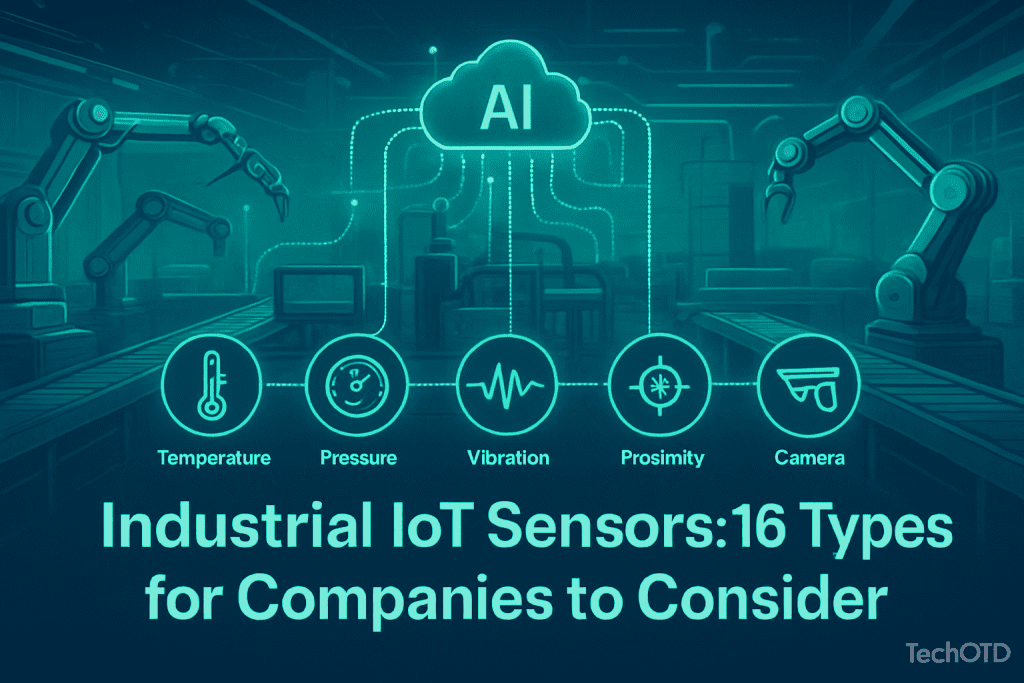
Industrial IoT Sensors: 16 Types Every Company Should Consider

Introduction In today’s rapidly advancing manufacturing and logistics landscape, Industrial Internet of Things (IIoT) sensors play a pivotal role in driving smart factories, real-time monitoring, and predictive analytics. From automating routine processes to enabling proactive maintenance and sustainability insights, the right IoT sensors transform how companies operate and compete. This comprehensive guide reveals 16 essential types of IIoT sensors modern enterprises should consider—plus actionable advice, real-world applications, and expert resources from TechOTD to future-proof your connected operations. Understanding Industrial IoT Sensors IIoT sensors are the building blocks of the smart industry. By capturing, transmitting, and analyzing physical phenomena (temperature, pressure, motion, etc.), they empower businesses to: Automate machine monitoring and control. Predict and prevent equipment failures. Boost energy efficiency and reduce costs. Improve workplace safety and compliance. Gain data-driven insights for better decision-making. Leading-edge sensor integration often includes AI, cloud analytics, and seamless custom development—discover what’s possible with TechOTD’s AI Services. 16 Types of Industrial IoT Sensors to Power Your Business 1. Temperature Sensors   Monitor equipment, products, and environments to prevent overheating, freezing, or spoilage. Use Cases: Cold chain logistics, HVAC, manufacturing. 2. Pressure Sensors Track fluid or gas pressure in pumps, pipelines, and tanks to prevent leaks or maintain optimal operation. Use Cases: Oil & gas, chemical processing, water utilities. 3. Proximity Sensors Detect presence or absence of objects—crucial for automation and safety interlocks. Use Cases: Conveyor lines, robotics, packaging lines. 4. Vibration Sensors Identify abnormal equipment vibrations indicating wear, imbalance, or impending breakdown. Use Cases: Predictive maintenance, rotating machinery, motors. 5. Humidity Sensors Measure moisture levels to ensure safe storage and ideal production conditions. Use Cases: Food processing, electronics, pharmaceuticals. 6. Flow Sensors Monitor the movement of liquids or gases for efficient control and billing. Use Cases: Water treatment, chemical processing, energy management. 7. Level Sensors Detect levels of liquids, solids, or granular materials in tanks and silos. Use Cases: Bulk storage, process industries, agriculture. 8. Accelerometers Track acceleration, tilt, and motion—enabling asset tracking and machine condition monitoring. Use Cases: Fleet management, machine health, smart logistics. 9. Gas Sensors Detect hazardous gases and pollutants to prevent accidents and ensure compliance. Use Cases: Mining, utilities, manufacturing, building management. 10. Optical Sensors Leverage light for object detection, counting, and quality inspection. Use Cases: Automated sorting, vision-based inspection, packaging. 11. Current/Voltage Sensors Monitor electrical consumption, surges, and overloads for operational efficiency and safety. Use Cases: Energy management, predictive maintenance, power distribution. 12. Ultrasonic Sensors Measure distance, detect objects, or monitor fluid levels using sound waves. Use Cases: Robotics, logistics automation, tank level detection. 13. Magnetic Sensors Detect magnetic fields or positions for speed, position, and rotational measurements. Use Cases: Conveyor belts, electric motors, proximity detection. 14. Infrared (IR) Sensors Enable temperature measurement and motion detection using infrared radiation. Use Cases: Safety systems, automated lighting, thermal monitoring. 15. Force/Torque Sensors Measure mechanical force or torque in manufacturing processes for quality control. Use Cases: Robotics, assembly lines, pick-and-place operations. 16. Image Sensors (Cameras) Capture and process images for AI analysis, defect detection, and remote monitoring. Use Cases: Production line inspection, security, operational dashboards. Integrating IIoT Sensors for Maximum Value Modern businesses achieve transformative benefits by integrating these sensors with: Cloud platforms for scalable analytics (Connect with TechOTD) AI and machine learning for predictive maintenance and insight generation (Next-gen AI Solutions) Custom dashboards for real-time, actionable views (Partner Programs) Industry-focused use cases like eCommerce logistics, manufacturing, or smart buildings (Industry Solutions) Conclusion The future of industrial operations is data-driven, intelligent, and interconnected. By strategically deploying these 16 IIoT sensor types, your company unlocks new levels of visibility, efficiency, and innovation. Ready to design a future-proof sensor network or need world-class AI integration for manufacturing, logistics, or energy? Start your digital transformation journey with TechOTD’s expert solutions. FAQ 1. What are the most popular IIoT sensor types for 2025? Temperature, pressure, vibration, and proximity sensors lead deployments in manufacturing and logistics. 2. How can IIoT sensors save costs for my business? They enable predictive maintenance, reduce downtime, optimize processes, and cut energy/waste expenses. 3. Is integrating multiple sensor types complicated? With the right partner and modular platforms like TechOTD, multi-sensor integration is streamlined and scalable. 4. Are IIoT sensors secure? Partner with trusted providers that prioritize data security, encryption, and compliance for safe operations. 5. How do I choose the right mix of sensors? Analyze your process needs, consult with IIoT and AI experts, and start with scalable pilot projects.

Business Process

The Rise of Digital Twins: How Virtual Models Are Changing Industries

Introduction Digital twins—virtual replicas of physical objects, systems, or processes—are rapidly transforming the industrial landscape. By bridging the gap between the real and digital worlds, these sophisticated virtual models allow organizations to simulate, monitor, and optimize operations in real time. As businesses grapple with increasing complexity, talent shortages, and global competition, digital twins offer a pathway to smarter decision-making, reduced costs, and unprecedented efficiencies. Understanding how these technologies are revolutionizing industries is crucial for leaders aiming to remain competitive and future-ready. What Are Digital Twins and Why Are They Important? Digital twins are detailed digital replicas of physical assets, processes, or systems, continuously updated using real-world data from sensors, IoT devices, and analytics platforms. These models reflect the current state and behavior of their physical counterparts, allowing organizations to: Simulate “what-if” scenarios for operational planning. Predict issues and enable proactive maintenance. Monitor performance and health of assets in real time. Why are they important? Enable safer, faster, and more cost-effective testing without physical risks. Provide insights to improve design, manufacturing, and end-user experiences. Lead to significant cost savings, increased uptime, and higher customer satisfaction. Key Market Statistics The global digital twin market is projected to reach $27.53 billion in 2025, with forecasts exceeding $471 billion by 2034—a CAGR of over 37%. Adoption is accelerating across sectors, with manufacturing, healthcare, construction, smart cities, and aerospace leading the way. How Digital Twins Are Transforming Industries Manufacturing Real-time asset monitoring and predictive maintenance minimize downtime and lower repair costs. Digital twins facilitate optimized production lines, reduced waste, and improved product quality. Companies like Mars are leveraging digital twins to enhance capacity, reduce packaging errors, and maximize equipment uptime. Healthcare Virtual models of the human body allow for better diagnosis, treatment, and personalized care. Hospital operations and logistics are improved through simulation and predictive analytics. Architecture, Construction, and Smart Cities Digital twins model buildings and infrastructure for planning, safety analysis, and efficient resource management. Cities use digital twins for traffic and utility management, disaster response, and sustainability initiatives. Aerospace & Automotive Simulate and test aircraft and vehicle performance before physical prototypes are built. Predict maintenance needs, reducing unexpected failures and extending asset life. Energy and Utilities Power plants and grids use digital twins for real-time operation optimization and maintenance scheduling. Renewable energy assets (e.g., wind turbines) benefit from predictive analytics for improved efficiency. Conclusion Digital twins are much more than a technological trend; they are a transformative force reshaping how industries operate. By merging digital intelligence with physical systems, organizations unlock new value from their assets, making operations smarter, safer, and more sustainable. As adoption rises and AI-driven automation deepens, the only question is how fast businesses will implement these tools to gain and sustain competitive advantage. Ready to future-proof your operations? Now is the time to explore and invest in digital twin technologies for transformative results. FAQ 1. What is a digital twin? A digital twin is a virtual replica of a physical asset, process, or system, constantly updated with real-time data to simulate and optimize performance. 2. Which industries use digital twins the most? Manufacturing, healthcare, construction, smart cities, aerospace, and energy are leading adopters. 3. How do digital twins save costs? By predicting failures, optimizing operations, and enabling proactive maintenance, digital twins reduce downtime, resource waste, and maintenance expenses. 4. Are digital twins only for large businesses? While early adoption was led by large enterprises, advancements in IoT and cloud/edge computing are making digital twins accessible to mid-sized and even small companies. 5. What challenges are there in adopting digital twins? Key hurdles include integration with legacy systems, data privacy, high upfront costs, and ensuring data quality.

Scroll to Top