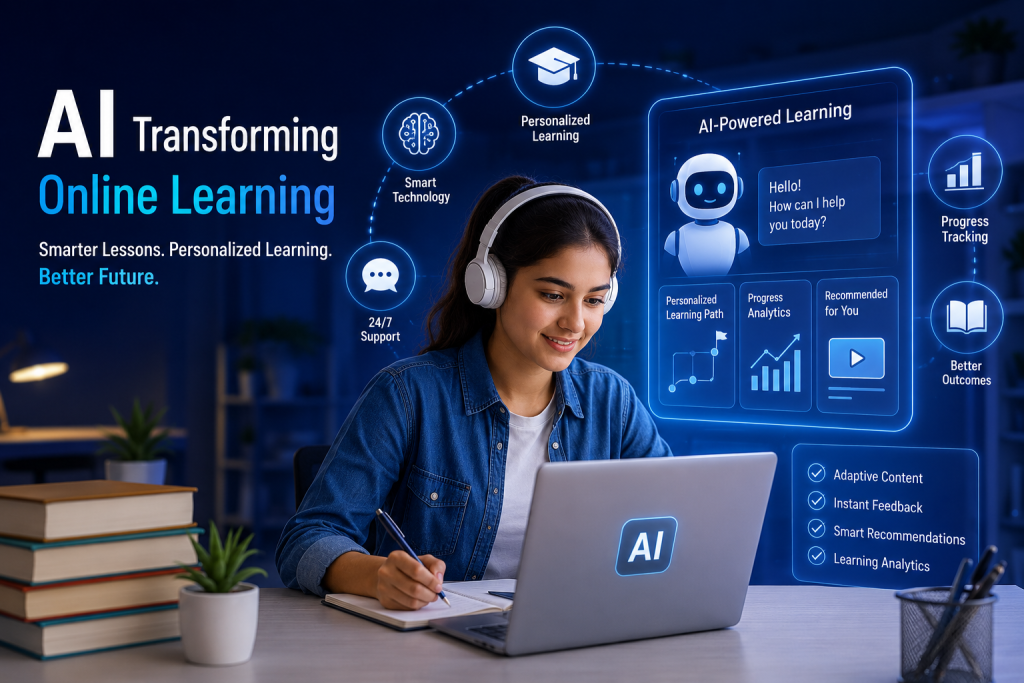
personalized learning

Student using AI-powered tools for personalized online learning
Education

How Artificial Intelligence Is Transforming Online Learning

Introduction Artificial Intelligence is becoming an important part of online education, changing how students access content, receive feedback, and progress through digital courses. AI-powered tools can analyze learning patterns and provide support that is more responsive to individual student needs. AI in online learning can help create personalized learning experiences by recommending relevant lessons, adjusting content difficulty, and identifying areas where students may need additional practice. This can make digital education more flexible and adaptive. As online learning continues to grow, artificial intelligence is creating new opportunities for smarter learning platforms, automated support, adaptive assessments, and personalized educational experiences. However, effective use of AI also requires responsible implementation, reliable data, and meaningful human guidance. What Is AI in Online Learning? AI in online learning refers to the use of artificial intelligence technologies to improve digital education and support students throughout their learning journey. AI-powered systems can analyze student interactions, learning progress, and performance to provide more relevant educational experiences. AI-Powered Learning Platforms AI-powered learning platforms can organize educational content and provide recommendations based on student activity. These systems can help learners discover relevant lessons, practice materials, and resources according to their progress and learning needs. Adaptive Learning Adaptive learning uses technology to adjust educational content according to a student’s performance and progress. If a learner finds a topic difficult, the platform can provide additional explanations, practice activities, or supporting resources. AI-Based Student Support AI-based tools can provide automated support through chatbots, virtual assistants, and intelligent help systems. These tools can answer common questions, guide students toward relevant resources, and provide assistance outside regular classroom hours. By combining data analysis, automation, and personalized recommendations, AI can help online learning platforms create more flexible and responsive learning experiences. How AI Personalizes Online Learning AI can personalize online learning by analyzing how students interact with educational content and identifying their learning patterns, strengths, and areas that may require additional support. This allows digital learning platforms to provide more relevant experiences for individual learners. 1. Personalized Learning Paths AI-powered platforms can recommend lessons and learning activities based on a student’s progress and performance. Instead of following exactly the same path as every other learner, students can receive content that is better suited to their current level and learning needs. 2. Adaptive Content and Difficulty AI systems can adjust the difficulty of learning materials based on student performance. Learners who understand a topic quickly may move forward, while students who need more support can receive additional explanations, examples, and practice activities. 3. Personalized Recommendations AI can recommend relevant videos, articles, exercises, and other learning resources based on a student’s interests and previous activity. These recommendations can help learners discover useful content without spending excessive time searching for it. 4. Identifying Learning Gaps By analyzing assessment results and learning activity, AI can help identify areas where students may be struggling. Teachers and learners can then use this information to focus on specific topics that require additional attention. Benefits of AI in Online Learning AI can provide several benefits for online learners and educators by making digital education more personalized, responsive, and efficient. When used effectively, AI tools can support learning without replacing the important role of teachers and human guidance. Personalized Learning Experiences AI can adapt learning experiences according to student progress, performance, and learning needs. This can help learners receive more relevant content and avoid spending unnecessary time on material they have already mastered. Instant Feedback AI-powered assessment tools can provide quick feedback on quizzes, exercises, and learning activities. Immediate feedback can help students identify mistakes and understand which areas need additional practice. 24/7 Learning Support AI-based chatbots and virtual assistants can provide basic support outside traditional classroom hours. Students can receive answers to common questions and guidance toward relevant learning resources whenever they need assistance. Improved Learning Efficiency AI can automate certain tasks such as organizing content, recommending resources, and analyzing learning progress. This can help students spend more time learning while giving educators useful information about student performance. Support for Teachers and Educators AI tools can help educators analyze learning data, identify students who may need additional support, and reduce repetitive administrative tasks. This can give teachers more time to focus on teaching, mentoring, and meaningful student interaction. Challenges and Limitations of AI in Online Learning Although AI can improve online learning in many ways, its use also creates important challenges. Educational institutions and online learning platforms need to consider privacy, data security, accuracy, accessibility, and the continued importance of human guidance. Data Privacy and Security AI-powered learning platforms may collect information about student activity, performance, and learning behavior. This data should be handled responsibly and protected through appropriate privacy and security practices. Accuracy and Reliability AI-generated recommendations and responses may not always be completely accurate or appropriate. Students and educators should evaluate AI-generated information carefully and avoid relying on automated systems without human review when accuracy is important. Overdependence on Technology Students may become overly dependent on AI tools if technology replaces independent thinking and problem-solving. AI should support learning rather than discourage students from developing their own understanding and critical thinking skills. Digital Access and Inequality Not every student has equal access to reliable internet connections, modern devices, or advanced AI-powered learning platforms. Equal access remains an important challenge for making AI-supported online education more inclusive. Maintaining Human Interaction AI can provide useful automated support, but it cannot fully replace teachers, mentors, and meaningful human interaction. Educators continue to play an important role in providing guidance, motivation, emotional understanding, and personalized support. The Future of AI in Online Learning The role of AI in online learning is likely to continue growing as artificial intelligence technologies become more advanced and accessible. Future learning platforms may provide smarter recommendations, more adaptive content, improved learning analytics, and increasingly personalized educational experiences. AI may also become more integrated with other technologies such as virtual reality, augmented reality, interactive simulations, and intelligent digital assistants. This combination could create more immersive and flexible online learning environments.
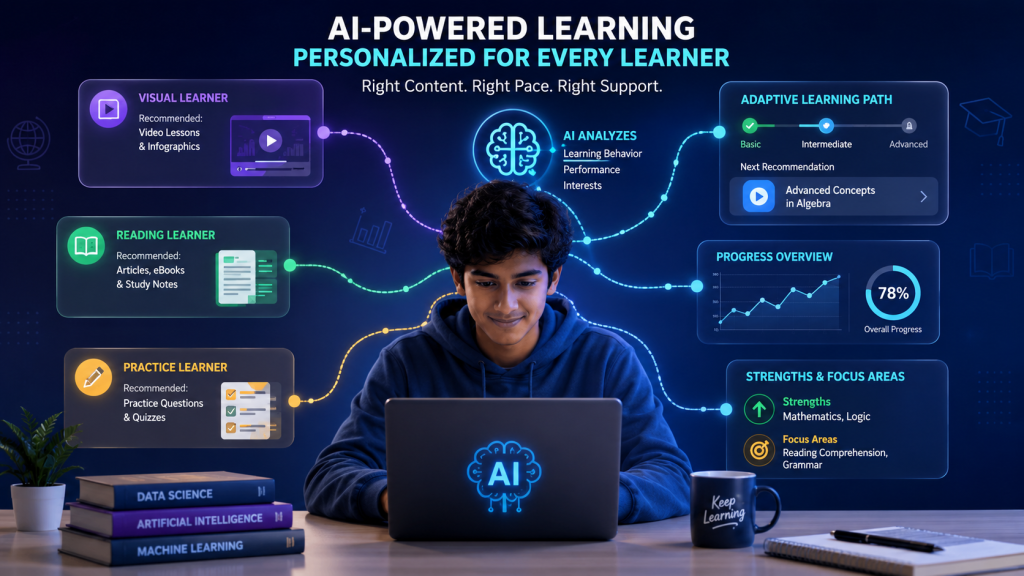
AI-powered personalized learning for students
Education

How AI-Powered Learning Is Personalizing Education

Introduction Every student learns differently. Some understand concepts quickly through visual content, while others need more practice, examples, or additional explanations. Traditional education often follows a common learning path, but artificial intelligence is making it possible to create more personalized learning experiences. AI-powered learning platforms can analyze student interactions, learning progress, and performance to recommend content and activities that match individual needs. This approach can help students learn at their own pace while giving educators better insights into where additional support may be required. As educational technology continues to evolve, personalized learning is becoming an important part of modern education. AI is not simply changing what students learn; it is also changing how learning content is delivered, practiced, and evaluated. What Is Personalized Learning? Personalized learning is an educational approach in which learning experiences are adapted to the individual needs, abilities, interests, and progress of each student. Instead of providing exactly the same content and activities to every learner, personalized learning aims to provide appropriate resources and support based on how each student learns. AI can make personalized learning more effective by analyzing information such as quiz results, learning activity, completed lessons, and areas where a student may be struggling. Based on these patterns, an AI-powered system can recommend suitable content, practice exercises, or additional explanations. Traditional Learning vs. Personalized Learning In a traditional learning environment, students often follow the same syllabus, lessons, and assessment schedule. Personalized learning allows the learning experience to become more flexible by adjusting content, difficulty, and pace according to individual progress. How AI-Powered Learning Personalizes Education AI-powered learning systems can use data and intelligent algorithms to understand how students interact with educational content. This allows learning platforms to make recommendations and adjust learning experiences based on individual progress. 1. Adaptive Learning Paths AI can adjust the difficulty and sequence of learning materials based on a student’s performance. If a learner understands a concept quickly, the system can provide more advanced material. If a learner struggles, it can recommend additional explanations and practice. 2. Personalized Content Recommendations AI can recommend videos, articles, exercises, quizzes, and other educational resources based on a student’s learning history and interests. This can help learners find relevant material without having to search through large amounts of content. 3. Individualized Feedback AI-powered systems can provide immediate feedback on quizzes, assignments, and practice activities. Quick feedback can help students identify mistakes, understand concepts, and make improvements while they are still actively learning. 4. Learning at an Individual Pace Students do not always need the same amount of time to understand a concept. Personalized learning allows students to spend more time on difficult topics and move ahead when they are ready, creating a more flexible learning experience. Benefits of AI-Powered Personalized Learning AI-powered personalized learning can provide benefits for students, teachers, and educational institutions. By adapting learning experiences to individual needs, it can make education more flexible, engaging, and focused on student progress. Better Learning Engagement When students receive content that matches their interests and learning levels, they may find lessons more relevant and engaging. Personalized recommendations can also help students discover learning resources that are appropriate for their current level. Improved Learning Outcomes Personalized learning can help students spend more time on topics they find difficult while moving faster through concepts they already understand. This targeted approach can support better understanding and continuous progress. Early Identification of Learning Gaps AI can analyze learning patterns and performance to identify areas where students may need additional support. Teachers can use these insights to provide targeted assistance before learning gaps become larger. More Efficient Teaching AI-powered platforms can provide teachers with information about student progress and learning needs. These insights can help educators plan additional activities and provide more focused support to individual learners. Greater Learning Flexibility Personalized learning allows students to access educational content at different times and progress at a pace that suits their needs. This flexibility can make learning more convenient for students with different schedules and learning preferences. Challenges of AI-Powered Personalized Learning Although AI-powered personalized learning offers many advantages, it also comes with challenges. Educational institutions need to consider data privacy, accuracy, accessibility, technology costs, and the importance of maintaining human involvement in education. Data Privacy and Security Personalized learning systems may collect information about student performance, learning behavior, preferences, and progress. Educational institutions need strong privacy and security practices to protect this information and ensure that student data is used responsibly. Accuracy of Recommendations AI recommendations depend on the quality of the data and algorithms being used. If a system incorrectly understands a student’s needs, it may recommend unsuitable content or learning activities. Human oversight can help identify and correct such issues. Digital Access and Inequality Not every student has access to reliable internet connections, modern devices, or advanced learning platforms. Differences in access can make it difficult to provide personalized technology-based learning equally to all students. Teacher Training Teachers need appropriate training to understand how AI-powered learning systems work and how to use their recommendations effectively. Technology should support teachers’ expertise rather than replace their judgment. Technology Costs Implementing AI-powered learning platforms may require investment in software, infrastructure, devices, training, and maintenance. Educational institutions need to consider these costs carefully when adopting personalized learning technologies. The Role of Teachers in Personalized Learning AI can provide useful information and recommendations, but teachers remain an essential part of personalized education. Teachers can use AI-generated insights to understand student needs, provide guidance, and make informed decisions about learning activities. AI as a Support Tool for Teachers AI should be viewed as a support tool rather than a replacement for teachers. It can help identify learning gaps, organize information, and suggest resources, while teachers provide context, judgment, encouragement, and personal support. Human Interaction Still Matters Learning is not only about receiving information. Communication, collaboration, creativity, emotional support, and classroom relationships are also important parts of education. Teachers play a central role in creating these human learning experiences. Combining AI With Human Expertise

Student comparing different learning apps on a laptop and phone to choose the best one for study goals, usability, and features.
App Development, Education & Learning

How to Choose the Right Learning App

Introduction Choosing the right learning app starts with understanding your goal. Whether you want to improve grades, learn a new skill, practice a language, or stay organized, the best app is the one that matches your needs, learning style, and daily routine. A learning app should not just give you content; it should help you learn in a way that feels simple, useful, and easy to maintain over time. When the app fits your purpose, studying becomes less stressful and more effective. With so many learning apps available today, it is easy to feel overwhelmed by choices. Some apps focus on video lessons, others on flashcards, quizzes, note-taking, progress tracking, or AI-based personalization, so the right one depends on what you want to learn and how you learn best. This is why it is important to look beyond popularity and focus on actual value. An app that works well for one person may not be the right choice for someone else, especially if their learning goals are different. A good learning app should do more than look attractive. It should support your actual learning goals, offer a simple interface, provide useful feedback, and make it easier to stay consistent over time. The best apps save time instead of wasting it, help you stay focused, and make difficult topics easier to understand. Features like reminders, progress reports, offline access, and interactive practice can make a big difference in how effective your study sessions are. Before choosing an app, think about your purpose. Are you preparing for exams, learning a language, building a professional skill, or helping a child learn? Different goals call for different features, such as offline access, curriculum alignment, accessibility, or adaptive practice. It also helps to test apps before committing. Free trials, demo versions, and small pilot use can reveal whether an app is easy to use, engaging, safe, and worth the cost. In the end, the right learning app is the one that helps you stay motivated and make real progress. It should fit into your routine naturally, support the way you learn, and give you confidence that your time is being used well. When chosen carefully, a learning app can become more than just a tool it can become a smart partner in your learning journey. How to Choose Match the app to your goal, such as exam prep, language learning, or subject practice. Check usability, because a clean and simple interface makes learning easier. Look for feedback features like quizzes, progress reports, and spaced repetition. Consider privacy and data security, especially for children or school use. Test the app on your device and compare free and paid versions before deciding. Conclusion The right learning app should make studying simpler, not more confusing. When an app fits your goals, learning style, and schedule, it becomes a helpful tool instead of a distraction. The best choice is usually the one that is easy to use, safe, engaging, and actually helps you make progress. A little testing upfront can save a lot of frustration later. FAQ What is the most important thing to look for in a learning app? The most important thing is alignment with your learning goal, because an app only helps if it supports what you are trying to achieve.digitallearninginstitute+1 Should I choose a free or paid learning app? Start with a free version or trial if possible, then upgrade only if the app offers features you truly need. How do I know if a learning app is effective? An effective app gives clear feedback, keeps you engaged, tracks progress, and helps you retain information better over time. Is privacy important when choosing a learning app? Yes, especially for children and school use, because apps may collect personal or learning data. Can one learning app work for everyone? Not usually, because learners have different goals, ages, and styles, so the best app depends on the user. What should I test before choosing an app? Test ease of use, content quality, feedback tools, device compatibility, and whether the app keeps you motivated.

Students and teachers using AI-powered education technology to personalize learning, track progress, and improve classroom experiences.
Artificial Intelligence

AI in Education: How Technology Is Changing the Way We Learn

Introduction Artificial intelligence is quickly reshaping education by making learning more personal, flexible, and efficient. What used to depend only on textbooks, classroom lectures, and one-size-fits-all lessons is now being enhanced by smart systems that can adapt to each learner’s pace and needs. AI in education is changing not only how students study, but also how teachers teach, assess, and support learning. This shift is creating a more connected and responsive learning experience for everyone involved. One of the biggest changes AI brings to education is personalization. Every student learns differently, and traditional classrooms often struggle to meet those differences at scale. AI-powered learning platforms can analyze student progress, identify weak areas, and suggest lessons or practice activities that match individual needs. This means students can spend more time on topics they find difficult and move faster through the ones they already understand. As a result, learning becomes more efficient and less frustrating. AI is also improving access to education. Students can now use intelligent tutoring systems, chatbots, and learning apps to get help outside the classroom at any time. This is especially useful for learners who need extra support, want to revise independently, or study at their own pace. Instead of waiting for the next class or a teacher’s availability, they can receive instant feedback and guidance. That level of support makes learning more continuous and convenient. Another major benefit of AI in education is smarter assessment. Teachers no longer have to rely only on manual evaluation for every learning activity. AI tools can grade quizzes, track performance trends, and highlight areas where students are struggling. This saves time for educators and allows them to focus more on teaching and mentorship. It also helps schools make better decisions because they can see learning patterns more clearly and respond faster when students need help. At the same time, AI is changing the kind of content students interact with. Learning is becoming more dynamic through video summaries, adaptive quizzes, interactive lessons, and intelligent recommendations. Instead of passively reading long lessons, students can engage with material in formats that hold attention better and improve retention. This makes education feel less rigid and more practical for modern learners. Of course, the growth of AI in education also comes with important questions. People want to know how much technology should be used, how student data should be protected, and how teachers’ roles may change in the future. Even with these concerns, one thing is clear: AI is not replacing education, but transforming it. It is helping create a system where learning can be more personalized, more accessible, and more effective than before. Conclusion AI in education is changing the way we learn by making lessons more personal, feedback faster, and learning tools more accessible. It helps students learn at their own pace while giving teachers better ways to track progress and support growth. As technology continues to improve, AI will likely become an even bigger part of classrooms and self-learning platforms. The future of education will depend on using AI wisely so that it supports human teaching instead of replacing it. FAQ What is AI in education? AI in education refers to the use of artificial intelligence tools and systems to improve teaching, learning, assessment, and student support. How does AI help students learn better? AI helps students by personalizing lessons, giving instant feedback, identifying weak areas, and recommending useful study resources. Can AI replace teachers? No, AI cannot replace teachers. It can support teaching, but human guidance, mentorship, and emotional understanding remain essential. What are examples of AI in education? Examples include chatbots, adaptive learning platforms, smart tutors, automated grading tools, and personalized study apps. Is AI useful for online learning? Yes, AI is especially useful for online learning because it helps students study independently, track progress, and get support anytime. What is the biggest advantage of AI in education? The biggest advantage is personalization, since AI can adapt learning experiences to each student’s needs and pace.

Diverse students using AI-powered tablets in modern classroom with holographic learning interfaces and teacher providing personalized guidance
Educational Technology

How AI is Transforming Education Systems

Introduction Imagine classrooms where every student learns at their perfect pace, teachers focus on inspiration rather than paperwork, and education adapts instantly to individual needs. This isn’t science fiction it’s AI transforming education systems right now. From personalized learning algorithms that boost retention by 30% to intelligent tutoring systems providing 24/7 support, artificial intelligence is rewriting the rules of education. In 2026, AI handles grading, predicts student success, and creates custom curricula freeing educators for what matters most: human connection. Yet this transformation brings challenges too data privacy concerns, digital divides, and ethical questions about AI replacing teachers. This comprehensive guide explores how AI is transforming education systems, revealing practical applications, real-world results, and actionable insights for schools embracing tomorrow’s learning revolution today. Conclusion AI is transforming education systems from rigid one-size-fits-all models into dynamic, personalized learning ecosystems that prepare students for 21st-century challenges. By automating administrative burdens, enabling adaptive learning, and providing unprecedented insights, AI empowers educators to focus on mentorship while students master skills at their optimal pace. The global AI education market, projected to exceed $20B by 2027, signals this revolution’s unstoppable momentum. Forward-thinking institutions embracing AI-driven education today will shape tomorrow’s innovators. Ready to lead educational transformation? Start with pilot programs, teacher training, and ethical AI frameworks. The future of learning belongs to those who act now your students deserve nothing less. FAQ Q1: How does AI personalize learning experiences? A: AI analyzes student performance data to create custom learning paths, adjusting content difficulty and pace in real-time. Platforms like Khan Academy report 30% better outcomes. Q2: Will AI replace human teachers? A: No AI handles repetitive tasks (grading, admin) while teachers focus on mentorship, creativity, and emotional support. AI enhances, never replaces, human connection. Q3: What are AI education implementation challenges? A: Data privacy, digital divides, teacher training gaps, and ethical bias concerns. Success requires robust policies and equitable access strategies. Q4: Which AI tools improve student engagement most? A: Intelligent tutors, gamified learning apps, and VR simulations boost engagement 75% by making abstract concepts interactive and fun. Q5: How does AI help special needs students? A: AI provides tailored content for diverse learning styles, real-time feedback, and accessibility tools reducing dropout risk by 18%.

Educational Technology

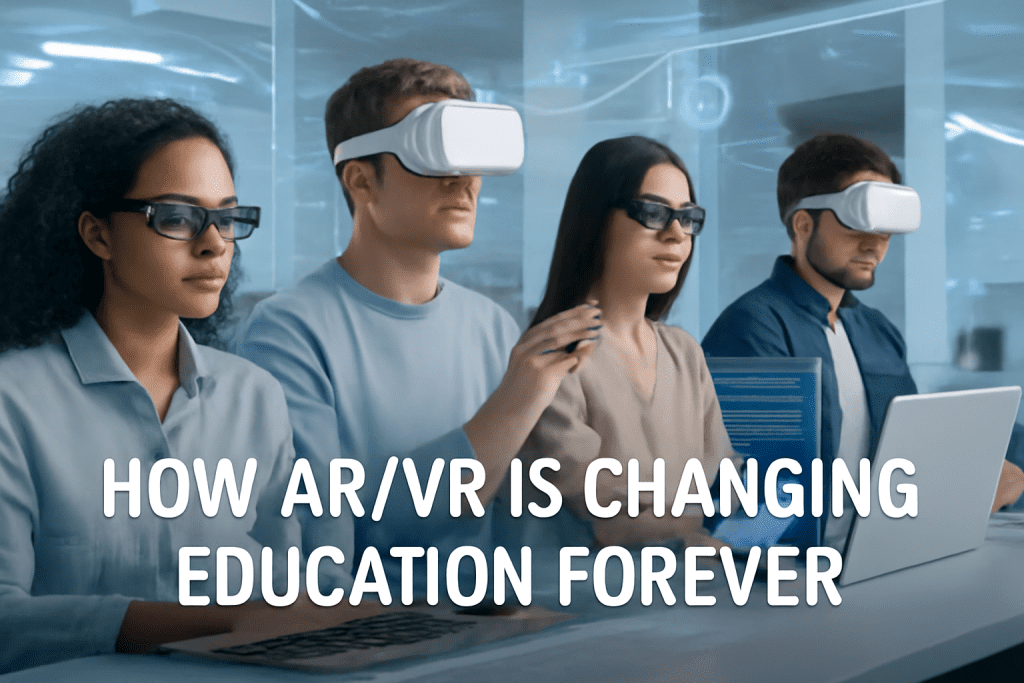
How AR/VR is Changing Education Forever

Introduction Augmented Reality (AR) and Virtual Reality (VR) are revolutionizing education, creating immersive, interactive environments that go far beyond traditional textbooks and lectures. From elementary schools introducing fun, 3D models in classrooms to universities using advanced VR simulations for medical training, AR/VR is making learning more engaging, effective, and accessible for all―forever transforming how students experience knowledge. What is AR and VR in Education?          .   Augmented Reality(AR): Integrates digital elements—like images, text, or 3D models—into the real world, viewed               through devices such as tablets, smartphones, or smart glasses. Virtual Reality (VR): Fully immerses users in a digital environment, typically via headsets, enabling “learning by doing,” simulation, and exploration far beyond the classroom’s physical walls. How AR/VR is Transforming Learning 1. Enhanced Engagement & Motivation Interactive AR/VR lessons make complex and abstract topics fun and tangible—students retain more information and develop a love for learning. Gamified elements and hands-on experiences break the monotony of rote learning. 2. Improved Understanding of Complex Concepts 3D models let students visualize everything from atoms to the solar system, and even human anatomy, enhancing their grasp of difficult subjects. Virtual field trips allow students to “visit” historical sites, disaster zones, or far-off planets—without leaving their school. 3. Safe, Experiential Learning VR simulations provide a risk-free way to practice real-world skills, such as surgery, engineering, or scientific experiments, improving practical skills with zero danger. 4. Personalized & Differentiated Learning Tailored AR/VR scenarios adapt to individual learning speeds and preferences, catering to diverse learning needs and styles. 5. Increased Collaboration and Social Skills Multi-user VR classrooms and AR projects encourage teamwork, communication, and collaborative problem-solving—even when students are remote. Real-World Examples Elementary Schools: AR sandboxes for geography; interactive 3D flashcards for biology; chemistry visualizations through AR cubes. Colleges/Universities: VR simulations for medical training; AR to study brain functions and psychological phenomena. Vocational Training: Virtual reality labs for mechanics, engineers, and healthcare professionals to practice skills before entering real workplaces. Distance/Online Learning: Students from around the world attend the same immersive VR classrooms, making quality education globally accessible. Benefits at a Glance Benefit AR Example VR Example Higher Student Engagement 3D interactive models in class Immersive field trips Improved Knowledge Retention AR flashcards, games Simulated hands-on lab work Accessibility Translation & instant guides Attend remote classrooms Collaboration & Social Learning Group AR projects Multi-user VR lessons Safe Practice for Risky Scenarios Step-by-step AR guides VR medical & engineering sims Personalized Learning Adaptive AR quizzes Branching VR scenarios How to Use AR/VR in Your Education Setting Start with available AR apps and tools—many offer free trials for classrooms (like Google Expeditions and ClassVR). Identify complex topics or skills in your curriculum where AR/VR can add value. Train teachers and students on using devices and software for maximum impact. Foster collaboration by creating group VR projects or AR-based treasure hunts/assignments. Regularly assess learning outcomes and adapt experiences for continued progress. Conclusion AR/VR is much more than a tech trend—it’s a paradigm shift in education. By merging virtual and real worlds, educators make learning vivid, memorable, and personalized for every student. As AR and VR tools become more accessible, their role in classrooms will only grow, ensuring that education everywhere is more engaging, relevant, and future-ready. FAQ Q1: What is the difference between AR and VR in education? A1: AR overlays digital information on the real world, enhancing what you see; VR immerses users in a completely virtual environment, allowing “hands-on” practice and exploration. Q2: Is AR/VR expensive for schools to implement? A2: Costs are dropping as technology evolves. Many AR apps work on smartphones/tablets. VR headsets are becoming more affordable, and many companies offer education discounts and ready-to-use lesson packages. Q3: How does AR/VR affect student learning outcomes? A3: Research shows AR/VR increases engagement, improves memory retention by nearly 9%, and supports diverse learners, especially those with special needs or remote access challenges. Q4: Can AR/VR be used for online or distance education? A4: Yes! VR classrooms enable students worldwide to learn together, while AR tools support remote, interactive, and collaborative activities. Q5: Will AR/VR replace teachers? A5: No. AR/VR is a tool to enhance teaching, not replace it. Human guidance, support, and expertise remain crucial for effective learning outcomes.

Technology

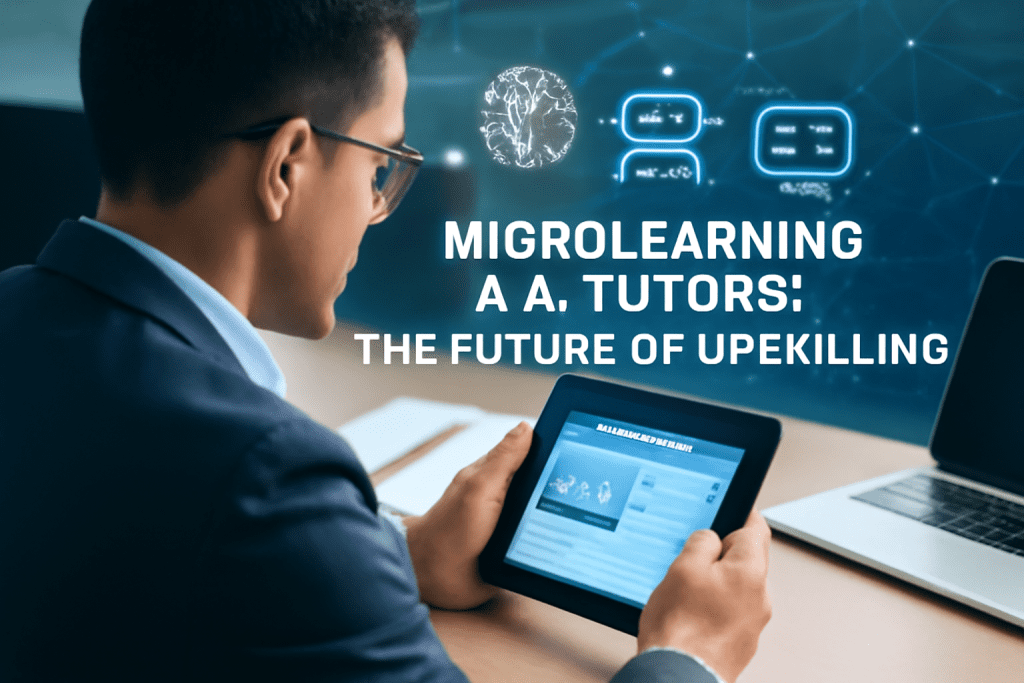
Microlearning & AI Tutors: The Future of Upskilling

Introduction In today’s fast-changing work environment, traditional corporate training often struggles to keep pace with the need for continuous learning and rapid upskilling. Enter microlearning and AI tutors—two transformative forces that are redefining how employees, students, and professionals acquire skills. Microlearning breaks complex topics into short, focused modules that are easy to fit into even the busiest schedules. With the integration of AI tutors, training becomes personalized, adaptive, and remarkably efficient. This blog explores how combining these innovations is empowering learners to close skill gaps, improve retention, and future-proof their careers—why it matters for organizations and individuals aiming to remain competitive in a digital-first world. The Power of Microlearning in Upskilling Bite-Sized, Targeted Learning: Microlearning delivers content in short modules, making it highly accessible and easy to digest, minimizing disruptions to daily work. Enhanced Knowledge Retention: Studies show microlearning can boost long-term retention by up to 80% compared to traditional methods. Real-Time Application: Training can be directly related to current job tasks or upcoming projects, ensuring immediate applicability. Flexibility for Modern Learners: Employees and students can access training on-demand and at their own pace—whether at work, at home, or on the go. Cost and Time Efficiency: Organizations reduce classroom time, travel costs, and printed materials while maximizing engagement. Supports Continuous Upskilling: Microlearning fits seamlessly into daily routines, enabling ongoing skill development without overwhelming learners. Use Cases Onboarding new employees with short, interactive lessons. Continuous professional development and compliance training. Soft skill enhancement—leadership, time management, communication. Role-specific technical skills for rapid workplace adaptation. How AI Tutors Supercharge Microlearning Personalized Learning Paths: AI tutors analyze learner performance and preferences, adapting content recommendations in real time for optimal challenge and engagement. Instant, Intelligent Feedback: Learners get immediate answers, personalized tips, and reinforcement exactly when needed, increasing motivation and clarity. Scalable and Adaptive: AI systems can scale training across entire organizations while tailoring the experience for each individual—bridging skill gaps efficiently. Automated Content Creation: AI-driven tools can quickly turn documentation or new policies into microlearning modules, quizzes, or infographics—cutting development time drastically. Popular Examples: Platforms like Khanmigo (Khan Academy), Duolingo, Quizlet, and TutorMe are already enhancing learning through AI-driven adaptation and support. Impactful Results AI-driven training programs have been shown to boost learning efficiency by up to 57%. Real-world implementations report higher engagement, improved completion rates, and measurable skill improvements. In academic settings, microlearning combined with AI intervention has produced significant gains in soft skill development and job readiness, particularly in business and technical fields. Conclusion Microlearning and AI tutors are not just passing trends—they’re strategic assets for the workforce of the future. By combining short, focused learning moments with adaptive, AI-powered support, organizations and individuals can accelerate reskilling, boost engagement, and unlock ongoing career growth. If you’re ready to future-proof your learning strategy, it’s time to embrace microlearning and AI tutors. Call to Action: Share this article with your network, comment below with your upskilling experiences, or reach out to learn how microlearning and AI tutors can empower your organization. FAQ Section Q1: What is the primary benefit of microlearning for busy professionals? A1: Microlearning enables professionals to learn new skills in short, targeted bursts, fitting easily into their daily schedules and minimizing disruption to their workflow. Q2: How do AI tutors personalize the learning experience? A2: AI tutors track learner progress, analyze performance, and adapt the difficulty and content in real time, creating a custom learning path for each user. Q3: Can microlearning be used for soft skill development? A3: Yes. Microlearning is highly effective for developing soft skills like communication, leadership, and time management, especially when modules are scenario-based and interactive. Q4: Are there proven results from using AI-powered microlearning in the workplace? A4: Yes. Studies report boosts in learning efficiency, improved skill retention, and higher engagement rates when organizations deploy AI-powered microlearning solutions. Q5: What are some top platforms combining microlearning and AI tutors? A5: Popular platforms include Khanmigo (Khan Academy), Duolingo, Quizlet, TutorMe, and Elsa Speak, which offer adaptive, AI-driven learning experiences across various skills and subjects

Scroll to Top