network security

Cloud Computing and Technology, cybersecurity

Beyond the Perimeter: The Ultimate Guide to Zero Trust Network Access (ZTNA)

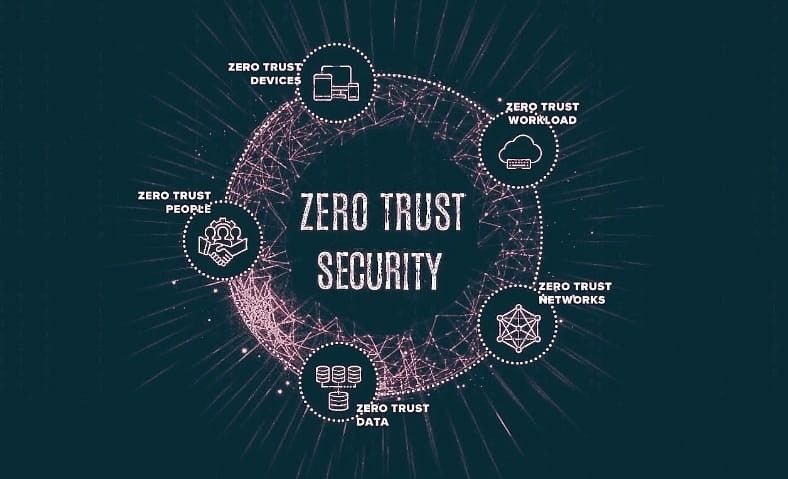
Introduction:-   For decades, enterprise security relied on a simple, comforting analogy: the castle and the moat. The castle was your local server room, the moat was your firewall, and the drawbridge was your Virtual Private Network (VPN). If you were outside the moat, you were untrusted. If you managed to cross the drawbridge with the right credentials, you were let inside the castle walls and granted free rein to roam the courtyard. But then the world changed. Applications left the local server room for the public cloud. Employees packed up their desktops and started working from home, coffee shops, and airports. Suddenly, the castle was empty, and the moat was protecting nothing but air. Continuing to rely on traditional, perimeter-based security in a hybrid, cloud-first era isn’t just inefficient—it is an open invitation to modern cyber criminals. When a malicious actor or a compromised device gains access to a traditional VPN, they inherit “lateral mobility,” allowing them to scan your entire network and compromise sensitive data at will. To survive this landscape, organizations are shifting toward a radically simple, uncompromising philosophy: Never Trust, Always Verify. This is the core engine behind Zero Trust Network Access (ZTNA). 1. Demystifying ZTNA: What is it Exactly? Zero Trust Network Access (ZTNA) is a category of security technologies designed to provide secure, seamless remote access to specific applications and data based on clearly defined access control policies. Unlike a legacy VPN, which grants broad network-level entry, ZTNA works on a strict need-to-know basis. It treats every single user, device, and connection request as a potential threat until proven otherwise. The Core Pillars of Zero Trust To truly understand ZTNA, it helps to look at the three foundational principles established by the National Institute of Standards and Technology (NIST): Explicit Verification: Always authenticate and authorize based on all available data points—including user identity, geographic location, device health, service or workload context, and data classification. Least Privilege Access: Limit user access with Just-In-Time (JIT) and Just-Enough-Access (JEA) models. Give users access only to the specific applications they need to do their jobs, and absolutely nothing else. Assume Breach: Micro-segment your network, minimize your attack surface, encrypt all digital sessions end-to-end, and use real-time analytics to detect anomalies and continuously improve your defenses. 2. Why the Traditional VPN is Failing the Modern Enterprise To appreciate why ZTNA is taking over the tech landscape, we have to look closely at the architectural cracks in the traditional VPN armor. TRADITIONAL VPN (Castle-and-Moat) [User] —> [VPN Gateway/Firewall] —> [Access Granted to the ENTIRE Corporate Network] ZTNA ARCHITECTURE (Micro-Perimeters) [User] —> [ZTNA Trust Engine] —> [Strict Verification] —> [Access Granted ONLY to App A] X-> [App B Hidden/Invisible] The Inherent Flaw of Lateral Movement The biggest vulnerability of a standard VPN is implicit trust. Once an employee logs in via a VPN client, they are functionally dropped directly into the corporate network segment. If an attacker steals that employee’s credentials via a sophisticated phishing attack, the attacker can move laterally across the infrastructure. They can hop from an innocent marketing portal to the critical financial database without triggering secondary alarms. Poor User Experience and Bottlenecks Traditional VPNs were designed when only a small fraction of the workforce worked remotely. In a modern hybrid enterprise, routing thousands of employees’ daily traffic through a central data center creates massive bandwidth bottlenecks. Employees experience sluggish connection speeds, dropped video calls, and overall frustration, which often tempts them to bypass corporate security measures entirely. The Problem of Visibility A VPN makes an open port visible to the public internet so that remote users can discover it. Unfortunately, if an authorized user can see it, a hacker scanning the internet for vulnerabilities can see it too. 3. How ZTNA Works Under the Hood ZTNA completely flips the script on network visibility. Instead of dropping users onto a network, ZTNA creates an isolated, encrypted “micro-perimeter” around each individual application. Here is a step-by-step breakdown of how a typical ZTNA connection request occurs: Step 1: The Request. A user attempts to access an internal corporate application (e.g., a private CRM or source code repository) from their laptop. Step 2: The Context Check. Before the connection is established, the ZTNA controller analyzes a multitude of contextual signals. It doesn’t just ask, “Does this person have the right password?” It asks: Is the device running an updated operating system? Is the corporate antivirus active? Is the user logging in from an expected geographic location? Does this request match their normal behavioral patterns? Step 3: The Dark Cloud Effect. While this verification occurs, the application remains completely hidden from the public internet. It does not respond to external pings or network scans, making it effectively invisible to attackers. Step 4: Micro-Segmented Access. Once the ZTNA controller verifies the user and device, it establishes a secure, isolated tunnel directly between that specific user and that specific application. The user has zero awareness of, or access to, any other applications hosted on the same network infrastructure. Step 5: Continuous Assessment. The trust is never permanent. The ZTNA engine continuously monitors the session. If the user suddenly disables their local firewall or changes locations dramatically mid-session, the connection is instantly revoked. 4. Architectural Models: Endpoint vs. Service-Initiated ZTNA When implementing ZTNA, organizations generally choose between two primary deployment styles, depending on their infrastructure and device fleet. Feature Endpoint-Initiated ZTNA Service-Initiated ZTNA Agent Requirement Requires a dedicated software agent installed on the user’s device. Clientless; typically accessed securely through a standard web browser. Best Used For Corporate-managed laptops and heavy engineering workloads. BYOD (Bring Your Own Device), contractors, and third-party vendors. Application Coverage Supports both web-based and legacy desktop applications. Primarily optimized for web-based (HTTP/HTTPS) applications. Security Control Deep device posture checking (inspecting registry files, patch levels). Standard identity validation and browser-level security checks. Endpoint-Initiated ZTNA In this model, a lightweight software agent sits on the user’s endpoint. The agent communicates device health and identity data to a centralized ZTNA controller. The controller

cybersecurity, Digital Transformation, Educational Technology, enterprise

Zero Trust Security: Why Organizations Are Adopting It Faster Than Ever

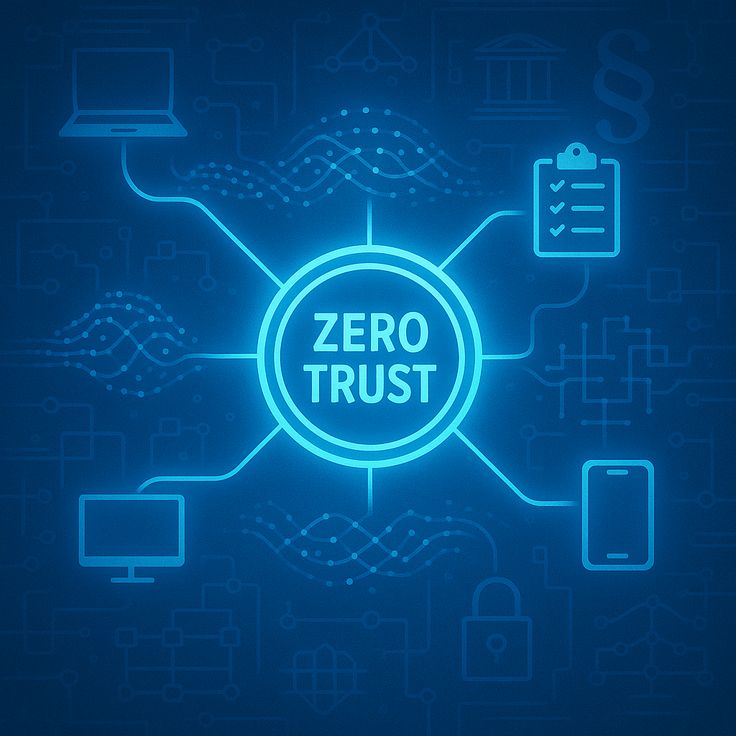
Zero Trust Security: Why Organizations Are Adopting It Faster Than Ever Cybersecurity has never been more important than it is today. Organizations across the globe are facing an unprecedented number of cyber threats, ranging from ransomware attacks and phishing campaigns to insider threats and sophisticated nation-state cyber operations. As businesses continue to embrace cloud computing, remote work, digital transformation, and interconnected technologies, traditional security models are proving increasingly inadequate. For decades, organizations relied on perimeter-based security strategies. The assumption was simple: anything inside the corporate network could be trusted, while anything outside should be treated as a potential threat. Firewalls, VPNs, and network segmentation formed the backbone of enterprise security. However, the modern digital environment has fundamentally changed this approach. Employees access company resources from multiple devices and locations. Applications reside in public and private clouds. Third-party vendors require network access. Sensitive data moves continuously between platforms and users. In this new reality, the concept of trust based solely on network location no longer works. This is where Zero Trust Security comes into the picture. Zero Trust has rapidly evolved from a cybersecurity concept into one of the most widely adopted security frameworks worldwide. Organizations of all sizes are investing heavily in Zero Trust architectures to protect their digital assets, strengthen compliance, and reduce cyber risks. But what exactly is Zero Trust Security, and why are organizations adopting it faster than ever before? Let’s explore. Understanding Zero Trust Security Zero Trust Security is a cybersecurity framework built on a simple but powerful principle: “Never Trust, Always Verify.” Unlike traditional security models that automatically trust users and devices inside a corporate network, Zero Trust assumes that every user, device, application, and connection could potentially be compromised. Under a Zero Trust model, no entity receives automatic trust, regardless of whether it is inside or outside the network perimeter. Every access request must be continuously verified before access is granted. This verification process typically includes: Identity verification Device authentication Access control policies User behavior analysis Multi-factor authentication Continuous monitoring The objective is to minimize risk by ensuring that only authorized users can access specific resources under predefined conditions. The Evolution of Cybersecurity Threats One of the biggest reasons organizations are embracing Zero Trust is the dramatic evolution of cyber threats. Modern cybercriminals have become more sophisticated than ever. Today’s attackers use advanced techniques such as: Ransomware-as-a-Service (RaaS) AI-powered phishing attacks Credential theft Supply chain attacks Insider threats Cloud account compromises Social engineering campaigns Many of these attacks bypass traditional security defenses because they exploit trusted accounts and legitimate access credentials. When attackers successfully steal login credentials, they can often move freely across traditional networks without triggering security alerts. Zero Trust eliminates this weakness by requiring verification at every stage of access. Even if an attacker compromises one account, they cannot automatically gain unrestricted access to sensitive systems. This significantly reduces the attack surface and limits potential damage. Why Traditional Security Models Are Failing The traditional “castle-and-moat” approach to cybersecurity was designed for a different era. In the past: Employees worked primarily from offices. Applications were hosted on-premises. Data remained within corporate networks. Devices were company-managed. Today, none of these assumptions consistently apply. Modern enterprises operate in highly distributed environments where: Employees work remotely. Applications run in multiple clouds. Data resides across various platforms. Contractors and vendors require access. Employees use personal devices. As a result, the network perimeter has effectively disappeared. Organizations can no longer rely solely on perimeter defenses because users and data exist far beyond traditional boundaries. Zero Trust addresses this challenge by focusing on identities, devices, and access rather than network location. The Core Principles of Zero Trust Security While Zero Trust implementations vary between organizations, most frameworks follow several key principles. Verify Every User Every user must authenticate before accessing resources. Authentication methods may include: Passwords Biometrics Security tokens Multi-factor authentication Identity verification is performed continuously rather than only during login. Least Privilege Access Users receive only the minimum access necessary to perform their tasks. This approach reduces risk because compromised accounts cannot access systems beyond their authorized permissions. Least privilege significantly limits lateral movement during cyberattacks. Continuous Monitoring Security teams continuously monitor user activities, devices, and network traffic. Behavior analytics help identify unusual patterns that may indicate malicious activity. Suspicious behavior triggers additional verification or access restrictions. Assume Breach Zero Trust operates under the assumption that breaches can occur at any time. Instead of focusing solely on prevention, organizations prioritize detection, containment, and response. This mindset improves resilience against sophisticated attacks. Device Security Verification Access decisions consider device health and security status. Devices may be evaluated based on: Operating system updates Antivirus status Encryption settings Security compliance Compromised or non-compliant devices may be denied access. The Remote Work Revolution Accelerated Adoption The global shift toward remote and hybrid work has dramatically accelerated Zero Trust adoption. Employees now access corporate resources from: Home offices Coffee shops Airports Co-working spaces Mobile devices Traditional VPN-based security approaches struggle to secure this distributed workforce effectively. Organizations need a security framework that protects users regardless of location. Zero Trust enables secure access by verifying users and devices rather than relying on network boundaries. As remote work becomes a permanent part of business operations, Zero Trust continues to gain momentum. Cloud Computing and Zero Trust Cloud adoption is another major driver behind the rise of Zero Trust Security. Modern organizations increasingly rely on: Software-as-a-Service (SaaS) Infrastructure-as-a-Service (IaaS) Platform-as-a-Service (PaaS) Cloud environments introduce new security challenges because resources are distributed across multiple providers and locations. Traditional security architectures often lack visibility and control in these environments. Zero Trust helps organizations secure cloud assets through: Strong identity management Granular access controls Continuous authentication Micro-segmentation Cloud workload protection This approach improves security without sacrificing flexibility. The Role of Multi-Factor Authentication Multi-factor authentication (MFA) has become a cornerstone of Zero Trust Security. Passwords alone are no longer sufficient. Attackers frequently obtain credentials through: Phishing attacks Data breaches Malware Credential stuffing MFA requires users to provide additional verification

Digital padlock representing cybersecurity and data protection.
cybersecurity, Data Privacy & Security

Cybersecurity in the Digital Age: Protecting Data in a Connected World

Introduction We live in an age where data travels faster than thought — from cloud storage to smartphones, from online banking to social media. But as our digital world expands, so do the cyber threats lurking behind every connection. From global ransomware attacks to phishing scams and data breaches, cybercrime has evolved into one of the biggest challenges of the 21st century. In 2024 alone, the global cost of cybercrime was estimated to surpass $10 trillion, making it more profitable than the illegal drug trade. In this digital age, cybersecurity isn’t optional — it’s essential for individuals, businesses, and governments alike. What Is Cybersecurity? Cybersecurity refers to the practice of protecting systems, networks, and data from unauthorized access, attacks, and damage. It involves technologies, processes, and best practices designed to secure: Computers and servers Mobile devices Networks Cloud environments User data Core Objectives of Cybersecurity — The CIA Triad: Element Meaning Purpose Confidentiality Keeping data private Prevent unauthorized access Integrity Maintaining data accuracy Ensure data isn’t altered maliciously Availability Ensuring accessibility Keep systems online and functional Together, these principles form the foundation of all cybersecurity systems. ⚙️ Types of Cybersecurity Cybersecurity covers a wide range of protection layers designed to defend different parts of the digital ecosystem. 1. Network Security Protects internal networks from intruders using firewalls, intrusion detection systems, and VPNs. 2. Information Security (InfoSec) Ensures data privacy and protects sensitive information from leaks or misuse. 3. Cloud Security Secures cloud-based infrastructure, applications, and data stored in remote servers. 4. Endpoint Security Defends devices such as laptops, phones, and IoT gadgets that connect to a network. 5. Application Security Prevents vulnerabilities during software development through encryption, code testing, and patch management. 6. Operational Security (OpSec) Focuses on the policies and procedures to handle data and protect assets. 7. Disaster Recovery and Business Continuity Ensures systems can recover quickly from attacks or data loss events. Common Cyber Threats Cyberattacks come in many forms — some target individuals, others target global corporations. Here are the most common types of cyber threats: Type Description Example Phishing Fraudulent emails trick users into revealing credentials Fake bank alerts Ransomware Encrypts data and demands payment WannaCry, LockBit Malware Software designed to damage or steal information Viruses, Trojans Denial of Service (DoS/DDoS) Overloads servers to make them crash Attacks on websites or networks Man-in-the-Middle (MitM) Intercepts data during transmission Wi-Fi eavesdropping SQL Injection Inserts malicious code into databases Web form exploits Zero-Day Exploit Targets unpatched vulnerabilities Newly discovered software flaws Insider Threats Employees misuse access privileges Data theft by insiders The increasing sophistication of cyberattacks means no organization is immune — prevention and vigilance are key. Essential Cybersecurity Tools Modern cybersecurity strategies rely on a mix of software, AI, and human expertise. Commonly Used Tools: Antivirus Software: Protects against malware and viruses (e.g., Bitdefender, Norton) Firewalls: Blocks unauthorized access to networks Encryption Tools: Secures data in transit and at rest Password Managers: Protects user credentials VPNs: Masks IP addresses for secure browsing Intrusion Detection Systems (IDS): Monitors networks for suspicious activity Multi-Factor Authentication (MFA): Adds an extra security layer beyond passwords The Role of Artificial Intelligence in Cybersecurity AI is becoming a game-changer in the fight against cyber threats. How AI Helps: Detects anomalies in real-time Predicts potential attacks before they occur Automates incident response Reduces false alerts and improves accuracy Example: AI-driven tools like Darktrace and CrowdStrike use machine learning to identify unusual network behavior and block cyberattacks instantly. Cybersecurity in Business Organizations of all sizes — from startups to multinationals — are prime targets for hackers. Key Areas of Focus for Businesses: Employee Awareness Training: Human error is the top cause of breaches. Data Encryption: Sensitive data must be encrypted at all stages. Regular Security Audits: Identify vulnerabilities before hackers do. Zero-Trust Architecture: Verify every access attempt, even inside the network. Incident Response Plans: Prepare for attacks with structured recovery strategies. Example:In 2023, several global firms adopted Zero Trust Security Models, ensuring users and devices are verified every time they access company data — drastically reducing internal breaches. Cybersecurity in the Cloud With more organizations migrating to cloud services like AWS, Azure, and Google Cloud, securing cloud infrastructure is vital. Cloud security ensures: Data encryption Identity and access management (IAM) Secure APIs and regular patching Providers also follow shared responsibility models, meaning both the provider and the client share the duty of maintaining security. Cybersecurity for Individuals Cybersecurity isn’t just for corporations — individuals must also stay alert. Personal Cyber Hygiene Tips: Use strong and unique passwords for every account. Enable two-factor authentication (2FA). Avoid clicking on suspicious links or attachments. Update software and systems regularly. Use secured Wi-Fi networks. Regularly back up important data. The Future of Cybersecurity The coming years will see cybersecurity evolve alongside AI, quantum computing, and the Internet of Things (IoT). 🔮 Key Future Trends: AI-powered threat detection Quantum encryption for unbreakable security Zero Trust Architecture becoming the global standard Biometric authentication (face, fingerprint, voice) Cyber resilience — not just prevention but rapid recovery Cybersecurity is no longer about building walls — it’s about creating adaptive, intelligent systems that learn and evolve faster than attackers. Conclusion In the digital era, data is power, and protecting it is non-negotiable. Cybersecurity is the first line of defense against a world of invisible threats. Whether it’s an individual securing personal data or a multinational corporation safeguarding billions of records, awareness and preparation are the strongest shields. As technology advances, so must our commitment to cybersecurity — ensuring a safer, more resilient digital future for everyone. FAQs 1. What is cybersecurity in simple terms?Cybersecurity is the protection of computers, networks, and data from digital attacks or unauthorized access. 2. Why is cybersecurity important?It prevents data theft, financial loss, and system damage caused by hackers or malware. 3. What are common cyber threats?Phishing, ransomware, malware, DDoS attacks, and insider threats are among the most common. 4. How can individuals improve cybersecurity?Use strong passwords, enable two-factor authentication, and avoid suspicious emails or downloads. 5.

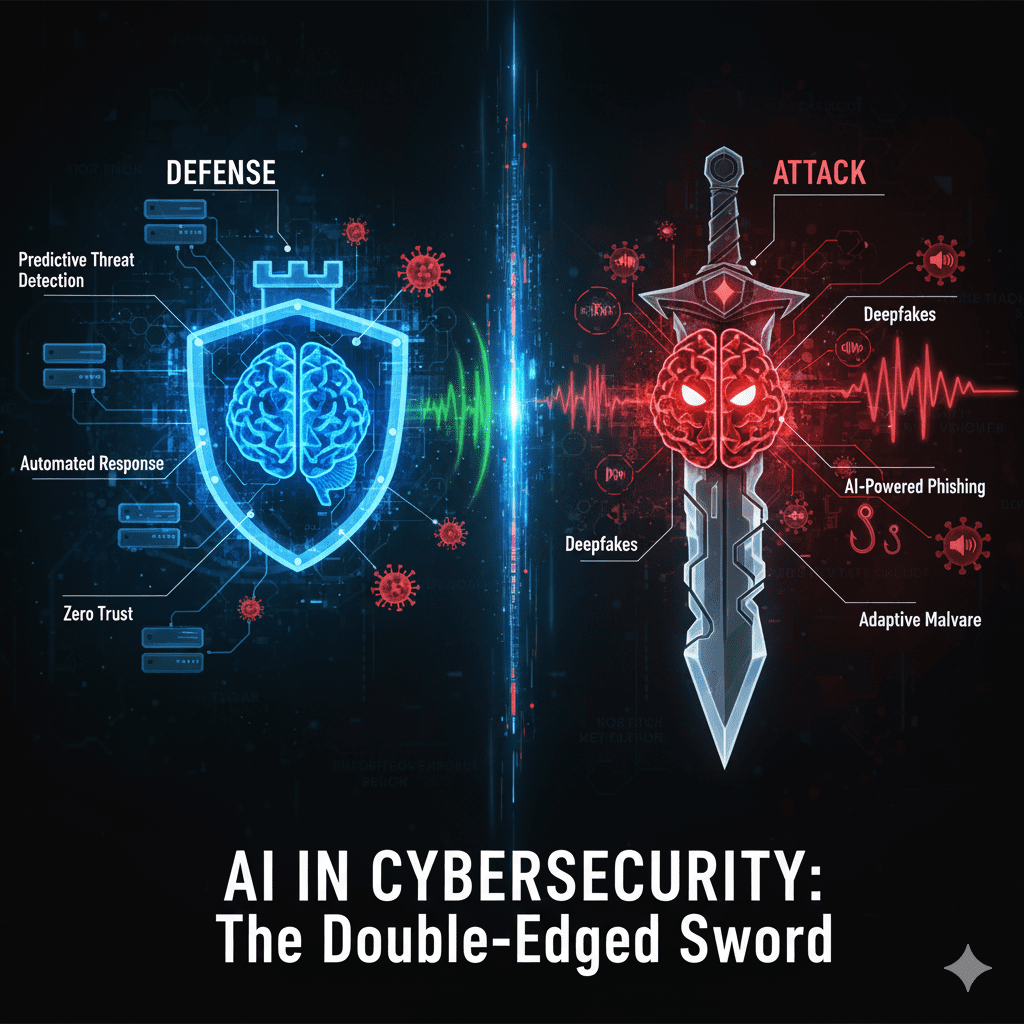
PREDICTIVE THREAT DETECTION and AUTOMATED RESPONSE
cybersecurity

Digital Armor: Defending Against Cyber Threats

Introduction For decades, the world of cybersecurity has been a high-stakes cat-and-mouse game. Security professionals build a wall, and hackers find a way over it. But today, this game is being fundamentally transformed by a powerful new player: Artificial Intelligence. AI is not just another tool; it’s a revolutionary force acting as both the strongest shield and the most dangerous new weapon. This article explores the dual role of AI in Cybersecurity, breaking down how it’s creating unprecedented defenses while simultaneously arming attackers with terrifying new capabilities The New Shield: AI as a Defensive Powerhouse The primary advantage of AI in a defensive role is its ability to process and analyze data at a scale and speed no human team could ever hope to match. While a human analyst sleeps, an AI security model is monitoring billions of events, looking for the one tiny anomaly that signals an attack. 1. Predictive Threat Detection Before AI, most security systems were reactive. They relied on “signatures”—the digital fingerprints of known malware. This meant a virus had to successfully attack someone first before it could be identified and blocked. AI, specifically machine learning, is predictive. It learns the normal, baseline behavior of your network, your users, and your devices. It can then spot suspicious deviations before a full-blown breach occurs. This includes: Behavioral Analysis: Is a user account that normally works from 9-to-5 suddenly trying to access sensitive files at 3:00 AM from a different country? AI flags this instantly. Anomaly Detection: Does a “smart” device like a thermostat suddenly start trying to communicate with an unknown server? AI can see this as a potential IoT (Internet of Things) attack. Pattern Recognition: AI can analyze global threat feeds and identify new attack patterns as they emerge, proactively blocking them before they even reach your network. 2. Automated Incident Response In a cyberattack, every second counts. A ransomware attack can encrypt an entire company’s files in minutes. AI doesn’t need to wait for approval; it can act in milliseconds. This is known as SOAR (Security Orchestration, Automation, and Response). Here’s a typical automated response scenario: Detect: An AI-powered sensor identifies a new, unknown program exhibiting ransomware-like behavior (e.g., rapidly encrypting files) on an employee’s laptop. Isolate: The AI immediately executes a predefined rule: it automatically disconnects that specific laptop from the company network, containing the threat. Investigate: The AI gathers all relevant data—what the program was, where it came from, what files it touched—and creates a report. Alert: It then sends an alert to a human security analyst, presenting the report and the action it took. The threat is neutralized before it could spread. The Future: An AI vs. AI Battleground This leads to an inevitable future: the front line of AI in Cybersecurity will be an AI-versus-AI battle. It will be a silent, high-speed war fought in milliseconds, with defensive AI models trying to detect and stop offensive AI-driven attacks. In this new era, the old security model of “trust but verify” is dead. The new model, which AI is perfect for, is Zero Trust. Zero Trust Architecture means you trust nothing and no one by default. It doesn’t matter if a login request comes from inside the office or outside; it must be verified. AI helps enforce this by continuously analyzing behavior. Just because you entered the right password doesn’t mean you are who you say you are. If your “logged-in” account suddenly starts acting suspiciously, the AI can force you to re-authenticate or block your access. Conclusion AI in Cybersecurity is a revolutionary, double-edged sword. It offers our most powerful hope for a secure digital future, capable of analyzing threats and responding at superhuman speeds. At the same time, it arms our adversaries with tools to create highly deceptive scams and intelligent malware. The key takeaway is that we can’t ignore it. For businesses, investing in modern, AI-powered defensive tools is no longer an option—it’s a necessity for survival. For individuals, it requires a new level of vigilance. In this new world, adaptability is everything. The future of security will be defined by who has the smarter, faster, and more adaptable AI. FAQ Q1: What is AI in Cybersecurity? AI in Cybersecurity refers to the use of artificial intelligence and machine learning to detect, predict, prevent, and respond to cyber threats. It moves beyond traditional, rule-based security by learning from data to identify new and unknown threats based on behavioral anomalies. Q2: Can AI replace human cybersecurity professionals? No, AI is a tool to augment human professionals, not replace them. AI can handle the massive, high-speed data analysis, but it still lacks human intuition, creativity, and strategic decision-making. AI flags the problem and contains it; the human analyst investigates the “why” and “how” to build a stronger long-term strategy. Q3: What is the biggest threat from AI in cyberattacks? Currently, the most accessible and dangerous threat is AI-powered social engineering, including deepfake audio and video. These attacks target the weakest link in any security system—human psychology—and are incredibly difficult to defend against with technology alone. Q4: How can a small business afford AI-powered security? While developing a custom AI model is expensive, most AI-powered security is now sold “as-a-service.” Many modern antivirus, firewall, and email security providers (like Microsoft, Google, and CrowdStrike) have already integrated AI and machine learning into their standard products, making it accessible and affordable for businesses of all sizes.

telecom

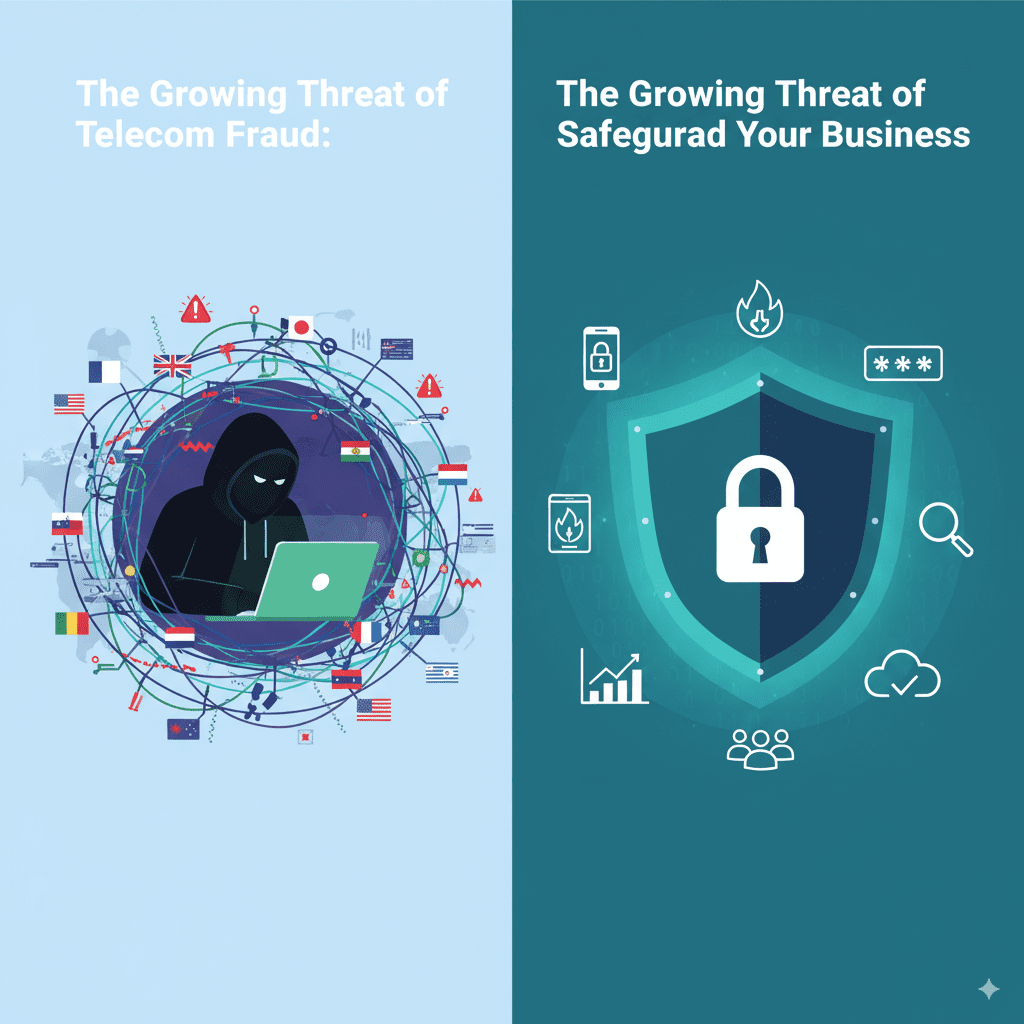
The Growing Threat of Telecom Fraud and How to Safeguard Your Business

Introduction As telecom networks become increasingly vital to global communications and business operations, the threat of telecom fraud has escalated into a pressing concern. Fraudsters exploit vulnerabilities within telecom infrastructures to commit crimes ranging from unauthorized access and identity theft to call and subscription fraud. For businesses relying heavily on telecom services, these fraudulent activities can result in significant financial losses, reputational damage, and regulatory penalties. This blog explores the evolving nature of telecom fraud, common fraud schemes targeting businesses, and robust strategies to safeguard your telecom assets. Leveraging AI-driven security solutions and advanced analytics is becoming indispensable to stay ahead of increasingly sophisticated attacks. For businesses seeking intelligent risk assessment and security planning, TechOTD’s AI services offer transformative solutions tailored to telecom and other industries. Understanding Telecom Fraud: Types and Tactics Telecom fraud continues to evolve with the advent of new technologies like VoIP, 5G, and mobile networks. Common types include: Subscription Fraud: Fraudsters obtain services under false identities, leaving businesses with unpaid bills. Call Forwarding Fraud: Unauthorized redirection of calls to premium rate numbers to exploit call charges. PBX Hacking: Unauthorized access to private branch exchanges, generating fraudulent calls. Refiling and Phishing: Illegitimate use of telecom resources to conduct phishing or refile previous calls to mask origins. SIM Swap Fraud: Hijacking mobile numbers to bypass authentication controls. International Revenue Share Fraud (IRSF): Exploiting international call setups to generate revenue for fraudsters at the operators’ expense. Each scheme targets vulnerabilities in telecom infrastructure, emphasizing the need for proactive defense mechanisms. Business Impacts of Telecom Fraud Financial Losses: Millions lost annually through fraudulent call charges, service theft, and identity compromise. Operational Disruption: Network overloads and compromised services degrade customer experience. Regulatory and Compliance Risks: Failure to protect telecom assets can lead to penalties under data protection laws and industry regulations. Brand Reputation Damage: Customer trust erodes when fraud incidents are publicized. How to Safeguard Your Business Against Telecom Fraud 1. Implement AI-Powered Fraud Detection and Analytics AI systems monitor traffic patterns in real time to detect anomalies that indicate potential fraud. Machine learning models adapt to new fraud behaviors, minimizing false positives and enabling quick action. Learn about predictive analytics enhancing telecom security here: Predictive Analytics Features and Use Cases. 2. Strengthen Identity and Access Management Multi-factor authentication (MFA) for network access, strict user identity verification, and SIM swap detection mechanisms decrease unauthorized entry risk. 3. Secure Network Architecture and Protocols Deploy firewalls, encryption, and secure routing protocols. Regularly update PBX and VoIP systems to patch vulnerabilities. 4. Continuous Monitoring and Incident Response Establish 24/7 network surveillance, combining automated alerts and expert reviews. Develop a clear fraud response plan and staff training. 5. Collaborate with Telecom Partners Work closely with carriers and technology providers to share threat intelligence and integrate security operations. Explore how blockchain enhances telecom security and trust: Blockchain Integration in Dubai Business Processes. Leveraging TechOTD’s Expertise in Telecom Security TechOTD provides tailored AI and machine learning solutions focused on telecom fraud detection, risk assessment, and workflow automation. Their expert consulting services help businesses evaluate vulnerabilities, implement advanced fraud controls, and comply with industry standards. Discover their approach to securing telecom through intelligent automation: How TechOTD Works. Future Trends in Combating Telecom Fraud AI and Deep Learning: Enhanced detection capabilities with evolving fraud patterns. Cloud-Based Security: Scalable, centralized fraud monitoring platforms. 5G Security Innovations: Addressing unique vulnerabilities in emerging networks. Integration of Big Data Analytics: Deeper insights into complex fraud schemes. The synergy of AI with telecom infrastructure will be key to staying ahead in this security arms race. Conclusion Telecom fraud is a pervasive and growing threat to business continuity and profitability. Safeguarding telecom assets requires a blend of cutting-edge AI technologies, robust protocols, and collaborative efforts across the ecosystem. Businesses investing in these defenses, with expert partners like TechOTD, can not only mitigate losses but also build trust and resilience in an increasingly connected world. For comprehensive AI-powered security solutions and insights, visit TechOTD AI Services and explore their extensive technology blog. FAQs Q1: What is the most common telecom fraud for businesses? Subscription fraud and PBX hacking are among the most prevalent and costly. Q2: How does AI help prevent telecom fraud? AI detects unusual traffic patterns and adapts to new fraud techniques in real time. Q3: Can blockchain improve telecom security? Yes, blockchain provides immutable and transparent transaction records that reduce fraud risks. Q4: What role does continuous monitoring play? It enables early fraud detection and rapid incident response, minimizing damage. Q5: Why is collaboration important in telecom fraud prevention? Sharing threat intelligence and best practices enhances the overall ecosystem security.

Scroll to Top