Mobile App Security

Restaurent

How Much Does It Cost to Build an App Like DoorDash?

Introduction The booming on-demand food delivery market has made apps like DoorDash household names, offering convenience, choice, and speed. Building a comparable app means creating a multi-faceted system integrating customer ordering, real-time driver tracking, payment processing, restaurant management, and much more. This blog breaks down the key features, development phases, technology stack, and estimated costs associated with building an on-demand food delivery app like DoorDash in 2025. It also highlights ways to optimize budget while delivering a robust, scalable solution. Key Features of a DoorDash-like App 1. User App for Customers Registration/login Browse restaurants and menus Real-time order tracking and notifications Multiple payment gateway integrations Ratings and reviews 2. Delivery Driver App Profile management Order acceptance/rejection GPS navigation and route optimization Earnings and payout tracking Real-time status updates 3. Restaurant Partner App Menu management Order notifications and status updates Sales and analytics dashboard Promotional tools 4. Admin Panel User, driver, and restaurant management Order management and monitoring Payment and commission management Analytics and reports Customer support and dispute handling Technology Stack Recommendations Front-end: React Native (for cross-platform mobile apps) Back-end: Node.js, Python Django Database: PostgreSQL, MongoDB Cloud Hosting: AWS, Azure, or Google Cloud APIs: Google Maps (for navigation), Payment gateways (Stripe, PayPal) Push Notifications: Firebase Cloud Messaging Real-time Updates: Socket.io or similar AI Enhancements: Predictive delivery times, demand forecasting (see AI-driven solutions) Development Timeline Discovery & Planning: 2–4 weeks UI/UX Design: 4–6 weeks Backend & API Development: 8–12 weeks Mobile App Development (iOS & Android): 8–10 weeks Testing & Deployment: 4 weeks Total: 5–7 months approximately Cost Estimation App Component Estimated Cost (USD) Customer App $40,000 – $70,000 Delivery Driver App $30,000 – $50,000 Restaurant App $25,000 – $45,000 Admin Panel $20,000 – $40,000 Backend & API $30,000 – $60,000 Testing & QA $15,000 – $30,000 Project Management $10,000 – $25,000 Total $170,000 – $320,000+ Cost Influencing Factors Feature complexity and AI integration Design sophistication and customization Third-party integrations Development team’s location and expertise Ongoing maintenance and scaling needs Tips to Optimize Development Cost Start with an MVP focusing on core features Use cross-platform frameworks like React Native Outsource to cost-effective, yet experienced teams Leverage cloud services to reduce infrastructure expenses Incorporate AI-driven features after initial launch (Learn more) Conclusion Building an app like DoorDash requires a significant financial commitment, but with strategic planning, smart technology choices, and AI-powered optimizations (Explore AI solutions), it is achievable. A feature-rich, scalable app can capture the opportunities in the fast-growing food delivery marketplace. For detailed guidance, development services, and ongoing innovation insights, consult TechOTD AI Services and stay updated with evolving trends via the TechOTD Blog.

React native doveploment

Less Talked About React Native App Development Considerations

Introduction React Native has surged in popularity as a preferred framework for building cross-platform mobile apps that deliver near-native performance. It offers developers the advantage of writing code once and deploying it on both iOS and Android, dramatically reducing time and cost. However, beyond the widely discussed benefits, there are several less-talked-about considerations that can impact the success and maintainability of React Native projects. This blog highlights underrated yet pivotal factors to consider when developing apps with React Native. Understanding these will help businesses and developers avoid common pitfalls, optimize performance, and build scalable applications. For insights on choosing the right development approach and leveraging AI-powered tools to enhance apps, explore TechOTD’s mobile app services and their technology blog. Less Talked About Considerations in React Native Development 1. Native Module Bridging Complexity While React Native covers most UI and logic needs, some features require native modules. Bridging custom native components between JavaScript and platform-specific code (Swift/Objective-C for iOS, Java/Kotlin for Android) can be complex and error-prone. Early planning of native module requirements prevents integration bottlenecks. 2. Platform-Specific UI/UX Nuances Cross-platform code sometimes overlooks subtle UI differences and behaviors expected by users on iOS or Android. Tailoring components and animations to respect platform conventions enhances user satisfaction but requires additional effort. 3. Debugging and Performance Profiling Challenges React Native debugging can be trickier compared to pure native apps. Certain performance issues stem from JavaScript thread bottlenecks and asynchronous bridge communication. Leveraging specialized profiling tools early helps identify and mitigate these problems. 4. Library and Dependency Maturity Not all React Native third-party libraries maintain parity between platforms or keep pace with the latest RN versions. Thorough vetting and maintenance planning for dependencies is critical to ensuring long-term app stability. 5. Handling Large App Sizes and Startup Times React Native apps tend to have larger binary sizes and longer cold start durations compared to native apps. Optimizing assets, code splitting, and lazy loading can mitigate user experience impacts but require strategic development approaches. 6. Security Considerations in JavaScript Environment JavaScript bundles can be reverse-engineered, posing risks of exposing app logic or sensitive data. Employing code obfuscation, secure storage, and adhering to best practices is essential to safeguard apps. How AI and Modern Tools Can Help AI-powered development assistants and predictive analytics tools can optimize performance tuning, automate testing, and suggest code improvements in React Native projects, reducing manual effort and error rates. TechOTD’s AI-driven solutions accelerate React Native development with proven frameworks and agile methodologies: React Native Development Services. Conclusion While React Native offers substantial advantages for rapid, cost-effective cross-platform app development, success requires attention to less obvious nuances—native module integration, platform-specific UX, debugging complexities, and security considerations. Addressing these early with the support of AI tools and expert development teams like TechOTD ensures scalable, high-performance apps that delight users across platforms. Stay updated on React Native trends and technology innovations at TechOTD Blog. FAQs Q1: Why is native module bridging necessary? Some hardware features or optimizations require platform-specific native code not supported directly by React Native. Q2: How do I ensure the app feels native on each platform? Design UI/UX specifically tailored for Android and iOS conventions with conditional rendering and styling. Q3: What tools help with React Native performance profiling? Tools like Flipper, Android Profiler, and Xcode Instruments assist in diagnosing performance bottlenecks. Q4: How do I manage third-party dependencies in React Native? Regularly audit and update libraries, favor well-maintained packages, and prepare for migration during React Native upgrades. Q5: How can I protect my app’s JavaScript code? Use obfuscation techniques, secure API keys, and follow secure coding guidelines to reduce vulnerabilities.

React native doveploment

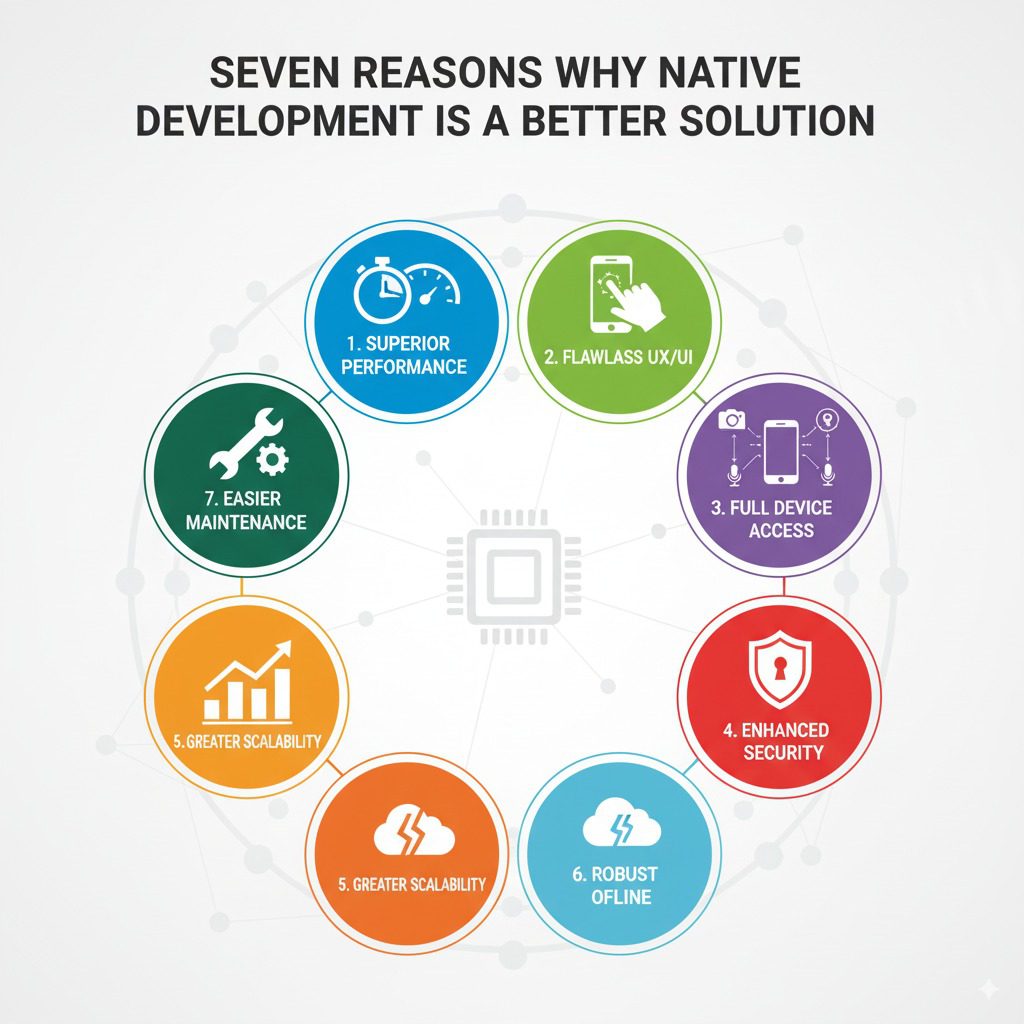
Seven Reasons Why Native Development is a Better Solution

Introduction As the mobile app ecosystem continues to evolve, businesses face a critical decision when choosing app development approaches. Among the various methodologies—native, hybrid, cross-platform—native app development remains the gold standard for delivering superior performance, user experience, and long-term scalability. Native development focuses on building apps specifically for a particular operating system (iOS or Android) using platform-specific languages and tools. This in-depth blog explores seven compelling reasons why native development is the better choice for businesses aiming to create impactful, resilient mobile applications. It integrates insights on AI integration, blockchain, and emerging technologies from TechOTD AI Services, along with best practices and strategic guidance drawn from TechOTD’s vast repository of technology leadership content. Reason 1: Superior Performance and Responsiveness Native apps benefit from direct access to device-specific hardware and OS features, resulting in high-performance apps with smooth animations and quick responsiveness. Native code executes faster than cross-platform or hybrid frameworks that rely on webviews or interpreters. Real-time processing of graphics, gestures, and touch inputs offers a fluid user experience critical for gaming, multimedia, and complex enterprise apps. Explore AI-powered performance optimizations within native applications at TechOTD AI Blog. Reason 2: Access to Device Features and Latest APIs Native development provides full access to device capabilities such as cameras, GPS, biometric sensors, and advanced APIs updated regularly by Apple and Google. This ensures apps leverage new hardware innovations like Face ID, LiDAR, or motion controls immediately without waiting for third-party framework updates. Native apps can utilize platform-specific SDKs and tools for push notifications, payment integration, and security enhancements. Learn about seamless multi-technology integration, including blockchain, at TechOTD Blockchain Integration. Reason 3: Enhanced Security and Compliance Native apps benefit from robust security implementations underpinning mobile operating systems, ensuring compliance with stringent data protection regulations. Developers can implement platform-specific encryption, secure key storage, and biometric authentication. Native apps are less vulnerable to common web-based security threats impacting hybrid apps. For advanced AI-driven security and data privacy, visit TechOTD AI Services. Reason 4: Better User Experience (UX) Alignment Native development ensures adherence to design guidelines and UX principles specific to each platform, enhancing user familiarity and satisfaction. App navigation, gestures, interface elements, and typography are optimized for iOS or Android standards. Native app experiences feel more intuitive and seamless, directly affecting user retention and engagement. Discover how predictive analytics can further tailor UX at TechOTD Predictive Analytics. Reason 5: Scalability and Maintainability While cross-platform tools promise faster initial development, native apps provide long-term scalability, maintainability, and stability. Native codebases facilitate easier debugging, upgrades, and integration of complex features evolving with business needs. Platform-specific updates, SDKs, and emerging technologies can be incorporated without compatibility issues. Understand structured software development approaches from TechOTD How We Work. Reason 6: Superior Offline Capabilities and Connectivity Native apps handle offline scenarios and incremental sync with greater precision using local data storage and background processing capabilities. This is crucial for industries like banking, healthcare, and travel where connectivity may be intermittent. Native apps can better manage push notifications, background tasks, and real-time updates with optimized battery consumption. AI-powered backend optimizations enhancing connectivity experiences are explored on TechOTD AI Blog. Reason 7: Future-Proofing with Emerging Technologies Native platforms serve as primary environments for rapid innovations involving 5G, AR/VR, machine learning, blockchain, and IoT integrations. Early access and native SDK support ensure apps capitalize on new tech leaps for competitive differentiation. Examples include AI-based real-time voice assistants, blockchain-secured transactions, and AR-powered customer experiences. Stay updated with cutting-edge developments at TechOTD Blog. Comparative Insights: Native vs Cross-Platform Aspect Native Cross-Platform/Hybrid Performance High, optimized for platform Moderate, especially for graphics Access to Device Features Full Limited or delayed support Security Platform-grade Increased vulnerabilities UX Quality Platform-consistent, polished Sometimes generic or inconsistent Development Speed Longer per platform Faster for multi-platform Maintenance Easier long-term Can become complex over time Emerging Tech Support Immediate Often delayed Real-World Case Studies and Success Stories Globally recognized enterprises including banks, manufacturers, and retailers choose native development to power critical apps, mitigate risks, and innovate rapidly. AI integrations in native apps have delivered breakthrough improvements in operational efficiency and customer engagement. Explore comprehensive AI and blockchain implementations at TechOTD AI and Blockchain Services. Implementation Best Practices for Native Development Define clear platform-specific requirements and target demographics. Embrace Agile development cycles with continuous testing and feedback. Leverage native performance profiling and analytics tools for iterative improvements. Ensure cross-functional collaboration among UX/UI, developers, and business teams. Plan for ongoing updates to support OS evolution and emerging technologies. Conclusion Choosing native app development is a strategic investment in superior performance, security, and long-term innovation potential. It aligns closely with platform advancements and emerging technologies, helping enterprises deliver exceptional mobile experiences that stand the test of time.

Scroll to Top