Industrial IoT

Cloud Computing and Technology, Educational Technology, Technology

The Evolution of Smart Factories: Industry 5.0 and Human-Machine Collaboration

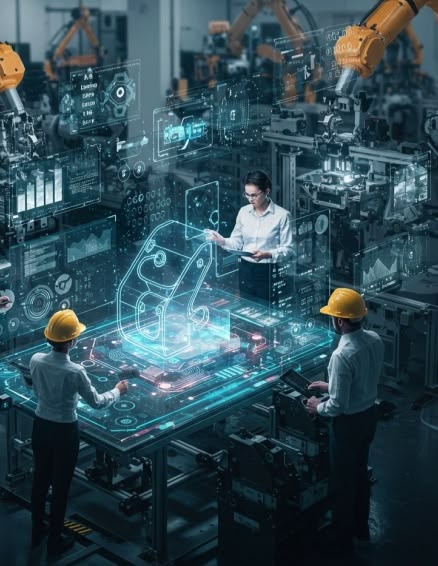
Introduction The manufacturing industry has experienced several technological revolutions over the past century. From the introduction of mechanized production systems during the First Industrial Revolution to the emergence of automation and digital technologies in Industry 4.0, each phase has fundamentally changed how products are designed, manufactured, and delivered. Today, the world is entering a new era known as Industry 5.0. Unlike Industry 4.0, which primarily focused on automation, connectivity, and efficiency, Industry 5.0 places humans back at the center of industrial operations. It emphasizes collaboration between people and advanced technologies such as artificial intelligence, robotics, machine learning, digital twins, and the Industrial Internet of Things (IIoT). Smart factories are no longer designed to replace human workers. Instead, they are evolving into intelligent environments where humans and machines work together to achieve greater productivity, creativity, sustainability, and innovation. This shift is reshaping the future of manufacturing and creating opportunities for organizations to build more resilient, adaptive, and human-centric production systems. Understanding the Journey from Industry 4.0 to Industry 5.0 Industry 4.0 introduced technologies that transformed traditional factories into highly connected digital ecosystems. Sensors, cloud computing, big data analytics, and autonomous machines enabled manufacturers to automate repetitive tasks and optimize production processes. While Industry 4.0 delivered significant efficiency improvements, many organizations discovered that complete automation was not always the ideal solution. Human expertise, creativity, problem-solving abilities, and emotional intelligence remained essential in many industrial environments. Industry 5.0 emerged as a response to this realization. Rather than focusing solely on automation, Industry 5.0 aims to create a balanced relationship between human workers and intelligent machines. The goal is not to replace people but to empower them with advanced technologies that enhance their capabilities and improve decision-making. This approach recognizes that the most successful factories of the future will combine the strengths of both humans and machines. What Is a Smart Factory? A smart factory is a manufacturing facility that uses digital technologies to monitor, analyze, and optimize production processes in real time. Unlike traditional factories, smart factories can continuously collect data from machines, equipment, and production lines. This data is then processed using AI and analytics tools to improve efficiency, reduce downtime, and support better decision-making. Key characteristics of a smart factory include: Real-time data collection and monitoring Connected machines and devices Predictive maintenance systems Automated production workflows AI-powered analytics Digital twins and simulations Advanced robotics Cloud-based manufacturing platforms With the introduction of Industry 5.0, smart factories are becoming more human-centric, enabling workers to collaborate effectively with intelligent systems. The Core Principles of Industry 5.0 Industry 5.0 is built around three major principles: Human-Centric Manufacturing The human-centric approach focuses on improving the role of workers within industrial environments. Technology is designed to support people rather than replace them. Employees are empowered with AI-driven tools, augmented reality systems, and collaborative robots that assist them in performing complex tasks more efficiently. This creates a workplace where technology enhances human capabilities while improving job satisfaction and workplace safety. Sustainability Sustainability has become a critical priority for modern manufacturers. Industry 5.0 encourages organizations to reduce waste, optimize resource consumption, and minimize environmental impact. Smart factories can use AI and analytics to monitor energy usage, reduce emissions, and improve production efficiency. Sustainable manufacturing practices help businesses meet regulatory requirements while supporting global environmental goals. Resilience Recent global disruptions have highlighted the importance of resilient supply chains and manufacturing systems. Industry 5.0 emphasizes adaptability and flexibility, enabling factories to respond quickly to changing market conditions, supply chain disruptions, and customer demands. Advanced analytics and digital technologies allow manufacturers to identify potential risks and take proactive measures before problems escalate. Human-Machine Collaboration: The Foundation of Industry 5.0 One of the most significant aspects of Industry 5.0 is the concept of human-machine collaboration. Instead of operating independently, humans and machines work together as partners. Machines excel at tasks involving speed, precision, data processing, and repetitive operations. Humans contribute creativity, innovation, critical thinking, and emotional intelligence. When combined, these strengths create a highly efficient and adaptable manufacturing environment. Examples of human-machine collaboration include: Robots assisting workers with heavy lifting AI systems supporting quality control inspections Augmented reality guiding technicians during maintenance Machine learning tools providing production recommendations Digital assistants helping operators make informed decisions This collaborative approach enables organizations to achieve higher productivity while maintaining human oversight and expertise. The Rise of Collaborative Robots (Cobots) Collaborative robots, commonly known as cobots, are among the most important technologies driving Industry 5.0. Unlike traditional industrial robots that operate within isolated safety cages, cobots are designed to work directly alongside human employees. Cobots can perform repetitive, physically demanding, or dangerous tasks while allowing workers to focus on higher-value activities. Benefits of cobots include: Improved worker safety Increased productivity Reduced physical strain Faster production cycles Greater operational flexibility Easier deployment and programming Manufacturers across industries are adopting cobots to create safer and more efficient work environments. As technology continues to advance, cobots are becoming more intelligent and capable of adapting to changing production requirements. Artificial Intelligence in Smart Factories Artificial intelligence serves as the brain of modern smart factories. AI systems can analyze massive amounts of operational data and identify patterns that would be difficult for humans to detect. Applications of AI in manufacturing include: Predictive Maintenance AI algorithms can predict equipment failures before they occur. By analyzing machine performance data, manufacturers can schedule maintenance proactively, reducing downtime and repair costs. Quality Control Computer vision systems powered by AI can inspect products with remarkable accuracy. Defects can be identified in real time, ensuring higher product quality and reducing waste. Production Optimization AI can continuously evaluate production processes and recommend improvements. This helps manufacturers maximize efficiency while minimizing resource consumption. Demand Forecasting Machine learning models can predict market demand and optimize production schedules accordingly. This reduces inventory costs and improves supply chain management. AI is becoming an essential component of Industry 5.0, helping organizations make smarter and faster decisions. Digital Twins and Virtual Manufacturing Digital twin technology is transforming how manufacturers design and manage industrial operations.
Manufacturing, Technology

Smart Factories and Industry 4.0: The Future of Manufacturing Operations

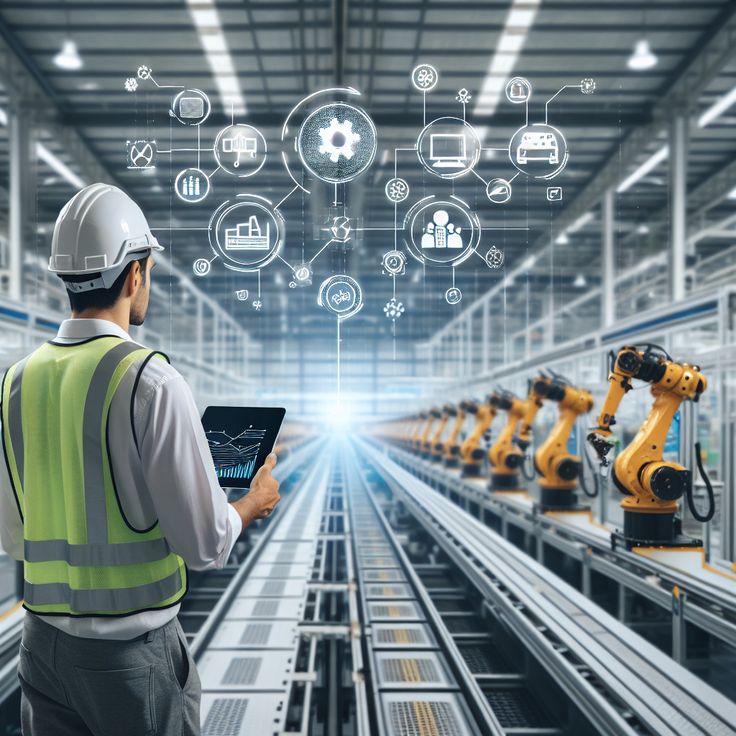
Smart Factories and Industry 4.0: The Future of Manufacturing Operations Manufacturing has always been a driving force behind economic growth and industrial development. From the steam-powered machines of the First Industrial Revolution to the computer-controlled production systems of the modern era, manufacturing has continuously evolved to meet changing market demands. Today, the industry is experiencing another major transformation known as Industry 4.0, a technological revolution that is redefining how factories operate, produce goods, and interact with supply chains. At the heart of this transformation lies the concept of the smart factory. Unlike traditional manufacturing facilities that rely heavily on manual monitoring and isolated systems, smart factories use interconnected technologies such as Artificial Intelligence (AI), the Internet of Things (IoT), cloud computing, robotics, and advanced analytics to create highly intelligent and automated production environments. As global competition intensifies and customer expectations continue to rise, manufacturers are under increasing pressure to improve efficiency, reduce costs, enhance product quality, and accelerate innovation. Smart factories provide a solution by enabling real-time visibility, predictive decision-making, and seamless communication across the entire production ecosystem. The combination of Industry 4.0 technologies and smart manufacturing practices is not simply improving existing processes; it is fundamentally changing how products are designed, manufactured, delivered, and maintained. Organizations that embrace this shift are positioning themselves for long-term success in an increasingly digital and connected world. Understanding Industry 4.0 Industry 4.0 represents the fourth industrial revolution, characterized by the integration of digital technologies into manufacturing and industrial operations. It connects machines, systems, and people through intelligent networks that enable autonomous decision-making and real-time data exchange. The first industrial revolution introduced mechanization through steam power. The second brought mass production through electricity and assembly lines. The third revolution introduced computers and automation. Industry 4.0 builds upon these developments by creating smart, connected, and data-driven manufacturing environments. The primary goal of Industry 4.0 is to create a seamless flow of information across all aspects of manufacturing operations. This allows organizations to respond quickly to changing conditions, optimize production processes, and improve overall performance. Smart factories serve as the practical implementation of Industry 4.0 principles. They combine digital technologies with traditional manufacturing processes to create adaptive and intelligent production systems capable of self-monitoring and self-optimization. What Is a Smart Factory? A smart factory is a highly digitized manufacturing facility where machines, sensors, software systems, and employees work together through connected networks to improve productivity and efficiency. In a smart factory, production equipment continuously generates data that is analyzed in real time. This information helps manufacturers identify inefficiencies, predict equipment failures, optimize workflows, and maintain consistent product quality. Unlike traditional factories where decisions often rely on manual intervention and historical reports, smart factories use real-time insights to support immediate action. Machines can communicate with each other, adjust production schedules automatically, and even detect potential issues before they impact operations. The result is a manufacturing environment that is more flexible, efficient, and responsive to customer needs. Key Technologies Powering Smart Factories The success of smart factories depends on several advanced technologies working together to create an interconnected manufacturing ecosystem. Internet of Things (IoT) The Internet of Things forms the foundation of Industry 4.0. IoT devices and sensors collect data from machines, production lines, and industrial equipment. These sensors monitor various parameters such as temperature, pressure, vibration, energy consumption, and machine performance. The collected data provides valuable insights into operational conditions and production efficiency. By connecting physical assets to digital systems, IoT enables real-time visibility across manufacturing operations and supports proactive decision-making. Artificial Intelligence and Machine Learning Artificial Intelligence plays a critical role in transforming raw manufacturing data into actionable insights. AI algorithms can analyze large volumes of information, identify patterns, and predict future outcomes. Machine learning systems continuously improve their accuracy by learning from historical and real-time data. Manufacturers use AI for predictive maintenance, quality control, demand forecasting, inventory optimization, and production planning. These capabilities help reduce downtime, improve product quality, and increase operational efficiency. Industrial Robotics Modern industrial robots have become increasingly intelligent, flexible, and collaborative. Unlike traditional robots designed for repetitive tasks, advanced robotic systems can adapt to changing production requirements and work alongside human employees. These collaborative robots, often called cobots, enhance productivity while improving workplace safety. Robots are widely used for assembly, welding, packaging, material handling, and inspection processes, allowing manufacturers to maintain high levels of accuracy and consistency. Cloud Computing Cloud computing provides the infrastructure needed to store, process, and analyze vast amounts of manufacturing data. By leveraging cloud platforms, manufacturers can access information from multiple locations, improve collaboration, and scale operations without significant infrastructure investments. Cloud-based systems also enable remote monitoring and management of manufacturing facilities, making it easier to oversee global production networks. Digital Twins A digital twin is a virtual representation of a physical asset, process, or production system. Digital twins allow manufacturers to simulate real-world conditions, test different scenarios, and evaluate potential improvements without disrupting actual operations. By creating accurate digital models of machines and production lines, organizations can optimize performance, reduce risks, and accelerate innovation. Big Data Analytics Manufacturing environments generate enormous volumes of data every day. Big data analytics helps organizations extract valuable insights from this information by identifying trends, detecting anomalies, and uncovering opportunities for improvement. Data-driven decision-making enables manufacturers to optimize production schedules, reduce waste, improve resource utilization, and enhance overall performance. Benefits of Smart Factories The adoption of smart factory technologies offers numerous advantages that extend across all aspects of manufacturing operations. Increased Operational Efficiency Automation and real-time monitoring help eliminate bottlenecks and streamline production processes. Manufacturers can identify inefficiencies quickly and make adjustments before they impact productivity. This leads to higher output and improved resource utilization. Reduced Downtime Unexpected equipment failures can result in costly production interruptions. Predictive maintenance solutions use AI and IoT data to identify potential issues before they cause breakdowns. Maintenance activities can be scheduled proactively, reducing downtime and extending equipment lifespan. Improved Product Quality Smart factories use advanced inspection systems, machine vision, and AI-powered analytics to detect

Internet of Things, Uncategorized

Exploring the Landscape of IoT Connectivity Technologies: Benefits, Use Cases, and Challenges

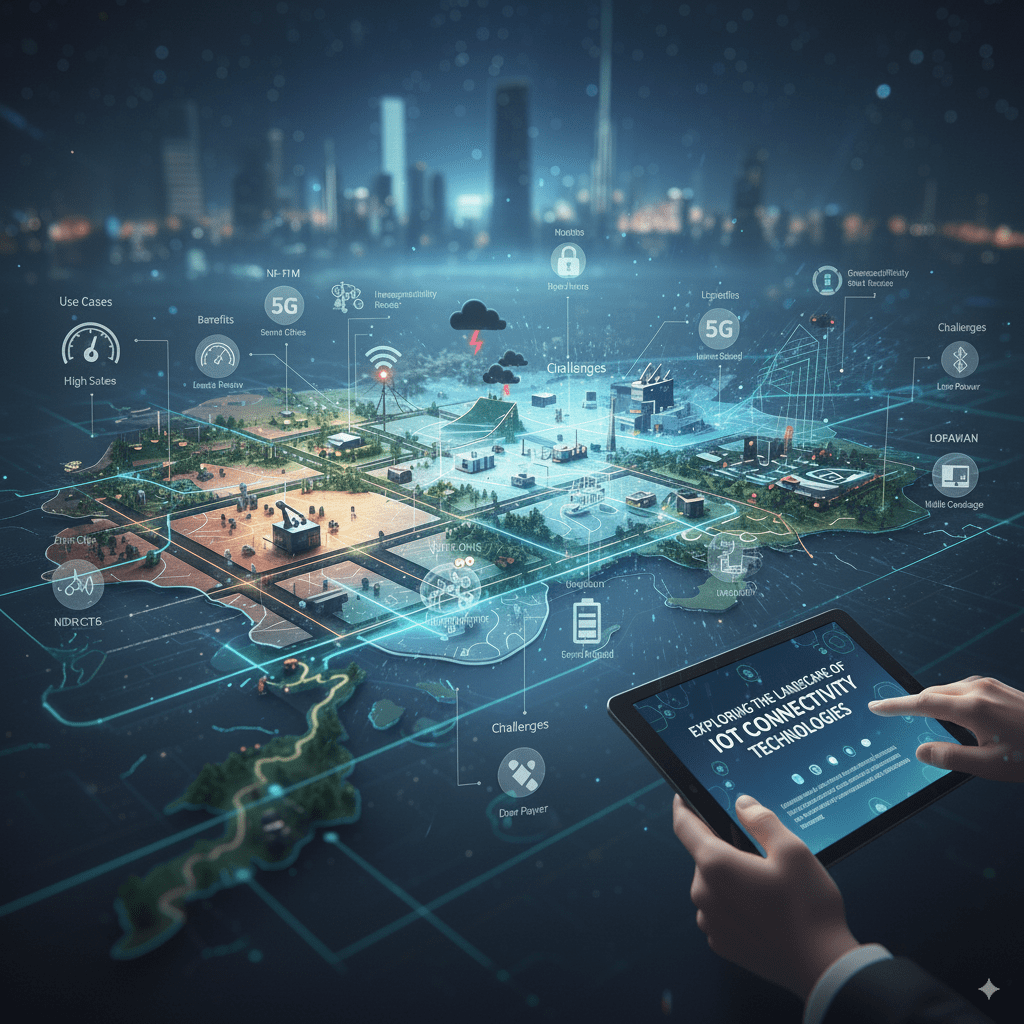
Introduction The Internet of Things (IoT) is no longer a future vision—it’s an essential driver of digital transformation in 2025, fueling everything from smart homes to smart cities, factories, healthcare, and more. At the heart of IoT’s growth lies connectivity—the bridge between billions of devices sensing, sharing, and acting on data. The choice of IoT connectivity technology profoundly shapes project costs, speed, coverage, scalability, and security. Let’s explore the main categories of IoT connectivity, their benefits, real-world use cases, and the critical challenges organizations face while deploying at scale. Types of IoT Connectivity Technologies Technology Range Power Usage Speed Typical Use Cases Wi-Fi Short-Medium High High Smart homes, offices, retail systems Bluetooth Short Low Moderate Wearables, medical sensors, asset tags Zigbee/Z-Wave Short Very low Low Smart homes, automation, lighting Cellular (2G-5G) High Moderate-High High Vehicles, public infrastructure LPWAN (LoRaWAN, NB-IoT) Long Ultra-low Low-Moderate Agriculture, utilities, remote assets Satellite Global High Moderate Remote monitoring, maritime, aviation Ethernet Local Low Very High Industrial, manufacturing plants RFID/NFC Ultra-short Low Low Inventory tracking, access control Benefits of IoT Connectivity Technologies Seamless Data Exchange: IoT connectivity enables always-on, real-time data transfer—powering automation and intelligent decisions. Interoperability: Modern standards like Wi-Fi, Bluetooth, and LPWAN protocols allow devices from various manufacturers to collaborate across industries. Scalability: Cellular and LPWAN technologies support millions of simultaneous device connections, vital for smart cities and industrial IoT. Remote Management: Satellite, LPWAN, and cellular make it possible to manage assets far from conventional networks, unlocking new remote and global applications. Energy Efficiency: Protocols like Zigbee, Bluetooth Low Energy, and LoRaWAN are optimized for low power, making battery-powered sensor networks practical. Practical Use Cases Across Industries Smart Cities: Traffic lights, surveillance cameras, air quality sensors, and public safety systems use cellular, LPWAN, and Wi-Fi to create intelligent, responsive cities—like Seoul’s AI-based traffic management. Manufacturing & Industry (IIoT): Predictive maintenance, robotics, and digital twins use Ethernet, Wi-Fi, and increasingly 5G for real-time machine status, cutting downtime and increasing efficiency. Healthcare: Wearable medical devices and patient monitoring rely on Bluetooth, Wi-Fi, and cellular for constant health updates and remote diagnostics. Agriculture: LoRaWAN and NB-IoT connect soil sensors, weather stations, and livestock trackers across wide expanses, enabling precision farming and livestock management. Automotive: Cellular and satellite enable fleet tracking, vehicle telemetry, and autonomous driving features, supporting safety and optimal logistics. Retail & Logistics: RFID, NFC, and Wi-Fi drive inventory management, cashless payments, and supply chain transparency. Key Challenges in IoT Connectivity Security & Privacy: With so many endpoints and constant data transfer, IoT is a high-value target for cyberattacks. Securing the pipeline, authenticating devices, and safeguarding sensitive data are top priorities. Interoperability: Diverse protocols, proprietary systems, and inconsistent standards can make large-scale integration complex and costly. Power Management: Many IoT devices are deployed in inaccessible locations. Ensuring sufficient battery life or energy harvesting is a technical hurdle. Scalability and Cost: Cellular and satellite offer global range but often with higher subscription and operational costs. Scaling networks without excessive costs requires careful planning. Network Congestion & Latency: As millions of devices transmit simultaneously, ensuring low-latency, reliable communication—especially in mission-critical scenarios—can be difficult. The rollout of 5G and AI-enhanced traffic management are addressing these challenges. Conclusion The evolving IoT landscape in 2025 is powered by a diverse suite of connectivity technologies—each with unique trade-offs. Organizations planning IoT deployments should assess their use case requirements for scale, range, energy, and cost, then select the right connectivity mix. Despite challenges, the benefits—greater efficiency, actionable insight, seamless automation, and new business models—are transforming industries and daily life. FAQs Q1: What’s the best IoT connectivity technology for smart agriculture? LPWAN technologies like LoRaWAN and NB-IoT offer long range and low energy use, ideal for fields and remote sites. Q2: Are 5G and IoT linked? Yes. 5G’s speed and low latency are unlocking real-time, large-scale IoT, such as connected vehicles and smart cities. Q3: What is the main security concern with IoT connectivity? The vast attack surface created by billions of endpoints, making robust network security essential. Q4: Can IoT devices work offline? Some do, but most applications require regular connectivity for updates, control, or analytics. Q5: Which technology is most energy-efficient for battery-powered IoT sensors? LoRaWAN, Zigbee, and Bluetooth LE are top choices due to their low-power protocols.

Digital Transformation

Why Mobile Edge Computing is Critical for Enterprises in the 5G Era

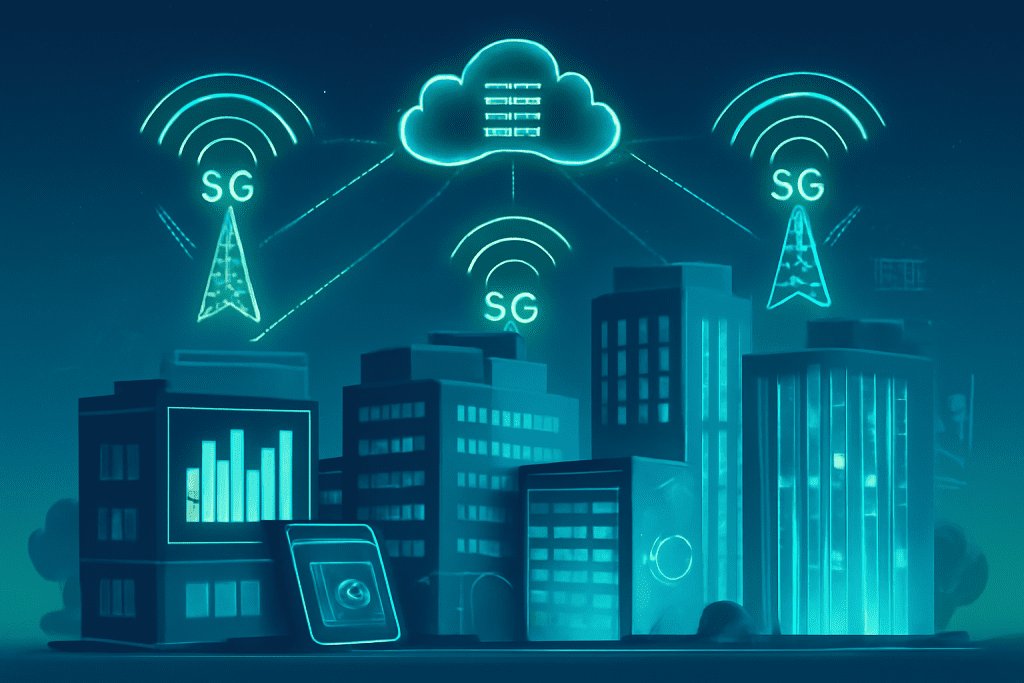
Introduction The arrival of 5G wireless technology is revolutionizing enterprise connectivity, promising multi-gigabit speeds, ultra-low latency, and support for billions of connected devices. However, to truly unlock the transformative potential of 5G, enterprises must integrate Mobile Edge Computing (MEC) into their digital infrastructure. 5G edge computing moves computation and data processing closer to where data is generated—at the “edge” of the network—enabling faster response times, greater security, and empowering real-time business innovation. Explore how AI-powered Mobile Edge Computing solutions can transform business processes at TechOTD AI Services. What is Mobile Edge Computing (MEC)? Mobile Edge Computing (MEC) is a network architecture that brings computing, storage, and analytics capabilities out of centralized data centers and closer to the physical location of devices and users. This proximity accelerates data processing and decision-making—critical in the 5G edge computing era where speed, responsiveness, and high-bandwidth are no longer optional but foundational to enterprise competitiveness. The Symbiosis of 5G and Mobile Edge Computing Ultra-low Latency: 5G networks promise sub-millisecond latency. Mobile Edge Computing (MEC) is essential for achieving these targets since only local processing can deliver true real-time responses for autonomous vehicles, telemedicine, and AR/VR solutions. High Bandwidth Utilization: With 5G’s massive data throughput, 5G edge computing prevents bottlenecks and network congestion. Reliability & Resilience: MEC in 5G networks reduces reliance on continual cloud connectivity, making operations more robust against outages and delivering superior quality of service. Key Benefits of Mobile Edge Computing for Enterprises Real-Time Data ProcessingProcessing data locally enables ultra-fast analytics required for applications like predictive maintenance, intelligent video surveillance, and automated supply chains. ✅ Example: A smart factory uses 5G edge computing with MEC to process IoT sensor data, optimizing equipment performance and reducing downtime—without sending all data to the cloud. Enhanced Security & PrivacyBy handling sensitive data close to its source, Mobile Edge Computing minimizes interception risks. Industries like healthcare and finance benefit from localized compliance and data residency. Reduced Network Congestion & CostsOffloading computation from central servers to the edge decreases backhaul requirements, making MEC in 5G both cost-efficient and scalable. Greater Scalability & FlexibilityMobile Edge Computing enables modular deployment of enterprise apps, scaling easily across retail, logistics, and smart cities. Industry Use Cases of Mobile Edge Computing Manufacturing: Smart factories rely on 5G edge computing for predictive analytics, digital twins, and real-time equipment monitoring. Retail: Edge-enabled personalization, AR shopping, and real-time customer engagement enhance user experience. Healthcare: Secure telemedicine, real-time imaging, and patient monitoring with Mobile Edge Computing in healthcare. Logistics & Transportation: Smart fleet management and navigation powered by MEC and 5G. Smart Cities: IoT-driven traffic management, safety, and environmental monitoring with edge computing in 5G networks. Conclusion Mobile Edge Computing (MEC) is critical for enterprises in the 5G era because it enables: Ultra-low latency, reliable, and scalable real-time applications Enhanced data security, privacy, and compliance Cost-effective handling of massive, distributed data flows Seamless integration with AI, IoT, and blockchain technologies Robust digital transformation strategies powering growth and innovation

Scroll to Top