Healthcare Digital Transformation

Healthcare & Fitness

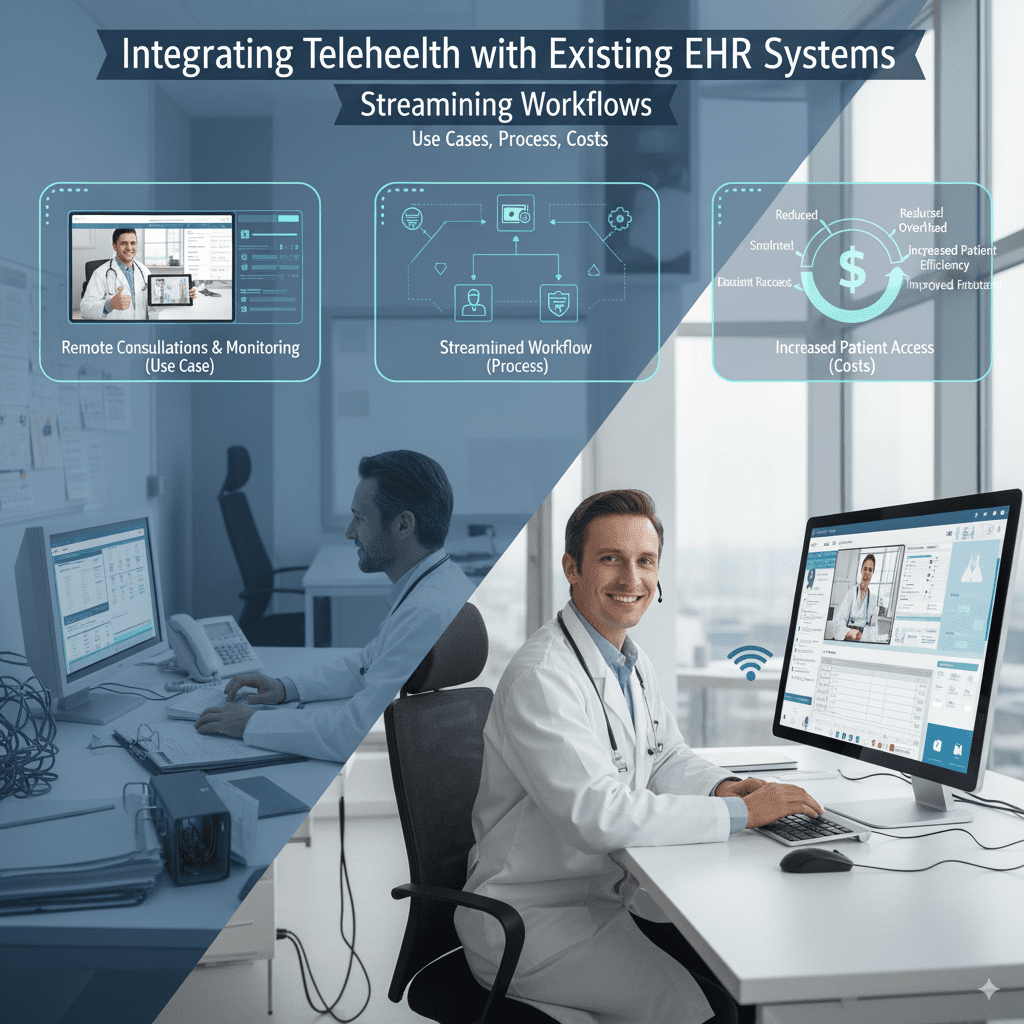
Integrating Telehealth with Existing EHR Systems: Streamlining Workflows

A rapid growth in the adoption of Electronic Health Records (EHRs) and telehealth software systems have been reported all across the world. For instance, almost 74% of healthcare physicians are actively offering telehealth services to their patients. However, one interesting finding in these studies is that it is causing a new strain of problems for healthcare providers, especially for healthcare IT teams. Since most healthcare providers use different healthcare software systems for different purposes, the creation of data silos has affected not only the interoperability of the desperate healthcare systems but also the clinical workflows of these practices. The disconnection between telehealth and Electronic Health Records (EHR) is creating a gap that is widening with every passing day. That is the reason a new trend is now taking shape and becoming a norm in the modern-day healthcare landscape. Yes, telehealth integration with EHR systems and EHR integration with telehealth systems for better data integration practices is what we’re talking about. But is this really the solution to bridge the gap between patient data leading to fragmented care? Well, explore exactly that along with the telehealth EHR integration benefits and the challenges of telehealth integration as well. So, without further ado, let’s get started! Unlocking the Power of Data Integration As healthcare practices are moving towards a digital landscape, the role of data in care delivery and also in the day-to-day affairs of healthcare practices is becoming the epicenter. That is why healthcare practices offering telemedicine should have EHR integration with their systems. Here are some of the telehealth EHR integration benefits that you must know: 1. Holistic Patient View: EHR integration with telemedicine systems enables healthcare providers to have a unified and holistic view of patient data. This patient data usually includes medical history, previous notes, telehealth encounters, and even medication and treatment plans. This will enable the provider to provide better patient care with a personalized approach. 2. Improved Care Coordination: Telehealth integration with healthcare systems, especially electronic health records systems, gives the provider direct access to all the relevant patient information, that too, in one place. This way, the entire care team can coordinate care in a much better way and make informed clinical decisions that can contribute to improving patient outcomes. 3. Streamlined Workflows and Reduced Errors: One of the major benefits of telehealth EHR integration is that it completely eliminates the chances of data duplication and manual entry. This way, clinical workflow is streamlined, significant time for both healthcare providers is saved, and errors are minimized, which will lead to better care practices. Apart from that, with EHR integration, the entire workflow can be streamlined, leading to better care practices. The Key to Interoperability: Standards and Technologies If you have even a slight idea about workflow optimization and telehealth integration with electronic health records, then you must know that interoperability is the key to data integration. Furthermore, to create a well-connected digital healthcare ecosystem, you must achieve interoperability. Here are some ways in which you can achieve that: 1. Breaking Down Silos with HL7 FHIR: HL7, also known as Health Level 7 and FHIR, are the interoperability standards that allow secure and standardized data exchange between telehealth platforms and EHR systems. Following these standards for data, integration enables healthcare providers to seamlessly exchange data and achieve EHR interoperability and telehealth. 2. Beyond Telehealth: While telehealth enables real-time virtual consultations with the use of telecommunication technologies, its integration with electronic health records and remote patient monitoring systems by achieving interoperability will make it an ecosystem where information can flow seamlessly and efficiently across different healthcare IT systems. This way, the telehealth integration will take the system beyond just virtual health consultations. 3. Future Proofing Your Infrastructure: As healthcare systems are becoming a part of the mainstream healthcare landscape, sooner or later, there will be a need to standardize the pattern in which data will be exchanged. This is in the foresight of the future of healthcare systems. So, actually following this as a best practice during your healthcare development will help you make your software future-proof and your practice one step ahead of the competitors, giving your practice more efficiency and efficacy. Challenges to Consider During Integration Since there are a lot of systems involved, the integration of so many systems is bound to be a challenging process for many. Here are some things that you can consider to avoid such challenges during the integration to help you achieve easy and smooth EHR and telehealth integration. 1. Data Standardization and Mapping: Data consistency across different systems is almost near impossible. The data stored in one healthcare IT system would be completely different from the data stored in your physicians’ healthcare systems. For instance, if the data standardization formats followed are different, then it becomes hard for the healthcare system to understand, interpret, and make sense of the data. However, with data mapping tools and industry-standard practices, you can actually ensure the quality of the data, which will automatically enhance the entire process, making the integration process much easier for the systems. 2. Cybersecurity and Data Privacy: Being one of those industries that is highly prone to cyber threats, there is a need to take robust security measures to protect sensitive patient data during the integration process. But how to ensure that? Following necessary compliances and regulatory regulations such as HIPAA, HITECH Act, GDPR, etc., can go a long way. Along with that, you ensure security measures are taken and also build trust in patients that their data is safe and private from the rest of the world. 3. Change Management and Staff Training: It cannot be ignored that the technology is constantly changing, and with that, everything needs to change. And the advancements in the medical field are proof of that. Being in the fastest changing industries, any change in the workflow or procedure will need a change in the system as well. Prepare for that in advance, train your staff well, and always address the technological changes that will help in the smooth adoption of the integrated system. Strategies for A Successful
Healthcare & Fitness, Uncategorized

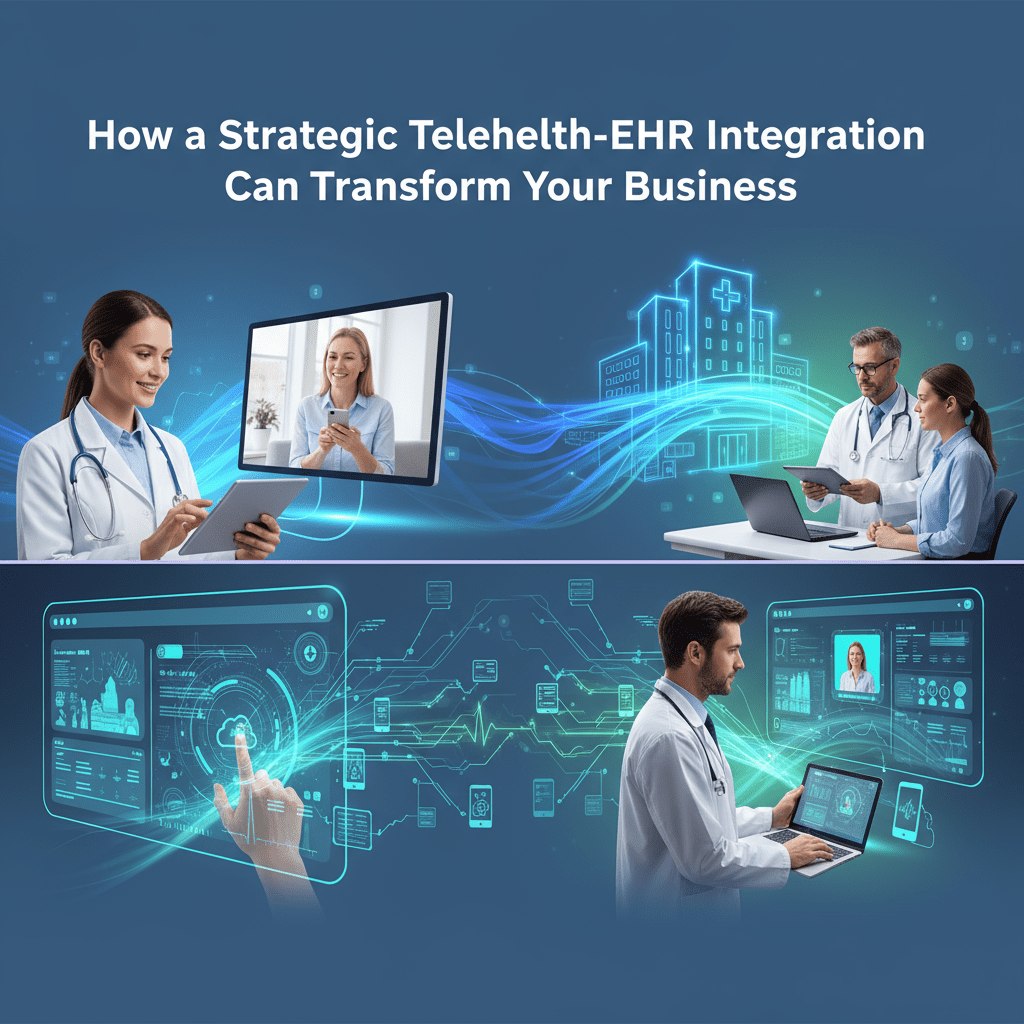
How a Strategic Telehealth-EHR Integration Can Transform Your Business: Use Cases, Process, Costs

Introduction The integration of telehealth systems with Electronic Health Records (EHR) is revolutionizing healthcare delivery by creating seamless, real-time access to patient data during virtual visits. This strategic alignment enhances care quality, streamlines operations, and opens new avenues for growth in healthcare organizations. Use Cases of Telehealth-EHR Integration Post-Surgical Follow-Ups Clinics use integrated systems to conduct virtual check-ins post-surgery, automatically updating patient records to ensure continuity and reduce unnecessary office visits. Remote Patient Monitoring Providers track chronic conditions via connected devices, with vitals and alerts seamlessly synced to the EHR, enabling proactive and timely interventions. Tele-specialty Consultations Specialists access comprehensive patient histories during remote consultations, reducing transcription errors and improving care coordination. Chronic Disease Management Integrated platforms allow centralized teams to monitor and respond to patient health remotely, reducing admissions and supporting underserved populations. Rural Telehealth Access Integration helps overcome barriers for rural facilities by enabling consistent remote care and efficient patient data exchange. Integration Process Overview Assessment & Planning: Evaluate existing telehealth and EHR systems for compatibility and establish integration goals. Choosing Integration Methods: Use APIs, HL7, or FHIR standards for data exchange. Data Mapping & Migration: Align telehealth data fields with EHR structures. Development & Testing: Build integration components and conduct rigorous testing. User Training: Train staff on new workflows and interfaces. Deployment & Monitoring: Rollout integration with ongoing support and optimization. Cost Considerations Small to mid-sized providers may expect initial setup costs between $20,000 to $200,000 depending on complexity. Data migration can range from $5,000 to $150,000+. Larger health systems investing in enterprise integration may face $400,000 to $600,000+ expenses. Annual maintenance, licensing, and staff training costs add to the ongoing investment. The right vendor partnership maximizes ROI while minimizing unforeseen expenses. Benefits of Integration Enhanced Clinical Workflow: Reduced manual entry, less duplication, and faster documentation. Improved Patient Experience: Seamless virtual visits with full access to medical history. Operational Efficiency: Streamlined billing, scheduling, and reporting. Scalability & Flexibility: Supports growth and new telehealth services with unified data infrastructure. Data Security & Compliance: Centralized policies reduce risk and simplify audits. Conclusion Strategic telehealth-EHR integration is a catalyst for healthcare innovation and improved business outcomes. By bridging virtual care with comprehensive patient records, organizations boost quality, efficiency, and patient satisfaction while controlling costs. For expert telehealth integration services and tailored healthcare technology solutions, visit TechOTD AI Services and stay informed via the TechOTD Blog.

Healthcare & Fitness

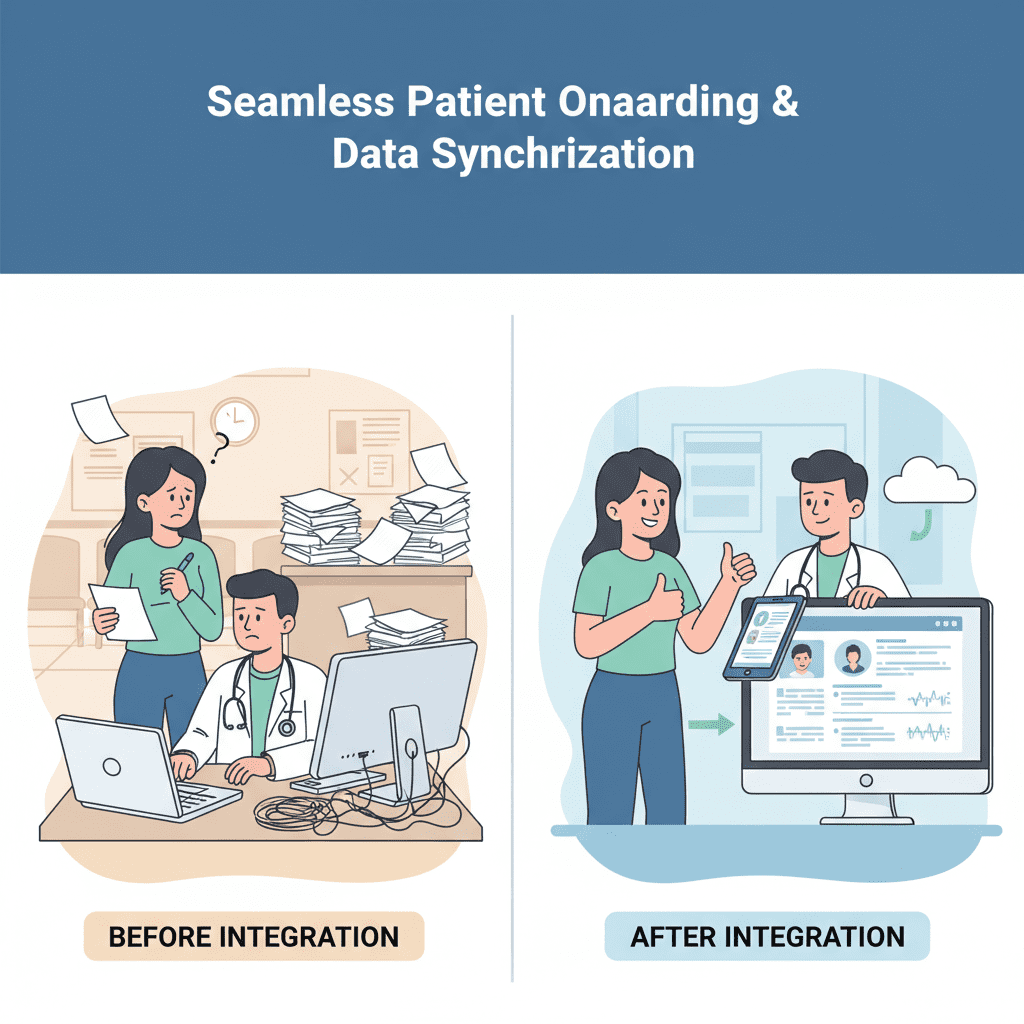
How Strategic Telehealth – EHR Integration Can Transform Your Business: Use Cases, Process, and Costs

Introduction In today’s rapidly evolving healthcare landscape, the integration of telehealth technologies with Electronic Health Records (EHR) is driving a transformative impact on how care is delivered and managed. Strategic telehealth-EHR integration not only enhances patient access and satisfaction but also streamlines operations, ensures regulatory compliance, and optimizes clinical outcomes. For healthcare providers and organizations seeking to remain competitive, improving care quality and operational efficiency through this integration has become essential. This comprehensive blog explores the significant benefits of integrating telehealth with EHR systems, real-world use cases, the integration process, cost considerations, and how innovative solutions from tech leaders like TechOTD are accelerating this healthcare transformation. Explore more about AI-driven healthcare innovations at TechOTD AI Services and browse through optimized technologies on the TechOTD blog. Understanding Telehealth – EHR Integration Telehealth-EHR integration enables seamless exchange of patient data between remote care platforms and centralized electronic health records. This unification supports efficient patient management, coordinated care, and real-time access to medical histories during virtual consultations. Integrated systems reduce manual data entry errors and optimize billing and documentation processes. Key features include: Real-time data synchronization for remote and in-person care interactions. Unified platform for patient scheduling, documentation, and follow-up. Streamlined workflows aligned with compliance requirements such as HIPAA. For detailed AI-driven health solutions empowering such integrations, see: Seamless Customer Journeys with AI. Use Cases: How Telehealth-EHR Integration Transforms Healthcare Business 1. Enhanced Remote Patient Monitoring (RPM) Integrated platforms facilitate continuous monitoring of chronic patients by syncing telehealth visits and IoT device data into EHRs. Clinicians gain comprehensive insights, enabling timely intervention and reducing hospital readmissions. 2. Virtual Consultations with Complete Medical History Physicians access patient history instantly during video consultations, improving diagnosis accuracy and personalizing care plans without delays or fragmented data. 3. Automated Clinical Workflows Integration automates documentation, e-prescriptions, and lab orders, reducing administrative burden and minimizing errors. This leads to faster patient throughput and billing cycles. 4. Improved Patient Engagement and Satisfaction Patients receive consistent communication, appointment reminders, and educational resources through integrated telehealth-EHR apps, fostering adherence and trust. 5. Data-Driven Population Health Management Aggregated data from remote visits enhances analytics, enabling preventive care strategies and outcome-based reimbursements. The Integration Process: Step-by-Step Implementing telehealth-EHR integration involves several structured phases: 1. Needs Assessment & Strategy Planning Analyze existing workflows, telehealth capabilities, and EHR architecture to define integration goals. Collaborate with clinical, IT, and compliance teams. 2. Technology Selection & Architecture Design Choose interoperable platforms and APIs, ensuring standards adherence (HL7, FHIR). Design secure data flows with encrypted channels. 3. Development & Customization Develop connectors or middlewares, customize UI/UX for providers and patients, and incorporate AI-driven tools for analytics and automation. Visit TechOTD’s how we work to learn about their tailored development approach. 4. Testing & Validation Conduct rigorous integration testing, data security audits, and user acceptance testing to ensure seamless data accuracy and system reliability. 5. Deployment & Training Roll out integrated systems gradually with stakeholder training to maximize adoption and minimize disruptions. 6. Ongoing Support & Optimization Maintain and update the system continuously, leveraging predictive analytics to proactively address system or clinical inefficiencies. Explore predictive analytics benefits here: Predictive Analytics Software Development: Features, Benefits & Use Cases. Estimated Costs of Telehealth – EHR Integration Costs vary depending on scale, existing systems, and customization needs: Cost Aspect Estimated Range (USD) Strategy & Consulting $10,000–$30,000 Software Development $50,000–$150,000 (API creation, middleware, UI/UX) Security & Compliance $10,000–$40,000 (Data encryption, audit frameworks) Testing & Deployment $15,000–$40,000 Training & Change Management $10,000–$25,000 Maintenance & Updates 15–25% of initial development cost annually Optimizing costs through AI and agile methodologies can reduce timelines and resource consumption. TechOTD specializes in delivering cost-efficient, scalable digital health solutions: Explore Mobile Apps & AI Services. Transforming Outcomes with AI and Emerging Technologies Integrating AI with telehealth and EHR unlocks powerful capabilities: Natural Language Processing (NLP) for automated clinical notes and coding. Sentiment Analysis to gauge patient feedback and improve service quality. Predictive Models for patient risk assessment and readmission forecasting. Computer Vision for remote diagnostics and image analysis. Read more about AI trends shaping healthcare innovation: AI Trends & Solutions – TechOTD. Real-World Impact and Industry Insights Leading healthcare organizations using telehealth-EHR integration report: 30–50% reduction in hospital readmissions. Up to 40% improvement in clinical workflow efficiency. Enhanced patient satisfaction scores and engagement. Additionally, blockchain technology integration enhances data security and patient privacy, as exemplified in Dubai’s business sector transformations: How Blockchain Integration Is Optimizing Business Processes in Dubai. Future Directions: Telehealth, EHR, and Beyond The healthcare sector is rapidly evolving with IoT, AI, and cloud-powered telehealth transforming patient care. Key future trends include: Interoperability advancements using standardized APIs for even smoother integrations. Personalized medicine driven by AI insights from comprehensive data ecosystems. Augmented reality (AR)/Virtual reality (VR) supported telehealth services. Influence of emerging large language models for healthcare insight generation: Large Language Models in Finance and Healthcare. Conclusion Strategic telehealth-EHR integration is a game-changer for healthcare businesses aiming to improve care quality, patient experience, and operational efficiency. By leveraging modern software practices, AI enhancements, and secure data management, organizations can not only meet regulatory demands but also gain a competitive edge. Consulting with expert technology partners like TechOTD ensures a smooth, scalable, and cost-effective integration that fuels innovation and growth. Start your transformation journey today: Book a Free Consultation with TechOTD and explore a wealth of knowledge in their Tech Blog. FAQ Q1: What are the primary benefits of telehealth-EHR integration? Better data access, efficient workflows, regulatory compliance, and improved patient care coordination. Q2: How complex is the integration process? It involves multiple phases—planning, development, testing, and training—usually spanning several months depending on the system scale. Q3: Can AI improve telehealth and EHR system efficiency? Yes, AI automates documentation, predicts patient risk, and enhances decision-making. Q4: What are typical costs involved in telehealth-EHR integration? Costs range depending on scale but typically are between $100,000 to $300,000 for comprehensive setups. Q5: How does blockchain relate to telehealth and EHR? Blockchain enhances data security, interoperability, and trustworthiness between providers and patients.

Healthcare & Fitness

Cloud Infrastructure and DevOps in Healthcare Apps

Introduction The intersection of cloud infrastructure and DevOps is revolutionizing how healthcare applications are built, deployed, and maintained, making healthcare systems more agile, compliant, and patient-centered. These advances empower providers to store vast amounts of sensitive data securely, deliver real-time services to patients worldwide, and quickly innovate in response to emerging needs and regulatory guidelines. Explore how AI-powered healthcare applications are transforming patient experiences and operations—see more on cloud-based AI services and their integration journey. The Role of Cloud Infrastructure in Healthcare Apps Scalability and Flexibility Cloud platforms such as AWS, Azure, and Google Cloud enable healthcare organizations to scale resources up or down dynamically, adapting to fluctuating workloads, seasonal spikes, or pandemic-driven surges in demand. This elasticity is essential for electronic health records (EHR), big data analytics, telemedicine, and remote monitoring applications. Multicloud and hybrid architectures are gaining traction, allowing seamless integration to meet stringent compliance needs and local storage guidelines. Private clouds cater to high-security environments such as large hospitals and research institutions, while public clouds efficiently handle analytics, appointments, and remote care. For a detailed breakdown of cloud-driven innovation in healthcare, visit TechOTD’s main blog. Secure Data Storage and Compliance Sensitive medical data demands the highest levels of security and compliance. Cloud vendors offer HIPAA- and GDPR-compliant solutions that maintain data privacy, encryption, and integrity. End-to-end encryption, auditing, and identity management are embedded in modern cloud services. Automated backups and disaster recovery protocols minimize downtime and data loss. To understand how TechOTD addresses privacy and compliance in healthcare, see the Privacy & Cookies policy. Accelerating Digital Health with AI and Analytics Cloud infrastructure empowers healthcare organizations to leverage advanced AI, machine learning, and predictive analytics. Key applications include: Standardizing precision diagnostics with massive image datasets, Predicting patient risks using trend analysis and real-time telemetry, Automating administrative documentation with NLP engines. Discover feature-rich use cases in predictive analytics on TechOTD’s dedicated analytics page. Enabling Telehealth and Remote Patient Monitoring The adoption of telemedicine surged during the COVID-19 pandemic, with cloud platforms facilitating: Real-time video consultations, Remote patient monitoring using IoT wearables, Synchronous data sharing among care teams. Integration details for mobile healthcare solutions are documented in TechOTD’s mobile app services section. DevOps: The Engine of Continuous Healthcare Innovation What Is DevOps in Healthcare? DevOps combines software development (Dev) and IT operations (Ops) to foster automation, collaboration, and rapid deployments. In healthcare, this approach: Shortens application release cycles, Ensures continuous integration and delivery (CI/CD), Facilitates ongoing feedback and quality improvements. Explore practical examples of workflow optimization on the TechOTD blog. Key Benefits of DevOps for Healthcare Faster Time to Market Automates deployments, enabling rapid roll-out of new features and critical patches. Provides a competitive edge in launching telehealth and AI-driven apps. Improved Patient Outcomes Supports continuous monitoring and rapid issue resolution, which enhances clinical reliability and patient trust. Real-time data analytics drive timely decisions at the point of care. Security and Compliance Implements DevSecOps to integrate security into every phase of the application lifecycle. Ensures adherence to sector-specific regulations (HIPAA, GDPR, etc.) using automated compliance checks. See TechOTD’s structured approach to secure software on their How We Work page. Cost and Resource Efficiency Applies Infrastructure as Code (IaC) principles, minimizing manual tasks and human error. Optimizes cloud spend by enabling demand-driven resource allocation. Case studies on cost savings and operational improvements can be found in TechOTD’s blog industry section. AI and Predictive Analytics Support Maintains stable environments for AI/ML-powered healthcare applications. Accelerates the development of smart diagnostics, triaging, and personalized medicine. For examples of large language models in regulated sectors, see LLMs in Finance. Implementing Cloud and DevOps for Healthcare Apps: A Step-by-Step Roadmap 1. Assess Business Needs and Regulatory Requirements Conduct a deep analysis of the existing tech ecosystem and compliance landscape. Evaluate suitability for cloud migration and DevOps adoption. Explore a real-world blueprint on TechOTD’s services overview. 2. Data Strategy and Cloud Architecture Selection Identify sensitive and non-sensitive datasets. Choose optimal cloud deployment models: public, private, hybrid, or multicloud. 3. Develop Secure, Scalable Applications Using DevOps Practices Implement CI/CD pipelines for all healthcare modules: EHRs, billing, telemedicine, and connected health IoT solutions. Automate testing, code reviews, and compliance checks to guarantee quality and security. 4. Integrate AI, Analytics, and Automation Leverage cloud APIs and frameworks for real-time analytics, predictive insights, and automated workflows. Explore how AI supports preventive care and operational efficiency in TechOTD’s AI service models. 5. Continuous Monitoring, Maintenance, and Support Use cloud-based monitoring tools (e.g., Grafana, Azure Monitor) for uptime, performance, and security event tracking. Establish mechanisms for ongoing maintenance, data retraining, and customer support. For workflow strategies, check out customer journey mapping with AI. Emerging Trends and Future Directions AI-Powered Healthcare and Predictive Care Increasing adoption of generative AI, chatbots for patient triage, and risk stratification tools. Integration of real-time wearable IoT data with cloud-hosted analytics engines. Get a comprehensive review of technology trends in healthcare and beyond at TechOTD’s blog. Blockchain Integration for Secure Health Data Blockchain ensures transparent, immutable transaction logging, critical for audit trails in clinical trials, medication administration, and consent management. Find an in-depth analysis at TechOTD’s blockchain blog post. Regulatory Evolution and Interoperability Ongoing standards development for seamless data exchange (HL7 FHIR, DICOM) and international interoperability. Enhanced focus on privacy-preserving machine learning and federated learning architectures. Challenges in Cloud and DevOps Adoption Legacy systems and data silos limiting seamless migration. Addressing complex multi-region compliance and data residency requirements. Upfront investments in talent, training, and DevOps/Cloud tooling. Best practices, pitfalls, and CRM integration insights can be found at TechOTD’s mobile app frameworks guide. Conclusion: Cloud and DevOps as Healthcare’s Innovation Backbone The synergy of cloud infrastructure and DevOps is shaping a future where healthcare is more agile, resilient, and patient-focused than ever before. With ongoing advancements in AI, predictive analytics, and compliance automation, healthcare providers are set to deliver faster, more effective, and more personalized care. For more guidance, industry news, and in-depth resources, visit: Privacy & AI Solutions TechOTD Blog Home How We Work at TechOTD Predictive Analytics Features Mobile Application Services Advanced Industry Insights Customer-Centric AI Journeys LLMs in Finance Use Cases Technology for Modern Education Gadgets for

Healthcare & Fitness

The Role of AI, IoT, and Big Data in Building Smarter Hospitals

Introduction In today’s fast-paced healthcare ecosystem, technology has become the backbone of smarter hospitals. With rising patient expectations, increasing demand for quality healthcare, and the need for efficient operations, hospitals are embracing Artificial Intelligence (AI), the Internet of Things (IoT), and Big Data. These three pillars are revolutionizing the way hospitals deliver care, improve patient outcomes, and optimize resource management. In this blog, we will explore how AI, IoT, and Big Data are shaping smarter hospitals, their key applications, benefits, and the future roadmap of intelligent healthcare systems. Why Smarter Hospitals are the Future of Healthcare Smarter hospitals are not just about advanced medical equipment — they are about data-driven decision-making, predictive analytics, connected devices, and AI-powered tools that ensure better diagnosis, treatment, and patient experience. By integrating AI, IoT, and Big Data, hospitals can: Deliver personalized treatment plans. Enhance patient monitoring and safety. Improve operational efficiency and resource allocation. Enable predictive maintenance of medical devices. Lower healthcare costs while improving quality. The convergence of these technologies is creating a patient-centric healthcare system that focuses not only on curing but also on prevention, wellness, and long-term care. Role of AI in Smarter Hospitals Artificial Intelligence has become a game-changer in healthcare. From diagnostics to patient engagement, AI enables hospitals to enhance care delivery in multiple ways. 1. AI in Medical Imaging & Diagnosis AI algorithms can analyze X-rays, MRIs, and CT scans with high accuracy, often detecting anomalies that human eyes may miss. This reduces diagnostic errors and ensures early detection of diseases like cancer and cardiovascular conditions. 2. AI-Powered Virtual Assistants Hospitals use AI-driven chatbots and voice assistants to handle patient queries, schedule appointments, and provide medical guidance. This reduces administrative workload and improves patient satisfaction. 3. Predictive Analytics for Patient Care By analyzing medical histories and real-time data, AI can predict disease risks, patient deterioration, and even recommend preventive measures. This proactive approach saves lives and reduces emergency cases. 4. Robotic Surgery AI-powered surgical robots assist doctors with precision and control during operations. These systems minimize complications and shorten recovery times. Role of IoT in Smarter Hospitals The Internet of Things (IoT) connects medical devices, patients, and healthcare staff through smart sensors and wearables. IoT plays a vital role in building connected hospitals. 1. Remote Patient Monitoring (RPM) IoT devices such as heart rate monitors, glucose trackers, and wearable ECGs allow doctors to monitor patients remotely. This is especially beneficial for chronic disease management. 2. Smart Beds & Equipment IoT-enabled hospital beds can monitor patient movements, prevent bed sores, and alert staff in case of falls. Smart medical devices also ensure better inventory management and reduce equipment downtime. 3. Asset Tracking & Management Hospitals can use IoT-based RFID tags and sensors to track critical equipment like ventilators, wheelchairs, and infusion pumps, reducing delays and improving resource utilization. 4. Emergency Response Systems IoT helps connect ambulances with hospital emergency rooms in real time, sharing patient vitals before arrival, which ensures immediate preparedness. Role of Big Data in Smarter Hospitals Hospitals generate terabytes of patient records, medical histories, imaging data, and administrative information every day. Big Data analytics transforms this raw data into actionable insights. 1. Enhanced Clinical Decision-Making Doctors can leverage Big Data to access evidence-based treatment plans, compare patient histories, and prescribe the most effective treatments. 2. Population Health Management By analyzing large datasets, hospitals can identify trends, track disease outbreaks, and implement preventive healthcare strategies. 3. Operational Efficiency Big Data helps hospitals optimize staff schedules, predict patient admissions, and manage supply chains effectively. 4. Fraud Detection & Security Hospitals can detect anomalies in billing, insurance claims, and data breaches using Big Data tools, ensuring financial and data security. Benefits of AI, IoT, and Big Data Integration in Hospitals Improved Patient Outcomes: Early diagnosis and personalized treatment plans. Cost Reduction: Optimized use of resources and preventive care reduces expenses. Enhanced Patient Engagement: AI chatbots, IoT devices, and mobile apps keep patients informed and engaged. Data-Driven Decisions: Big Data analytics empowers hospitals to make better, evidence-based decisions. Operational Efficiency: Automation and predictive tools reduce administrative burden. Challenges in Building Smarter Hospitals Despite the benefits, there are several challenges: Data Privacy Concerns: Patient data must be protected with strict cybersecurity measures. High Initial Investment: Advanced AI, IoT, and Big Data systems require significant investment. Integration Issues: Legacy systems may not seamlessly integrate with new technologies. Skilled Workforce Shortage: Hospitals need trained professionals in AI and data analytics. The Future of Smarter Hospitals The future of smarter hospitals will focus on AI-driven automation, precision medicine, and predictive healthcare models. Hospitals will increasingly adopt cloud-based solutions, 5G-powered IoT devices, and blockchain for secure data sharing. This digital transformation will redefine healthcare delivery by making it smarter, faster, and more patient-centric. Related Resources & Backlinks AI in Healthcare Page TechOTD Blog Blockchain in Business Processes – Dubai How We Work LLMs in Finance AI & Service Excellence Best Gadgets for Programmers in 2025 Predictive Analytics in Software Development Impact of Technology on Education React Native vs Swift TechOTD Blog Industries Mobile App Services FAQs 1. How does AI improve patient care in hospitals? AI improves patient care through faster diagnosis, personalized treatment recommendations, and predictive analytics that help prevent health complications. 2. What are the benefits of IoT in hospitals? IoT enables real-time patient monitoring, better equipment management, and improved emergency response, making hospitals more efficient and patient-friendly. 3. How does Big Data support smarter hospitals? Big Data helps hospitals analyze patient records, predict disease outbreaks, and improve decision-making, leading to better outcomes and optimized resources. 4. Are there security risks in using AI, IoT, and Big Data in hospitals? Yes, data privacy and cybersecurity remain major concerns. Hospitals must implement strict security protocols to protect patient data. 5. What is the future of smarter hospitals? The future lies in precision medicine, AI-driven automation, blockchain-enabled secure data sharing, and cloud-based hospital systems that provide seamless healthcare services. Conclusion The integration of AI, IoT, and Big Data is revolutionizing modern healthcare and shaping

Scroll to Top