enterprise automation

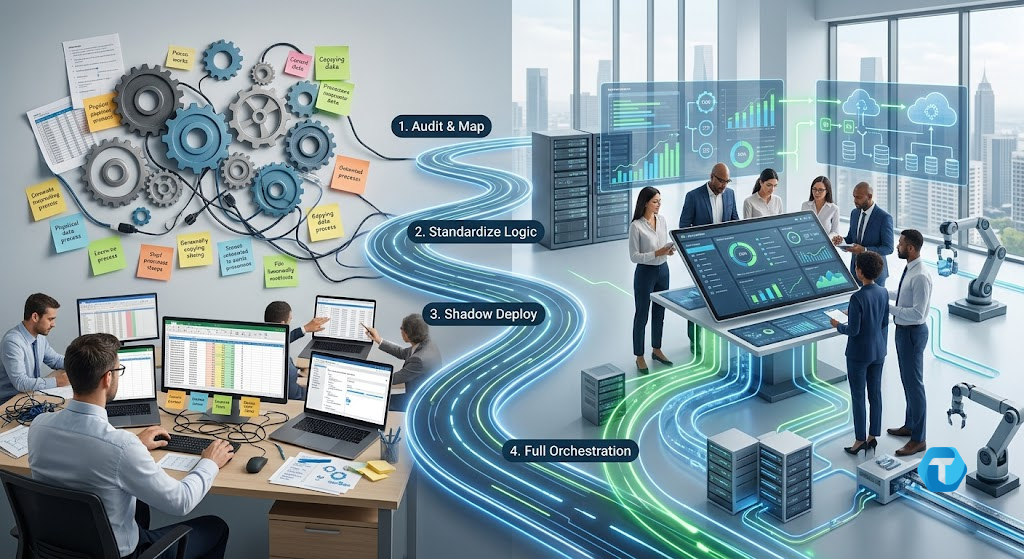
Enterprise Workflow Automation 4-Phase Roadmap Diagram
Business Intelligence, Digital Transformation

Beyond the Patchwork: A Phased Roadmap to Enterprise Workflow Automation

Beyond the Patchwork: A Phased Roadmap to Enterprise Workflow Automation Modern organizations often struggle with fragmented processes that drain valuable time and human energy. Implementing enterprise workflow automation allows businesses to replace manual tasks with streamlined, resilient software pipelines, ensuring operational velocity, accuracy, and enterprise scalability. Imagine hiring a world-class architect, handing them a hard hat, and then ordering them to spend eight hours a day carrying individual bricks back and forth across a muddy construction site. Sounds absurd, right? Yet, inside almost every modern enterprise, a remarkably similar tragedy unfolds every single day. Behind multi-million-dollar tech stacks lies an unspoken corporate secret: our highest-paid knowledge workers are routinely forced to act as expensive human APIs. Senior engineers, financial analysts, operations leads, and HR managers log in every morning not to innovate, but to act as digital couriers. They manually copy data from Spreadsheet A, reformat it for Database B, cross-reference it against PDF Invoice C, and broadcast a Slack alert to Manager D. We hire brilliant minds for their strategic judgment, yet we consume their bandwidth with low-cognitive, high-friction administrative glue. How many hours did your best talent spend playing “digital courier” this week? And more importantly, what is this invisible waste costing your business? The Trap of the “Duct-Tape” Quick Fix When leaders finally recognize this operational drain, the initial impulse usually triggers a secondary disaster: brittle, hasty automation. An eager manager writes a custom Python script, wires up an unmonitored webhook, or deploys a quick point-solution to bridge the gap. For a few months, everyone celebrates. But then the inevitable happens: The script’s author leaves the company. An upstream software vendor silently updates its API schema. An unexpected edge case slips through undetected. The result? The duct tape snaps. The automation breaks silently, leaving the organization with catastrophic data drift, missed financial reconciliations, or severe compliance failures. Automating enterprise operations is not an impulse software purchasing decision—it is an architectural discipline. To transition from fragile manual interventions to resilient, enterprise-grade operations, organizations must abandon ad-hoc patches in favor of a structured, phased modernization roadmap. Part 1: The Spectrum of Process Maturity Before building a bridge, an engineer must assess the terrain. Automating a process before it is understood or standardized does not eliminate operational friction—it merely accelerates chaos at machine speed. Where do your core operations sit on the maturity scale? Maturity Level Phase Name How Data & Logic Flow Human Role Level 0 Ad-Hoc Manual Fragmented across spreadsheets, emails, and notes. The human is the data conduit. Level 1 Standardized Documented rules and repeatable sequences. Human executes steps predictably. Level 2 Assisted Scripted macros or local triggers handle routine sub-tasks. Human manually triggers and verifies execution. Level 3 Orchestrated End-to-end API workflows with automated state management. Human acts as a system governor (HITL). Level 4 Adaptive Event-driven, telemetry-monitored, self-healing pipelines. Human focuses purely on strategy and continuous tuning. The Four Pillars of Sustainable Automation To build an automated system that survives real-world chaos, your architecture must rest on four fundamental pillars: Deterministic Boundaries: Identical inputs must yield identical, predictable outputs every single time, without silent variance. Auditability: Every transaction, data transformation, and state change must leave a persistent, timestamped audit trail. Graceful Degradation: When an upstream dependency fails, the workflow must safely freeze, isolate the infected record, and alert stakeholders—never corrupt downstream databases. Decoupled Architecture: Business logic must remain independent of specific software tools. Swapping out your CRM should never collapse your financial reconciliation backbone. Part 2: Enterprise Workflow Automation — A 4-Phase Roadmap Attempting a high-risk “big bang” overhaul of enterprise workflows is a recipe for operational failure. Mature organizations progress methodically through four distinct execution phases: ┌────────────────────────────────────────────────────────┐ │ Enterprise Modernization Roadmap │ ├────────────────────────────────────────────────────────┤ │ Phase 1: Friction Audit & Mapping ──> Uncover debt │ │ │ │ │ ▼ │ │ Phase 2: Process Standardization ──> Refine logic │ │ │ │ │ ▼ │ │ Phase 3: Low-Risk Shadow Deploy ──> Parallel runs │ │ │ │ │ ▼ │ │ Phase 4: Full Orchestration ──> Scale & monitor │ └────────────────────────────────────────────────────────┘ Part 3: Auditing Friction and Standardizing Logic Phase 1: The Friction Audit & Value Mapping Not every manual task deserves to be automated. High-variability tasks that occur twice a year are often best left to human judgment. To pinpoint high-impact targets, evaluate internal workflows across three criteria: [ Workflow Evaluation Matrix ] High Candidates ──> High Volume + Strict Rules + Structured Data (e.g., Daily Invoice Processing) Low Candidates ──> Low Volume + Subjective Logic + Unstructured Data (e.g., Quarterly Custom Contract Reviews) Before writing a single line of code, quantify the damage using the Total Process Friction Cost (TPFC) formula: TPFC = (Monthly Volume × AHT) × Hourly Rate + Error Overhead Where AHT is the Average Handling Time in hours, Hourly Rate is the blended hourly cost of staff, and Error Overhead accounts for the financial cost of manual remediation. Rule of Thumb: Prioritize processes where the calculated TPFC is high and the rule determinism is absolute. Phase 2: Process Standardization The Golden Rule of Automation: Never automate a process you haven’t first simplified on paper. Stripping a process down to its raw data mechanics requires mapping three vital elements: The Exact Trigger: What event initiates execution? (e.g., A webhook firing on a closed-won CRM deal, or a CSV file landing in an S3 bucket). Input-to-Output Schema: What fields are strictly mandatory? What happens when a field is missing? Edge-Case Isolation: Document every historic anomaly. If 5% of incoming invoices lack a tax ID, map explicit programmatic fallback rules before building the pipeline. Part 4: Shadow Execution and Full Orchestration Phase 3: Low-Risk Shadow Deployment What is the safest way to test a commercial aircraft’s new autopilot system? You don’t remove the pilots on day one. You run the autopilot in parallel, comparing its decisions against the human captain’s actions in real time. In process modernization, this is called Shadow Execution. Trigger Event ───► [ Human Operator ] ────►
Artificial Intelligence, Technology & Innovation

Architects of Autonomy: The Complete Guide to Deploying Agentic AI in Enterprise Infrastructure

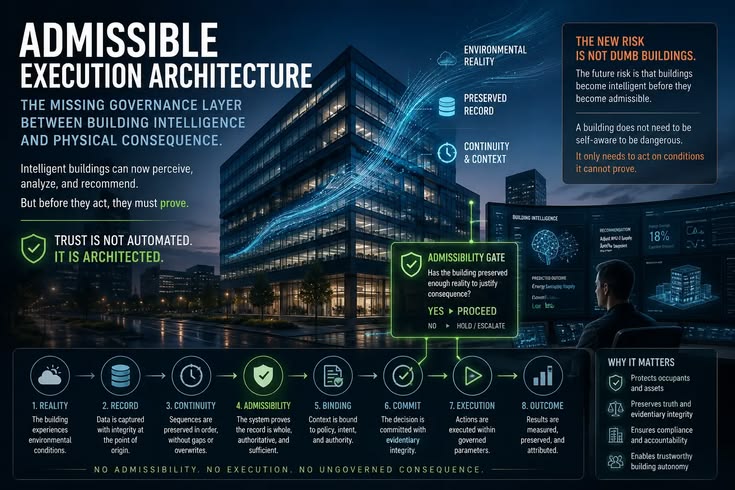
Introduction:- The landscape of artificial intelligence has shifted dramatically. For the past few years, organizations focused heavily on Generative AI—using Large Language Models (LLMs) primarily as sophisticated chatbots, creative writing assistants, or static data summarizers. While these applications delivered clear productivity gains, they remained fundamentally reactive. A human had to prompt the system, evaluate the output, copy-paste the result into another tool, and decide on the next course of action. The AI was a tool, not a teammate. Today, we are witnessing the dawn of the Agentic AI era. This paradigm shift moves us away from passive text generation and toward autonomous execution. Agentic AI refers to systems powered by advanced foundation models that can perceive their environment, reason through complex objectives, formulate multi-step plans, utilize external tools, collaborate with other digital entities, and execute actions to achieve specific business goals with minimal human intervention. For enterprise leaders and technology architects, this transition represents both an unprecedented opportunity and a massive infrastructure challenge. Transitioning from a single prompt-and-response model to a continuously running ecosystem of autonomous agents requires a fundamental rethinking of data pipelines, compute allocation, security frameworks, and software architecture. This guide provides a definitive roadmap for understanding, designing, and deploying enterprise-grade Agentic AI within modern technical ecosystems. Understanding the Anatomy of an AI Agent To build an effective agentic architecture, we must first break down what an AI agent actually is. Unlike a standard software program that follows rigid if/then logic, or a baseline LLM that predicts the next token in a vacuum, an autonomous agent functions as a dynamic loop of perception, reasoning, and action. An enterprise-grade agent consists of four core pillars. The Reasoning Core (The Brain) At the center of every agent is a foundation model, typically an LLM or a multimodal model. The core model acts as the central processing unit. It accepts a high-level goal from a user—such as “Audit our quarterly cloud expenditure and automatically resolve any misallocated billing codes”—and breaks it down into a logical sequence of sub-tasks. The reasoning engine utilizes sophisticated cognitive frameworks like Chain-of-Thought (CoT) or ReAct (Reason and Act) to evaluate its own progress, spot mistakes in its thinking, and pivot its approach when encountering obstacles. Memory Systems (The Context Engine) An agent cannot function effectively if it forgets what it did two minutes ago or lacks historical context about the enterprise. Agent architectures employ two primary types of memory: Short-Term Memory: This captures the immediate, in-flight context of the current task. It tracks what sub-tasks have been completed, what data has been gathered, and what the immediate next step is within a single session. Long-Term Memory: Powered by vector databases and semantic indexing, long-term memory allows an agent to retain knowledge across weeks, months, or thousands of distinct interactions. It stores user preferences, historical corporate data, past mistakes, and successful resolution patterns, allowing the agent to get smarter over time. Tool Integration (The Extremities) An LLM trapped in a sandbox can only talk. To turn talk into action, agents must be equipped with tools. Tools are APIs, database connectors, software development kits (SDKs), web scrapers, or even legacy terminal interfaces that allow the agent to interact with the external digital world. Through a process called function calling, the reasoning core determines when it needs external data or actions, selects the appropriate tool, formats the payload correctly, executes the call, and consumes the resulting data back into its reasoning loop. The Execution and Planning Layer (The Controller) This layer acts as the orchestrator that manages the state machine of the agent. It enforces constraints, manages token budgets, sets timeouts, and dictates how the agent should handle errors. If an API call fails, the planning layer prompts the reasoning core to find an alternative route rather than letting the system crash or enter an infinite loop. Infrastructure Requirements for Enterprise Agentic AI Deploying an application that hits an OpenAI or Anthropic API occasionally is relatively straightforward. Deploying thousands of autonomous agents that run continuously, polling systems, analyzing data streams, and modifying databases requires a robust, scalable, and highly resilient underlying infrastructure. Organizations looking to adopt agentic workflows must invest heavily in three distinct areas of their tech stack. Compute Optimization and Inference Scalability Agentic workflows are compute-intensive. A single user request to an agent might trigger twenty sequential calls to an LLM as the agent reasons, checks a database, refines its query, calls an API, validates the output, and finalizes the result. This creates a massive compounding effect on inference costs and latency. To mitigate this, enterprises are moving away from relying solely on commercial, one-size-fits-all API endpoints. Instead, they are adopting hybrid architectures. High-level planning and critical decision-making are routed to frontier models. Meanwhile, specialized, smaller open-source models (such as Llama-3 or Mistral variants fine-tuned for specific tasks like SQL generation or API interaction) are hosted locally on private cloud infrastructure. Utilizing advanced inference frameworks like vLLM or TensorRT-LLM, combined with dynamic batching, allows enterprises to maintain low latencies and manage predictable compute expenditures. High-Velocity and Graph-Based Data Pipelines Traditional Retrieval-Augmented Generation (RAG) relies on chunking documents and turning them into flat vector embeddings. While this works well for basic question-answering, it falls short for agentic workflows that require understanding complex corporate hierarchies, relational dependencies, and fast-changing operational data. Next-generation agent infrastructure requires a shift toward Knowledge Graphs integrated with vector spaces (GraphRAG). By representing corporate data as nodes (e.g., projects, employees, servers, clients) and edges (e.g., owns, reports to, depends on), agents can perform vastly superior semantic reasoning. If an agent is tasked with diagnosing a system outage, a knowledge graph allows it to instantly trace how a failure in a specific microservice impacts a downstream billing database, giving it the holistic perspective needed to take accurate corrective action. LLM Orchestration and Agent Frameworks Building an agent from scratch using raw API calls is akin to writing a web application in assembly language. Development teams require structured frameworks to manage agent lifecycles, states, and communications.

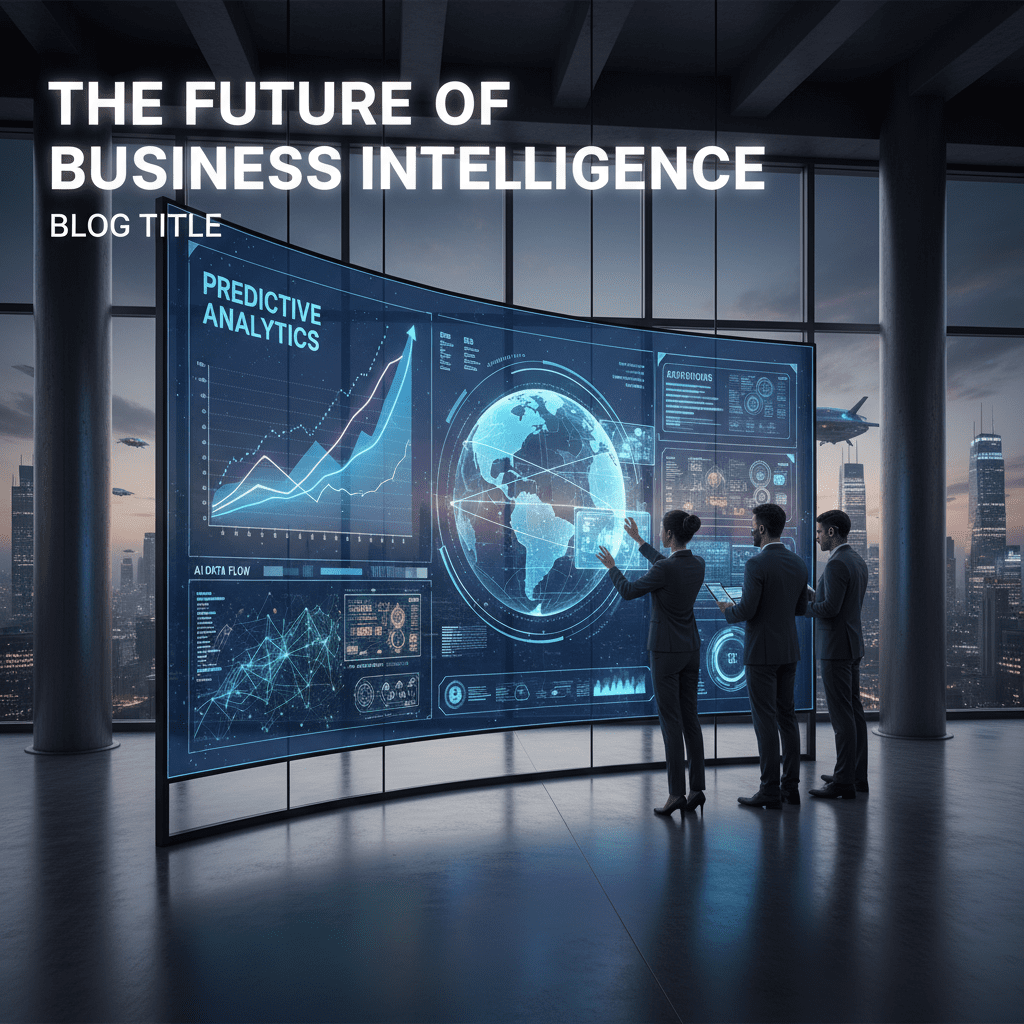
"Futuristic dashboard with predictive analytics graphs, AI data streams, and business professionals analyzing digital interfaces, representing software-driven business forecasting."
data science, Software development

Predictive Analytics Software Development

Introduction Predictive analytics software development is revolutionizing how organizations leverage their data to anticipate trends, reduce risk, and gain a competitive edge. By deploying machine learning, statistics, and advanced modeling, companies can turn historical and real-time data into actionable predictions—whether for sales forecasting, preventing fraud, or optimizing inventory. With mounting business complexity and data volumes, predictive analytics tools have become essential for organizations aiming to future-proof their strategies and drive smart decisions in an ever-changing market. What Is Predictive Analytics Software Development? Predictive analytics utilizes historical and live data, advanced algorithms, and machine learning to forecast future outcomes and recommend the best actions. Developing predictive analytics software typically involves identifying business needs, collecting and preparing data, building models, and integrating these models seamlessly into business applications for real-time insights. Modern predictive analytics systems can be custom-coded, built using data science tools, or integrated through user-friendly low-code platforms, making this technology accessible across industries. Key Features: Automated data ingestion and cleansing Model building, evaluation, and deployment Real-time prediction capabilities Integration with business processes and dashboards Ability to learn and adapt as new data arrives The Predictive Analytics Software Development Lifecycle Strategic Planning Define specific business problems such as churn prediction, fraud detection, or inventory optimization. Set measurable goals and align key stakeholders. Data Collection & Preparation Gather data from internal systems, external sources, and real-time feeds. Cleanse, transform, and annotate data to ensure quality input for models. Model Development Choose appropriate algorithms (e.g., regression, decision trees, neural networks). Train and validate models on historical data; iterate for accuracy and explainability. Integration & Deployment Embed predictive models into business systems like CRMs, ERPs, or supply chain tools for live predictions. Provide end-users, analysts, and leaders with intuitive dashboards or automated triggers. Monitoring, Maintenance, and Scaling Track accuracy; retrain models as conditions shift and new data is available. Continuously enhance with new features and data sources. Best Practices: Start small with a pilot project—optimize, then scale Prioritize data quality and governance early on Foster teamwork between IT, data science, and business units Focus on model transparency and compliance Embrace agile, iterative development for adaptability Business Benefits & Use Cases Improved Decision-Making: Predictive analytics drives proactive strategies by uncovering patterns and forecasting potential outcomes. Risk Reduction: Banks, insurers, and manufacturers leverage predictive models for fraud detection, credit scoring, risk assessment, and predictive maintenance. Enhanced Efficiency: Automated forecasting and resource allocation improve supply chain and operations management. Personalization: Retailers and marketers optimize targeting, recommendations, and retention using behavioral analytics. Healthcare: Early disease detection, readmission risk prediction, and personalized treatment planning lead to improved patient outcomes. Scalable Growth: Predictive software enables organizations to handle increasing data complexity and maintain a competitive edge. Conclusion Developing predictive analytics software equips organizations with the foresight to make smarter, data-driven decisions while automating processes and enhancing resiliency. By following best practices and leveraging modern development frameworks, businesses of all sizes can turn raw data into predictive power—unlocking new opportunities and sustainable growth. Call-to-Action: Explore predictive analytics software solutions tailored to your business needs—connect with expert developers today and turn your data into a strategic asset! FAQ What is predictive analytics software? It is a tool that uses historical and current data, along with algorithms and machine learning, to forecast future trends and inform smarter business decisions. How does predictive analytics benefit companies? It improves revenue prediction, reduces risk, enhances customer experience, streamlines operations, and delivers personalized recommendations. What are common use cases? Fraud detection, demand forecasting, maintenance planning, customer segmentation, and healthcare diagnosis are among the top applications. What is needed to build predictive analytics software? You need a well-defined problem, quality data, an experienced team, the right algorithms, and a plan for ongoing monitoring and refinement. How do you choose the right predictive model? Select based on the type of prediction needed—classification, regression, or time series—and evaluate with validation metrics before deployment

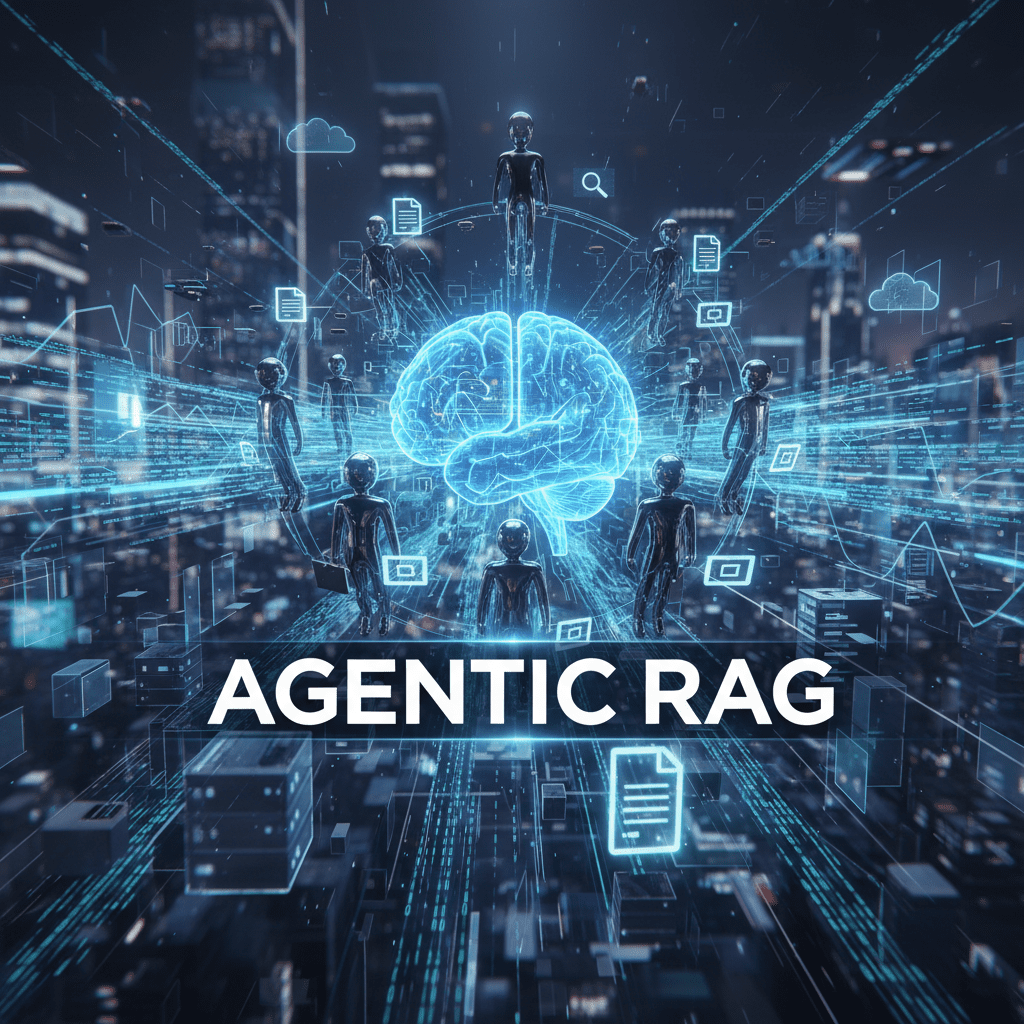
Futuristic business illustration showing a central AI brain connected to digital agent nodes and data streams, with document icons symbolizing smart retrieval. Bold title reads 'Agentic RAG
React native doveploment

Agentic RAG

Introduction Agentic RAG is transforming the way organizations approach information retrieval, research, and automation by combining the power of retrieval-augmented generation (RAG) with intelligent, autonomous agents. This advanced AI framework empowers systems to reason, plan, use external tools, and learn over time, resulting in highly accurate and context-aware outputs. As modern enterprises face exponential growth in data, agentic RAG offers new ways to access reliable information, automate workflows, and create advanced virtual assistants—ushering in a new era of scalable, adaptive business intelligence. What Is Agentic RAG? Agentic RAG merges retrieval-based AI models with generative language models, empowered by autonomous agents that go beyond static query matching. Agents can decide what information to retrieve, break down complex queries into sub-tasks, access external APIs, and synthesize data for comprehensive responses. Unlike classic RAG, agentic RAG adapts to new data and context dynamically, leveraging iterative planning and feedback to continually improve output quality. Key Features: Autonomous decision-making and reasoning Multi-step planning and query decomposition Dynamic retrieval from diverse sources (databases, APIs, knowledge bases) Enhanced accuracy, efficiency, and real-time adaptability Continual learning and context management Types of Agentic RAG Agentic RAG systems employ several types of agents based on function and complexity: Routing Agent: Directs queries to the most suitable RAG pipeline, using agentic reasoning to analyze tasks such as document summarization or question answering. One-Shot Query Planning Agent: Breaks queries into independent sub-queries, executes them in parallel, and synthesizes unified answers. Tool Use Agent: Integrates external tools and APIs for real-time or specialized data, enhancing generative responses. ReAct Agent (Reason + Act): Iteratively reasons and interacts with multiple sources or tools, adapting its approach mid-task for the most precise result. Dynamic Planning & Execution Agent: Manages multi-step and complex workflows, separating long-term plans from immediate execution. Utilizes computational graphs and orchestrates stepwise execution. Applications in Real-World Scenarios Agentic RAG offers transformative benefits across industries: Enterprise Knowledge Management: Streamlines access to organizational data, enabling employees to make fast, informed decisions. Automated Support & Virtual Assistants: Reduces workloads by providing instant, context-relevant answers in customer and employee support. Healthcare: Improves patient insights and research capabilities with agents that gather and contextualize medical knowledge. Legal Research & Finance: Accelerates analysis of documents, regulations, and market data with agents capable of domain-specific data synthesis. Innovation & Research: Assists in synthesizing ideas, comparing multiple sources, and driving strategic initiatives through intelligent information retrieval. How To Implement Agentic RAG Follow these steps for building an agentic RAG system: Define Objectives: Identify tasks suitable for agentic RAG, such as chatbots or automated research. Choose Core Components: Select a retrieval system (e.g., dense passage retrieval, hybrid search) and a generative AI model (e.g., GPT, BERT). Prepare Data: Collect, clean, and preprocess documents to ensure compatibility and maximize retrieval accuracy. Build the Retrieval Layer: Index documents for fast, context-aware search. Agent Integration: Introduce agents to orchestrate workflows—query planning, tool use, and multimodal integration. Fine-Tune & Feedback Loops: Continuously refine models with user feedback and retraining to maintain high performance. Deploy & Monitor: Set up APIs, real-time monitoring, and performance dashboards for ongoing optimization. Key Tools: LlamaIndex and LangChain for agent orchestration, reasoned workflows, and tool integration. Low-code platforms like ZBrain for business workflows and rapid issue response. Conclusion Agentic RAG is redefining the landscape of AI-driven knowledge management, automating complex information retrieval, and powering scalable enterprise solutions. Its combination of multi-agent intelligence, context-awareness, dynamic adaptation, and modular flexibility gives organizations the tools to succeed in an information-rich, rapidly evolving market. Unlock the power of agentic RAG to supercharge research, virtual assistants, and automated decision-making. Call-to-Action: Explore how agentic RAG can optimize workflows and revolutionize information access—connect with AI experts today to get started on a future-ready solution! FAQ What is Agentic RAG? Agentic RAG is a framework that empowers AI agents to retrieve and use external information, plan multi-step workflows, and generate intelligent, context-aware responses far beyond classic RAG capabilities. How does it differ from traditional RAG? Agentic RAG adds autonomous reasoning, multi-task orchestration, and external tool use—enabling more accurate and adaptable information synthesis. What are the main benefits for enterprises? Benefits include scalable automation, enhanced data accuracy, personalized user experiences, and efficiency with reduced costs and improved decision quality. What are common implementation challenges? Challenges involve complex system integration, managing data quality, ensuring scalability, and maintaining real-time performance. Which platforms support agentic RAG development? Popular frameworks are LlamaIndex, LangChain, and low-code platforms like ZBrain, offering flexible workflow design and seamless data integration. The Real Benefits of Hiring a React Native App Development Company

Scroll to Top