Demystifying Mobile Edge Computing: Benefits, Use Cases, and Future Trends
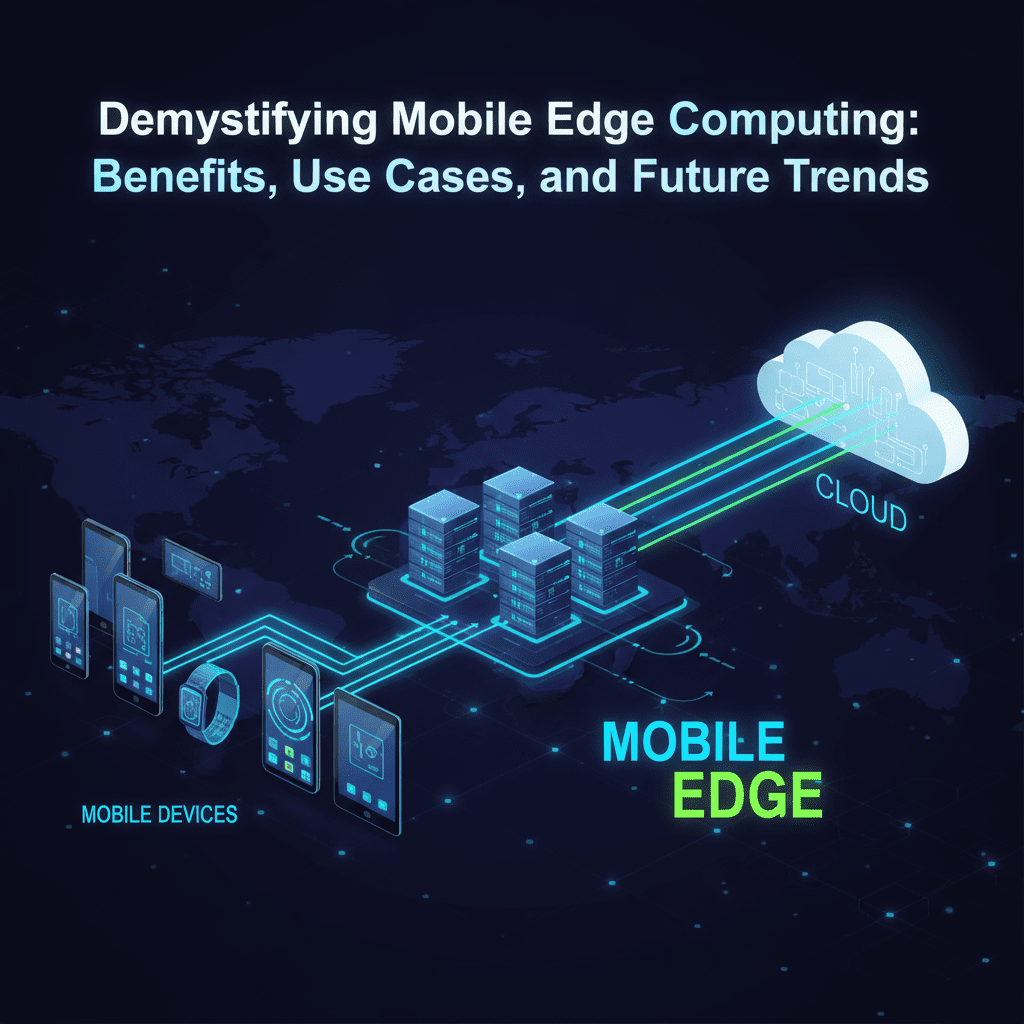
Introduction In the rapidly evolving digital landscape, Mobile Edge Computing (MEC) has become a critical technology, ushering in new capabilities beyond traditional cloud computing paradigms. By processing data closer to the source—at the edge of the network—MEC dramatically improves data processing speed, reduces latency, enhances security, and fuels innovation across industries. This comprehensive blog demystifies MEC with a deep dive into its benefits, practical use cases, and future trends shaping enterprise strategies. It also highlights key technological integrators such as AI, blockchain, and predictive analytics explored extensively by TechOTD and its related resources. What is Mobile Edge Computing? Mobile Edge Computing (MEC) pushes computing power and data storage closer to end users and connected devices, typically at or near cellular base stations, IoT gateways, or local data centers. Unlike central cloud data centers that might be geographically distant, MEC provides ultra-low latency and real-time processing capabilities. This proximity is a game changer for applications requiring speed, reliability, and privacy. MEC works symbiotically with 5G, AI, and IoT to enable seamless, intelligent experiences across multiple sectors. Benefits of Mobile Edge Computing 1. Ultra-Low Latency and Real-Time Processing By processing data at the edge, MEC reduces the time needed to transmit data to distant cloud servers and back. This latency reduction is essential for use cases like autonomous driving, remote surgery, and live video analytics. 2. Enhanced Data Privacy and Security MEC minimizes data traveling over public networks, reducing exposure risks. Enterprises can enforce data residency and compliance directly on edge nodes, critical for healthcare, finance, and government. 3. Bandwidth Optimization and Cost Savings Edge processing filters and aggregates data locally, reducing network congestion and lowering bandwidth costs—a vital benefit as IoT devices and data volumes surge. 4. Improved Reliability and Resilience MEC enables critical systems to function locally even if the central cloud or wide-area network connectivity is disrupted, offering business continuity and superior service quality. 5. Scalability and Flexibility Modular edge deployments allow enterprises to add or upgrade capacity closer to users and devices, supporting dynamic workloads and new services faster than traditional cloud-only models. Key Use Cases of MEC Across Industries Manufacturing: Smart Factories and Predictive Maintenance MEC combined with IoT sensors enables immediate processing of operational data, facilitating real-time monitoring, predictive maintenance, and automation in factories — minimizing downtime and maximizing productivity. Retail: Personalized In-Store Experiences Retailers use MEC for instant data analytics supporting personalized promotions, inventory management, and frictionless payment processing at the store edge, enhancing customer experience. Healthcare: Remote Monitoring and Diagnostics In healthcare, MEC allows processing of medical imaging and patient data locally for faster, secure diagnostics and telehealth services while ensuring compliance with privacy regulations. Transportation and Logistics: Autonomous and Connected Fleets Edge computing enables rapid data analysis for connected vehicles and fleets, supporting route optimization, safety monitoring, and compliance in real-time. Smart Cities: Responsive Public Infrastructure Citywide IoT systems use MEC to process environmental data, traffic flows, and public safety signals locally, enabling fast responses and efficient resource management. Integration with AI and Blockchain Technologies Artificial Intelligence at the Edge Integrating AI with MEC allows for real-time, context-aware decision making on devices or local nodes without sending data back to the cloud. This accelerates innovation in predictive analytics, image recognition, and anomaly detection. Explore advanced AI applications in enterprises at TechOTD AI Services and TechOTD AI Blog. Blockchain for Enhanced Security and Transparency Blockchain technology complements MEC by providing decentralized, tamper-proof transaction records and supply chain transparency, ideal for secure edge operations. Learn more about blockchain’s transformative business role at TechOTD Blockchain Integration. Best Practices for MEC Implementation Evaluate Business Needs and Edge Readiness: Identify workloads that gain most from edge processing to ensure efficient deployment and ROI. Prioritize Security: Implement comprehensive security protocols including data encryption, authentication, and zero-trust models at all edge points. Adopt Hybrid Cloud-Edge Architecture: Combine centralized cloud resources with edge nodes for balance between scalability and low latency. Use Automation and AI for Resource Optimization: Employ AI-driven management tools for predictive maintenance, load balancing, and anomaly detection. Partner with Experienced Vendors: Collaborate with technology providers skilled in edge deployments to ensure seamless integration and ongoing support and TechOTD How We Work. Future Trends in Mobile Edge Computing Advances in On-Device AI: Smaller, more capable AI models running independently on edge devices for privacy and speed. Industry-Specific MEC Solutions: Vertical customization for health, manufacturing, retail, and other sectors. Edge Orchestration and Automation: Automated deployment, scaling, and self-healing edge systems reducing OPEX. Integration with 6G and Beyond: As next-gen networks evolve, MEC will expand with wider network slices and higher bandwidths. Expansion of Smart Cities and IoT: Growing urban infrastructure and IoT devices will increase MEC demand exponentially. Stay current on technology impact with TechOTD Blog and explore mobile and AI app development strategies at TechOTD Mobile Apps. Key Takeaways: MEC drastically reduces latency by processing data near the source. Security and data privacy improve through decentralized processing. Reduces network load and operational costs for enterprises. Industry use cases span manufacturing, retail, healthcare, transport, and smart cities. AI and blockchain technologies amplify MEC capabilities. Hybrid cloud-edge architectures offer flexible, scalable designs. Automation and orchestration will drive future MEC innovations Conclusion Mobile Edge Computing is no longer a futuristic concept but a necessary foundation for enterprises embracing digital transformation in the 5G era. By bringing compute power and intelligence closer to data sources, MEC accelerates innovation, enhances security, optimizes networks, and delivers real-time insights that fuel competitive advantage. Enterprises equipped with strategic MEC integration, supported by AI, blockchain, and predictive analytics, will unlock new business models and efficiencies—leading the charge into a connected, intelligent future.