
Digital Health Transformation

Healthcare & Fitness

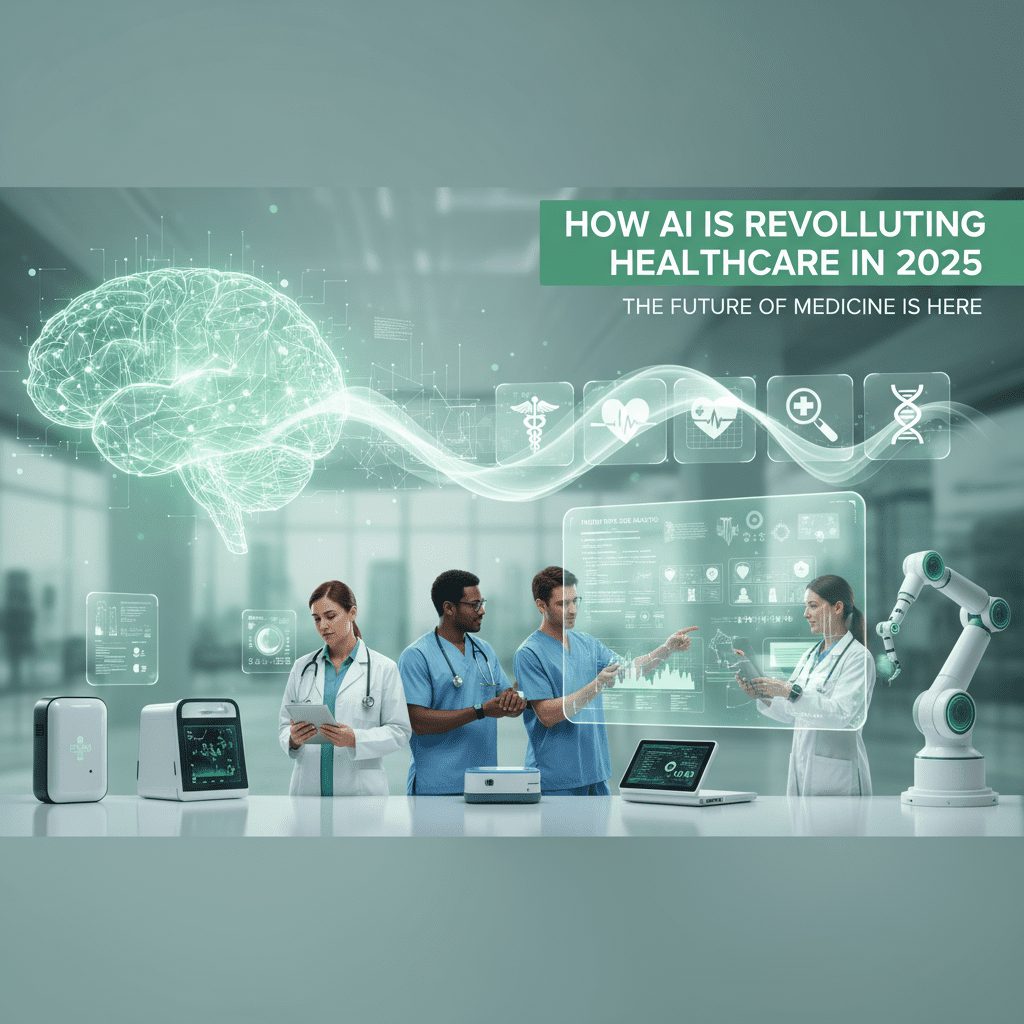
How AI is Revolutionizing Healthcare in 2025

Introduction Artificial Intelligence is ushering in a new era of healthcare in 2025—boosting patient outcomes, accelerating innovation, and making care more precise and accessible than ever before. Here’s how AI is shaping the future of medicine across the globe. Smarter, Faster Diagnostics AI-Powered Medical Imaging: AI now analyzes X-rays, MRIs, and CT scans to detect anomalies like tumors, fractures, and infections faster and more accurately than ever. Early cancer and rare disease detection have been dramatically improved, with error rates and costs dropping significantly. Predictive Diagnostics: AI uses data from patient histories, genetics, and wearables to anticipate the risk of diseases before symptoms occur, allowing for preventative care strategies—especially effective for chronic conditions like heart disease and diabetes. Next-Gen Treatment: Personalized Medicine Precision Treatments: AI integrates genetic, lifestyle, and clinical data to tailor therapies for individuals, especially in oncology and rare diseases, optimizing outcomes and reducing side effects. Genomics and Profiling: Advanced AI systems rapidly interpret genomic data, enabling real-time profiling during surgeries and predicting individual responses to therapies, revolutionizing cancer and rare disease management. Remote Care & Virtual Health Assistants Wearable Monitoring: AI-powered devices track real-time vital signs, alerting both patients and clinicians to potential health issues before they escalate. Hospital-at-home models reduce readmissions and improve quality of life. 24/7 Virtual Support: Chatbots and AI-driven apps now answer medical questions, schedule appointments, provide medication reminders, and triage patients, all while reducing the workload of clinicians. AI in Clinical Decision-Making Real-time Decision Support: AI gives doctors evidence-based recommendations at the point of care by synthesizing global research, treatment guidelines, and patient information. This augments physician expertise, increases diagnostic accuracy, and improves confidence in treatment decisions. Automating Admin Tasks: Intelligent agents automate medical documentation, billing, and coding. This lightens the administrative load and allows clinicians to spend more time with patients. Accelerating Medical Research & Drug Discovery Drug Development: AI can sift through millions of molecules, predict interactions, and simulate clinical trials—speeding up drug discovery, lowering development costs, and quickly identifying optimal candidates for new treatments. Clinical Trials Optimization: By analyzing records and finding ideal trial participants, AI makes trials safer and more effective, accelerating new therapies to market. Enhancing Equity and Population Health Addressing Social Determinants: AI analyzes socioeconomic data alongside health records to identify at-risk populations, close care gaps, and optimize resource allocation—paving the way for fairer, more accessible healthcare. Global Reach: AI extends expertise to remote areas, bridging geographic gaps and allowing global collaboration in tackling public health challenges. Robotic Surgery and Assisted Procedures Greater Precision: Robotic systems powered by AI help surgeons perform complex operations with greater dexterity and accuracy, resulting in fewer complications and quicker recovery times for patients. Impact at a Glance Area AI-Driven Transformation Example/Impact Diagnostics More accurate, earlier detection AI finds tumors in scans invisible to the eye Personalized Care Tailored therapies, reduced side effects Precision oncology; rare disease management Patient Monitoring Continuous data analysis, proactive alerts Wearables detect heart issues before symptoms Administration Automated records and workflows Less clinician burnout, more patient care Research Faster drug discovery, smarter trials Shortened time to new treatments Access & Equity AI bridges gaps for rural or vulnerable groups Virtual care reaches more patients Challenges and the Road Ahead Ethics & Trust: Ensuring privacy, reducing bias, and building transparent, explainable AI remain priorities as adoption expands. Human-AI Partnership: AI isn’t replacing medical professionals but empowering them—successful healthcare systems will be those that blend human empathy with machine intelligence. Scalability: With 90% of hospitals expected to use AI by 2025, broad access and workforce training are key for sustaining progress. AI’s transformative role in healthcare is just beginning. As these technologies advance, expect faster diagnoses, more personalized care, and a health system that’s smarter, fairer, and more responsive to the needs of all. The revolution is well underway—and in 2025, AI is making healthcare better, one patient at a time.
Healthcare & Fitness

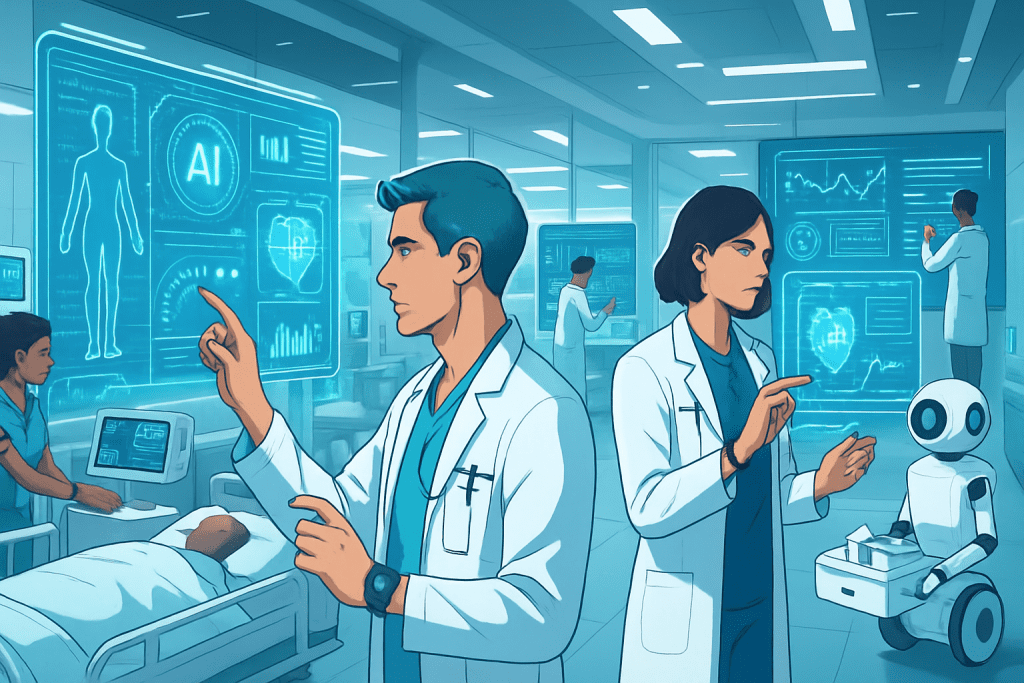
Smart Hospitals: Revolutionizing Healthcare Operations with Modern Technology

Introduction Healthcare is undergoing a digital revolution, and at the center of this transformation are Smart Hospitals. With the integration of technologies like IoT (Internet of Things), AI, Big Data, Cloud Computing, and Blockchain, hospitals are no longer just physical spaces for treatment — they are evolving into intelligent ecosystems that provide seamless care, improved efficiency, and enhanced patient outcomes. In this blog, we’ll explore how smart hospitals are redefining healthcare operations, their key technologies, benefits, challenges, and future opportunities. What Are Smart Hospitals? A Smart Hospital uses modern digital technologies to optimize operations, enhance patient care, and improve decision-making. Unlike traditional hospitals, which rely heavily on manual processes, smart hospitals employ connected devices, automated systems, predictive analytics, and AI-driven decision-making to deliver data-powered healthcare solutions. These hospitals are not only focused on clinical improvements but also on operational efficiency, patient experience, and cost reduction. Key Technologies Powering Smart Hospitals The smart hospital ecosystem is built upon several transformative technologies: 1. IoT (Internet of Things) IoT connects medical devices, wearables, and hospital equipment, enabling real-time patient monitoring and automated data collection. For example, wearable devices can track patient vitals and immediately alert doctors in case of anomalies. Learn how IoT is reshaping industries in this blog. 2. Artificial Intelligence (AI) AI assists in diagnostics, personalized treatment recommendations, and predictive analytics. From detecting diseases in early stages to streamlining hospital workflows, AI is the backbone of smart hospitals. Explore how AI enhances service excellence in this article. 3. Electronic Health Records (EHRs) and Cloud Computing Cloud-based EHR systems ensure seamless data sharing among healthcare professionals, allowing for collaborative care and better treatment decisions. For more insights into AI and data applications, check AI in Finance use cases. 4. Robotics and Automation Robotic surgical systems, automated medication dispensers, and AI-powered diagnostic assistants reduce human error and increase accuracy. 5. Predictive Analytics & Big Data By analyzing historical health data, predictive analytics can anticipate patient needs, optimize staffing schedules, and improve resource allocation. See how predictive analytics is applied in this detailed guide. 6. Blockchain Technology Blockchain ensures secure, tamper-proof medical data sharing across systems, reducing fraud and enhancing patient trust. Benefits of Smart Hospitals Enhanced Patient Care – Real-time monitoring and AI-driven diagnostics improve treatment accuracy. Operational Efficiency – Automation reduces waiting times and optimizes staff workload. Data-Driven Decision Making – Analytics empower healthcare providers to make better choices. Cost Reduction – Preventive care and predictive maintenance reduce unnecessary expenses. Patient Experience – Virtual assistants, telehealth, and mobile health apps provide personalized and convenient care. For example, mobile app solutions for healthcare are already transforming the industry. Learn more about custom development in mobile app services. Challenges in Implementing Smart Hospitals Despite their promise, smart hospitals face several challenges: High Initial Investment – Implementing advanced technologies requires significant funding. Cybersecurity Risks – With massive data flow, hospitals become vulnerable to cyberattacks. Integration Issues – Legacy systems often cannot integrate seamlessly with modern solutions. Staff Training – Healthcare workers need training to adapt to new digital workflows. Regulatory Compliance – Hospitals must follow strict data privacy and healthcare regulations. Use Cases of Smart Hospitals Remote Patient Monitoring – Wearables and connected devices monitor patients beyond hospital walls. Smart Beds – Beds equipped with sensors track patient movement and vitals. AI-Powered Imaging – AI improves the speed and accuracy of CT, MRI, and X-ray scans. Telemedicine Platforms – Virtual consultations allow patients to access specialists remotely. Mobile Health Apps – Patients manage appointments, prescriptions, and records via smartphones. Explore app development strategies in this React Native vs Swift comparison. Future of Smart Hospitals Smart hospitals are expected to evolve further with: 5G-enabled healthcare solutions AI-driven predictive healthcare models Digital twins for personalized treatment Advanced robotics in surgeries Sustainable and green hospital infrastructure The convergence of healthcare with AI, IoT, and mobile apps is creating a new era of precision medicine and patient-centric care. SEO Backlinks Integration Throughout this blog, we have naturally integrated useful links from TechOTD to enhance user experience and provide additional resources: AI-driven insights TechOTD Blog Hub Blockchain in Business Processes How We Work Large Language Models in Finance AI for Customer Journeys Best Gadgets for Programmers Predictive Analytics in Software Development Technology in Education React Native vs Swift Industries Blog Page Mobile App Development Services FAQs About Smart Hospitals 1. What is the meaning of a smart hospital? A smart hospital leverages AI, IoT, cloud computing, and automation to improve patient care and hospital operations. 2. How do smart hospitals improve patient care? By using real-time monitoring, predictive analytics, and AI-based diagnostics, smart hospitals ensure faster and more accurate treatments. 3. Are smart hospitals expensive to build? Yes, the initial setup requires a high investment, but long-term benefits include reduced costs, better efficiency, and improved outcomes. 4. What technologies are most important for smart hospitals? Key technologies include IoT, AI, robotics, blockchain, and cloud-based EHR systems. 5. What is the future of smart hospitals? The future involves 5G, AI-driven personalized medicine, robotic surgeries, and eco-friendly hospital designs. Conclusion Smart hospitals are not just a vision of the future—they are already becoming a reality today. By integrating technologies like AI, IoT, robotics, blockchain, and predictive analytics, they are transforming the way healthcare is delivered. For patients, smart hospitals promise personalized and efficient care. For doctors and staff, they reduce administrative burdens and improve treatment accuracy. And for healthcare providers, they ensure long-term sustainability with reduced costs and optimized resources. As we move forward, hospitals that embrace these technologies will lead the way in providing next-generation healthcare services. The journey towards smart hospitals is challenging, but the rewards in terms of patient outcomes, cost efficiency, and innovation are unparalleled.

Scroll to Top