AI integration

Digital Transformation

Digital Transformation Strategies You’ll Wish You Knew Sooner

Introduction Digital transformation is no longer a buzzword—it’s a fundamental push shaping how organizations deliver value, innovate, and stay competitive in rapidly evolving markets. Yet, most businesses face unexpected hurdles, costly investments, and missed opportunities simply because they overlook key strategies that drive real results. This blog reveals the digital transformation strategies that lead to lasting impact—and that you’ll wish you applied earlier. 1. Prioritize Integration, Not Just Implementation Many organizations make the mistake of deploying digital tools in silos. Instead, develop integrative solutions that easily connect systems, streamline workflows, and enable cross-functional collaboration. A well-connected digital ecosystem powers automation and improves operational efficiency. 2. Embrace User-Centric Innovation Digital platforms must be user-friendly—whether for customers or employees. Intuitive design and robust usability testing result in higher adoption and satisfaction. Focus innovations on real needs, ensuring technology enhances daily work and customer experiences. 3. Run Parallel Systems During Transition Avoid downtime by maintaining legacy systems while experimenting with new digital solutions. This reduces operational risks and enables safe, staged modernization, such as piloting AI-powered processes alongside manual workflows before full migration. 4. Move Away from Legacy Technologies—Smartly Don’t let outdated infrastructure slow growth. Upgrade and automate with cloud platforms, scalable data analytics, and AI-powered tools. This move strengthens flexibility and helps future-proof the business without the pain of abrupt change. 5. Invest in R&D and Continuous Learning Allocate resources for digital R&D and organizational upskilling. Businesses that foster ongoing learning and innovation outperform their peers, especially when embracing technologies like AI, IoT, and predictive analytics to gain actionable insights. 6. Use Data Analytics for Real-Time Optimization Integrate real-time data analytics platforms to monitor KPIs, optimize workflows, and enable informed, proactive decision-making. Data-driven transformation leads to better forecasting and agile business development. 7. Build a Digital-First Culture Digital success depends on people as much as technology. Encourage a culture of experimentation, resilience, and collaboration. Cross-functional teams and digital champions accelerate transformation and break down silos. 8. Strengthen Ecosystem Partnerships Collaborate with tech, data, and value chain partners to address complexity and deliver superior customer outcomes. Ecosystem strategies enable differentiated service offerings and unlock additional value. 9. Automate Where It Matters Most Automate core processes—customer support, supply chain, and operations—with AI and digital solutions. Automation reduces manual workloads, minimizes errors, and frees up resources for value-driven initiatives. Conclusion The most effective digital transformation strategies are not about implementing more technology, but about creating integrated, user-focused, data-driven, and agile organizations. By putting these proven strategies into practice sooner, leaders can unlock new business opportunities, drive innovation, and avoid the pitfalls that stall progress. For actionable guidance, explore AI-driven transformation and continuous improvement resources with TechOTD AI Services and stay updated via the TechOTD Blog.
Mobile App Development

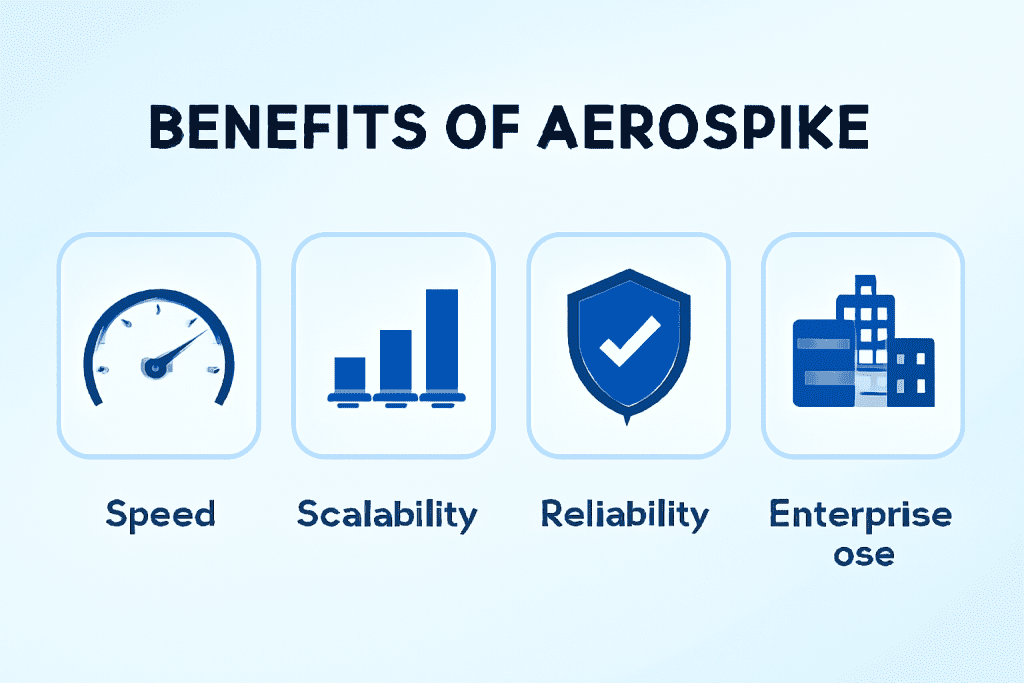
The Business Benefits of Choosing Aerospike Database

Introduction In today’s data-driven business landscape, organizations demand databases that deliver high performance, scalability, and reliability while processing vast volumes of real-time data. Aerospike, a modern NoSQL distributed database, excels in these areas, providing enterprises the foundation they need to innovate, optimize operations, and enhance customer experiences. This comprehensive blog explores the multifaceted business benefits of choosing Aerospike Database. It discusses key technical advantages, diverse industry use cases, and how Aerospike integrates with emerging technologies like AI, blockchain, and predictive analytics. Strategic backlinks to TechOTD AI Services and other relevant TechOTD content enrich the discussion for readers seeking to elevate their technology strategies. Why Aerospike? Key Business Advantages 1. Ultra-High Performance and Low Latency Aerospike is engineered for real-time, high-speed transactions at scale. Its Hybrid Memory Architecture leverages both RAM and persistent flash storage, dramatically reducing latency and enabling billions of transactions per day. Businesses can deliver instant personalization, fraud detection, and dynamic pricing, critical in sectors like retail, ad tech, and finance. Explore AI-driven real-time personalization and fraud prevention strategies at TechOTD AI Services. 2. Extreme Scalability and Reliability Aerospike’s distributed architecture supports automatic sharding and replication across multiple nodes and data centers, ensuring horizontal scalability and high availability without performance degradation. This reliability is vital for applications requiring 99.999% uptime such as telecom, gaming, and banking. Real-world case studies are available via TechOTD Blog. 3. Simplified Data Architecture By combining key-value and document store capabilities, Aerospike simplifies data models and reduces infrastructure complexity. This simplification accelerates development cycles and reduces operational costs and risks. Learn about lean and agile development in mobile apps at TechOTD Mobile Apps. 4. Enterprise-Grade Security and Compliance Aerospike includes multi-layer security features such as encryption at rest/in transit, access control, and audit logging, supporting regulatory requirements like GDPR and HIPAA. Enhanced data security integrates seamlessly with blockchain technologies to ensure immutable, secure transactions TechOTD Blockchain Integration. 5. Native Cloud and Hybrid Deployment Flexibility Aerospike supports deployment across public clouds, private clouds, and on-premises environments, providing flexibility aligned with IT strategy and regulatory mandates. Hybrid cloud architectures enable the best of scalability and control, a focus area covered extensively by TechOTD Cloud Blogs. Industry Use Cases Empowered by Aerospike   Retail & E-Commerce: Real-Time Personalization and Inventory Management Aerospike powers instant personalization at scale by managing user sessions and product catalogs with minimal latency. Faster inventory updates and order processing improve customer satisfaction and operational efficiency. Financial Services: Fraud Detection and Risk Analytics Aerospike enables ultra-fast transaction processing and real-time anomaly detection, reducing fraud and credit risks. AI-driven analytics running on Aerospike data accelerate decision-making TechOTD Large Language Models in Finance. Ad Tech: Real-Time Bidding and Audience Segmentation Aerospike’s capability to handle massive read/write loads supports real-time bidding platforms and audience analytics, increasing ad revenue and precision. Telecommunications: Session Management and Network Optimization High-availability and low-latency session data management improve call quality and subscriber experience. Gaming & Entertainment: Leaderboards and In-Game Analytics Real-time game state updates and analytics tracking enable responsive multiplayer experiences and personalized gameplay. Integration with AI, Blockchain, and Predictive Analytics Aerospike integrates seamlessly with AI and machine learning pipelines, enabling fast data ingestion and retrieval critical for training and inference at scale. For comprehensive AI integration strategies, see TechOTD AI Services. Blockchain enhances Aerospike’s secure data framework for use cases requiring transparency and trust TechOTD Blockchain Integration. Predictive analytics leverage Aerospike’s performance to deliver timely insights, enhancing operational decision-making TechOTD Predictive Analytics. Operational Excellence and Developer Productivity Aerospike comes with advanced management tools, monitoring, and automation features that reduce downtime and manual effort. Its powerful query language and APIs accelerate developer productivity, supporting agile methodologies TechOTD Mobile App Development. Challenges and Mitigation Learning Curve: Adopting new database technologies requires training, but developer-friendly resources and consulting can ease transition TechOTD How We Work. Integration Complexity: Aerospike integrates with popular data platforms and analytics tools to ease ecosystem compatibility. Future Outlook As edge computing and 5G expand, Aerospike’s low latency and edge adaptability position it for emerging workloads. Continued AI and blockchain feature integration will boost Aerospike’s role in next-gen applications. Stay updated with TechOTD insights on evolving technology at TechOTD Blog. Conclusion Choosing Aerospike Database offers enterprises a high-performance, scalable, and reliable platform crucial for modern data-intensive applications. Its unique architecture supports business agility, innovation, and operational excellence across sectors. Key Benefits Summary: Real-time, low-latency data processing Unmatched scalability and availability Simplified data models and reduced complexity Robust security compliance and blockchain synergy Hybrid and cloud deployment flexibility Proven multi-industry use cases and AI integration

Technical Debt

Digital Innovation Challenges: Can Your Technology Keep Up?

Digital Innovation Challenges: Can Your Technology Keep Up?   Introduction In today’s lightning-fast digital era, innovation isn’t just a buzzword—it’s a necessity. Businesses that fail to adapt quickly risk losing ground to agile competitors, eroding market share, and falling short of customer expectations. Digital innovation brings immense promise—streamlined operations, new revenue streams, and better user experiences—but it also introduces unique technological challenges. Is your technology stack resilient, scalable, and intelligent enough to keep pace? This blog explores the key hurdles companies face in the race for digital excellence and provides practical solutions, highlighting how future-ready partners like TechOTD can empower your journey. The Biggest Digital Innovation Challenges Legacy System Limitations Outdated IT infrastructure and siloed systems hamper integration and flexibility. Difficulty connecting legacy platforms to cloud, mobile, and AI solutions slows business transformation. Solution: Migrate gradually with expert web development and modernization. Scalability for Sudden Growth Many companies struggle to scale infrastructure to meet demand spikes without prohibitive costs. Cloud adoption and automation help, but navigating the transition can be complex. Solution: Embrace robust cloud solutions and leverage AI-powered automation. Security in a Connected World Expanding digital footprints increase vulnerabilities to cyber threats and data breaches. Compliance with evolving regulations (GDPR, HIPAA) is increasingly demanding. Solution: Build secure software with regular security audits through industry-leading partners. Data Overload and Insight Extraction Massive data is generated every minute, but actionable insights lag behind. Integrating disparate data sources and harnessing predictive analytics is an ongoing struggle. Solution: Invest in AI & Analytics to turn raw data into strategic advantage. User Expectations & Digital Experience Customers demand seamless, personalized experiences across platforms. Slow, unintuitive, or buggy apps lead to abandoned carts and lost loyalty. Solution: Employ cutting-edge mobile app and web solutions for world-class customer engagement. How to Overcome Innovation Hurdles Create a Culture of Agility Foster cross-functional teams and encourage experimentation over perfectionism. Rapidly prototype and test new ideas with minimal risk. Adopt Modular, Future-Proof Platforms Use modern APIs and microservices to facilitate integration and scalability. Avoid vendor lock-in and ensure long-term flexibility. Harness Artificial Intelligence Automate repetitive tasks and drive smarter decisions with AI-driven tools. Leverage AI for predictive analytics, personalization, and product recommendations for industries like eCommerce. Partner with Innovation-Driven Experts Collaborate with technology advisors who offer both strategy and implementation—see how TechOTD’s partner programs deliver end-to-end digital transformation. Invest in Proactive Maintenance and Support Ensure continuous uptime, regular updates, and future scalability. Choose IT partners that provide robust support and knowledge transfer—learn more About TechOTD. Conclusion Digital innovation is a journey with hurdles at every step—from legacy challenges and security threats to the need for constant scalability and insight. But with the right strategy and future-facing technology partners, these challenges turn into stepping stones for growth and leadership. Is your organization ready to innovate at scale and speed? Start by assessing your digital readiness and engaging with trusted partners like TechOTD to shape a resilient, intelligent future. FAQ 1. What’s the main technology challenge in digital innovation? Legacy systems and lack of integration are the biggest barriers—modernize gradually, don’t rip and replace. 2. How can my business extract more value from our data? Utilize advanced AI and data analytics platforms to unify, process, and interpret data from all sources. 3. Are cloud solutions essential for digital innovation? Yes, cloud infrastructure allows you to scale rapidly, deploy globally, and tap into new services and capabilities with less friction. 4. What are best practices for securing digital innovations? Follow a security-by-design approach, conduct regular audits, and stay compliant with the latest regulations. 5. When should I seek an external technology partner? If you need fresh expertise, want to expedite transformation, or lack in-house tech resources, partnering with a firm like TechOTD is highly effective.

Technology & Business

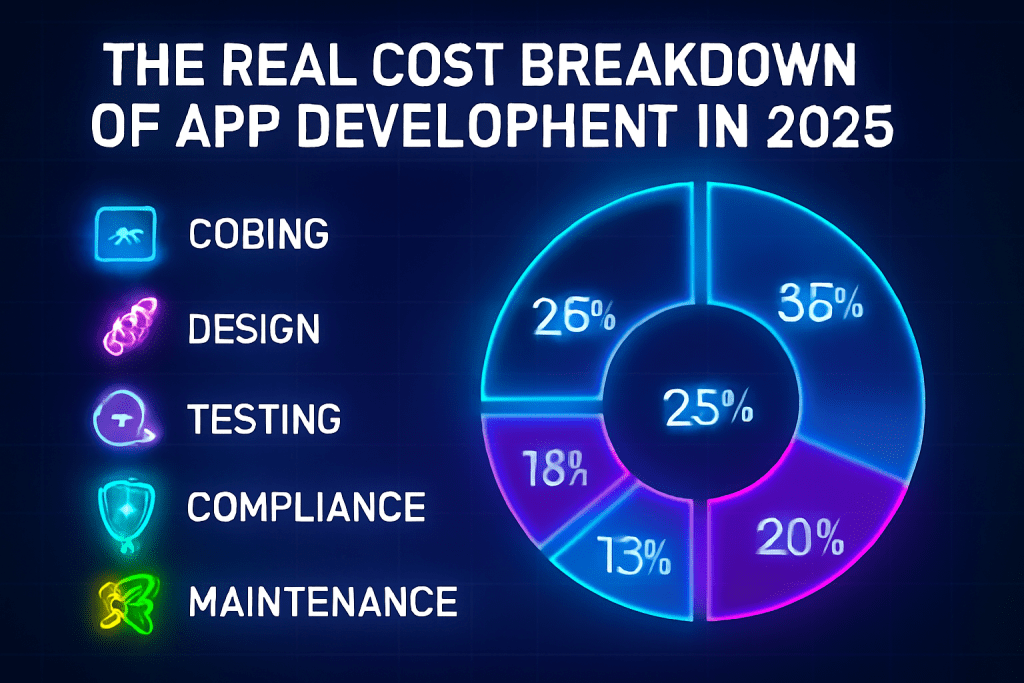
Breaking Down the Real Cost of App Development in 2025: Beyond Just Coding

Introduction App development in 2025 is about far more than lines of code. As expectations for quality, speed, scalability, and compliance rise, so do hidden and overlooked costs. This breakdown shows exactly what you’re paying for—beyond just hiring developers. The Real Cost of Building an App in 2025 Typical cost ranges: Simple app: $5,000 – $50,000 Mid-range complexity: $32,000 – $100,000 Complex/enterprise app: $100,000 – $400,000+ (and often much more) But this is just the start. These figures only represent direct development. The real cost of app development covers a lot more. Cost Breakdown: Every Phase Matters Development Phase 2025 Typical Cost (USD) What’s Included Discovery/Planning $4,500 – $8,000 Research, requirements gathering, scoping Design & Prototyping $15,000 – $30,000 UX/UI, wireframes, branding, design sprints Development (Coding) $35,000 – $75,000 Backend, frontend, API integrations Quality Assurance $8,000 – $18,000 Manual/automated testing, bug fixes Deployment $2,000 – $4,000 App store prep, backend transfer Maintenance (annual) 20–25% of original cost Updates, bug fixes, server fees, minor features Total Range $80,000 – $250,000+ Varies by app complexity and scope Source: 2025 industry reports and agency benchmarks What Drives App Development Costs Up? 1. Complexity and Features Advanced features: Real-time chat, AI, AR/VR, payments, analytics, and third-party integrations hike costs. Multiplying platforms (iOS, Android, web) doubles or triples work—native builds cost more than cross-platform. 2. Design Quality Custom animations, branding, and intensive user experience (UX) work increase time and budget. Accessibility and localization (multi-language) add further complexity. 3. Rising Developer Salaries In 2025, senior developer rates have soared to $80–$200/hour, especially for AI, automation, and cloud expertise. Talent shortages inflate costs globally, even in traditional outsourcing regions. 4. Security & Compliance Robust data security, GDPR, HIPAA, and other legal compliance standards are now non-negotiable. Expect extra costs for security infrastructure and legal reviews. 5. AI & Emerging Technologies AI-powered features (e.g., chatbots, recommendations) demand data pipelines, AI model training, specialized talent, and ongoing model tuning—all beyond standard coding. 6. Testing and Deployment Cross-device, cross-platform, and performance testing is more intensive than ever. Bugs, edge cases, and app store requirements require real QA investment. 7. Maintenance & Upgrades Post-launch, apps typically consume 15–25% of the original build cost yearly for bug fixes, security patches, OS updates, evolving features, and hosting. 8. Ongoing Infrastructure Cloud hosting, database management, analytics tools, push notification services, and external APIs add recurring (often growing) costs. 9. Marketing, Support & Scaling App store optimization, initial marketing, and user support are usually overlooked in budgets, but are crucial for success. Regional Cost Differences Region Developer Rate (USD/hour) Example Total App Cost North America / Western EU $80 – $200 $100,000 – $500,000+ Eastern Europe $35 – $100 $40,000 – $200,000+ India, SE Asia, Latin Am. $20 – $60 $10,000 – $150,000+ Outsourcing still brings savings, but global demand is shrinking the price gap. Hidden and Overlooked Costs Discovery and project management: Time spent scoping, iterating, and aligning goals. Third-party licenses & tools: Fees for libraries, frameworks, SaaS, and APIs. Legal and privacy compliance: Audits, certifications, and legal counsel. User acquisition: Marketing, onboarding flows, and initial support. Analytics and reporting: Implementing tools for usage tracking, engagement, and crash reporting. How to Keep Costs Under Control Prioritize MVP: Start with a minimum viable product to reduce initial spend and validate your core idea. Choose wisely: Use cross-platform tools where possible, but weigh against performance needs. Plan for maintenance: Budget at least 20% of your build costs annually for ongoing support. Invest in design and QA: Skipping these leads to poor ratings and post-launch costs. Understand compliance early: Legal and security shortcuts are costly in the long run. Hire specialized teams, not just cheap labor: Experienced developers optimize code, reduce bugs, and reach launch faster, often saving money in total. Frequently Asked Questions (FAQ) How much does a basic app cost in 2025? Estimates for a basic app range from $5,000 – $50,000, but serious MVPs average $40,000–$100,000, including design, QA, and deployment. Why are post-launch costs so high? App maintenance, updates, and legacy support account for 20–25% of build costs per year. Plus, scaling, cloud fees, and evolving user demands always add up. What’s the biggest mistake in budgeting for app development? Underestimating everything besides coding—especially QA, compliance, maintenance, and marketing. How much should I budget for a complex or AI-powered app? Complex and AI-integrated apps with advanced features will usually start at $100,000 and can exceed $400,000, with ongoing costs for data, training, and specialized talent. Conclusion The real expense of app development in 2025 goes far beyond just coding. Factor in discovery, design, compliance, AI integration, rising salaries, security, testing, and year-on-year maintenance. A well-researched, flexible budget—alongside clear priorities and seasoned partners—is the key to launching an app that succeeds for years to come.

Scroll to Top