
adaptive learning

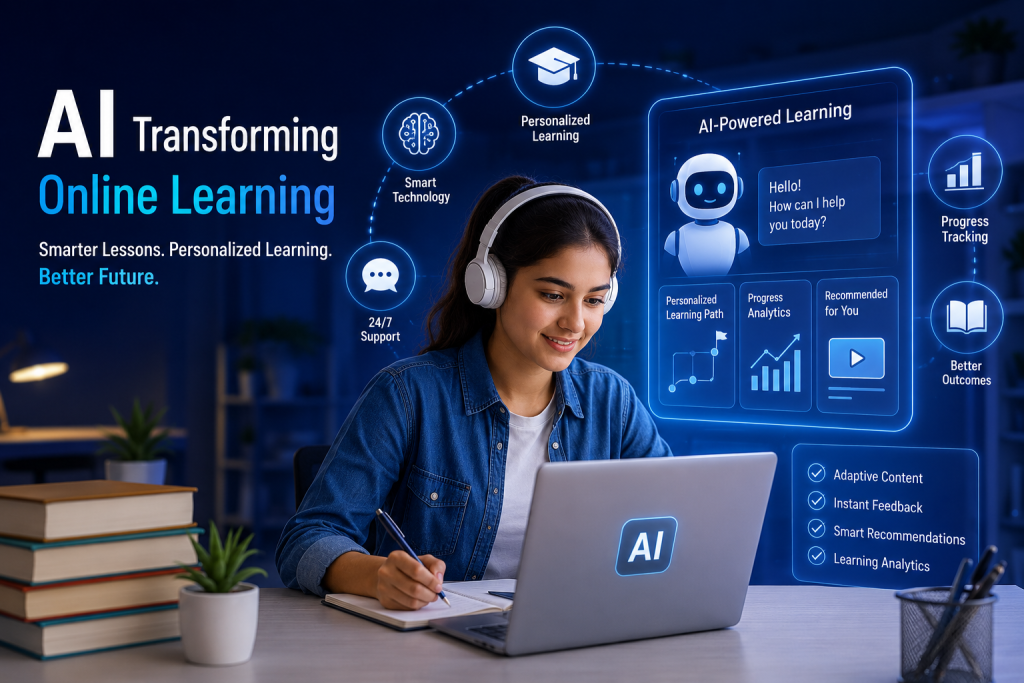
Student using AI-powered tools for personalized online learning
Education

How Artificial Intelligence Is Transforming Online Learning

Introduction Artificial Intelligence is becoming an important part of online education, changing how students access content, receive feedback, and progress through digital courses. AI-powered tools can analyze learning patterns and provide support that is more responsive to individual student needs. AI in online learning can help create personalized learning experiences by recommending relevant lessons, adjusting content difficulty, and identifying areas where students may need additional practice. This can make digital education more flexible and adaptive. As online learning continues to grow, artificial intelligence is creating new opportunities for smarter learning platforms, automated support, adaptive assessments, and personalized educational experiences. However, effective use of AI also requires responsible implementation, reliable data, and meaningful human guidance. What Is AI in Online Learning? AI in online learning refers to the use of artificial intelligence technologies to improve digital education and support students throughout their learning journey. AI-powered systems can analyze student interactions, learning progress, and performance to provide more relevant educational experiences. AI-Powered Learning Platforms AI-powered learning platforms can organize educational content and provide recommendations based on student activity. These systems can help learners discover relevant lessons, practice materials, and resources according to their progress and learning needs. Adaptive Learning Adaptive learning uses technology to adjust educational content according to a student’s performance and progress. If a learner finds a topic difficult, the platform can provide additional explanations, practice activities, or supporting resources. AI-Based Student Support AI-based tools can provide automated support through chatbots, virtual assistants, and intelligent help systems. These tools can answer common questions, guide students toward relevant resources, and provide assistance outside regular classroom hours. By combining data analysis, automation, and personalized recommendations, AI can help online learning platforms create more flexible and responsive learning experiences. How AI Personalizes Online Learning AI can personalize online learning by analyzing how students interact with educational content and identifying their learning patterns, strengths, and areas that may require additional support. This allows digital learning platforms to provide more relevant experiences for individual learners. 1. Personalized Learning Paths AI-powered platforms can recommend lessons and learning activities based on a student’s progress and performance. Instead of following exactly the same path as every other learner, students can receive content that is better suited to their current level and learning needs. 2. Adaptive Content and Difficulty AI systems can adjust the difficulty of learning materials based on student performance. Learners who understand a topic quickly may move forward, while students who need more support can receive additional explanations, examples, and practice activities. 3. Personalized Recommendations AI can recommend relevant videos, articles, exercises, and other learning resources based on a student’s interests and previous activity. These recommendations can help learners discover useful content without spending excessive time searching for it. 4. Identifying Learning Gaps By analyzing assessment results and learning activity, AI can help identify areas where students may be struggling. Teachers and learners can then use this information to focus on specific topics that require additional attention. Benefits of AI in Online Learning AI can provide several benefits for online learners and educators by making digital education more personalized, responsive, and efficient. When used effectively, AI tools can support learning without replacing the important role of teachers and human guidance. Personalized Learning Experiences AI can adapt learning experiences according to student progress, performance, and learning needs. This can help learners receive more relevant content and avoid spending unnecessary time on material they have already mastered. Instant Feedback AI-powered assessment tools can provide quick feedback on quizzes, exercises, and learning activities. Immediate feedback can help students identify mistakes and understand which areas need additional practice. 24/7 Learning Support AI-based chatbots and virtual assistants can provide basic support outside traditional classroom hours. Students can receive answers to common questions and guidance toward relevant learning resources whenever they need assistance. Improved Learning Efficiency AI can automate certain tasks such as organizing content, recommending resources, and analyzing learning progress. This can help students spend more time learning while giving educators useful information about student performance. Support for Teachers and Educators AI tools can help educators analyze learning data, identify students who may need additional support, and reduce repetitive administrative tasks. This can give teachers more time to focus on teaching, mentoring, and meaningful student interaction. Challenges and Limitations of AI in Online Learning Although AI can improve online learning in many ways, its use also creates important challenges. Educational institutions and online learning platforms need to consider privacy, data security, accuracy, accessibility, and the continued importance of human guidance. Data Privacy and Security AI-powered learning platforms may collect information about student activity, performance, and learning behavior. This data should be handled responsibly and protected through appropriate privacy and security practices. Accuracy and Reliability AI-generated recommendations and responses may not always be completely accurate or appropriate. Students and educators should evaluate AI-generated information carefully and avoid relying on automated systems without human review when accuracy is important. Overdependence on Technology Students may become overly dependent on AI tools if technology replaces independent thinking and problem-solving. AI should support learning rather than discourage students from developing their own understanding and critical thinking skills. Digital Access and Inequality Not every student has equal access to reliable internet connections, modern devices, or advanced AI-powered learning platforms. Equal access remains an important challenge for making AI-supported online education more inclusive. Maintaining Human Interaction AI can provide useful automated support, but it cannot fully replace teachers, mentors, and meaningful human interaction. Educators continue to play an important role in providing guidance, motivation, emotional understanding, and personalized support. The Future of AI in Online Learning The role of AI in online learning is likely to continue growing as artificial intelligence technologies become more advanced and accessible. Future learning platforms may provide smarter recommendations, more adaptive content, improved learning analytics, and increasingly personalized educational experiences. AI may also become more integrated with other technologies such as virtual reality, augmented reality, interactive simulations, and intelligent digital assistants. This combination could create more immersive and flexible online learning environments.
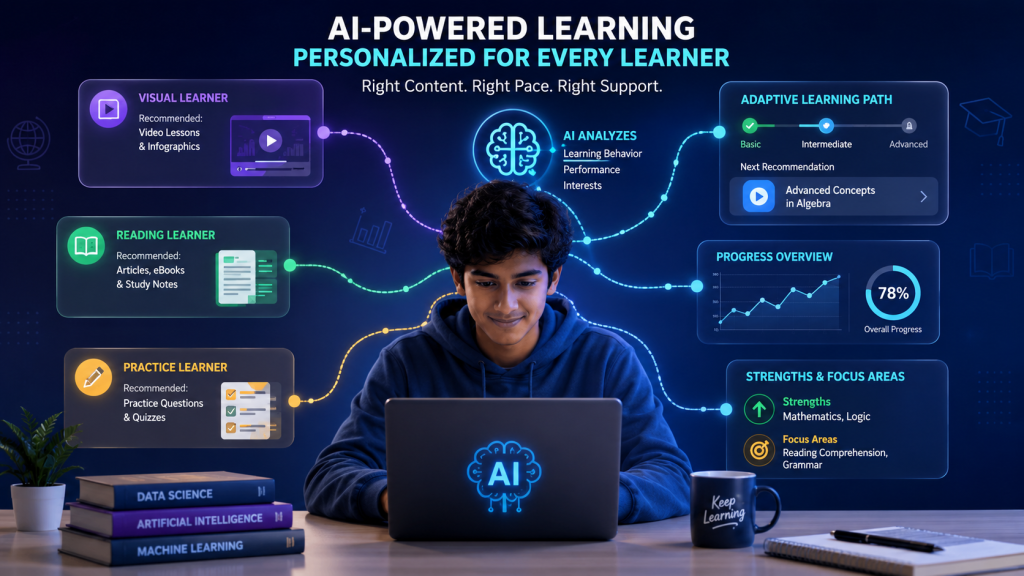
AI-powered personalized learning for students
Education

How AI-Powered Learning Is Personalizing Education

Introduction Every student learns differently. Some understand concepts quickly through visual content, while others need more practice, examples, or additional explanations. Traditional education often follows a common learning path, but artificial intelligence is making it possible to create more personalized learning experiences. AI-powered learning platforms can analyze student interactions, learning progress, and performance to recommend content and activities that match individual needs. This approach can help students learn at their own pace while giving educators better insights into where additional support may be required. As educational technology continues to evolve, personalized learning is becoming an important part of modern education. AI is not simply changing what students learn; it is also changing how learning content is delivered, practiced, and evaluated. What Is Personalized Learning? Personalized learning is an educational approach in which learning experiences are adapted to the individual needs, abilities, interests, and progress of each student. Instead of providing exactly the same content and activities to every learner, personalized learning aims to provide appropriate resources and support based on how each student learns. AI can make personalized learning more effective by analyzing information such as quiz results, learning activity, completed lessons, and areas where a student may be struggling. Based on these patterns, an AI-powered system can recommend suitable content, practice exercises, or additional explanations. Traditional Learning vs. Personalized Learning In a traditional learning environment, students often follow the same syllabus, lessons, and assessment schedule. Personalized learning allows the learning experience to become more flexible by adjusting content, difficulty, and pace according to individual progress. How AI-Powered Learning Personalizes Education AI-powered learning systems can use data and intelligent algorithms to understand how students interact with educational content. This allows learning platforms to make recommendations and adjust learning experiences based on individual progress. 1. Adaptive Learning Paths AI can adjust the difficulty and sequence of learning materials based on a student’s performance. If a learner understands a concept quickly, the system can provide more advanced material. If a learner struggles, it can recommend additional explanations and practice. 2. Personalized Content Recommendations AI can recommend videos, articles, exercises, quizzes, and other educational resources based on a student’s learning history and interests. This can help learners find relevant material without having to search through large amounts of content. 3. Individualized Feedback AI-powered systems can provide immediate feedback on quizzes, assignments, and practice activities. Quick feedback can help students identify mistakes, understand concepts, and make improvements while they are still actively learning. 4. Learning at an Individual Pace Students do not always need the same amount of time to understand a concept. Personalized learning allows students to spend more time on difficult topics and move ahead when they are ready, creating a more flexible learning experience. Benefits of AI-Powered Personalized Learning AI-powered personalized learning can provide benefits for students, teachers, and educational institutions. By adapting learning experiences to individual needs, it can make education more flexible, engaging, and focused on student progress. Better Learning Engagement When students receive content that matches their interests and learning levels, they may find lessons more relevant and engaging. Personalized recommendations can also help students discover learning resources that are appropriate for their current level. Improved Learning Outcomes Personalized learning can help students spend more time on topics they find difficult while moving faster through concepts they already understand. This targeted approach can support better understanding and continuous progress. Early Identification of Learning Gaps AI can analyze learning patterns and performance to identify areas where students may need additional support. Teachers can use these insights to provide targeted assistance before learning gaps become larger. More Efficient Teaching AI-powered platforms can provide teachers with information about student progress and learning needs. These insights can help educators plan additional activities and provide more focused support to individual learners. Greater Learning Flexibility Personalized learning allows students to access educational content at different times and progress at a pace that suits their needs. This flexibility can make learning more convenient for students with different schedules and learning preferences. Challenges of AI-Powered Personalized Learning Although AI-powered personalized learning offers many advantages, it also comes with challenges. Educational institutions need to consider data privacy, accuracy, accessibility, technology costs, and the importance of maintaining human involvement in education. Data Privacy and Security Personalized learning systems may collect information about student performance, learning behavior, preferences, and progress. Educational institutions need strong privacy and security practices to protect this information and ensure that student data is used responsibly. Accuracy of Recommendations AI recommendations depend on the quality of the data and algorithms being used. If a system incorrectly understands a student’s needs, it may recommend unsuitable content or learning activities. Human oversight can help identify and correct such issues. Digital Access and Inequality Not every student has access to reliable internet connections, modern devices, or advanced learning platforms. Differences in access can make it difficult to provide personalized technology-based learning equally to all students. Teacher Training Teachers need appropriate training to understand how AI-powered learning systems work and how to use their recommendations effectively. Technology should support teachers’ expertise rather than replace their judgment. Technology Costs Implementing AI-powered learning platforms may require investment in software, infrastructure, devices, training, and maintenance. Educational institutions need to consider these costs carefully when adopting personalized learning technologies. The Role of Teachers in Personalized Learning AI can provide useful information and recommendations, but teachers remain an essential part of personalized education. Teachers can use AI-generated insights to understand student needs, provide guidance, and make informed decisions about learning activities. AI as a Support Tool for Teachers AI should be viewed as a support tool rather than a replacement for teachers. It can help identify learning gaps, organize information, and suggest resources, while teachers provide context, judgment, encouragement, and personal support. Human Interaction Still Matters Learning is not only about receiving information. Communication, collaboration, creativity, emotional support, and classroom relationships are also important parts of education. Teachers play a central role in creating these human learning experiences. Combining AI With Human Expertise

Technology

Microlearning & AI Tutors: The Future of Upskilling

Introduction In today’s fast-changing work environment, traditional corporate training often struggles to keep pace with the need for continuous learning and rapid upskilling. Enter microlearning and AI tutors—two transformative forces that are redefining how employees, students, and professionals acquire skills. Microlearning breaks complex topics into short, focused modules that are easy to fit into even the busiest schedules. With the integration of AI tutors, training becomes personalized, adaptive, and remarkably efficient. This blog explores how combining these innovations is empowering learners to close skill gaps, improve retention, and future-proof their careers—why it matters for organizations and individuals aiming to remain competitive in a digital-first world. The Power of Microlearning in Upskilling Bite-Sized, Targeted Learning: Microlearning delivers content in short modules, making it highly accessible and easy to digest, minimizing disruptions to daily work. Enhanced Knowledge Retention: Studies show microlearning can boost long-term retention by up to 80% compared to traditional methods. Real-Time Application: Training can be directly related to current job tasks or upcoming projects, ensuring immediate applicability. Flexibility for Modern Learners: Employees and students can access training on-demand and at their own pace—whether at work, at home, or on the go. Cost and Time Efficiency: Organizations reduce classroom time, travel costs, and printed materials while maximizing engagement. Supports Continuous Upskilling: Microlearning fits seamlessly into daily routines, enabling ongoing skill development without overwhelming learners. Use Cases Onboarding new employees with short, interactive lessons. Continuous professional development and compliance training. Soft skill enhancement—leadership, time management, communication. Role-specific technical skills for rapid workplace adaptation. How AI Tutors Supercharge Microlearning Personalized Learning Paths: AI tutors analyze learner performance and preferences, adapting content recommendations in real time for optimal challenge and engagement. Instant, Intelligent Feedback: Learners get immediate answers, personalized tips, and reinforcement exactly when needed, increasing motivation and clarity. Scalable and Adaptive: AI systems can scale training across entire organizations while tailoring the experience for each individual—bridging skill gaps efficiently. Automated Content Creation: AI-driven tools can quickly turn documentation or new policies into microlearning modules, quizzes, or infographics—cutting development time drastically. Popular Examples: Platforms like Khanmigo (Khan Academy), Duolingo, Quizlet, and TutorMe are already enhancing learning through AI-driven adaptation and support. Impactful Results AI-driven training programs have been shown to boost learning efficiency by up to 57%. Real-world implementations report higher engagement, improved completion rates, and measurable skill improvements. In academic settings, microlearning combined with AI intervention has produced significant gains in soft skill development and job readiness, particularly in business and technical fields. Conclusion Microlearning and AI tutors are not just passing trends—they’re strategic assets for the workforce of the future. By combining short, focused learning moments with adaptive, AI-powered support, organizations and individuals can accelerate reskilling, boost engagement, and unlock ongoing career growth. If you’re ready to future-proof your learning strategy, it’s time to embrace microlearning and AI tutors. Call to Action: Share this article with your network, comment below with your upskilling experiences, or reach out to learn how microlearning and AI tutors can empower your organization. FAQ Section Q1: What is the primary benefit of microlearning for busy professionals? A1: Microlearning enables professionals to learn new skills in short, targeted bursts, fitting easily into their daily schedules and minimizing disruption to their workflow. Q2: How do AI tutors personalize the learning experience? A2: AI tutors track learner progress, analyze performance, and adapt the difficulty and content in real time, creating a custom learning path for each user. Q3: Can microlearning be used for soft skill development? A3: Yes. Microlearning is highly effective for developing soft skills like communication, leadership, and time management, especially when modules are scenario-based and interactive. Q4: Are there proven results from using AI-powered microlearning in the workplace? A4: Yes. Studies report boosts in learning efficiency, improved skill retention, and higher engagement rates when organizations deploy AI-powered microlearning solutions. Q5: What are some top platforms combining microlearning and AI tutors? A5: Popular platforms include Khanmigo (Khan Academy), Duolingo, Quizlet, TutorMe, and Elsa Speak, which offer adaptive, AI-driven learning experiences across various skills and subjects

Scroll to Top